Give Your Idlis a Healthy twist ….

Give your idlis a healthy twist.

Dietitian Jasleen Kaur shares her recipes. You can share yours too! Scroll down to find out how. 


Photograph: Kind courtesy Upendra Kanda/Creative Commons

Hot and sour idli

Ingredients:

  • 1 cup rice
  • 1 cup arhar dal/ toovar dal
  • Red chillies
  • 1 onion, chopped
  • A pinch of hing
  • 1 tsp grated jaggery

Method:

  • Soak the rice and dal separately in three cups of water for four hours.
  • Grind red chillies and tamarind to fine paste. Grind dal and rice separately.
  • Add grated jaggery and red chillies, turmeric powder and salt. Mix well. Set aside for four to five hours to ferment.
  • Lightly grease idli moulds and put the batter. Once steamed, serve the idlis with chutney.

Idli Upma

Ingredients:

  • 5-6 idlis
  • 1 tbsp oil
  • 1/2 tsp mustard seeds
  • 1/2 tsp urad dal
  • 1/2 tsp cumin seeds
  • 5-6 curry leaves
  • 1/2 ginger, finely chopped
  • 1 dry red chilli
  • 1 green chilli, chopped
  • 1/4 cup onions, chopped

Method:

  • Crumble 5 to 6 idlis and keep aside.
  • Heat oil in a pan and add mustard seeds.
  • When they start crackling, add urad dal and cumin seeds.
  • Saute till the urad dal turns golden. Add 5 to 6 curry leaves (chopped or kept whole), ginger, red chili and green chili.
  • Stir and then add the chopped onion. Mix well and saute for a minute or two.

SOURCE:::::: http://www.rediff.com

Natarajan

How Sivalingam battled pain to snatch another C’wealth gold….

‘I had no hopes of winning a medal after I injured my thighs during the National Championships while attempting 194 kg in clean and jerk. ‘

‘Even now I am competing at less than ideal fitness, but I am glad that was enough to get me a gold.’                                                                                                                                       

Defending champion Sathish Sivalingam (77 kg) claimed India’s third gold medal at the Commonwealth Games on Saturday, emerging triumphant despite having given up podium hopes after his injured thighs made even routine things like sitting painful.

The 25-year-old Indian lifted a total 317 kg (144+173) and was so ahead in the competition that he forfeited his final clean and jerk lift.

“I had no hopes of winning a medal after I injured my thighs during the National Championships while attempting 194 kg in clean and jerk. It’s a quadriceps problem; even now I am competing at less than ideal fitness, but I am glad that was enough to get me a gold,” said Sathish, after the medal presentation ceremony during which he was accorded a warm applause from the packed arena.

“I was in so much pain that even sitting was very painful for me. Everyone took care of me, gave me hope but I was not very confident. I had not trained that hard and my body was not at its best, and so how could I hope for a medal,” added the Tamil Nadu lifter.

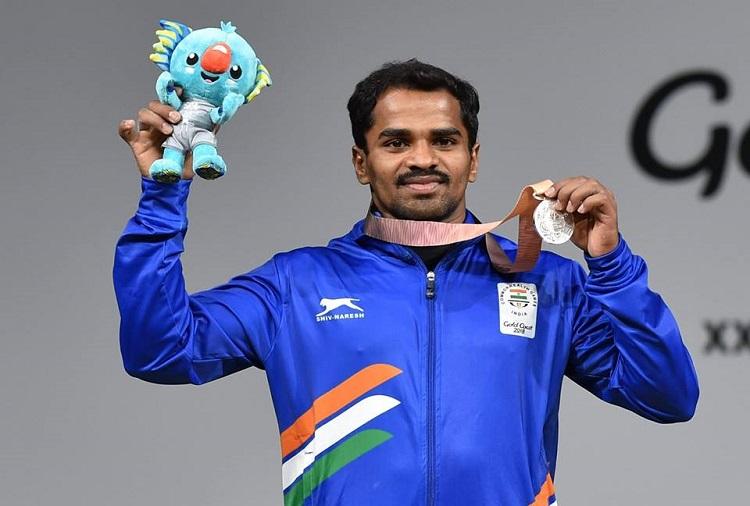
GOLD COAST, AUSTRALIA – APRIL 07: Gold medalist Sathish Kumar Sivalingam of India poses during the medal ceremony for the Men’s 77kg Weightlifting Final on day three of the Gold Coast 2018 Commonwealth Games at Carrara Sports and Leisure Centre on April 7, 2018 on the Gold Coast, Australia. (Photo by Mark Metcalfe/Getty Images)


It was a fascinating contest of one-upmanship between Sathish and eventual silver-medallist Jack Oliver of England in the snatch competition.

The two kept upping the weights before their attempts but Oliver kept his nose ahead at the end of snatch as he lifted 145 kg in his second attempt. It was a kilogram more than Satish’s final attempt.

However, Satish had the last laugh in clean and jerk after Oliver failed two attempts of 171kg and settled for a total of 312 kg (145+167).

The bronze medal went to Australian showman Francois Etoundi, who lifted 305 kg (136+169) and collapsed clutching his injured shoulder after his final lift.

“I got lucky there, had he (Oliver) not dropped those weights, I would have had to go higher and I am not sure how my body would have taken that. I am quite relieved actually.”

At the 2014 Commonwealth Games, Sathish won the gold medal with 149 kg snatch and 179 kg clean and jerk lifts, totalling 328 kg. His lift of 149 kg in snatch continues to be the Games record.

“I didn’t want to touch that level because I still need to undergo rehabilitation. The fact that the access to our physio was limited made it all the more difficult. I just hope that we get a physio with us at the Asian Games,” said Sathish, once again highlighting the problems the weightlifters are facing due to the lack of accessibility of their physios in the competition area.

Sathish is also the reigning Commonwealth Championships gold-medallist.

“I hope to do even better in the Asian Games because there is a gap now. Earlier, the Asian Games used to come within 20-25 days of the Commonwealth Games, which didn’t give us enough time to prepare. But this time I have got time to prepare and be fully fit now,” he said.

Tags: Jack OliverKumar SivalingamSathish SivalingamFrancois EtoundiIMAGE

Source:   www.rediff.com

Natarajan

Meet Gururaja…CWG 2018 Medallist…

‘His victory is our victory,” said his family as they watched him bag the silver medal in weightlifting, in Australia.


At 7.30 am on Thursday morning all eyes in the Poojary household in Vanse, a tiny village near Kundapur in Karnataka, were glued to the television.

One of their own, Gururaja Poojary, was taking part in the men’s 56-kg weightlifting competition in the 2018 Commonwealth Games in Australia. After failing to lift the weight of 138 kg in his first two attempts, it appeared as if Gururaja’s medal prospects were slipping away

The 25-year old weightlifter, however, was the very picture of strength in his final attempt to take his final tally to 249 kg and clinch the silver medal.

This medal in the Gold Coast is not only Gururaja’s first taste of success on the international stage right on his debut, but is also the product of a journey where he overcame poverty and personal setbacks to reach where he is.

But for his family members, it came as no surprise.

He comes from a sporting family – all five of his brothers dabbled in Kabaddi and were athletes. “But it was Gururaj who was always going to achieve his dream,” says Manohar Poojary, Gururaja’s elder brother.

Gururaja’s father, Mahabala Poojary, is a goods-truck driver, who struggled to make ends meet to take care of his six sons. “Poverty is something we have lived in all our life. If we were a little bit well-off financially or received the necessary support and encouragement, maybe all of my sons could have made our country proud,” says Mahabala, speaking after his son’s success in Australia.

But due to poverty and unforeseen circumstances at home, Gururaja’s older brothers – Mohan, Manohar, Udaya and Rajendra – had to drop out of school and, with that, from sports. Only Gururaja and his youngest brother, Rajesh, completed their studies amongst the six sons.

His mother, Padhu Poojarthi, is a homemaker.

But his family was not willing to let Gururaja tread the same path. “Our father worked extra hard to ensure that Gururaja strove to achieve his dream. Seeing my father’s and brother’s struggles, even we chipped-in, taking on extra work to help in whatever way we could. Today, his victory is as much our victory,” says Manohar.

While studying at Sri Dharmastala Manjunatheshwara (SDM) College in Ujire, in Dakshina Kannada, Gururaja was looking for a wrestling coach rather than a weightlifting one. This was around the time Sushil Kumar had won his first Olympic medal in wrestling in 2008. While his search for a wrestling coach proved to be fruitless, he met powerlifters at the local gym and was soon representing his college in powerlifting.

It was here he met his coach Rajendra Prasad, who gave him his first lessons in weightlifting.”I still remember, in 2011, Gururaja was a young boy who had just joined a graduation course. He was a Kabaddi player and a wrestler, and did not have any idea about powerlifting. We selected him for the club and, seeing his talent, guided him in powerlifting,” says Rajendra Prasad, who works as a coach at the SDM Sports Club.

He added that Gururaja was proficient at the University level and even broke a record set by him in 1999 by lifting 193 kg (total in snatch and knee jerk) in 2012. He improved to 243 kg in 2015, a record which still stands to this day.

It was only in 2013 that he became a national-level athlete and in 2014, after a gold medal at the national-level, he started becoming a serious contender for a Commonwealth Games berth.

With his superlative rise in the sport, Gururaja also enrolled in the Indian Air Force three years ago, after which the Air Force took care of all the training expenses. “Until then, it was the family, college-mates and generous philanthropists who gave wings to his dream, hoping he would bring glory to the region,” says Manohar.

By the time the financial strain on his family was eased, 25-year-old Gururaja was ready to take on the world stage.

With the win in Australia, he has now vaulted straight into the national limelight and Pramod Madhwaraj, Karnataka Minister for Youth, Fisheries and Sport, who also hails from Udupi, said that Gururaja is likely to get a government job as a group-B officer and also a cash prize for his achievements.

When TNM caught up with Gururaja, he was, understandably, elated. “I am very happy that I have represented India in the Commonwealth Games and won the first silver medal for India (this year). This is my first Commonwealth Games and I want to thank my parents, family, my weightlifting coach Rajendra Prasad, SDM institution and everyone from my village who supported me,” he says.

His family members, who were nervously watching from home, was over the moon. Although his mother says she doesn’t quite understand the world of sport, she adds she is overwhelmed by the media visits.

But Gururaja’s family was quick to add that the journey is still not over. “We want him to make our country proud. Our biggest dream is that he participates and wins in the Olympics,” says Mahabala.

There is still some way to go before Gururaja can qualify for the Olympics. His final tally of 249 kgs will have to improve closer to 300 kgs. But throughout his journey, he has broken barriers and after his latest success in Australia, Gururaja will no doubt be willing to go the mile to chase his Olympic dream.

Source…….Harsha Raja Gatty and Prajwal Bhat in https://www.thenewsminute.com

Natarajan

The jingle Trucks of Pakistan …

A typical Pakistani truck driver spends more time with his truck than he does with his wife. Which explains why he wants his 10-ton six-wheeler to look like a new bride.

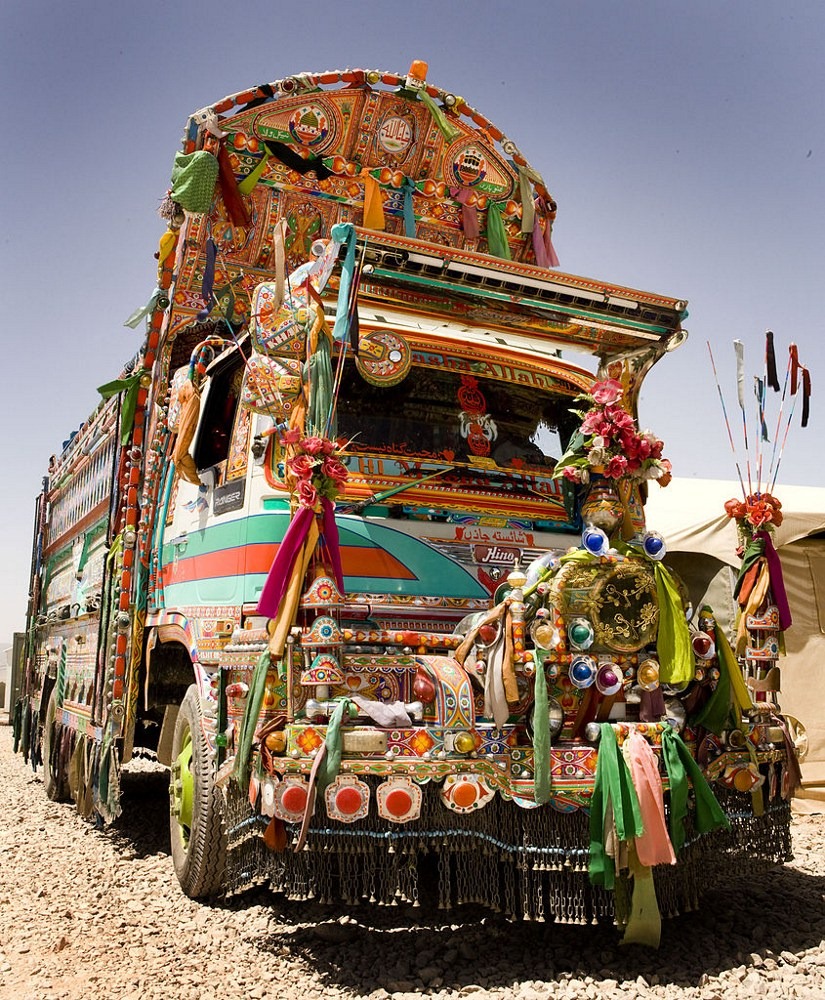
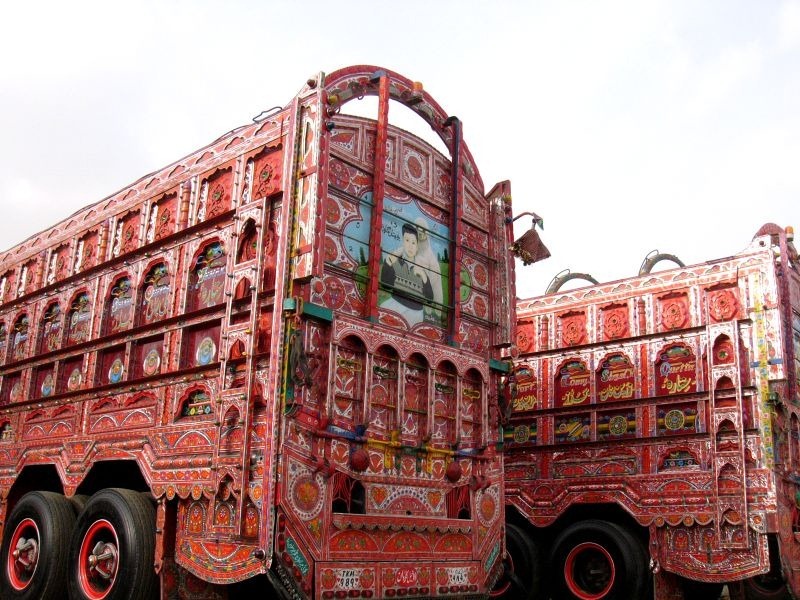
These trucks plying across Pakistan’s national highways and the neighboring country of Afghanistan are distinctively ostentatious. The entire trucks, from top to bottom, are a riot of colors. Lavishly painted panels containing a mosaic of birds, flowers, landscapes, saints, and actresses in hyper-saturated color palette adorn the exterior, while plastic flowers, draped beads, mirrors, ribbons and velvet grace the interior. The cabin is crowned by a custom built wooden prow wrapped in more kitschy artwork, while a string of metal bells dangle from the chassis all round the periphery. When the truck is in motion, these bells clang against each other like a new bride’s ghungroo. This is where the nickname “jingle trucks” come from—coined by US troops deployed in Afghanistan.


Photo credit: ISAF Public Affairs/Flickr

And it isn’t just trucks alone. Passenger buses, water tankers, transport vans, rickshaws, and even vendors’ pushcarts are psychedelically decorated with eye-popping colors. It’s like a rolling folk art, “a national gallery without walls, a free-form, kaleidoscopic exhibition in perpetual motion,” as Richard Covington puts it.

The tradition of decorating trucks began sometime in the 1920s with the introduction of the long-distance Bedfords—a British-built truck with rounded cab and seven-feet high paneled sides that was to become the country’s most prestigious and dependable truck for more than half a century. Originally trucks were painted with each company’s logo so that illiterate people could recognize who owned the trucks. Gradually, these logos became more fanciful, flamboyant and competitive. By the 1950s, stylized murals and frescoes had begun to replace them. It was only in the 1960s, as the country’s economy boomed, the decorations became increasingly sophisticated to reflect the growing wealth of the drivers and the rise of a new urban class.

Pimping out a truck this way cost truck owners a small fortune. It isn’t unheard of for a driver to spend the equivalent of a year’s worth, or more, of profits on truck decorations. According to a 2005 article, a basic painting and body job costs a minimum of $2500, equivalent to two years of the average truck driver’s salary. Some spend upwards of $10,000 outfitting their rigs. Unbelievably, many truckers will return to the workshop every three or four years for a full vehicle makeover.

“Truckers don’t even spend so much money on their own houses,” marvels Durriya Kazi, head of the department of visual studies at the University of Karachi. “I remember one driver who told me that he put his life and livelihood into the truck. If he didn’t honor it with the proper paint job, he would feel he was being ungrateful.”

A well-decorated truck also gives customers the impression that it is well taken care of and will, therefore, be a dependable way to transport goods.

Truck painting is also a big business. In Karachi city alone, more than 50,000 people are engaged in this unregulated yet lucrative industry. Family-run workshops comprising of apprentices and highly trained artisans, and small shops selling all manners of outlandish ornaments and accessories crowd around truck yards.

Over the years, however, the business has changed. Now instead of meticulously hand painting each truck, mass produced stickers and adornments are used.

“Truck decoration is not stagnating; it is dead,” laments R M Naeem, an assistant professor at the National College of Arts, Lahore. “This is because truck painters treat their work as a source of livelihood. They do not have the time or the luxury to innovate; they repeat the same old patterns, images and icons over and over again.”

However, thanks to artists like Haider Ali, who gave a Ford van a jingle-truck-style makeover a couple of years ago in a parking lot in Pasadena, California, and other painters, it’s unlikely that this quintessentially Pakistani craft is going to die out any time soon


Source……..Kaushik in  http://www.amusingplanet.com

Natarajan


This 69 year old Man has helped start free Libraries across Chennai , and YOU can too !

No membership, no one to supervise, and no last date to return books: Mahendra Kumar’s libraries run on no rules, and plenty of goodwill.

Chennai-based Mahendra Kumar speaks about reading and books with reverence and passion. “It is a character-building activity,” he says earnestly.

In April 2015, he decided to do something which he hoped would encourage people to read: He opened a library in Thirumullaivoyal, Chennai.

It wasn’t just your run-of-the-mill library. The most unique part about it wasn’t even that it was set up in a cement shop, where 69-year-old Mahendra shared a table with the shopkeeper.

What truly set it apart was there was no membership fee, no register to keep track. Literally anyone could walk in, pick up one of the 20 books, and take it home. They could return it whenever they wanted.   

This was the first Read and Return Free Library (RFL). Now, Mahendra says that there are 66 of them across TN, and a few other states, with 10,000 books in all.

His first library in Thirumillaivoyal has now expanded to three cupboards, which he keeps outside his house,bursting with books. It stands completely unmanned.

“I could have kept a register perhaps, where people could sign with the book they were taking,” he adds as an afterthought. But Mahendra snaps out of it the very next moment. “I wanted no protocols, no control. Just people free to read and return books, as per their conscience.”

Encouraging others

Presently, there are 48 RFL libraries in Chennai alone. The others are in Nilgiris, Coimbatore, Aurangabad and Mumbai.

But setting these up has not been an easy task. Unable to travel to these places himself, Mahendra would try to convince others to start such libraries.

“I would sometimes see contact numbers in books. Someone who has written an introduction or a foreword – I’d try to find their numbers. I would try to convince them then to start this in their locality. And I would send whatever little money I could to help them,” Mahendra shares.

One such person he convinced was a former classmate of his, Captain R Venkataraman, who started a RFL library in T Nagar, Chennai, in 2016.

“But there are only so many friends or family members who can be convinced,” Mahendra says. “If there are 66 libraries today, you can assume I made 6,000 calls for them.”

Not as easy as it seems

In the past two years, RFL libraries have sprung up in many different places – gated communities, railway stations, hospitals and even a barber shop.

RFL at a Railway Station….

Mahendra is reluctant to share that this has required a considerable amount of legwork and resources from him. He believes it will discourage people, and make them wary of starting more RFLs.

“When people initially came to know about the concept, they wanted to donate books. So I would speak to a few of them, start at 5 am in the morning, make a round with multiple stops and come back with a car full of books,” he recounts. “Sometimes, I would sleep in the car because I’d get tired.”

The problem was that everyone wanted to donate books, but no one wanted to start the library. “Sometimes, people seemed on board with the idea, but they don’t really follow it up with action. I have been wanting to start one RFL library in Bengaluru as well, and got a volunteer too. But they have not really taken it forward after that.”

Mahendra says that he is ready to send some books, and whatever token amount he can from his pocket to help them get started, if only people volunteer.

He also mentions that he is grateful for his wife, who has never raised an objection against him going around the city at odd hours to collect books, and spending money for the RFLs.

Helping students

Mahendra put together the RFL website in 2016. While he is not very familiar with the internet, he says that he somehow learnt some basics and put it together. “The logo looks very childish, no? I made it on Microsoft Paint,” he says, sounding anxious.

The sole purpose for starting the website, he says, is to promote something called ‘Students Corner’.

It allows students to post requirements for second-hand course books, as well as if they have books to donate. Once they fill a form under that section on the site, other students can see it and get in touch. The donor can either mail the books or have them collected by the recipient, as per convenience.

However, Mahendra rues that this has not become as popular as he would have liked it to be.

He also wishes for more people to start RFLs in their localities. “But, it is quite simple really. You just have to see it from time to time to ensure that the infrastructure, wherever you’ve put it, is okay. You can also start it, madam!” he says, cheerfully.

Source…..Geetika Mantri in https://www.thenewsminute.com/

Natarajan

வாரம் ஒரு கவிதை …” நெருப்பின் தாகம் “

நெருப்பின் தாகம்
——————-
மலையேறும் மோகம் …உன் மடி மீது விளையாடும்
தாகம் …வேகம் வேகமாய் உன்னிடம் ஓடி
வந்த அந்த சிறுமலர்கள் செய்த பாவம் என்ன ?
சொல்லு மலையன்னையே  …உன் வெறுப்புக்கு
காரணம் என்ன ?
உன் நிழலில் ஓடி விளையாடி ஒரு புது உலகம்
காண வந்த அந்த  சிறு மலர் கொத்து
மீது நீ நெருப்பைக் கொட்டியது ஏன் ? யார் மீது
வெறுப்பு உனக்கு ?
நெருப்பின் தாக்கம் என்ன என்று தெரியாதா உனக்கு ?
உன் கோப நெருப்பின் தாகத்துக்கு உன் பிள்ளைகள்
என்ன தண்ணீரா ?
உன் வெறுப்பு யார் மீது இருந்தாலும் கொட்ட  வேண்டாம்
மீண்டும் உன் கோப  நெருப்பை யார் மீதும் தாயே !
போதும் இந்த சோகம் …வேண்டாம் இன்னொரு நெருப்பின்
தாகம்!  பிள்ளைகள் எங்கள் பிழை  பொறுத்து
மன்னிக்க வேண்டும் மலையன்னை நீ !
K.Natarajan
in http://www.dinamani.com dated 17th March 2018

The Hindi-Speaking Aussie who loves India …

Charles ‘Biharilal’ Thomson, is an Australian who speaks fluent Hindi learnt on the streets, trains and buses of India’s hinterland.
Biharilal tells Rediff.com‘s Archana Masih how India has bewitched him.
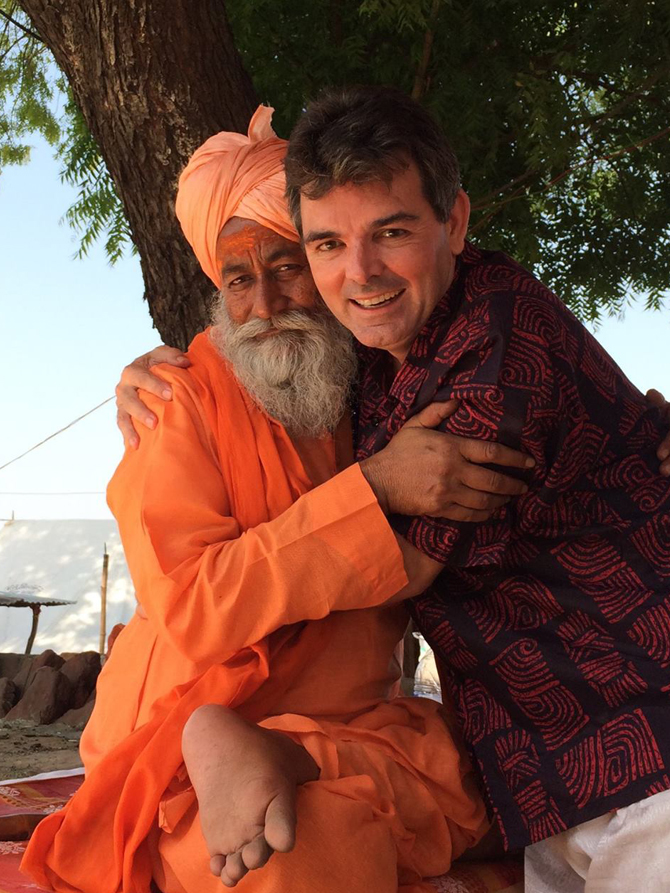


Photograph: Kind courtesy Charles Thomson/Facebook

Biharilal Thomson is a white Australian who speaks Hindi better than many Indians.

The first time he saw a non-white person was as a 10 year old. His mother had invited an Indian yogi from Bihar into their home in Australia and asked her son to share his room with the sadhu for a few weeks.

“I had only seen white Australians till then, not even native Aboriginals — and here was an Indian in a langoti in my room!” he exclaims in good humour, sitting in a film producer’s home in suburban Mumbai, wearing a kurta-pajama and a yellow stole.

In the two hour conversation, he only speaks Hindi, a language he learnt in the streets, trains and buses of Bihar where he had arrived at age 13 in December 1974.

He loved his new home on the banks of the Ganga so much that he did not return to Australia for the next 11 years. Accounts of his experiences in India’s rural underbelly in the 1970s-1980s, include encounters with dacoits on horseback on at least two railway journeys.

“I saw real sadhus, I saw real dacoits — and I thought I had reached an amazing place,” says Biharilal with a grin. His life experiences, he says are so unbelievable that he sometimes thinks it is like a film.

It also reveals an India of another time — one that was simpler, wilder, unfamiliar and distant from what it is today.

“India was friendly with the Soviet Union, and I came across Indians who were desperate to emigrate to the USA, Canada or UK — not to the USSR.”

“The other thing that was common was cycles. Only the DM (district magistrate) and SP (superintendent of police) had cars — and in the trains people sometimes travelled with their own cooks!”

After going back to Australia in 1985, he returned to formally work in India in 2011.

India has seen a giant leap ahead since, and he has spent nearly 16 years here, but one question posed to him that hasn’t changed over the years is — “Why did you come to India?”

“This is what I am routinely asked, especially by the youth. They ask ‘Why have you come here when we want to settle abroad?’,” says Biharilal, who applied for Indian citizenship in 2014 and hopes to hold an Indian passport soon.

“The other thing I am amazed with is this craze for English. Even if I speak to those who know Hindi in Hindi, they reply in English!”

“Why?”

His fluency in Hindi has fetched him invites to Hindi events by the Indian high commission in Australia, to symposia at Savitribai Phule Pune university and Delhi’s Hansraj College. He has anchored a few film festivals and done some acting roles.

It has also brought him an FM radio show that he hopes to receive a confirmation for by April.

“In independent India it will be the first time that an angrez will do a radio show in Hindi,” he says enthusiastically.

Not wanting to be boxed into roles of the typical gora speaking tooti-phooti Hindi, he refers to the accomplished actor Tom Alter.

“He is an asli Hindustani, I’m nakli, but because earlier directors made him speak broken Hindi like an angrez, people thought he was English.”

“People didn’t know he was Indian, a Padma Shri, who spoke fluent Hindi and Urdu.”

Biharilal works at Josh Talks, a media company that invites guests to share inspirational stories. His focus is on all regional languages and tier-2 cities.

He has also done a few acting roles in Hindi and Marathi television serials, and recently appeared in an airline commercial for Scoot, a budget airline owned by Singapore Airlines.

There are quirky benefits to a white man speaking Hindi too — like the number of wedding invitations he receives. Many wedding organisers in the Delhi area send him invitations only to have a foreigner on display!

“I get so many invitations for chief guest. In the marriage season, I’ll be booked,” he laughs.

“People want a gora who speaks Hindi to show at their weddings.”

The move from Australia to India may have been a continental shift, but for Charles ‘Biharilal’ Thompson, it was like coming home.

It was a life introduced to him by his mother, a ballerina and an early convert to yoga, who came to learn at the Bihar School of Yoga in Munger in 1972.

“At that time only 1% of the world travelled by aeroplane,” says Biharilal, who is often recognised as ‘Biharilal Autowale Babu’ after a show on Zee TV where he covered the 2017 Delhi municipal election in a colourful autorickshaw.

He also covered the UP assembly election last year for WION, Zee’s English news channel.

“We used to fly to the Gold Coast to visit my grandparents every year. I made my father promise that he would send me to India instead, if I stood 1st or 2nd in school.”

He stood 2nd and travelled to Calcutta, he says, taking a train to Jamalpur and then a bus to Munger.

“I was shocked to see the poverty in Calcutta, but hearing ‘garam chai‘ by tea vendors in the train was like music,” he remembers.

Eight weeks later, his father returned to take him home.

“I told him I wanted to stay for one more year,” he says over a cup of tea.

“But I stayed for 11.”

blob:https://ishare.rediff.com/d8239350-f845-46f6-86e1-762bd67d53b5

He has now spent 16 years in India — first at the Bihar School of Yoga in Munger, then working in a financial tech start up Eko India, and currently in the entertainment industry.

At the famed yoga school in Munger, he says he learnt yoga and managed the library. He helped in the institute’s office work which would take him to Patna and Delhi.

It was on one these travels that he found himself in the middle of a dacoity.

He had bought a third class ticket and boarded a train from Jamalpur to Patna in Bihar. The TT saw his ticket and upgraded him to first class. Along the way, dacoits came riding alongside the train, detached the first class compartment and started looting passengers.

When they reached his coupe, he held out his hands, and said, “Ruko, ruko! (stop, stop!)”

The dacoits stopped.

“I was a young boy and did not know very good Hindi at that time, so I just managed to ask a dacoit if he had any videshifriend?”

The dacoit said ‘No’ and Biharilal told him that he would be his friend.

“He smiled and did not take anything from me.”

Caught in another dacoity on a railway platform — this time on a dark railway platform surrounded by crop fields — his saffron clothes came to his rescue.

“When they came to me, I just sprang up and started chanting Bum, Bum Bole-Bum, Bum Bole and they said, ‘Yeh toh Ganga jal wala aadmi hai‘ and let me go,” he chuckles.

India was very different then, he says. Yoga institutes were very austere and drew only the most committed.

He remembers the first function he organised which had a generator as backup for electricity failure. When the lights went off and the generator was switched on — the crowd left the sammelan and rushed to get a first glimpse of a generator at the back.

At fifty-seven, Biharilal has seen the arc of India’s history from Indira Gandhi’s Emergency to her assassination to the post liberalisation. He has travelled widely, even taken his mother to the Kumbh Mela.

In between, he returned to Australia and ran a Thai vegetarian restaurant but kept coming back to India.

“I started coming back in the late 80s, but visas were very difficult. Till the Modi Sarkar came, getting a visa to India was not easy. Sushma Swaraj is doing a good job,” he says.

In 2009, a startup started by Biharis, Eko India, offered him a job and he moved to India.

But it was a chance encounter with an Indian student at a Sydney swimming pool that opened the door to acting.

Shashank Ketkar, now a popular television actor, had got talking to him by the pool hearing his Hindi and came to eat at his Thai restaurant.

Few years later, Biharilal would visit him on the sets of his show whenever he was in Mumbai. His kurta-pajama style of dressing and fluency in Hindi caught the eyes of the director and led to small roles. He also got to play an angrez in a Marathi film Shashank Ketkar was acting in.

“I went to Kohlapur and shot a scene where I was seated on a horse in 40 degrees heat. I loved it. I thought I had become Shah Rukh Khan!”

He has also acted in a Hindi suspense thriller that will release this year.

Every day, he receives a large number of messages on Facebook and makes it a point to at least say ‘Ram, Ram’ or ‘Namaste’ to them.

“I feel the whole of Hindustan is made for me. Yeh kamal ka desh hai, yaha aapko sab kuch mil jayega (this is a great country, there is nothing you can’t find here),” he says, adjusting the famous Australian Akubra hat he is wearing and steps into the hot Mumbai sun.

Archana Masih / Rediff.com

Source…..www.rediff.com

Natarajan

The little girl from Mahabalipuram who is taking Indian skateboarding scene by storm…

Eight-year-old Kamali Moorthy, a child prodigy, is the only girl skateboarder and surfer in her hamlet in Tamil Nadu.


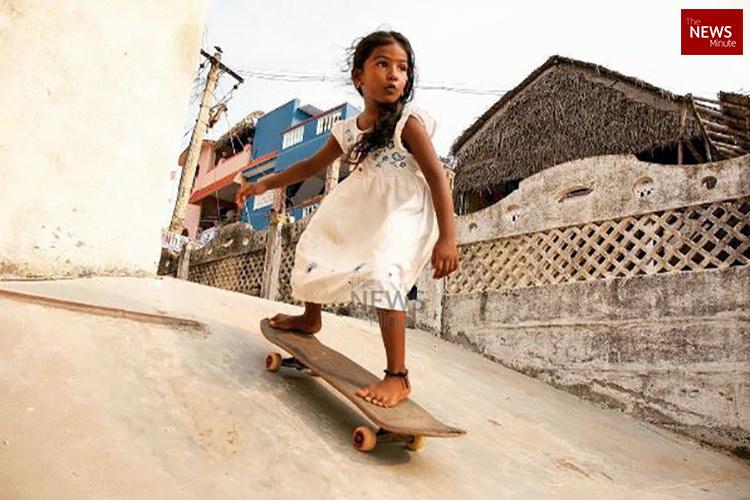
It was 3pm on a Friday. The air was hot and salty, and Fisherman Colony, a seaside village near Mahabalipuram in Tamil Nadu, was baking in the afternoon sun. Seemingly oblivious to the heat, a few children are skateboarding on a quirky new skating ramp set up in the street. Among them was an arresting sight – a small girl effortlessly navigating the concrete slopes of the ramp, setting herself apart from the rest.

With her short hair tied up and two front teeth still taking shape, 8-year-old Kamali Moorthy grins as she drops into the ramp from the granite coping and rolls down the slopes, as if she was born to do so. And this is indeed the common belief among many people, from tourists to the fisher folk, who adore Kamali, the only girl skateboarder and surfer in the hamlet.

“Was she born with a skateboard?” asks Steffano Beccari, an Italian sculptor as he watches Kamali on the ramp.

“Right? she makes it look so easy,” responds Aine Edwards, Kamali’s mentor and an Irish entrepreneur residing in Mahabalipuram.

For the skateboarding community in India, Kamali is a child prodigy. She is not a professional skateboarder yet, but she is already a part of the circuit and goes on tours with other skateboarders. How did this young girl from a fishing hamlet in coastal TN become the next big thing in Indian skateboarding?

Destined to meet

“Kamali was only 3 years old when she started skating on a slope built by Holystoked collective, which builds skating ramps free of cost across India,” Aine says, “Mahabs has always been a surfer’s town, and skateboarding is concrete surfing, so it goes hand-in-hand here.”

Velu, a well-known surfer and Kamali’s uncle’s friend taught her and her little brother, Harish, how to balance themselves on a skate board, she says. “He even gifted them two boards. Ever since those baby steps, Kamali has been on a roll, quite literally, teaching herself new tricks every day and skating to her heart’s content.”

However, it was when world-renowned skater Jamie Thomas visited Mahabs as part of a brand promotion event few years ago, that Kamali got her first big break.

“I was down the end of the street and one of my friends mentioned that there was a pro skate-boarder in town. Just then, Kamali came out in a white dress with a skate board in her hand and Jamie Thomas was by the beach. I went and asked him if I can introduce him to a little girl. The rest is history,” says Aine, adding that they were destined to meet.

For Aine, it was just surreal to watch Jamie and Kamali skateboard together.

“What was merely a chance encounter lasted 3 to 4 hours. Jamie changed all his plans and taught her new tricks,” Aine says, “And just like that, he took Kamali’s skills up by a few notches. It was magic.”

“I learned a lot of new tricks from Jamie which I have been practicing. He taught me to drop in from the big one (taller part of the ramp) and to skate through steeper slopes. Then he taught me this cool trick called rock to fakie which I’m not sure how to explain” Kamali chips in with excitement. A talkative child, who is not shy to speak up, Kamali has more than just the sporting talent, she has confidence.

Jamie even sent Kamali a skateboard, on which she has been practicing ever since. Every day, she takes her board and goes to the ramp opposite to her house to hone her skills. However, Kamali’s potential, Aine explains, is not limited to the ramps in her village.

“Last year, we took a bunch of kids, including Kamali, to Mangaluru where Holystoked set up a skate park. She skated non-stop. She dropped in from the top of the ramp which is twice as tall as the ramp she was used to back home. After she got back, she was dejected as she had to go back to the smaller ramp. It was like giving a kid a big candy and taking it back,” laughs Aine.

Skateboarder in the surfers’ family

Aine and Kamali were introduced to each other through a surfer friend who stayed in a homestay atop Kamali’s house. Kamali’s chirpy presence instantly drew everyone to her, and Aine too was charmed the moment they met.

“She was quite a character even then. A lot of fun to hang out with. We soon started going to the ocean to surf and she gradually picked up the art of riding the waves,” Aine recollects.

Unlike the other girls in the town, Kamali was born into a family of surfers and hence it came naturally to her, Aine explains.

“Surfing is in her blood. Kamali only started skating regularly during her school summer holidays, as there was no one to take her surfing. Now she can catch green waves and go sideways on her own, which is quite impressive,” says Aine.

“She has two skateboards and there’s a skating park conveniently located opposite to our house. She has been skateboarding almost every day since she was three. I sometimes think she uses her board more than her feet,” Kamali’s mother Suganthi says.


With the surf season beginning in March, Aine says that Kamali is excited to hit the waves again.

Skateboarding into the future

Living with her single mum, Suganthi, and grandparents, Kamali and her four-year-old brother Harish are the first-generation English medium school goers. So, they have to strike a balance between their formal education and sport. But with growing popularity, a lot of the residents around Mahabs want to send their kids to skate. And many of them even ask if Kamali can teach their children, explains Aine.

“The teachers in her school are very encouraging. Some of them wanted to get Kamali to teach skating to her classmates as part of the school’s extra-curricular activity,” says Aine.

“All said, this is still a conventional fishing village and the girls are brought up pretty traditionally. Many in this village don’t understand this culture of skating and surfing. For them it is something that has infiltrated from the West and they wonder what all the fuss is about?” says Aine.

Despite these challenges, Kamali, Harish and several other skater kids aim to shatter stereotypes and become mainstream skateboarders.

Aine and other surfing enthusiasts in Mahabs want to promote the sport in and around the village by setting up more and better ramps in the future. However, when asked about promoting skating through competitions, she remains sceptical, “She is too young to compete professionally. But besides this, skating much like surfing, is a soul sport. Although there are quite a few surfing contests, you do it not as a competition but for the love of the sport.”

Source ::::: Sreedevi Jayarajan in http://www.thenewsminute.com

natarajan


Say it with a Post Card ….” Post Crossing ” is the way !

‘Postcrossing’ members meet in Metro rail

At a time when social media networks have taken over communication, a few people still find charm in sending postcards.

What’s fascinating is that they send the postcards to strangers in some corner of the world and receive one from some other corner. The idea of ‘Postcrossing’ is to exchange postcards to anyone in the world through the website http://www.postcrossing.com where the addresses of registered members are available.

On Sunday, the ‘Postcrossing community’ in Chennai held its meeting in the Chennai Metro Rail. They boarded at Nehru Park and alighted at the airport for a discussion.

G. Prakashraj, a 21-year-old engineering student of Anna University recollects how he chanced upon the initiative. “I found the website and started off in a small way. We meet at least twice or thrice a year. For a change, we decided to meet in the Metro today,” he said.


“Have you ever received a postcard from an underwater post office? I have. That’s how exciting it can get,” he says, recollecting about the postcard he got from Vanuatu, an island nation located 1,000 miles east of northern Australia.

Arun Kumar Narasimhan, a member of the group, says he was fascinated to get a postcard on steam engines all the way from Finland. “This encourages people of all ages to continue writing letters and sending postcards in this digital age.” It also brings in new friends. Recently, the Chennai group met its Mumbai counterpart.

Mr. Prakashraj is planning to visit Bhutan with his postcrossing friend. “That’s what life is all about. Meeting new people and gaining new experiences,” he says.

Source…..www. the hindu.com

Natarajan

Hyderabad Girl Scripts History, Wins India’s First Gymnastics Medal in World Cup…!

The Gymnastics World Cup 2018 in Melbourne will go down in history as India got its first ever bronze medal in the women’s vault event.

The feat was achieved by Aruna Reddy, who finished after Slovenia’s Tjasa Kysslef and Australia’s Emily Whitehead, with a score of 13.649. A total of 16 countries were part of the World Cup series event this year.

The 22-year old dedicated her stupendous win to her late father, B Narayana Reddy, who had been instrumental for his daughter’s entry into the field.                     

Aruna with her Bronze medal. Source: Facebook.

Realising that Aruna had the agility and build for a gymnast, Narayana had her enrolled at the Lal Bahadur Shastri stadium in Hyderabad at the age of five.

“I owe everything to him, and if he had been alive and seen me on the podium today, he would have been so happy. He was there in my days of struggle, but couldn’t watch me win,” said an emotional Aruna to The Indian Express.

The Hyderabadi lass, who is a former black belt and Karate trainer, had initially trained under the guidance of coaches Swarnalatha and Ravinder. Later, Swarnalatha’s husband Giriraj took over as Aruna’s mentor after realising her immense potential and was her instructor until his untimely death in 2008.

Then, coach Brij Kishore took Aruna under his wing, and it is under his guidance that the budding gymnast blossomed and went on to clinch many medals at three National Games she had participated in, with the first one being in 2005.

In 2014, Aruna had aroused some hope for Indian gymnasts when she secured the 14th position at the qualification round of Vault apparatus at the Commonwealth Games along with a ninth place finish at the Asian Games.

Aruna came back to the fore when she had finished sixth in Vault during the 2017 Asian Championships.

The young athlete is determined to give her finest performance in the upcoming international events.

“The sad thing about this sport is that once you cross the age of 23-24, it becomes difficult to perform because the body doesn’t remain as flexible. A gymnast’s career is short. That’s why I want to make the most out of things before I turn 23,” she told Deccan Chronicle.

Aruna is also part of the Indian gymnastics contingent for the 2018 Commonwealth Games which will be held in Gold Coast, Australia.

We congratulate the young woman on her extraordinary win and wish her luck in all her future endeavours.

Source….www.the betterindia.com

natarajan