Revisiting History …A Harappa in Tamilnadu …!!!


Brick buildings, the drainage system excavated in Keezhadi village are on par with those found in Harappa, reports A Ganesh Nadar/Rediff.com
OLYMPUS DIGITAL CAMERA

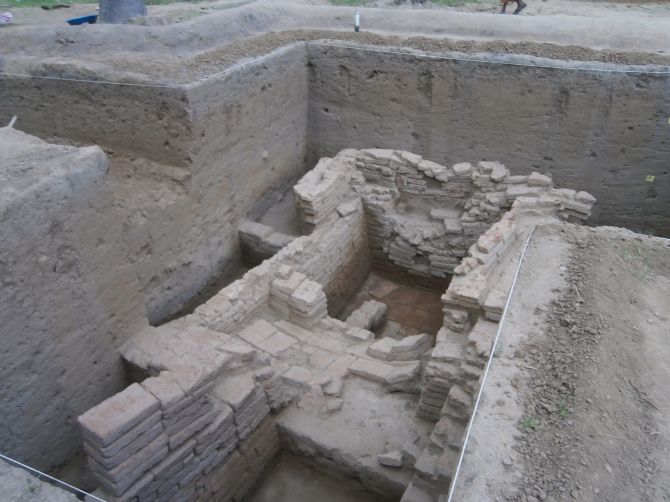
IMAGE: A water tank with feeder channels discovered during excavation at Keezhadi village in Sivaganga district, Tamil Nadu. All photographs: A Ganesh Nadar/Rediff.com

A major excavation by the Archaeological Survey of India of a Sangam era settlement is making big news with its amazing discoveries.

About 12 km from Madurai on the highway to Rameswaram, a large coconut field on the banks of the Vaigai river in Keezhadi village of Sivaganga district is being excavated, where Roman artefacts and vessels with writings in the Brahmi script have been discovered.

Brahmi is the earliest script which the Tamils used during the Sangam period, which roughly extended from the 3rd century BC to the 3rd century AD. There were three dynasties during this period: The Cheras, the Cholas and the Pandyas who traded with the Romans. After the 6th century AD, the Grantha script replaced Brahmi.

In the 13th century AD, this area was called Kuntidevi Chaturdevi Mangalam and there are no records from before that period. This area is spread over about 80 acres and covers a radius of about 3.5 km.

Since the ASI, to seek permission for the excavation, had to give the owners of the land a written assurance that they will get it back in the same condition, ASI staff refill the digs after photographing and collecting the artefacts.

The first survey in the area commenced in 2013, the excavation was conducted in 2015 and again in 2016. The ASI plans another excavation next year, but that has to be sanctioned by the Survey’s headquarters in New Delhi. Students from Chennai University and the Krishna Arts College helped the ASI in the current round of digs.

OLYMPUS DIGITAL CAMERA

IMAGE: Burnt tile pieces recovered from the site.

In the present phase of excavation — apart from the Roman artefacts and vessels with Brahmi text — relics confirming the presence of handicrafts like weaving, ship-building, metal working, carpentry, rope-making, ornament-making, making of ivory products, tanning etc during the Sangam period have been found.

Nails and other iron and ivory products have been found, which confirm the presence of this town during the Sangam period. Structures built with bricks and mortar have also been unearthed.

A team of ASI experts — including Superintendent K Amarnath Ramakrishna, Assistant Archaeologists Rajesh and Veeraraghavan — is involved in the excavation work, which began on January 18 and is likely to continue till September.

The ASI officials say the settlement was more than 2,000 years old, and dates to the Sangam era.

So far, about 3,000 ancient artefacts, including a signet made of clay with an ornamental design, have been excavated.

According to the ASI officials, the ancient settlement had an underground drainage system which was on par with the Harappan system. The sewage drains had been laid with baked clay pipelines, which are still visible.

The drainage system is similar to the one that was found in Harappa, the ASI officials said.

Apart from signets, arrows, weapons made of iron and copper, rare ornaments have been found, ASI Superintendent Ramakrishna said.

“It is very rare to find the constructions intact. The findings threw more light on the Sangakaala (Sangam era) Tamil civilisation,” he added.
OLYMPUS DIGITAL CAMERA

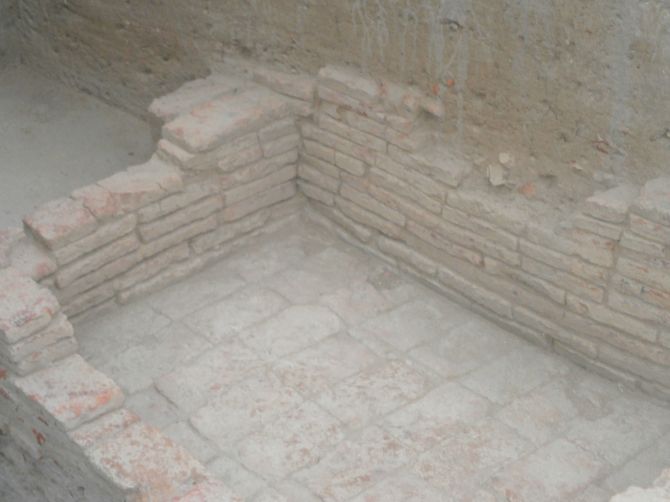
IMAGE: ASI archaeologists have excavated rare Sangam-era brick buildings at Keezhadi village.

This town was a residential area, Assistant Archaeologist Rajesh said, and they have discovered brick buildings in it, which were very rare during that time.

The ASI team surveyed the banks of the Vaigai in 2013-2014, checked out 293 sites for excavation, and chose the present site.

As many as 43 excavations were conducted last year and 1,800 artefacts found. This year, 53 excavations have been conducted and 3,000 items discovered and preserved.

Among the artefacts were semi-precious stones, glass, shells, burnt bricks, tusk, and iron. Products used by people in their day-to-day lives were recovered.

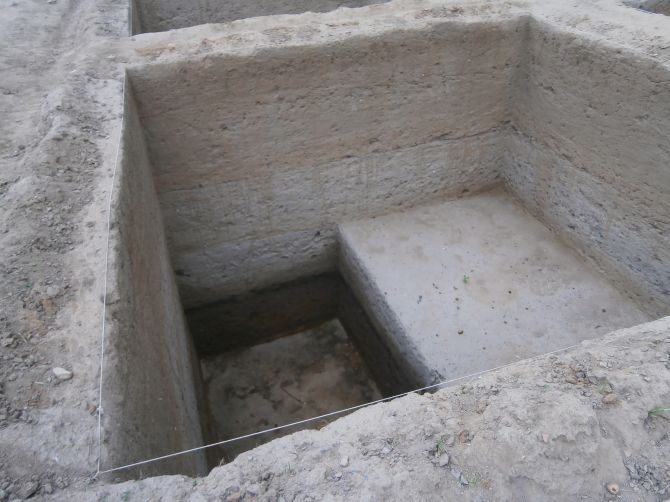
There were plenty of small water tanks made of bricks and mud. The water tanks were fed through well-laid channels, which are still present. Though most of the place looks residential, some business centres were also found.

They have found roof tiles and nails which suggest that the buildings were storied. Vessels with names written in the Brahmi script have been found, names like ‘Sattan, Thisan, Chandan, Inavadan, Muyan’ and ‘Udhiran’.

“The date we are looking at is between the 3rd century BC and the 3rd century AD, which was the Sangam period. Carbon dating is still to be done,” Rajesh said.
OLYMPUS DIGITAL CAMERA

IMAGE: A water tank unearthed in the excavations.

This is the second phase of the ASI excavation and the team has sought permission for another one.

“There has been no important excavation in south Tamil Nadu, so we want to do this extensively,” Ramakrishna said. “The history of this area has not been properly understood. In the third phase, we will learn more.”


A Ganesh Nadar / Rediff.com

Source…www.rediff.com

Natarajan
Man lives 555 days without a Heart …

1465822719821

While waiting for a human heart transplant, Stan Larkin lived 555 days without the organ at all.

To passers-by, the 25-year-old Ypsilanti, Michigan, resident appeared to be a typical young adult. He enjoyed taking his three toddlers to the park and hanging out with his younger brother, Dominique.
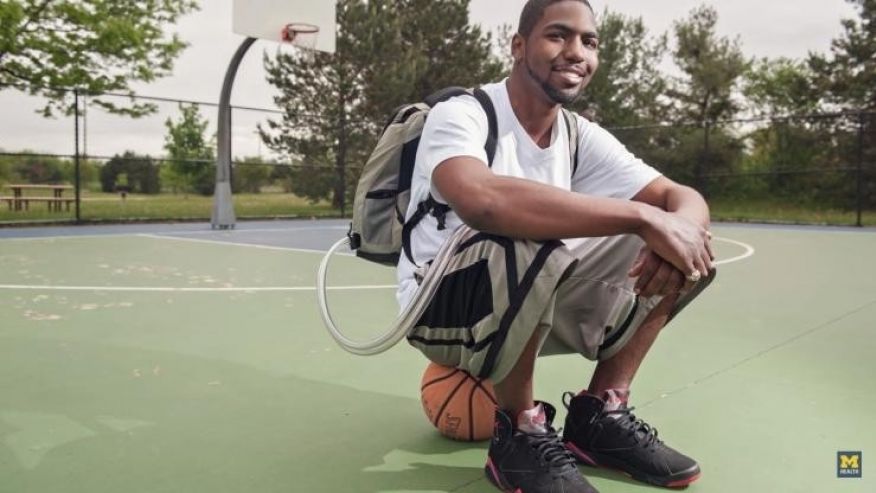
What wasn’t obvious was that a gray backpack Larkin carried was what kept him alive. Inside that bag was the power source for an artificial heart pumping in his chest.
Larkin’s real heart was removed from his body in November 2014. It was replaced with a device that allowed Larkin to stay home instead of in a hospital while waiting to receive a transplant.
It finally arrived this year, in May. Now, Larkin is recovering from his procedure at the University of Michigan Frankel Cardiovascular Center. He is scheduled to return home as early as next week.
“Most people would be scared to go so long with [an artificial heart], but I just want to tell them that you have to go through the fear, because it helps you,” Larkin said. “I’m going home so fast after the transplant because it helped me stay healthy before the transplant.”
At any given time, there are about 4,000 patients nationwide waiting for human heart transplants, according to the U.S. Organ Procurement and Transplantation Network.
Some patients with end-stage heart failure may wait months or even years before a suitable donor heart becomes available, said Dr. Billy Cohn, a cardiovascular surgeon and director of the Center for Technology and Innovation at the Texas Heart Institute.
“Many of these patients have hearts that are so weak, the kidneys, liver and other critical organs will fail while they are waiting,” said Cohn, who was not involved in Larkin’s care. “Many of these patients would die without some form of support,” such as an artificial heart.

‘A machine was going to be my heart’

Larkin didn’t realize that his heart was suffering until nine years ago, when he collapsed without warning while playing in a basketball game. It turned out that Larkin had a genetic form of heart disease called familial cardiomyopathy. His brother, Dominique, 24, was soon found to have it, too.
The condition occurs when heart muscle stretches and enlarges the open area of at least one heart chamber, inhibiting the organ from pumping blood efficiently.
The type of cardiomyopathy seen in Stan and Dominique, called arrhythmogenic dysplasia, causes arrhythmias and failure on both sides of the heart, said Dr. Jonathan Haft, a cardiac surgeon at the University of Michigan who operated on the brothers.
“It’s an awful condition to have,” Haft said. “But the technology available and the technology that is evolving in the field of heart failure is very exciting. … The total artificial heart falls into that category.”
Both brothers eventually progressed to heart failure and cardiogenic shock, and they were equipped with artificial heart devices in late 2014. Dominique stayed in the hospital with his device for six weeks before receiving a human heart transplant.
But Larkin, who was thriving with the device, was the perfect candidate to live outside the hospital, Haft said.
“I was shocked when the doctors started telling me that I could live without a heart in my body and that a machine was going to be my heart. Just think about it — a machine,” Larkin said.

‘It feels like a real heart’

It’s not the first time a patient has lived for a long time with an artificial heart, but Larkin became the first patient in Michigan to go home with the portable device.
The SynCardia temporary artificial heart in Larkin’s chest replaced his failing heart, including its chambers and four valves. Two tubes, exiting the left side of Stan’s body beneath the ribcage, connected the artificial heart to a 13-pound machine called the Freedom Driver.
 
The driver, which was carried in a backpack, not only powered the artificial heart, it delivered pumps of compressed air into the heart’s ventricles, allowing blood to be pumped through the body.
“Stan was very active and did an immaculate job taking care of himself and taking care of the equipment used to keep him alive,” Haft said.
With his life-saving backpack in tow, Larkin played pick-up games of basketball, enjoyed time with his children and rode in the car with his friends.
“It’s just like a real heart,” Larkin said. “It’s just in a bag with tubes coming out of you, but other than that, it feels like a real heart. … It felt just like a backpack with books in it, like if you were going to school.”
Voncile McCrae, Larkin’s mother, often helped him change the bandages covering the holes in his body where the tubes emerged.
We had to be careful so that he wouldn’t get an infection,” McCrae said, chuckling about how she had been scared to touch the tubes and handle the Freedom Driver machine. “Now, I’m a pro.”

‘An amazing brother’

The technology that, temporarily, was a part of Larkin’s body shows just how advanced artificial heart devices have become since the world’s first self-contained artificial heart was implanted in a patient in 2001, said Dr. Laman Gray, Jewish Hospital chair in cardiovascular surgery at the University of Louisville.
Gray was one of the celebrated surgeons who performed that first artificial heart procedure. He has closely followed developments in the fields of cardiac surgery, such as Larkin’s case.
“I think there’s good science here, and there have been really great advancements in this area,” Gray said. “We’re making great progress, and people are living normal lives. There’s definitely a place for total artificial hearts and a need for them.”
Dominique said he and his brother are grateful that their needs were met — and that they survived.
“I have an amazing brother,” Dominique said. “He has been here with me since the beginning and has never let me down. … I’m blessed to have him in my life.”
Source…..By Jacqueline Howard, CNN ….www.stumbleupon.com
Natarajan

Shakuntala Railways: The Only Train Line In India That Is Still Not Owned By India !!!


The Indian Railways is India’s lifeline. Every day millions of passengers avail its facilities.

It has become such an integral part of our lives that we cannot imagine a life without it. The Indian railways were nationalized way back in the year 1951. But today, we are not going to talk about the Indian railways but we are going to talk about of its long forgotten relative ‘The Shakuntala Railways’. I am sure that for most of you this sounds a bit alien. Hearing the name you might think of it as a name of some train or maybe a little-known rail zone.

Shakuntala Railways is one of only a few operational railway lines in India that remains with private owners and perhaps the only one that belongs to a British firm.

Beyer.Garrett

But Shakuntala is neither one of them. In fact, it is an independent railway which does not come under the Indian Railways. So, technically the Indian Railways does not enjoy a monopoly. When Nationalization happened in 1951, Strangely this line was left alone. Interestingly till date, nobody knows the exact reason why this line was never de-privatised.

The birth of Central Province Railway Company (CPRC) or The Shakuntala railways took place way back in 1910. It was founded by a British Firm called Killick-Nixon.

11travel-kalka

It was formed during the British Raj. During those times, most of the rail lines were operated by individual firms. The location of the track was quite strategical as this route was used to transport cotton from Vidharba. This cotton then made its way to Manchester.

During those times, there was a deal between the CPRC and the Great Indian Peninsular Railway (GIPR). This deal stayed in place even after GIPR became Central Railways.

Soon, not only cotton but the line was used even to ferry passengers. The GIPR used CPRC’s lines to run its trains and paid a compensation or rent to the company. The deal continued even after GIPR was replaced by the Central Railways. To this day, the Central Railways pays the British firm a compensation for using its lines. Interestingly, in recent times, the Indian Railways has not paid the decided rent instead has been adjusting it from the cost of repairs and maintenance.

Unlike most train lines in India, this train line still uses a narrow gauge.

The rail line itself is quite unique as the unlike most of the rail lines that are broad gauge lines, Shankuntala railways still use narrow gauge lines. The British company still gets more than 1 crore rupees from the Indian Railways for running a train on its tracks called the Shakuntala Express.

The Shakuntala Express is a passenger train that runs from the towns of Yavatmal to Murtijapur

Shakuntala-Express-yavatmal-train-service-suspended

The train runs through the beautiful cotton growing areas of Achalpur, which falls under Amravati division. If you are ever lucky enough to board this train then this train journey is sure to take you back to the 19th century. Everything about it is old school. It seems that when modernisation happened everywhere it forgot about poor Shakuntala.

Every day it covers just one return journey and even today it is a lifeline for hundreds of poor people, who cannot afford to take the road, as it almost 5-6 times the train’s fare

It covers a journey of almost 190Km in about 4 hours.  For these people, it is the cheapest means of transport and they can’t imagine their lives without it. The train runs through a narrow gauge which itself gives it a very toy- train kind of feeling.

It still runs on a steam engine and the rail signals have been there right from the British Raj

Most of the official works are also done manually. In times when our trains run on electric engines ,  Shakuntala Express still uses an old steam engine. Another interesting thing that you would find when you board this train is that all the existing rail signals are still from the British era with the words ‘made in Liverpool’inscribed on it.

This journey literally takes you on a trip down the memory lane.

Source….Abir Gupta in http://www.storypick.com

Natarajan

படித்து மெய் சிலிர்த்தது ….!


“இன்று மாலை காஞ்சிபுரம் மகா பெரியவா பிருந்தாவனம் சென்றிருந்தேன். அற்புதமான தரிசனம் (இரவு ஆரத்திக்குப் பின் எடுக்கப்பட்ட படத்தை இணைத்துள்ளேன்). மகா பெரியவா சரணம்.
கடந்த 5.6.2016 ஞாயிறன்று கோவைப்புதூர் பிராமண சேவா சங்கத்தின் சார்பாக அங்குள்ள சுந்தர விநாயகர் ஆலயத்தில் ‘ஷீர்டி பாபா மகிமை’ என்ற தலைப்பில் சொற்பொழிவு நிகழ்த்தினேன்.
எனது நிகழ்ச்சிகள் குறித்து முகநூலிலும், மெயிலிலும் முன்கூட்டியே பதிவிடுவது வழக்கம். அந்தந்த ஏரியாவில் உள்ள பக்தர்கள் கலந்து கொள்வதற்கு வசதியாக இருக்கும் என்பதால் இப்படி. சமீப நாட்களில் முக்கியமான எனது சொற்பொழிவு விவரங்களை வாட்ஸப்பில் சில குரூப்களிலும் நானே பதிவிடுவது வழக்கம்.
அதுபோல் ஒரு வாட்ஸப் குரூப்பில் கோவை நிகழ்ச்சிகள் குறித்துப் பதிவிட்டேன். அதில் ‘ஷீர்டி பாபா மகிமை’ குறித்து நான் சொற்பொழிவு நிகழ்த்தப் போவது குறித்து அதே குரூப்பில் ஒரு அன்பர் தனது கண்டனத்தைத் குரல் வாயிலாகவே பதிவு செய்திருந்தார். அதன் சாராம்சம் – ‘மகா பெரியவா மகிமை பற்றிப் பேசி வரும் தாங்கள் ஷீர்டி பாபா பற்றி பேசுவது சரியல்ல. இதை ஏற்றுக் கொள்ள முடியவில்லை. கண்டனத்துக்குரியது’ என்பது போல் பதிவு செய்திருந்தார்.
நான் இதைக் கேட்டு விட்டு, எல்லாம் மகா பெரியவா லீலையே என்று விட்டு விட்டேன். காரணம் – ஷீர்டி பாபா பற்றிப் பேசுவது இது முதல் முறை அல்ல. மயிலாப்பூர் ஷீர்டி சாய்பாபா ஆலயத்தில் பாபா பற்றிப் பேசி இருக்கிறேன். பொதிகை ‘குரு மகிமை’ நிகழ்ச்சியில் அவ்வப்போது பாபா பற்றிப் பேசியும் வருகிறேன். எனவே, இவரது கருத்துக்கு முக்கியத்துவம் கொடுக்காமல் விட்டு விட்டேன். என்றாலும், அவர் ஏன் இப்படிப் பேசினார் என்று எனக்குள் ஒரு கேள்வி அவ்வப்போது எழுந்து கொண்டே இருந்தது.
இன்று பெரியவா பிருந்தாவனத்தில் அவரது சந்நிதிக்கு நேர் எதிரில் நான் அமர்ந்திருக்கும்போது இதற்கு பதில் கிடைத்தது, சிலிர்க்க வைத்த ஓர் அனுபவம்.
காஞ்சிபுரத்தில் வசிக்கும் பாரதி என்ற பெண் மகா பெரியவாளின் அத்யந்த பக்தை. இவர் ஒரு மாற்றுத் திறனாளி. என்றாலும், சிரமத்தைப் பற்றிச் சற்றும் பொருட்படுத்தாமல் வீல் சேரில் மடத்துக்கு வந்து விடுவார்.
அவர் இன்று பெரியவா சந்நிதிக்கு எதிரே அமர்ந்திருந்தார். பக்கத்தில் நான் அமர்ந்திருந்தேன். அப்போது, ‘‘உங்ககிட்ட ஒரு விஷயம் சொல்லணும். இங்கே சின்ன காஞ்சிபுரத்துல அமுதானு என் ஃப்ரெண்டு இருக்கா. அவகிட்ட பெரியவா ஒரு அற்புதம் பண்ணி இருக்கா. தோ, அவளே வந்து சொல்லுவா. இங்கேதான் பிரதட்சிணம் பண்ணிண்டிருக்கா’’ என்று ஆரம்பித்தார் பாரதி.
அடுத்த ஒரு சில நிமிடங்களில், பிரதட்சிணத்தைப் பாதியில் நிறுத்தி விட்டு வந்த அமுதாவும் அருகே அமர்ந்தார். அமுதாவே ஆரம்பித்தார். ‘‘எனக்கு மகா பெரியவாதான் எல்லாம். எங்க வீட்டுல தினமும் பூப்பறிச்சு மகா பெரியவா உள்ளிட்ட எல்லா சாமிங்களுக்கும் வைப்பேன். சமீபத்துல ஒருத்தர் என்கிட்ட ஷீர்டி சாய்பாபா விக்கிரகம் ஒன்றைக் கொடுத்தார். அதையும் வீட்டு பூஜையறையில வெச்சிருந்தேன். ஏனோ தெரியலை… அதற்கு பூ வெச்சதில்லை. ஆனா, பிரார்த்திப்பேன்.
திடீர்னு ஒரு நாள் பெரியவாளே என்கிட்ட ‘தினமும் ஷீர்டி பாபாவுக்கும் பூ வை. அவரும் நானும் வேறில்லை’ சொல்றதைப் போல் இருந்திச்சு. ஷாக் ஆகி அடுத்த நாள் முதல் ஷீர்டி பாபாவுக்கும் பூ வெச்சு பிரார்த்தனை பண்றேன்’’ என்றார்.
வாட்ஸப் குரூப்பில் அந்த அன்பர் கேட்டதற்கான பதிலை, இதைவிட வேறு எப்படித் தெளிவாக மகா பெரியவாளால் தர முடியும்?!
என்னைப் பொறுத்தவரை – மகான்களுக்குள் பேதமே இல்லை. என்னைப் பொறுத்தவரை ஆதி சங்கரரும் ஒன்றுதான். ராமானுஜரும் ஒன்றுதான். காவாங்கரை கண்ணப்ப ஸ்வாமிகளும் ஒன்றுதான். என்றைக்குமே நான் பேதம் பார்த்ததில்லை.
மகா பெரியவா சரணம்.
அன்புடன் .
சுவாமிநாதன்  “
Source…. Input from My friend Shri Swaminathan , Chennai thro his mail to me today.
Natarajan

Message for the Day…”Try to understand the kind of divine strength present in all human beings..”.


An individual may be an ideal in one particular sphere. But it is rare to find one who, in all spheres — social, political, spiritual, and economic – is able to guide being an ideal. When we take an overview of our ancient history, we find that Krishna was one such rare individual. He could be regarded as an ideal for the entire world. Truly, if we want to comprehend these ideal aspects of Krishna, we have to push aside, to some extent, the Divinity present in Him and concentrate on the human aspects of His life and work. So long as we concentrate on His divine aspects, the good human qualities in Him will not come to our attention in the proper perspective. Today people are prepared to worship man; but they are not prepared to understand man. Understanding the kind of divine strength that is present in human beings is possible only if we attempt to do so through human nature.SI_20160512

Message for the Day…” Whenever you face obstacles in Life , you should treat it as stepping stones for your success…”


All the pains and difficulties that you get will ultimately turn out as a means to give you happiness and pleasure. Even a diamond of high quality does not get its value unless we cut the facets on it. Pure gold will not be turned into a beautiful ornament unless it is repeatedly put into fire and moulded. Whenever you experience pains, trials, obstacles and tribulations, you should recognise them as paths for obtaining ultimate happiness. So we should be prepared to accept pain. To seek pleasure alone and not to welcome pain is not right. Pleasure comes out of pain. We should recognise that all pain will ultimately end in pleasure.SI_20160607

Message for the Day….” Have faith in Vedas and Sastras…”

SI_20160512

To have faith in the Vedas and to accept the injunctions of the Veda is being regarded by the modern youth as outmoded and uncivilised. Young people today are not making an enquiry as to what is contained in the Vedas or in the Sastras (scriptures). They go further and say that those Have faith in the Vedas people who have faith in the Vedas and the Sastras are only having blind faith. If one argues, after acquainting oneself with the contents of what one is arguing about, one can argue for any length of time, but if a person is arguing without knowing the contents, it is not possible to have an argument. Our Vedas have been teaching us several aspects of Satyam or truth, of Jnanam or wisdom, and ofAnanta or infinity. We should ask ourselves whether the people who describe truth as truth and knowledge as knowledge are foolish, or the people who describe truth as untruth and knowledge as ignorance are foolish.

Message for the Day…” Understand the kind of love and affection that God showers on His Devotees…”

SI_20160607

Acquire the competence to understand the kind of love and tenderness that God showers on His devotees. Pleasure arises from pain and pain results in pleasure. Because the Pandavas were in the jungle for twelve years and hid themselves unrecognised for the thirteenth year, people now appreciate their noble qualities. Because of the many obstacles and troubles that Prahlada encountered, and the punishments meted out to him, the rest of the world now knows how great his devotion was. Prahlada never had tears in his eyes and never exhibited any pain when the demons were harming him. He was simply uttering the name of the Lord and requested the Lord’s presence. His devotion and equanimity in pain and pleasure is a living example even today of what real faith and devotion can do. On the other hand, had Prahlada lived with his father in luxury with care and tenderness, how would his faith be known?

” Sarcasm at its best…” Pl read and share with younger gen… !!!