வரலாறு பேசும் அரிய புகைப்படத்தை விட்டு சென்ற விண்வெளி வீரர்!

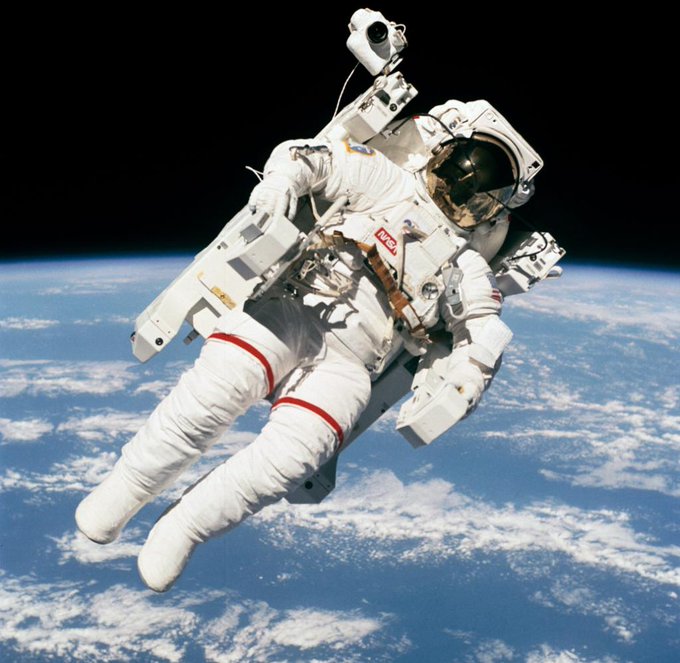
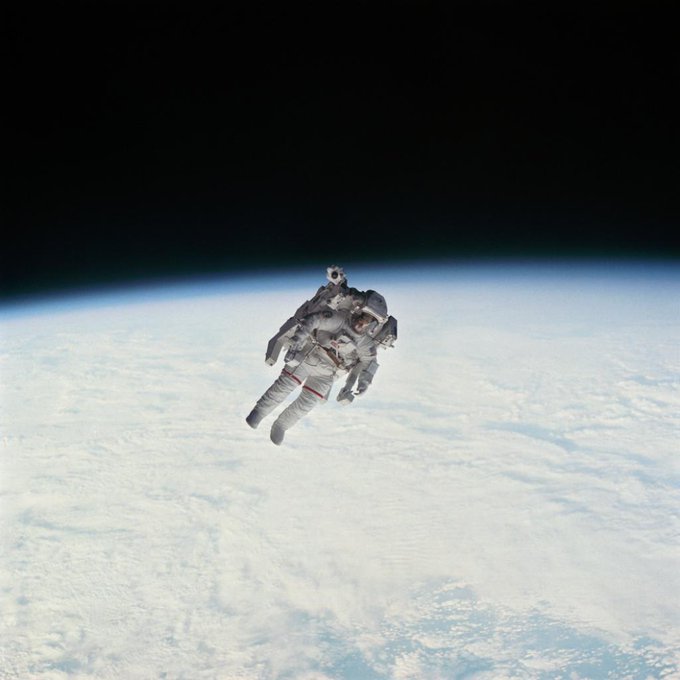
மந்தாரமான கறுப்பு நிற திரை… கீழே பிரகாசமாக படர்ந்திருக்கும்  நீல நிறம். குட்டியாகத் தெரியும் பொம்மை போன்ற உருவம்.. ஏதோ கிராபிக்ஸ் காட்சி போன்று தோன்றலாம். ஆனால் இது விண்வெளியில் பதிவான உண்மை காட்சி. கீழே படர்ந்திருக்கும் நீல நிறம்தான் நாம் வாழும் பூமி. கறுப்பு திரை விண்வெளி. குட்டி பொம்மை போன்று மிதந்து கொண்டிருப்பவர் விண்வெளி வீரர் புரூஸ் மெக்கண்டில்ஸ் (Bruce McCandless).                                                                                                                             


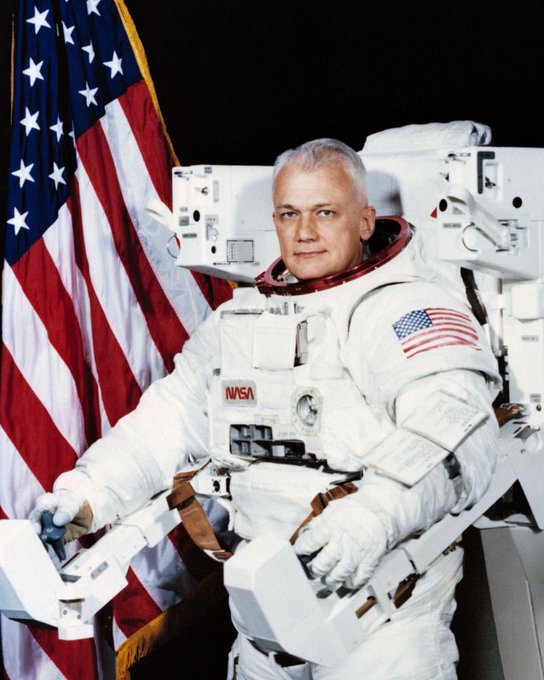
இந்த புகைப்படம் 1984ம் ஆண்டு பதிவானது. எந்த பிடிமானமும் இல்லாமல் சுதந்திரமாக (untethered with nothing) விண்வெளியில் வலம் வந்த முதல் வீரர் என்னும் பெருமைப்பெற்றவர்  புரூஸ் மெக்கண்டில்ஸ். இவர் தனது 80 வயதில் கடந்த 21ம் தேதி காலமானார். அவரை பெருமைப்படுத்தும் விதமான அவரின் சாதனை நிமிடங்களை நாசா வெளியிட்டு வருகிறது. அவரின் இந்த புகைப்படம் விண்வெளி வரலாற்று பக்கங்களில் சிறந்த பக்கமாக விளங்கும் என்று புகழாரம் சூட்டியுள்ளது நாசா!

View image on TwitterView image on TwitterView image on Twitter

We’re saddened by the loss of retired astronaut Bruce McCandless II. Most known for being the 1st human to free-float on a shuttle spacewalk, he also served as the Apollo 11 moonwalkers’ link to mission control and helped launch @NASAHubblehttps://www.nasa.gov/astronautprofiles/mccandless 

Source….www.vikatan.com

Natarajan


Ethiopia’s Churches In The Sky…

The ancient Kingdom of Axum, now a part of Ethiopia, was one of the first nations in the world to adopt Christianity. The religion took strong foothold in 330 AD when King Ezana the Great declared it the state religion and ordered the construction of the imposing basilica of St. Mary of Tsion. Legend has it, that it here that Menelik, son of King Solomon and the Queen of Sheba, brought the Ark of the Covenant containing the Ten Commandments.

By the fifth century, nine saints from Syria, Constantinople and elsewhere had begun spreading the faith far beyond the caravan routes and deep into the mountainous countryside. These missionaries played a key role in the initial growth of Christianity in Ethiopia. The monks translated the Bible and other religious texts from Greek into Ethiopic allowing the locals who couldn’t read Greek to learn about Christianity. The religion’s mystical aspects found a curious draw among the young. As Christianity grew, a series of spectacular churches and monasteries were built high atop mountains or excavated out of solid rock, many of which are still in use today.                                                


A priest is seen looking out of Abuna Yemata church’s only window. The church is located on aside of a cliff, 650 feet up from the floor of the valley. This image is from a recently published book “Ethiopia: The Living Churches of an Ancient Kingdom.”

These ancient churches were often built in the most impossible of places. A good example is the Abuna Yemata Guh in Tigray, in Northern Ethiopia. This 5th century church is perched 650 feet up in the sky, on the face of a vertical spire of rock. To reach it, one has to climb without any climbing ropes or harnesses, inching along narrow ledges and crossing a rickety makeshift bridge. The final leg of the journey involves scaling a sheer 19 feet-high wall of rock. The church was founded by Abuna Yemata, one of the nine saints, who chose the secluded spot as his hermitage.

Photo credit: Andrea Moroni/Flickr

Source….Kaushik in http://www.amusing planet.com

Natarajan


Toronto’s Camouflaged Electric Substations….

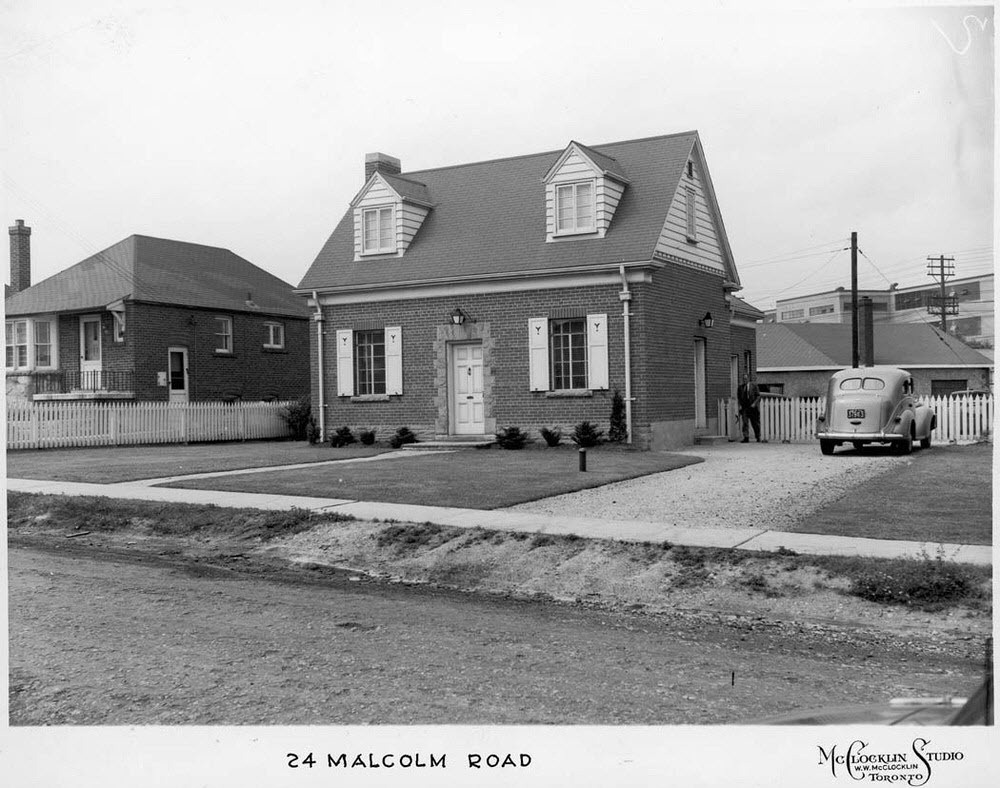
More often than not, industrial infrastructures are an eyesore, especially when they are smack in the middle of a beautiful city like Toronto. So for the past hundred years, Canada’s second-largest municipal electricity distribution company, Toronto Hydro, has been disguising substations into quiet little houses that blend right in with the neighbourhood. Some appear like grand Georgian mansions or late-Victorian buildings, while others look like humble suburban homes. Even the most sharp-eyed resident couldn’t tell these faux homes apart. Some are not even aware they are living next door to a transformer.


This is not a house. Photo credit: City of Toronto Archives

Toronto was first electrified in the late 1880s. At that time a number of small private companies were supplying electrical demands. Then in 1908, Torontonians voted overwhelmingly for the formation of a municipal electricity company, and Toronto Hydro came into being in 1911.

From the very beginning, Toronto Hydro was keen not to have ugly conglomerations of metals, switches and wires robbing the city’s urban and suburban neighbourhood of its beauty. So each substation they built was wrapped around by a shell of masonry and woodwork carefully designed to resemble residential homes. A driveway and some low-maintenance shrubs in the garden helped complete the deception.

The earliest known substation, dating from 1910 and located at 29 Nelson St. in the John and Richmond area, looks like a four-storey Victorian-era warehouse or perhaps an office building with a grand entrance and raised horizontal brick banding. One of the grandest of these structures is the Glengrove Substation, built in 1931. This Gothic building with its large oak doors, leaded glass windows and long narrow windows reminiscent of Medieval times, it’s no wonder that Toronto Hydro employees call it the “Flagship” or the “Castle”.

As architectural styles evolved, so did the camouflage. From grandiose buildings of the pre-depression era to ranch style houses that became popular with the booming post-war middle class of the 1940s to 1970s, to progressively more modernist structures with flat roof and smooth white exterior. These substation homes were so authentic that they were sometimes broken into by burglars.

There used to be over 270 substation homes scattered across Toronto. According to Spacing Toronto, as of 2015, 79 of these substations are still active.

Source….Kaushik  in http://www.amusingplanet.com

Natarajan


பறவைகள் மோதிய விமானம்… ஆற்றில் இறக்கிய பைலட்… விமான வரலாற்றில் ஒரு ‘வாவ்’ சம்பவம்!


2009 ஆண்டு ஜனவரி 15 குளிர்காலத்தின் வியாழக்கிழமை. நியூயார்க் நகரம் எப்போதும் போல இயங்கிக் கொண்டிருக்கிறது. லகுவார்டியா விமானநிலையம் பரபரப்பாக இருக்கிறது. விமானங்கள் வருவதும் போவதுமாக இருக்கிறது. விமானங்களுக்கு ஓடுபாதையில் இறங்க வேண்டிய நேரத்தை சிக்னலாக வழங்கிக் கொண்டிருக்கிறார்கள். லகுவார்டியாவிலிருந்து US ஏர் பஸ் 1549  A320 என்கிற விமானம் நார்த் கர்லோநியாவில் உள்ள சார்லோட்டி விமான நிலையத்திற்குப் புறப்படத் தயாராகிறது. 66 டன் எடை கொண்ட விமானம் இரண்டு என்ஜின்களைக் கொண்டது. இரண்டு என்ஜின்களும் 40000 குதிரைத் திறன் கொண்டவை. பைலட்டின் பெயர் செஷ்லே சுல்லேன்பெர்கர் (Chesley Sullenberger). வயது 57. இவர் அமெரிக்க விமானப்படையில் பைலட்டாக  இருந்தவர். மொத்தம் 19663 மணி நேரம் பறந்தவர். அதில் 4765 மணி நேரம் A320 விமானத்தில் பயணித்தவர்.

ஏர் பஸ் 1549  A320 விமானத்தில் 150 பயணிகளும் ஐந்து விமானச் சிப்பந்திகளும் பயணிக்கிறார்கள். விமானம் கிளம்புவதற்கான ஒப்புதல் நிலைய அதிகாரிகளிடமிருந்து கிடைக்கிறது. விமான நிலையத்தின் நான்காவது ஓடுபாதையிலிருந்து மாலை 3:24:56 நொடிகளுக்கு விமானம் புறப்படுகிறது.

விமானம் 2818 அடி உயரத்தில் 343 கிலோமீட்டர் வேகத்தில் பறந்துக் கொண்டிருக்கிறது. விமான முகப்புப் பகுதியில் விமானத்தின் முன்பாக பறவைகள் வருவதை பைலட் பார்க்கிறார். அவை கனடா கீஸ் வகை பறவைகள். 3:27:11  பறவைகள் விமானத்தின் எஞ்சின் பகுதியில் மோதுகின்றன. பறவைகள் மோதியதில் விமானத்தின் இரண்டு என்ஜின்களும் பழுதாகின்றன. விமானம் பழுதானதை உணர்கிற பைலட் உடனே விமான நிலைய கட்டுப்பாட்டு அறைக்குத் தகவலைத் தெரிவிக்கிறார். 3:27:33 வினாடிகளில் “விமானத்தில் பறவைகள் மோதிவிட்டன.  உடனே விமானத்தை லகுவார்டியாவில் தரை இறக்க வேண்டும் ஓடுபாதையை கிளியர் செய்து கொடுங்கள்” என்கிறார். நிலைமையின் தீவிரத்தை அறியாத விமான நிலைய அதிகாரிகள் விமானத்தை நியூ ஜெர்சியில் இருக்கிற டேடேர்போரோ விமான நிலையத்தில் இறக்குங்கள் எனத் தகவல் சொல்கிறார்கள்.

“விமானத்தை டேடர்போரோவில் இறக்குவதற்குச் சாத்தியமில்லை” என பைலட் பதிலளிக்கிறார். விமானம் ஜார்ஜ் வாஷிங்டன் பாலத்திற்கு மேலாகப் பறந்துக்கொண்டிருக்கிறது. பயணிகளுக்கு எந்தத் தகவலும் வழங்கப்படவில்லை. விமானத்தில் இருக்கிற 150 பயணிகளையும் காப்பாற்றியாக வேண்டிய அசாதாரண சூழ்நிலை. நொடிக்கு 18 அடி கீழ் நோக்கி விமானம் சென்றுகொண்டிருக்கிறது. தீவிரத்தை உணர்கிற பைலட் 3:28:10 நேரத்தில் விமானத்தை அட்சன் பகுதியில் இறக்குவதாக விமான நிலையத்திற்குத் தெரிவிக்கிறார். ஆனால், விமான நிலைய அதிகாரிகள் ”அட்சன் பகுதியிலா வேண்டாம்” என்கிறார்கள். காரணம் அட்சன் என்பது ஓடுதள பகுதி அல்ல என்பதே. நியூயார்க் நகரத்தில் இருக்கிற ஒரு ஆறு. ஜார்ஜ் வாஷிங்டன் பாலம் இருக்கிற நகரின் பரபரப்பான பகுதி. மொத்த விமான நிலையமும் பதற்றத்திற்கு வருகிறது. அட்சன் ஆறு ஐக்கிய அமெரிக்காவின் நியூயார்க்கின் கிழக்குப் பகுதியின் ஊடாகச் செல்லும் ஆறு. வடக்கிலிருந்து தெற்கு நோக்கி ஓடும் ஆற்றின் நீளம் 507 கிலோமீட்டர்கள்.

வேறு வழியின்றி விமானத்தை பைலட் அட்சன் ஆற்றுப் பகுதியில் இறக்க முடிவு செய்கிறார். பயணிகளுக்கு நிலைமை எடுத்துச் சொல்லப்படுகிறது. விமான ஒலிபெருக்கியின் மூலம் விமானிப் பயணிகளுடன் உரையாடுகிறார். பயணிகள் பயத்தில் உறைகிறார்கள். அடுத்து என்ன நடக்கும் என்பதை யூகிக்க முடியாத சூழல். விமான நிலையக் கட்டுப்பட்டு அறையில் இருக்கிற அதிகாரிகள் நியூயார்க் கடற்படைக்குத் தகவல் கொடுக்கிறார்கள். கடற்படையின் படகுகள் கப்பல்கள் குறிப்பிட்ட இடத்திற்குக் கிளம்புகின்றன. பாதுகாப்பு ஹெலிகாப்டர்கள், படகுகள் என அட்சன் ஆறு மிகப்பெரிய விபத்திற்கு தயாராகிறது

3:30  நிமிடத்திற்கு பைலட் விமானத்தை அட்சன் ஆற்றில் இறக்குகிறார். ஆற்றுக்கும் விமானத்திற்குமான இடைவெளி 500 அடியிலிருந்து தீவிரமாகக் கண்காணிக்கப்படுகிறது. 100 அடி, 50 அடி, 20 அடி, 10 அடி எனக் குறைகிறது. 0.  அவ்வளவுதான். அதிபயங்கரச் சத்தத்துடன் விமானம் ஆற்றில் பாய்கிறது. அட்சன் பகுதிக்குப் பக்கத்தில் இருக்கிற மக்கள் பேராபத்தை உணர்கிறார்கள். விமானம் ஆற்றில் பாய்ந்த அடுத்த நிமிடம் ஆற்றில் மிதக்க ஆரம்பிக்கிறது. நல்ல வேளையாக விமானம் தீப்பிடிக்கவில்லை. விமானத்தின் தானியங்கி கதவுகள் மூடிக்கொள்கின்றன. கதவுகள் மனித முயற்சியில் திறக்கப்படுகிறது. அடித்துப் பிடித்துக்கொண்டு பயணிகள் விமானத்திலிருந்து வெளியே வருகிறார்கள். சிலர் பதற்றத்தில் வெளியே குதிக்கிறார்கள். குளிர்காலம் என்பதால் நீர் ஐந்து டிகிரி குளிராக இருக்கிறது. விமானத்திலிருந்து வெளியே வந்தவர்களை குளிர் வாட்டி வதைக்க ஆரம்பிக்கிறது. விமானத்தின் இறக்கைப் பகுதிகளில் ஏறி நின்று  கொண்டு உதவிக்கு அழைக்கிறார்கள். விமானம் ஆற்றில் இறங்கிய நான்கு நிமிடங்களில் கடற்படையின் படகுச் சம்பவ இடத்திற்கு வந்து சேர்கிறது. பயணிகளில் ஒருவர் மாற்றுத் திறனாளி. விமானம் கொஞ்சம் கொஞ்சமாக நீரில் மூழ்க ஆரம்பிக்கிறது. கடற்படை வீரர்கள் பயணிகள் எல்லோரையும் பத்திரமாக மீட்கிறார்கள். படகுகள் மூலம் எல்லோரும் மீட்டு ஆற்றின் கரைக்குக் கொண்டுவரப்படுகிறார்கள். 3:55 நிமிடத்தில் விமானத்தின் கடைசிப் பயணியும் பத்திரமாக மீட்கப்படுகிறார். எல்லோரும் காப்பாற்றபட்டார்கள் என்பதை உறுதி செய்கிற விமான பைலட் கடைசியாக வெளியே வருகிறார். ஐந்து பயணிகள் பெரிய காயங்களுடன் மருத்துவமனையில் சேர்க்கப்படுகிறார்கள். எழுபத்தி எட்டு பயணிகளுக்குச் சிறிய காயங்கள். சிலர் குளிர் காய்ச்சலுக்கு ஆளானார்கள். ஒரு பயணிக்கு விமானத்தின் எரிபொருள் கண்ணில் பட்டதில் பார்வை போனது.

பெரிதாக எந்த அசம்பாவிதமும் அந்த விபத்தில் நிகழவில்லை. பயணிகள் பைலட்டை தூக்கிவைத்து கொண்டாடுகிறார்கள். விபத்து நடந்த இரண்டாம் நாள் விமானம் ஆற்றுப் படுக்கையிலிருந்து மீட்டு நியூ ஜெர்சிக்குக் கொண்டு செல்லப்படுகிறது. விஷயம் நீதி மன்றத்துக்குச் செல்கிறது. விமான நிர்வாகம் விமான பைலட்டை குற்றம் சாட்டுகிறது. விமானத்தை டேடர்போரோ விமான நிலையத்தில் தரை இறக்கி இருக்கலாம்; அதற்கான நேரம் இருந்தது. ஆனால் விமானி அவசரப்பட்டு விமானத்தை ஆற்றில் இறக்கிவிட்டார் என வாதாடுகிறது. விமானி செஷ்லே சுல்லேன்பெர்கர் அந்த நேரத்தில் பயணிகள் உயிர் குறித்து மட்டுமே சிந்தித்ததாகச் சொல்கிறார். அதை ஏற்றுக்கொள்ளாத விமான நிறுவனம் நீதிமன்ற உத்தரவுபடி ஒரு விமானத்தை சோதனை முயற்சியாக விபத்து நடந்த இடத்திலிருந்து டேடர்போரோ விமான நிலையத்தி இறக்கிக் காட்டுகிறது. ஆனால், விபத்துக்குள்ளான விமானத்தின் விமானி ”சோதனை செய்யப்பட்ட விமானிக்கு என்ன நடக்கப்போகிறது எனத் தெரியும். அதனால் அவர் எளிதாக விமானத்தை தரையிறக்கி விட்டார். மேலும் அவர் அதற்காகப் பயிற்சி பெற்றிருக்கிறார். ஆனால் என்னுடைய நிலை வேறு” எனச் சொல்லி வாதிடுகிறார்.

விமான நிர்வாகம் அதை ஏற்றுக் கொள்ளாமல் மீண்டும் ஒரு  சோதனை முயற்சியில் இறங்குகிறது. நடுவானில் விமானத்தின் இரு எஞ்ஜின்களையும் செயலிழக்கச் செய்து டேடர்பெரோ விமான நிலையத்தில் தரை இறக்குகிற முயற்சியில் இறங்கியது. விமானம் பெரிய சுவற்றில் மோதி விபத்துக்குள்ளாகிறது. அனைத்தையும் ஆராய்ந்த நீதிமன்றம் செஷ்லே சுல்லேன்பெர்கர் செய்தது சரி எனச் சொல்லி தீர்ப்பளிக்கிறது. செஷ்லே சுல்லேன்பெர்கர் விமானி பல பதக்கங்களைப் பெறுகிறார். விமான நிறுவனம் பயணிகளுக்கு இழப்பீடை வழங்கியது.

இந்தச் சம்பவத்தை மையமாக வைத்து ‘சல்லி(Sully)’ என்றொரு படம் வெளியானது. டாம் ஹாங்க்ஸ் நடித்திருந்தார்.

Source….George Anthony in http://www.vikatan.com

Natarajan

வாரம் ஒரு கவிதை…”மேகத்தில் கரைந்த நிலா …”

மேகத்தில் கரைந்த நிலா …
————————-
நிலவு உனக்கு மேகமே மேலாடை
மேலாடை உன் முகம் மறைக்க
முழு நிலவு நீயும் இள நிலவாய்
புன்னகைப்பாய் உன் மேலாடைக்குப்
பின்னால் எப்போதும் !
மேகம் கரைந்து மழை பொழியும்
நேரம் கரை புரண்டு ஓடுது மழை
நீர் வெள்ளம் என் மண்ணில் இன்று !
கடற்கரையின்  கரையிலும் கூட
மேகக் கரைசலின் தாக்கம்.. இது
வரை நான் பார்க்காத ஒன்று !
முழு நிலவு நாளில் உன் முகம் காண
வானம் பார்க்கிறேன் நான் இன்று !
மேக மேலாடைக்குப் பின்னால்
மறைந்து இருக்கிறாயா நிலவே ?
இல்லை …நிலவு  நீயும் மேகக் கரைசலில்
கரைந்து கீழே என் மண்ணில் விழுந்து
கடல் நீரில் கலந்து விட்டாயா ? …சொல்லு நிலவே !
Source…My Kavithai as appeared in http://www.dinamani.com dated 4th Nov 2017
K.Natarajan

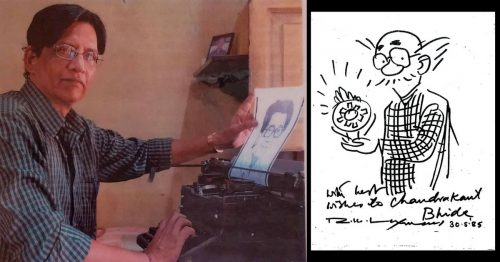
Chandrakant Bhide: Here is Why RK Laxman Was a Fan of this Diligent Typist…

A typist is required to be fast and accurate, and while he proved to be precisely that, Bhide was much more too. Throw in artistic to those set of skills, and you have Chandrakant Bhide.

“Sachin Tendulkar’s curls gave me the most trouble!”

Chandrakant Bhide is a typist by profession. In 1967 he joined the Union Bank of India and worked there for 3 decades.

A rather implausible scenario for Tendulkar’s curls to give him grief, right?

A typist is required to be fast and accurate, and Bhinde proved he was precisely that but more too.

Throw in artistic to those set of skills, and you have Chandrakant Bhide.


Chandrakant Bhide and a typed out sketch of RK Laxman’s the Common Man

“Art helped me meet important people. How else does a modest typist like me get to meet and be appreciated by people like R. K. Laxman and Mario Miranda,” questions Mr Chandrakant Bhide?

Mr Bhide is anything but ‘just a typist’. His art is indicative of his sheer talent and why the likes of the above-mentioned greats were his fans.

Growing up, he always wanted to join an art school – specifically the Sir J.J. School of Art in Mumbai.

But financial constraints forced him to take a more secure job.

“One day I was asked to type out a list of phone numbers, instead of typing a regular list, I made one in the shape of a telephone instrument,” he remembers. That was the beginning of many more artistic endeavours to come.


“I typed out Lord Ganesha using the ‘x’ key and it was published in the Maharashtra Times newspaper in 1975. I slowly started improvising and started using other keys like ‘_’, ‘=’, ‘@’, ‘-’, ‘,’ in my sketches,” recalls Bhide.

His father’s words inspired him to be better and do better. Each sketch takes him about 5-6 hours to complete.


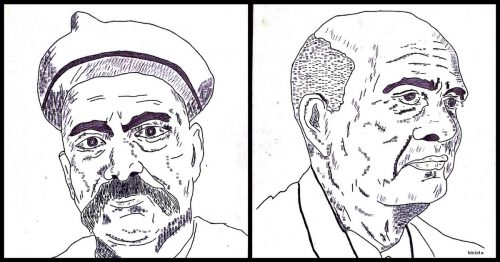
Bhide’s sketches of Bal Gangadhar Tilak and Sardar Patel done on the typewriter

“I hold the paper with my left hand and use the fingers on my right hand to type out the symbols. The different shades in a sketch are added by using a light or a hard touch on the keys. My hands start aching after 10-15 minutes, and so I need constant breaks,” he adds.

One day, Mr Bhide sketched RK Laxman’s, Common Man. It was a time when Xerox machines had just made their appearance. His friend helped him get copies and requested to keep the original.


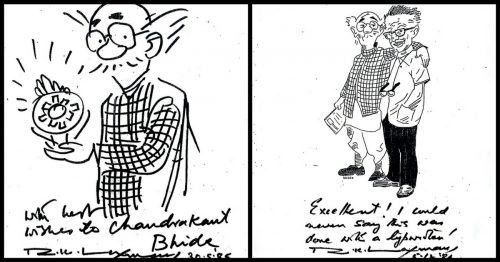
A huge fan of RK Laxman’s work, Bhide has made several sketches of Laxman’s iconic “Common Man”, winning him the famous illustrator’s admiration

“I wanted to show the sketch to R.K. Laxman sir. I went to his office without an appointment and showed it to the cartoonist. Laxman sir was so thrilled with it that he said the result could not have been better with a pen and brush. We spent 1.30 hours talking, and I even mentioned my lost dream of studying in Sir J.J. School of Art, and he said, you can be an artist anyway!” he recalls.

Bhide continued to keep in touch with the famed cartoonist and takes great pride in having several original ‘Common Man’ sketches.

Over the years, Mr Bhide has created almost 150 sketches including several of people he admires including Amitabh Bachchan, Dilip Kumar, Sunil Gavaskar, Dr Ambedkar, Lata Mangeshkar and more.

But it was Sachin Tendulkar’s curls that frustrated the master typer! “I finally used the ‘@’ symbol to get it right,” he recalls.

One of his fondest memories was meeting up with renowned cartoonist and illustrator Mario De Miranda via a common friend, the famous Behram Contractor also known as the Busy Bee. “I was nervous when I rang the bell to Mario’s home, but he soon put me to ease. Once he saw some of my sketches based on his famous characters (Ms Fonseca, Godbole and Boss), he autographed one of my sketches with the words – ‘I wish I could draw like you type.’ That was my biggest compliment,” says Mr Bhide.

Mario De Miranda encouraged and inaugurated Mr Bhide’s first exhibition. He went on to hold several more, including ones in festivals like IIT Mumbai’s Mood Indigo and IIT-Kanpur’s Antaragini.

Mr Chandrakant Bhide retired from the Union Bank of India in 1996. He approached the administration department with a request to buy his beloved companion, his typewriter but was denied it as it was against policy. But on the day of his farewell, the chairman of the Bank allowed him to buy it for just Rs. 1.

Today, the typewriter still holds a place of pride in his household. “It has been with me for fifty years now, I understand it, it understands me,” he chuckles.

Source….Uma Iyer in http://www.the betterindia.com

Natarajan


வாரம் ஒரு கவிதை… ” நிசப்த வெளியில் …”


நிசப்த வெளியில் …
———————
கருவறை வாசம் மட்டுமே   நிசப்த வாசம் ஒரு சிசுவுக்கு
இந்த மண்ணில் வந்து பிறந்த  நேரம் முதல் சத்தம்
சத்தமே எங்கும்  எதிலும் !
சப்தம் தவிர்த்து நிசப்தம் தேடி ஓடுவது எங்கே ?
வாழ்வில் ஒலியும்  சப்தமும்  தேவைதான்
ஆனால் வாழ்வே சப்தமாகலாமா ?
ஒளி மயமான எதிர் காலம் தேடும்  குழந்தைக்கு
கிடைப்பது ஒலி மயமான இரைச்சலும் அலைச்சலும்தான் !
அண்ட வெளியிலும் இல்லையே இன்று நிசப்தவெளி !
நாளும் பல  விண்கலம் அண்டவெளியில் சுற்றி சுற்றி
நிசப்த வெளியின் தனித்துவமே தகர்ந்து விட்டதே !
சப்தம் மறந்து நிசப்தம் தேடி ஓடுவது எங்கே ?
நிசப்தம் தேடி நாம் ஓடிட வேண்டாமே  …நம் வீட்டைத்
தேடி ஓடி வரும் நிசப்த வெளி நாம் நினைத்தால் !
வாரம் ஒரு நாள் …ஒரே ஒரு நாள் …கொடுப்போம்
விடுமுறை நம் வீட்டு தொலைக் காட்சிப் பெட்டிக்கு !
எப்போதும் சிணுங்கும் கைபேசிக் குழந்தைக்கும்
தப்பாமல் தர வேண்டும் ஒரு நாள் ஓய்வு !
இரைச்சல் இல்லாத ஒரு ஒரு வீடும்  நிசப்த
வெளியே !  அலைச்சல் இல்லாத வழியும்
இதுதான் நிசப்தம் தேடி ஓடுவோருக்கு !
My Kavithai in http://www.dinamani.com dated 16th oct 2017
Natarajan

Joe Reginella’s Memorials to Disasters That Never Happened…!!!


Most remember October 29th, 1929—also known as Black Tuesday—as the day when the New York stock market crashed. However, it was also the day when one of the most horrific tragedy involving human-animal conflict happened at the Brooklyn Bridge.

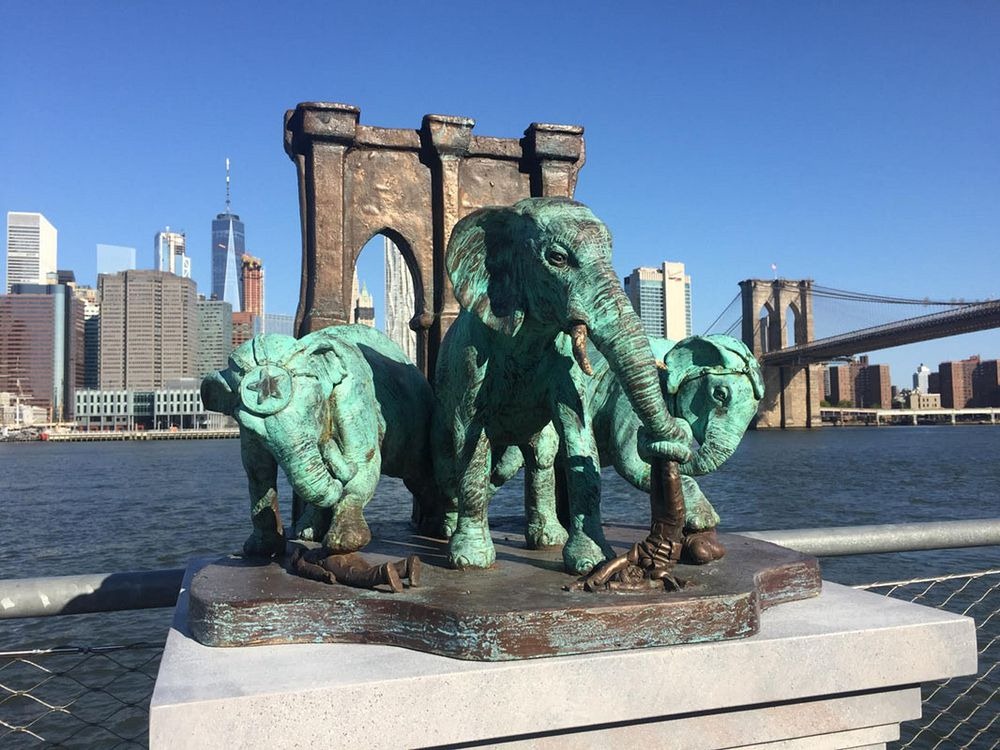
On that awful day a trio of three circus elephants, including the star attraction—a thirteen-foot-tall African elephant named Jumbo, was to cross the Brooklyn Bridge and into New York. The event was greatly publicized and crowds of people came from miles around to see Jumbo. While crossing the bridge, something caused the animals to panic and what was to be a slow and deliberate cross suddenly became a deadly stampede as the three elephants charged into the cheering crowd. Aside from scores of human casualty, two of the elephants died in the stampede, while Jumbo escaped to freedom through the Holland Tunnel and lived out his days at an elephant sanctuary.

 The memorial to the 1929 Brooklyn Bridge Elephant Stampede. Photo credit: Joe Reginella

When a new bronze memorial to the tragedy was unveiled at the Brooklyn Bridge Park last month, it left visitors scratching their heads because no one ever remembered hearing or reading about the Brooklyn Bridge Elephant Stampede of 1929. That’s because the tragedy never happened. It’s a satirical piece of art by sculptor Joe Reginella.

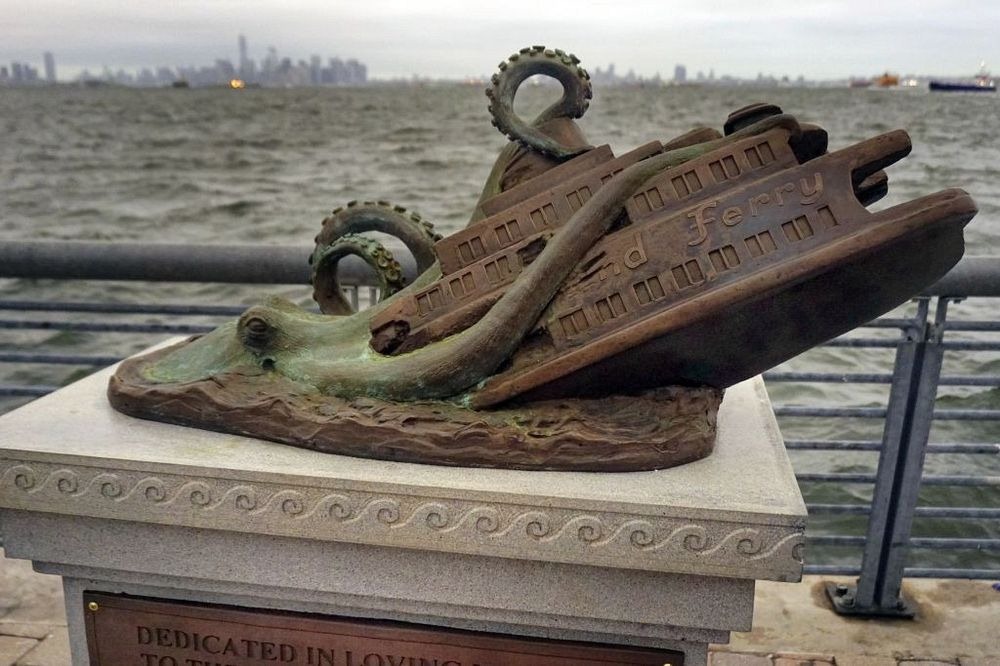
Last year, the prankster-artist erected another memorial to yet another fabricated tragedy—the so-called Staten Island Ferry Disaster—in Battery Park. The story goes, that on November 2nd, 1963, a Staten Island Ferry with over 400 people onboard was attacked by a giant octopus and was pulled beneath the water resulting in the death of all passengers. According to Reginella, the disaster went almost completely unnoticed by the public because it was overshadowed by another more “newsworthy” tragedy that occurred that day—the assassination of President John F. Kennedy.

As part of the hoax, Reginella created a fake documentary, fabricated newspaper articles and distributed flyers to puzzled tourists sending them to a nonexistent museum on Staten Island.


The memorial to the 1963 Staten Island Ferry Disaster. Photo credit: Ula Ilnytzky

The idea for the hoax came to him when Reginella was taking his 11-year-old nephew on the ferry between Manhattan and Staten Island. To satisfy the kid’s curious questions, such as if the waters were infested with shark, Reginella fabricated the story of a giant octopus attack.

“The story just rolled off the top of my head,” he told The Guardian, and it evolved to become “a multimedia art project and social experience – not maliciously – about how gullible people are”.

In the early few days after the memorial was unveiled, Reginella sat close by with a fishing pole pretending to fish so that he could eavesdrop on the conversations. Sometimes he overheard people wondering why nobody ever heard of it. Others simply stared out at the water and walked away.

While the Staten Island Ferry Disaster never happened, there is actually a bit of interesting history behind Reginella’s latest hoax—the Brooklyn Bridge Elephant Stampede. Elephants belonging to the Barnum and Bailey’s Circus did actually cross the Brooklyn Bridge in 1884, when the circus came to town. One of the elephants, a thirteen-foot and seven-ton African, was actually named Jumbo. He was accompanied by twenty other elephants, seven camels and ten dromedaries in what was known as Barnum’s legendary “elephant walk.”

Neither memorials are permanent, and are displayed only on specific days and times. Consult the memorials’ websites for timing before you decide to visit.

www.sioctopusdisaster.com
www.bbelephantstampede.com

Source….Kaushik in http://www.amusingplanet.com

Natarajan


India”s Most unusual Post Offices….Our Country Celebrates National Postal Day today…

E-mails may have overshadowed the concept of snail mail, yet post offices still hold a special place in the Indian way of life. Having long had a presence in local communities, they have served as exchange posts for news, gossip and much more.

As the country celebrates the National Postal Day today, here’s a look at three of India’s most unusual post offices.

Send a postcard from any of these unique spots, and you are sure to score some travel bragging rights!

1. The Post Office at Hikkim


Perched at 15,500 ft above sea level in Himachal Pradesh’s strikingly beautiful Spiti Valley, the hamlet of Hikkim is reputedly home to the world’s highest post office.

A small hut with whitewashed walls and a red postbox hanging outside, the quaint post office is 23 km from the town of Kaza and has been functioning since November 5, 1983. With no internet and patchy cell phone signal, the facility is the only conduit to the world for Hikkim’s residents.

This inconspicuous little post office is single-handedly managed by Rinchen Chhering, who has been the branch postmaster for over 20 years. He was chosen for the post when he was just 22 because he could run fast and owned a bicycle!

Every day, two runners take turns hiking to Kaza on foot to deliver mail that is then taken by bus to Reckong Peo, onward to Shimla, further by train to Kalka, from where it is taken to Delhi and sent to its final destination. In winter, everything in the valley freezes – the rivers, the lakes, the mountains. As the snow cover cuts off Hikkim from the rest of the world, the village’s post office also shuts down for six months.

2. The Post Office at Antarctica

Dakshin Gangotri Station                                                                                                                                                           


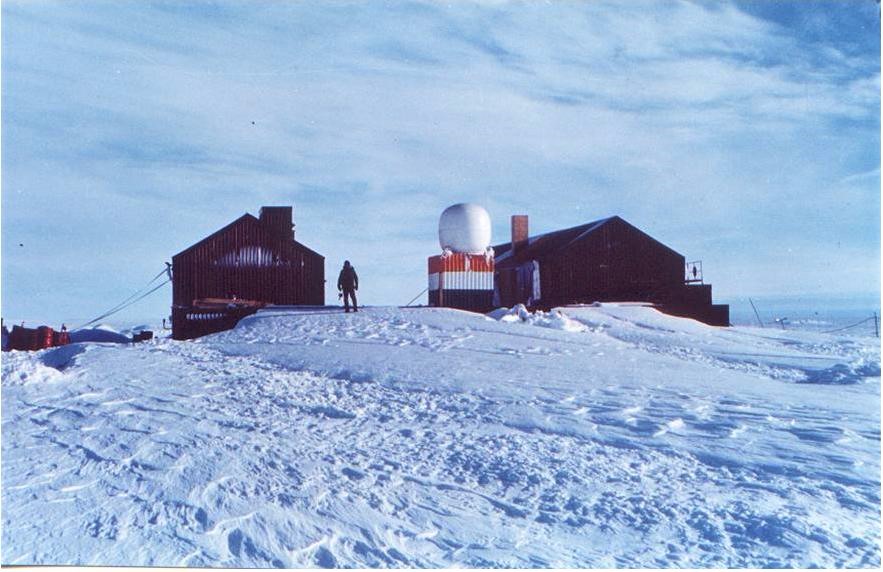
Located in Dakshin Gangotri, India’s first scientific base in Antarctica, this post office first became operational on February 24, 1984, after it was established during the third Indian expedition to the frigid ‘White Continent.’ It was a part of the base’s multi-support systems that also included including ice-melting plants, laboratories, storage and recreational facilities.

The Dakshin Gangotri PO was brought under the Department of Post at Goa on January 26, 1988. Scientist G. Sudhakar Rao, who went to Antarctica as a member of the Seventh Indian Scientific Expedition in 1987, was appointed as its first honorary postmaster. Interestingly, in its first year of establishment, nearly 10000 letters were posted and cancelled at this post office.

However, in 1990, Dakshin Gangotri PO in Antarctica was decommissioned after it got half buried in ice. The post office was then shifted to the new permanent research base, Maitri.

Over the years, the unusual spot has become a favourite stop-off for tourists from cruise ships who came to explore the frozen continent and learn about its unique ecosystem. They send out postcards and letters that take between two and six weeks to reach their destinations via Hobart (in Australia).

3. The Post Office on Dal Lake


Built on an intricately carved houseboat, the Srinagar’s Floating Post Office claims to be the only one of its kind in the world. Here you can avail all regular postal services while being afloat on the Dal Lake. A heritage post office that has existed since colonial times, it was called Nehru Park post office before it was renamed by the then chief postmaster John Samuel in 2011.

After a pretty little philately museum and souvenir shop were added to it, the Floating Post Office was formally relaunched in August 2011. Interestingly, the seal used on everything posted from the this is unique, and tourist-friendly post office bears a special design — of a boatman rowing a shikara on the Dal Lake — along with the date and address.

While enthusiastic tourists row to the post office every day to send postcards back home, for the locals, the post office is more than an object of fascination. The islets in Dal Lake are home to over 50000 people (farmers, labourers, artisans and shikaraowners) for whom this state-run facility is the nearest source of postal and banking services.

Source…SanchariPal in http://www.thebetterindia.com

Natarajan


The Fascinating History of the Iconic Mysore Sandal Soap…

A soap that has held a special place in the hearts of Indians for more than a century, Mysore Sandal Soap’s legacy is intricately interwoven with Karnataka’s history and heritage.

There is something beautifully Indian about the fragrance of sandalwood. Sweet, warm, rich and woody, it is a scent that is deeply interwoven with the nation’s history and heritage. This is, perhaps, one of the many reasons why the Mysore Sandal Soap has held a special place in the hearts of Indians for more than a century.

Here’s the fascinating story behind India’s most-loved sandal soap.

One hundred and one years ago, in May 1916, Krishna Raja Wodiyar IV (the then Maharaja of Mysore) and Mokshagundam Visvesvaraya (the then Diwan of Mysore), set up the Government Sandalwood Oil factory at Mysore for sandalwood oil extraction.

The primary goal of the project was to utilise the excess stocks of the fragrant wood that had piled up after World War I halted the export of sandalwood from the kingdom of Mysore (the largest producer of sandalwood in the world at the time).

Two years later, the Maharaja was gifted a rare set of sandalwood oil soaps. This gave him the idea of producing similar soaps for the masses which he immediately shared with his bright Diwan. In total agreement about the need for industrial development in the state, the enterprising duo (who would go on to plan many projects whose benefits are still being reaped) immediately got to work.

A stickler for perfection, Visveswaraya wanted to produce a good quality soap that would also be affordable for the public. He invited technical experts from Bombay (now Mumbai) and made arrangements for soap making experiments on the premises of the Indian Institute of Science (IISc). Interestingly, the IISc had been set up in 1911 due to the efforts of another legendary Diwan of Mysore, K Sheshadri Iyer!

From the talent involved in the research happening at IISc, he identified a bright, young industrial chemist called Sosale Garalapuri Shastry and sent him to England to fine tune his knowledge about making soap. Affectionately remembered by many as Soap Shastry, the hardworking scientist would go on to play a key role in making Visveswaraya’s dream a reality.

After acquiring the required knowledge, Shastry quickly returned to Mysore where the Maharaja and his Diwan were waiting anxiously. He standardized the procedure of incorporating pure sandalwood oil in soaps after which the government soap factory was established near K R Circle in Bengaluru.

The same year, another oil extraction factory was set up at Mysore to ensure a steady supply of sandalwood oil to the soap making unit. In 1944, another unit was established in Shivamoga. Once the soap hit the market, it quickly became popular with the public, not just within the princely state but across the country.

However, Shastry was not done yet. He also created a perfume from distilled sandalwood oil. Next, he decided to give the Mysore Sandal Soap a unique shape and innovative packaging. In those days, soaps would normally be rectangular in shape and packed in thin, glossy and brightly coloured paper. To help it stand out from the rest, he gave the soap an oval shape before working on a culturally significant packaging.

Cognizant of the Indian love of jewels, Shastry designed a rectangular box resembling a jewellery case— with floral prints and carefully chosen colours. At the centre of the design was the unusual logo he chose for the company, Sharaba (a mythical creature from local folklore with the head of an elephant and the body of a lion. A symbol of courage as well as wisdom, the scientist wanted it to symbolise the state’s rich heritage.

The message ‘Srigandhada Tavarininda’ (that translates to ‘from the maternal home of sandalwood’) was printed on every Mysore Sandal Soapbox. The aromatic soap itself was wrapped in delicate white paper, similar to the ones used by jewellery shops to pack jewels.

This was followed by a systematic and well-planned advertising campaign with cities across the country carrying vibrant signboards in neon colours. Pictures of the soapbox were noticeable everywhere, from tram tickets to matchboxes. Even a camel procession was held to advertise the soap in Karachi!

The out-of-the-box campaign led to rich results. The soap’s demand in India and abroad touched new heights, with even royal families of foreign nations ordering it for themselves. Another important turning point for the company was when, in 1980, it was merged with the oil extraction units (in Mysuru and Shivamoga) and incorporated into one company called Karnataka Soaps and Detergent Limited (KSDL).

However, in the early 1990s, the state-run firm did face a rough patch due to multinational competition, declining demand and lack of coordination between sales and production departments. As losses started rising, it was given a rehabilitation package by BIFR (Board for Industrial & Financial Reconstruction) and KSDL grabbed the lifeline with both hands.

The company streamlined its way of functioning and soon it had started showing profits again. Thanks to rising profits year after year, it had soon wiped out all its losses and repaid its entire debt to BIFR by 2003. The company also successfully diversified into other soaps, incense sticks, essential oils, hand washes, talcum powder etc.

Nonetheless, the Mysore Sandal Soap remains the company’s flagship product, the only soap in the world made from 100% pure sandalwood oil (along with other natural essential oils such as patchouli, vetiver, orange, geranium and palm rose). Due to tremendous brand recall and loyalty associated with the soap, it also bags a prized position on the shopping lists of visiting NRIs.

In 2006, the iconic was awarded a Geographical Indicator (GI) tag — that means anyone can make and market a sandalwood soap but only KSDL can rightfully claim it to be a ‘Mysore Sandalwood’ soap.

Thanks to this near-monopolistic presence in the market for sandalwood bathing soaps, KSDL has also become one of Karnataka’s few public sector enterprises that turns consistent profits. In fact, the company registered its highest gross sales turnover (of ₹476 crore) in 2015-16.

Such is the legacy of sandalwood and this earthy, oval-shaped soap in the state that even Karnataka’s thriving film industry calls itself Sandalwood!

Today, there are a multitude of branded soaps in the market but Mysore Sandal Soap continues to hold a distinctive place among all of them. Its production figures continue to rise, even as the availability of sandalwood is on the decline.

To counter this, KSDL has been running a ‘Grow More Sandalwood’ programme for farmers, that provides affordable sandalwood saplings along with a buy-back guarantee.Working in partnership with the forest department, it is also working to ensure that for every sandalwood removed for extraction, a sandalwood sapling is planted to replace it.

The story of Mysore Sandal Soap and its enduring appeal is an inspiration not just for Indian PSUs but for the entire FMCG sector. Here’s hoping that its future is aromatic as its history!

Source….www.the betterindia.com

Natarajan