This Date in Science…. Feb 20…1962…. John Glenn First American To orbit Earth !!!

This date in science: John Glenn first American to orbit Earth
John Glenn and Friendship 7
On February 20, 1962, John Glenn became the first American to orbit the Earth. He made three turns around the planet before returning safely.

February 20, 1962. John Glenn became the first American to orbit the Earth on this date. He made three turns around the planet before returning safely in his space capsule, which was called Friendship 7. He followed two Russian cosmonauts in making this early orbit of our planet: Yuri Gagarin ( April 1961) and Gherman Titov (August 1961).

While Glenn was in orbit, NASA controllers received an indication that the heat shield on his craft had come loose. They instructed Glenn not to jettison the rockets underneath the heat shield during re-entry, because the rockets might be able to hold the shield in place. Fortunately, the indication turned out to be a false alarm.

Glenn returned to space at age 77 aboard the space shuttle Discovery in 1995, making him the oldest person to fly in space. His mission’s primary scientific aim at that time was to study the effects of spaceflight on seniors.


John Glenn climbs into the Friendship 7 spacecraft just before making his first trip into space on February 20, 1962. Photo via NASA

John Glenn and Friendship 7

Here's What John Glenn saw on February 20, 1962.  Just 5 minutes and 44 seconds after launch, Glenn offered his first words about the view from his porthole: “This is Friendship 7. Can see clear back; a big cloud pattern way back across towards the Cape. Beautiful sight.” Three hours later, at the beginning of his third orbit, Glenn photographed this panoramic view of Florida from the Georgia border (right, under clouds) to just north of Cape Canaveral. His American homeland was 162 miles (260 kilometers) below. “I have the Cape in sight down there,” he noted to mission controllers. “It looks real fine from up here. I can see the whole state of Florida just laid out like on a map. Beautiful.”  Image via NASA
Here’s What John Glenn saw on February 20, 1962. Just 5 minutes and 44 seconds after launch, Glenn offered his first words about the view from his porthole: “This is Friendship 7. Can see clear back; a big cloud pattern way back across towards the Cape. Beautiful sight.” Three hours later, at the beginning of his third orbit, Glenn photographed this panoramic view of Florida from the Georgia border (right, under clouds) to just north of Cape Canaveral. His American homeland was 162 miles (260 kilometers) below. “I have the Cape in sight down there,” he noted to mission controllers. “It looks real fine from up here. I can see the whole state of Florida just laid out like on a map. Beautiful.” Image via NASA
Here’s what John Glenn saw on February 20, 1962. Just 5 minutes and 44 seconds after launch, Glenn offered his first words about the view from his porthole: “This is Friendship 7. Can see clear back; a big cloud pattern way back across towards the Cape. Beautiful sight.” Three hours later, at the beginning of his third orbit, Glenn photographed this panoramic view of Florida from the Georgia border (right, under clouds) to just north of Cape Canaveral. His American homeland was 162 miles (260 kilometers) below. “I have the Cape in sight down there,” he noted to mission controllers. “It looks real fine from up here. I can see the whole state of Florida just laid out like on a map. Beautiful.” Image via NASA
Bottom line: John Glenn became the first American to orbit Earth on February 20, 1962. His space capsule was called Friendship 7.

Bottom line: John Glenn became the first American to orbit Earth on February 20, 1962. His space capsule was called Friendship 7.

SOURCE:::: www. earthskynews.org

Natarajan

Do you Know That the Largest Air Evacuation in History was done by India …?

When thousands of Indians were stuck in Kuwait during Gulf war, the Indian government executed the world’s largest air evacuation mission ever. The operation continued for almost two months and managed to airlift over 1,70,000 Indians. Here is all you need to know about the amazing effort!

Air India might be largely known today for delayed flights and poor service. But did you know that the largest air evacuation in the history of mankind was executed by the much aligned national airline of India? In 1990, the Indian government airlifted over 1,70,000 Indians from Kuwait with help of 488 flights in just 59 days. Air India entered into Guinness Book of World Records for the civil airline that had evacuated the most people till date.

Why the evacuation?

During the Gulf war in 1990, when Saddam Hussain invaded Kuwait, the Iraqis took over the city in a few hours leaving the entire country in a state of terror. This included the fairly significant Indian community there as well. While the Kuwaiti royal family escaped to Saudi Arabia, the general population suffered great tragedies and loss. The responsibility came on the Indian government to safely evacuate the Indian community from Kuwait and hence, the largest air evacuation mission took shape.

“We did not use the word ‘condemn’ in our statement [about the Iraqi attack], for two reasons: one, we were concerned about our nationals there; second, we still believed that there was some scope for a negotiated solution to the problem. We were keen to play a role. If we condemned the development openly, it would have been difficult for us to deal with Iraq,” said K.P. Fabian, former Ambassador of India who was head of the Gulf Division of the Ministry of External Affairs during the First Gulf War.

What made it difficult?

Evacuating the Indian community from Kuwait was not an easy task. People were not ready to leave behind everything they had spent their entire lives earning in Kuwait. They underestimated the gravity of the situation and were reluctant to leave their well-settled lives.

Also, many people living there did not have valid travel papers as they had handed them over to their employers who were either missing or dead.

“Meanwhile, another problem was brewing. One set of Air India crew was stranded in Kuwait, having flown in a flight earlier. The Air India pilots and staff threatened that unless we got this crew out, they would ground the flights. The threat was indeed serious. As per Ministry of Overseas Indians (MOIA) annual report 2012-13, there are over 25 million overseas Indians across the globe and whenever need arises, it is the government’s responsibility to bring back the country’s citizens safely. Not only just the evacuation during Gulf war, Indian government has successfully executed many such missions. It was decided that the Foreign Minister should go to Baghdad and Kuwaitand urgently arrange repatriation of our nationals” said Fabian.

Also, Indian people took shelter in various schools and other buildings in various parts of Amman. They had to travel from various places to the Amman airport. It could not be predicted when these people would arrive and due to this, flights got delayed a lot. The crew had to stay on duty for a much longer time than the stipulated duty hours which created a lot of tiffs.

How did they do it?

Indian government officials went to Kuwait to meet Saddam Hussain and get him on board the arranged repatriation of Indian nationals.

“We conveyed our official viewpoint and also our plans to evacuate our nationals. He listened to our views and repeated his known position, and agreed to facilitate the repatriation of our nationals,” said Fabian.

As the help reached on August 14 (12 days after the invasion had taken place), Indian citizens were angry as they were expecting a quicker intervention by the Indian government. But, the then Foreign Minister I.K. Gujral quickly brought the crowd under control and in no time had them shouting “Bharat Mata ki Jai”.

Initially, a few military aircrafts were arranged to evacuate the elderly, women and children. But due to a lengthy air space clearance procedure, this did not seem like a feasible solution. So the government turned to Air India for assistance.

You should have seen us. We were operating out of a hotel room in Amman with very little space and carrying out all our operations from there,” MP Mascarenhas, who organised the operation as the airline’s regional director in the Gulf & Middle East, told Scroll.

The Indian Air Force deployed its IL 76 aircraft for a steady communication link between Kuwait and Delhi government officials. The situation was severe and required immediate help and attention. The Kerala government came forward and dispatched food items for the Indian nationals in Kuwait.

“My suggestion was that we needed to first pick up mothers with babies, other children, women, sick and old people. And also, on the basis of some kind of distributive justice, we needed to select people from every region,” said Fabian.

There were far more people to be evacuated than expected. But, the coordination and team work of the people on the mission managed to evacuate all the Indian nationals out of the country. There was also a Pakistani Airline crew stranded in Kuwait and they wished to be evacuated by Indian aircrafts. On humanitarian grounds, the Indian officials agreed.

The successful operation that started on August 14 1990, continued for almost 2 months and created history, finally coming to an end on October 11.

Other notable achievements

This was not the only successful evacuation and heroic act by the Indian government. “Operation Sukoon” in 2006 by the Indian Navy was another great operation to evacuate Indian, Sri Lankan and Nepalese nationals, as well as Lebanese nationals with Indian spouses, from the conflict zone during the 2006 Lebanon War. Four naval ships – INS Mumbai, INS Betwa and INS Brahmaputra and oil tanker INS Shakti – executed the successful operation.

Another successful evacuation “Operation Blossom” took place in 2011 when mass protests against the military broke out in Libya. Around 8,000 Indians were evacuated with help from Indian Navy’s INS Jalashwa (an amphibious transport dock ship) and a destroyer INS Mysore – both these ships together could carry around 1,200 people at one go – and the fleet tanker the INS Aditya.

The Indian government has time and again proved that it leaves no stone unturned in bringing back its people safely to the country in times of distress anywhere in the world. Kudos to all the heroes who have showed immense courage and humanity in the toughest of times.

– See more at: http://www.thebetterindia.com/15179/heres-need-know-largest-air-evacuation-history-india/#sthash.53OtJbOP.dpuf

SOURCE:::: http://www.the betterindia.com

Natarajan

Message For the Day…” By Conscious Efforts Habits can be Changed and Character Refined …”

No person or wickedness in this planet is incorrigible. Wasn’t Angulimala, the robber, turned into a kindhearted person by Lord Buddha? Wasn’t thief Ratnakara transformed to Sage Valmiki? By conscious effort, habits can be changed and character refined. People always have within them, within their reach, the capacity to challenge their evil propensities and to change their evil habits. By selfless service, renunciation, devotion, prayer, and regulation of conduct, the old habits that bind people to earth can be discarded and new habits that take them along the divine path can be instilled into their lives. The purpose of all spiritual literature, poems, epics and books is to discuss the nature of mind, its ways and vagaries, and to inform about the process of reshaping it. Please realize that the mere reading of a book will not vouchsafe discrimination. That which is seen, heard, or read must be put into practice in actual life. 

Sathya Sai Baba

A Rewind…. When a 41 year old Former Captain came out of Retirement to Lead Australia against India

When the 41-year-old former captain came out of retirement to lead Australia against India…

India’s tour of Australia in 1977-78 was completely overshadowed by the arrival of Kerry Packer’s World Series Cricket (WSC), unleashed on the world six months earlier, which left the home side fielding a virtual third XI under Bob Simpson, a 40-something captain who had retired from the game a decade earlier. Despite that, the series proved exciting and Simpson’s comeback triumphant.

Bob Simpson drives on his way to 176 in Perth, in what was his fifth first-class match in a decade

Bob Simpson drives on his way to 176 in Perth, in what was his fifth first-class match in a decade © ESPNcricinfo Ltd 


In May 1977, news broke that media mogul Packer, frustrated by his inability to secure TV rights for cricket for his fledgling TV channel, had decided to organise games of his own. Capitalising on the low amounts cricketers were paid, particularly in Australia, he signed up more than 50 players for his enterprise.

With his “circus” – as the establishment and media dismissively labelled the venture – taking place in parallel to the Australian season, it meant that the national selectors sat down in October 1977 with almost two dozen of their more likely choices unavailable.

The Australian Cricket Board (ACB) did all it could to frustrate WSC, barring it from all major cricket grounds, and going to court to prevent it referring to games as Tests or from calling their side Australia.

Packer believed that given the national side was bereft of all the leading players – and most second-string ones as well – the public would turn their backs on the official Test series. The establishment feared the same.

A divided Australian team had lost the Ashes in England in the summer, and few seemed able to predict who they would pick to face the Indians, let alone who would lead them. Craig Serjeant, a 26 year-old batsman who had made his debut that summer, was one of the favourites, if only because he was one of the few established cricketers not to have signed for Packer. The other leading candidate was John Inverarity, a 33-year-old allrounder who had played the last of his six Tests five years earlier.

So the announcement that Simpson, a 41-year-old who had retired from the game in 1968, had been hauled out of retirement to lead the side was met with shock but almost no dissent. Indeed, journalists at the press conference at which the news was made public broke into spontaneous applause.

Among those close to the game there was a general belief Simpson was still good enough. “He has a wonderful batting technique,” Keith Miller said, “and is fitter at the moment than he has been for years.”

Simpson, who had been made the offer the previous month, had been a top player and had led Australia 28 times after taking over the captaincy from Richie Benaud in 1963. He averaged 48 with the bat in his 52 Tests and was a brilliant slip fielder and useful legspinner and had continued to play regularly after retiring and had scored a hundred for grade side Western Suburbs at the start of the season.

The ACB made clear it was not expecting miracles. Praising Simpson’s “experience and technical knowhow” it added: “Irrespective of the runs he may make Simpson will make a significant contribution to Australian cricket in the coming season.”

Simpson was an old-school leader and wasted no time in saying he felt that the Australians had become undisciplined. In England the side had come under fire for their slovenly appearance and attitude. “It starts in getting the players proud to represent their country,” he said. “I’ll be looking to restore some of the lost guidance.”

And whatever the board felt, he had no intention of not pulling his weight in the side. “I wouldn’t have made myself available if I didn’t think I would get runs. I have never surrendered my wicket easily. I have always considered it my obligation to my team, myself and spectators to get runs.

“Undoubtedly the success I have enjoyed in grade cricket in the past, and this year, made easier my decision to come back. If I had not been scoring runs, I would not have considered a return just as a figurehead.”

He admitted he had been approached “almost every year” to resume for his state in the decade since he retired, repeatedly declining as he felt New South Wales were good enough without him. But with Packer players missing from the Sheffield Shield, things had changed. “The special conditions this year have made it necessary for an experienced player to be at the helm.”

At the beginning of November, Simpson returned as captain of New South Wales, the side he led to their last Sheffield Shield title 12 years earlier. He had three matches before the first Test to find his feet.


In Perth, NSW lost to Western Australia by four wickets. Simpson made 14 and 5 and took three wickets. He then led his side to a nine-wicket win over South Australia, making 66 in his one outing. His final game was against the Indians, where he scored 58 and 94. He had proved he had not lost his ability with the bat, especially against spin.

India headed into the first Test with wins in all four of their matches against the states; on two previous tours of Australia they had never beaten a state side. But they were aware the opposition they had been facing were weak.

Australia’s squad contained six uncapped players. Simpson aside, they boasted 36 Test appearances between them, of which 22 belonged to Jeff Thomson – he had signed for Packer but subsequently changed his mind. Only Serjeant, named as vice-captain, Thomson and Kim Hughes survived from the XI that had played Australia’s previous Test at The Oval three months earlier.

In the fortnight before the opening Test, WSC had launched to poor attendances and a generally lukewarm response. The first Test between Simpson’s almost unknown Australia and India in Brisbane was nervously watched by both the ACB and WSC, as it directly clashed with Packer’s Supertest in Melbourne. The official Test was a cracker and attracted 32,000 to the Gabba; the Supertest drew a little over 13,000.

In Brisbane, Simpson was dismissed for 7 in the first innings, falling to the spin of Bishan Bedi. In his last Test before this one, in January 1968, he had been dismissed by Bedi, also for 7. Australia gained a slender 13-run lead on the first innings before Simpson made a vital 89 second time round. India, chasing an improbable 341 to win, fell 16 runs short.

The second Test, in Perth, was no less exciting. India took an eight-run first-innings lead – Simpson’s six-and-a-half hour 176 keeping them at bay almost alone – but lost by two wickets as Australia chased down 342 with 22 balls remaining. Again, crowds were larger than expected.

India kept the series alive with comprehensive wins in the third and fourth Tests, but Australia, anchored by Simpson’s 100 and 51, won the decider by 47 runs on the sixth day. Nevertheless, India made 445 in pursuit of 493, the highest losing total in the fourth innings of a Test; when they were 415 for 6, a remarkable win was still on the cards.

Simpson’s return had proved more successful than anyone had dared hope. Not only had he forged a winning side from a batch of youngsters, he had done so by leading from the front with 539 runs at 53.90. Financially, a thrilling Test series had won out over WSC’s garish, hyped Supertests.

But the tide was about to change. Shortly before the final Test, almost 25,000 watched a WSC limited-overs game under floodlights. Packer, with white balls, coloured clothing and a variety of gimmicks, had found what the public wanted. Cricket would never be the same again.

SOURCE:::: MARTIN WILLIAMSON  in http://www.espncricinfo.com

Natarajan

This Date …Feb 13…. .. BirthDay of Chuck Yeager… The 1st Pilot to Break the Sound Barrier…

February 13, 1923. Chuck Yeager, the first pilot to break the sound barrier, was born in Myra, West Virginia on this date in 1923.

Yaeger enlisted in the Army Air Corps in September 1941, at the age of 18. He fought in World War II before being assigned to fly high-performance aircraft at Edwards Air Force Base in 1947.

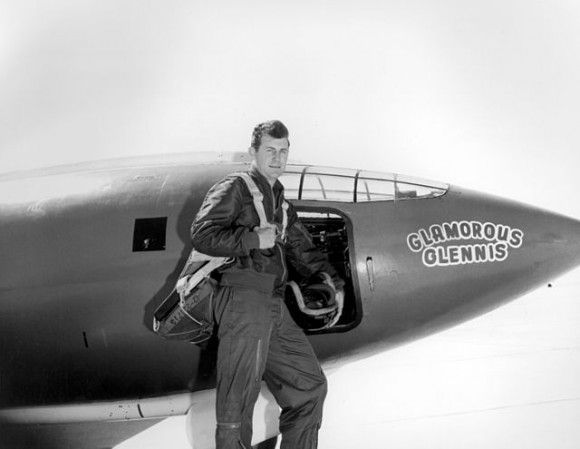
On October 14, 1947, Yeager piloted a plane called Glamorous Glennis to Mach 1.06, just over the speed of sound.

Dubbed the fastest man alive, he also won the prestigious Collier Trophy in aviation even as he continued setting speed records.

The plane in which he broke the sound barrier is on display at the Smithsonian National Air and Space Museum in Washington, D.C.

Yeager’s adventures were popularized in a 1980s satirical book and movie, both called The Right Stuff.

He currently lives California.

Yeager in front of the Bell X-1, which, as with all of the aircraft assigned to him, he named Glamorous Glennis after his wife.  Image via Wikimedia Commons.

Bottom line: On February 13, 1923, Chuck Yeager, the first pilot to break the sound barrier, was born in Myra, West Virginia.

SOURCE:::: http://www.esrthskynews.org

Natarajan

Message For the Day…” Character is the Fragrance of the Flower of Life …”

Buddha, Jesus Christ, Shankaracharya, Vivekananda, and many great saints and devotees of the Lord are treasured in the memory of people even to this day. What quality made them memorable for all times to come? It is their character. The qualities that make up a flawless character are: love, patience, forbearance, steadfastness, and charity. These must be revered. Character is the fragrance of the flower of life; it gives value and worth to life. The hundred little deeds that we indulge in every day harden into habits; these habits shape the intelligence and mould our outlook and life. All that we weave in our imagination, seek in our ideals, and yearn in our aspirations leave an indelible imprint on the mind. Poets, painters, artists, and scientists may be great, each in their own field, but without character, they can have no standing in society.

Sathya Sai Baba

This Date in Science….Feb 11 2010……When a Spacecraft Destroyed a Sundog…

February 11, 2010. On this date – the coolest space launch ever for us sky fans! I ran into this image and video yesterday via a post on Google+. I was interested when I saw a quote from the person who runs the world’s absolute best website for sky optics, Les Cowley of the website Atmospheric Optics. It turns out this story has been around a few years, but I liked it and thought you might, too. It began with the launch five years ago of NASA’s Solar Dynamics Observatory (SDO), one of several observatories that keep an eye on our sun. It seems that when SDO lifted off from Cape Canaveral on February 11, 2010, on its mission to observe the sun, it first destroyed a sundog in Earth’s atmosphere – in the process bringing to light the new form of ice halo – and teaching those who love and study sky optics new things about how shock waves interact with clouds.

The video above shows SDO’s 2010 launch via an Atlas V rocket. Watch it now, and turn up the volume to hear people cheer when the spacecraft’s passage through the atmosphere destroyed the sundog – which is a bright spot in the sky, formed by refraction of sunlight through plate-shaped ice crystals, which drift down from the sky like leaves fluttering from trees. If you have to, watch it twice to see the luminous column of white light that appears next to the Atlas V.

Les Cowley explained in this 2011 post at Science@NASA:

When the rocket penetrated the cirrus, shock waves rippled through the cloud and destroyed the alignment of the ice crystals. This extinguished the sundog.

The sundog’s destruction was understood. The events that followed were not. Cowley said:

A luminous column of white light appeared next to the Atlas V and followed the rocket up into the sky. We’d never seen anything like it.

Cowley and colleague Robert Greenler at first couldn’t explain this column of light. Then they realized that the plate-shaped ice crystals were organized by the shock wave from the Atlas V. Cowley explained:

The crystals are tilted between 8 and 12 degrees. Then they gyrate so that the main crystal axis describes a conical motion. Toy tops and gyroscopes do it. The earth does it once every 26000 years. The motion is ordered and precise.

Love it!

View larger. | Optics experts in the U.K. have discovered a new form of ice halo.  Image Credit: NASA/Goddard/Anne Koslosky View larger. | When the Solar Dynamic Observatory (bright streak in lower right quadrant of photo) lifted off from Cape Canaveral on February 11, 2010, its launch enabled optics experts to discover a new form of ice halo. Image via NASA/Goddard/Anne Koslosky

Bottom line: When NASA’s Solar Dynamics Observatory (SD0) lifted off from Cape Canaveral on February 11, 2010, on its mission to observe the sun, it first destroyed a sundog in Earth’s atmosphere – in the process bringing to light the new form of ice halo – and teaching those who love and study sky optics new things about how shock waves interact with clouds.

Via Science@NASA website

SOURCE:::: http://www.earthskynews.org

Natarajan

” ” அச்சு இற்று முறிந்த இடம் … அச்சரப்பாக்கம்…” !!!

“இளையாத்தங்குடிப் பிள்ளையாருக்குத் தாமே

தள்ளாத வயதில் துள்ளும் பாலகனைப் போல்

முட்டிக்கால் தோப்புக்கரணம் போடுகிறார்பெரியவா”

(கைலாஸ சங்கரனின் மறு அவதாரமோ!)

734324_514749501889171_935875765_n.jpg

ராமேச்வரத்தில் அப்போது நிர்மாணமாகி வந்த

ஸ்ரீ சங்கரமடத்துக்குச் சென்னையிலிருந்து சிலர்

விக்கிரகங்களுடன் சென்ற லாரி வழியே ‘ஆக்ஸில்’

உடைந்து நின்று விட்டது. இளையாத்தங்குடியிலிருந்த

பெரியவாளுக்குத் தகவல் தெரிவிக்கப்பட்டது.

“எந்த இடத்தில் நின்று விட்டது” என்று வினவுகிறார்.

“அச்சரப்பாக்கத்தில்” என்று பதில் வருகிறது.

பெரியவாள் முகத்தில் புன்னகை விரிகிறது.

இடுக்கண் வருங்கால் நகைக்கிறார்.

இளையாத்தங்குடிப் பிள்ளையாருக்குத் தாமே

தள்ளாத வயதில் துள்ளும் பாலகனைப் போல்

முட்டிக்கால் தோப்புக்கரணம் போடுகிறார்.

ராமேச்ர விஷயம் விக்கினமின்றி நடைபெறவே

விக்னேஸ்வர வழிபாடு என்பது வெளிப்படை.

மூர்த்தி வழிபாட்டுக்கு மேம்பட்ட முற்றிய அருள்

நிலையில் இருந்து இவரே இடையூற்றைத்

தீர்த்துவிடலாம்.ஆயினும் விக்கினம் தீர்க்கவே

ஏற்பட்ட தெய்வத்தை, மானுடருக்கு முன்னுதாரணமாகத்

தாமே வழிபட்டுக் காட்டுகிறார்.அதைச் சொல்லாமல்

சொல்லுகிறார்.

“பரமசிவன் பிள்ளையாரை வேண்டிக் கொள்ளாமலே

திரிபுர தகனத்துக்குப் புறப்பட்டார். ‘எந்தக் காரியம்

ஆரம்பித்தாலும் பிள்ளையாரை முதலில் பூஜிக்க வேண்டும்

என்று லோகத்துக்கு ஏற்பட்ட சம்பிரதாயத்தை ஈஸ்வரனே

செய்து காட்டினால்தானே, மற்ற ஜனங்களும் அப்படிச்

செய்வார்கள்? அதனால், ஈஸ்வரன் இப்படிப் பண்ணாத போது

அவர் புறப்பட்ட ரதத்தின் அச்சு முறிந்து போயிற்று.அப்புறம்

அவர் விக்னேஸ்வரரைப் பிரார்த்தனை செய்து கொண்ட பிறகு

தான் அது புறப்பட்டது.

அச்சு இற்று முறிந்த போன இடம்தான் ‘அச்சரப்பாக்கம்’ என்று

இப்போது சொல்லும் அச்சிறுப்பாக்கமான ஊர்.அங்கேயேதான்

நம் லாரியும் அச்சு முறிந்து நின்றிருக்கிறது.!”

எப்பேர்ப்பட்ட பொருத்தம்! பொருந்தாமல் இடையூறு

ஏற்பட்டதிலேயே ஒரு பொருத்தம் கண்டுவிட்டார்.

“கைலாஸ சங்கரன் ரதத்தில் போனபோது எங்கே அச்சு

முறிந்ததோ, அதே ஊரில் காலடி சங்கரர் லாரியில்

போகிறபோது ஆக்ஸில் உடைந்திருப்பதால் இவர்

அவனுடைய அவதாரமே என்றும் நிரூபணம் ஆகிறது!”

என்று பின்னரும் ஒரு பொருத்தம் காட்டிவிட்டார்

Read more: http://periva.proboards.com/thread/8611/#ixzz3RUElITvx

SOURCE:::: http://www.periva.proboards.com

Natarajan

Message For the Day…” Everything Changes with Time…”

Even Rama, who had established Rama Rajya (the ideal kingdom) on one historic occasion, had to leave this world and pass away. Everything has to pass away some day. Nothing is going to remain permanently in this world. Even the Rama Rajya had to disappear and change. Everything changes with time and nothing remains unchanged. Many people have ruled over this land, but could any one of them take away even a small portion of the land? The only thing which you can carry and which you should take is the permanent grace of the Lord. A good name is all that you should aspire for during your life. We should do good and earn a good name, and thus lead a good life by doing good to others. This is the ideal which we have to hand over to the rest of the world.

Sathya Sai Baba

படிக்கவும் … சிந்திக்கவும் …” நம் நாட்டில் பசுவும் உழவும் மறைந்த கதை ” …

உழவும் பசுவும் ஒழிந்த கதை!
ஆங்கிலேயர்கள் இந்தியாவை ஆக்கிரமித்த பின் இங்குள்ளவை பற்றி அவர்கள் ஆச்சரியப்பட்ட விஷயங்கள் இரண்டு. ஒன்று குருகுலக்கல்வி, மற்றொன்று நமது பாரம்பரிய விவசாயம்.
அப்போதைய பிரிட்டிஷ் இந்திய கவர்னரான ராபர்ட் கிளைவ் நம் விவசாய முறையைப் பற்றி நீண்ட விரிவான ஆய்வு செய்தார். இந்திய விவசாய முறை பிரிட்டிஷாரைச் சார்ந்திருக்கவும் அவர்களுக்குச் சாதகமாகவும் மாற்ற நினைத்தார்.
அவருடைய ஆய்வின்படி, இந்தியக் கால்நடைகள், குறிப்பாக, பசுக்கள்தான் நமது விவசாயத்தின் முதுகெலும்பு. பசுக்கள் இல்லை என்றால் இந்திய விவசாயம் அழியும்.
இப்பசுக்களை அழித்துவிட்டால் விவசாயம் அழிவுப்பாதையை நோக்கித் திரும்பும். அதன் மூலம் ரசாயன உரங்களுக்காகவும், பூச்சிக்கொல்லி மருந்துகளுக்காகவும், ஆங்கிலேயர்களைச் சார்ந்திருக்கும் நிலை ஏற்படும் என உணர்ந்தார்.
நமது பசுக்களின் சாணம் நல்ல சத்தான உரமாகவும், அவற்றின் சிறுநீர் சிறந்த பூச்சிக்கொல்லியாகவும் காலம்காலமாக நம்மால் பயன்படுத்தப்பட்டு வந்தது. பசுக்கள் அழிந்தால் இந்தியர்கள், உரத்துக்கும், பூச்சிக்கொல்லி மருந்துக்கும் ஆங்கிலேயரைச் சார்ந்து நிற்கும் நிலை உருவாகும் என முடிவு செய்தார். இப்படித்தான் ஆங்கிலேய நாட்டின் உரங்கள் இங்கு நுழைந்தன.
நமது பசுக்களின் சாணத்தையும், சிறுநீரையும் பயன்படுத்தி ஒரு ஏக்கருக்கு 54 குவிண்டால் அளவுக்குச் சத்தான அரிசியை நாம் உற்பத்தி செய்தோம். இதை அறிந்து, 1760-இல் ராபர்ட் கிளைவ், பசுக்களை கொல்லப் பசுவதைக் கூடங்களை (ஸ்லாட்டர் ஹவுஸ்) இந்தியாவில் நிறுவினார். நாளொன்றுக்கு 30 ஆயிரம் பசுக்கள் வீதம் ஒரு ஆண்டில் ஒரு கோடிப் பசுக்களைக் கொன்றார்.
அவர் இந்தியாவை விட்டுச் செல்வதற்கு முன் இதேபோல பல கூடங்களை நிறுவினார். இதன் மூலம் லட்சக்கணக்கான பசுக்கள் உணவுக்காகக் கொல்லப்பட்டன. அக்காலத்தில் பெரும்பாலான பகுதிகளில் நம் மக்கள்தொகையைவிட, பசுக்களின் எண்ணிக்கை அதிகமாக இருந்தது.
இதன் மூலம் உணவுதானிய உற்பத்தி தடையின்றி நடந்தது. 1910-ஆம் ஆண்டு நம் நாட்டில் 350 பசுவதைக்கூடங்கள் இரவும், பகலும் இயங்கின. பசுக்களின் எண்ணிக்கை படிப்படியாகக் குறைந்ததும் நாம் ரசாயன உரத்துக்கு அவர்கள் வாசலை நாடிய நிலை உருவானது. இதன் மூலம் யூரியாவும், பாஸ்பேட் உரங்களும் உள்ளே நுழைந்தன.
நம் நாடு சுதந்திரம் அடைந்தபின் பசுமைப்புரட்சி என்ற பெயரில் பெருமளவு ரசாயன உரங்களைப் பயன்படுத்தி உற்பத்தியைப் பெருக்கினோம். அதன் பக்கவிளைவுகளை இன்று அனுபவிக்கிறோம்.
ஒருமுறை நிருபர் ஒருவர் இந்த பசுவதைக் கூடங்கள் பற்றி மகாத்மா காந்திஜியிடம் கேட்டபோது, “இந்தியா சுதந்திரம் அடையும் நாளில் அனைத்து பசுவதைக் கூடங்களும் மூடப்படும்’ என்றார்.
1929-ஆம் ஆண்டு நேரு ஒரு பொதுக்கூட்டத்தில் பேசுகையில், “நான் இந்தியாவின் பிரதமரானால் இங்குள்ள பசுவதைக் கூடங்களை மூடுவதே என்னுடைய முதல் வேலையாக இருக்கும்’ என்றார்.
இதில் மிகப்பெரிய சோகம் என்னவென்றால் 1947-க்கு பின் 350 பசுவதைக்கூடங்கள் என்ற நிலையில் இருந்து, 36 ஆயிரம் பசுவதைக்கூடங்கள் என்ற நிலைக்கு இப்போது முன்னேறிவிட்டோம்.
இன்று அதிநவீன இயந்திரங்களால் ஆன வதைக்கூடங்கள் நிறுவப்பட்டு, ஒரு மணி நேரத்தில் பத்தாயிரம் பசுக்கள் என்ற அளவில் வதை செய்யும் திறனுடன் இரவும், பகலும் இயங்கிக் கொண்டிருக்கின்றன.
சாப்பாட்டுக் கறிக்காகவும், தோலுக்காகவும் லட்சக்கணக்கான பசுக்கள் கொடூரமாகக் கொல்லப்படுகின்றன. தில்லியில் மட்டும் 11 ஆயிரம் பசுவதைக் கூடங்கள் சட்டத்துக்குப் புறம்பாக இயங்குகின்றன, இங்கு மட்டும் நாளொன்றுக்கு இரண்டு லட்சம் பசுக்கள் கொல்லப்படுகின்றன.
நமது நாட்டுப் பசுக்களின் இனமே கருவறுக்கப்படும் சூழல் நடந்து கொண்டிருக்கிறது. நமது பாரம்பரிய கால்நடைகள் நல்ல உடல் சக்தியுடன் நோய் எதிர்ப்புத் திறன், வெயிலைத் தாங்கும் சக்தி பெற்றவை. மாபியா கும்பல், அவர்களுடைய லாரி, டிரக்குகளில் நூற்றுக்கணக்கான பசுக்களைச் சந்தைகளில் வாங்கி, வதைக்கூடங்களுக்கு அனுப்பி வருகிறது.
இதற்கு போலீஸ் துறையும் உடந்தையாகச் செயல்படுகிறது. வடமாநிலங்களில் துப்பாக்கி முனையில் கால்நடைகள் கிராம மக்களிடமிருந்து பறித்துச் செல்லப்படுகின்றன.
விவசாயம் அழிந்து தொழிற்சாலைகளும், நகரமயமாதலும் பெருகி வருகிறது. பெரும்பாலான விவசாய நிலங்கள் பிளாட்டுகளாகவும், வர்த்தகக் கேந்திரங்களாகவும் உருமாறிவிட்டன.
கால்நடைகளுக்கு பசுந்தீவனம், வைக்கோல் குறைந்துகொண்டே வருகிறது. மேய்ச்சல் நிலமும் மறைந்து கொண்டே வருகிறது. முந்தைய ஆட்சியில் நிலமற்ற விவசாயிகளுக்கு இரண்டு ஏக்கர் நிலம் திட்டத்தில் இருந்த புறம்போக்கு நிலங்களும் மறைந்துவிட்டன.
விளைநிலம் குறைந்தால் என்ன? குறைந்த நிலம், அதிக மகசூல் என்ற நோக்கில் அறிவியலார்கள் உள்ளனர். உணவுப்பொருள்களை விளைவிப்பதைவிட, இறக்குமதி செய்து கொள்வது எளிது என அரசியல்வாதிகள் கூறுகின்றனர்.
இதன் பாதிப்புகளை அனுபவிக்கப்போவது வருங்கால சந்ததிகள்தான். அறிவியலார்கள் மற்றும் பிராணிகள் நல அமைப்பினர்களின் புள்ளிவிவரப்படி நம் நாட்டில் உள்ள 72 மில்லியன் (ஒரு மில்லியன் என்றால் பத்து லட்சம்) உழவு மற்றும் வண்டி மாடுகள், 27 மில்லியன் மெகாவாட் சக்தி அளவுக்கு உடல் உழைப்பை நமக்குக் கொடையாக அளிக்கின்றன.
இந்த உழைப்பின் மூலம், அதே அளவு சக்தியை உற்பத்தி செய்ய நிலக்கரி மற்றும் மற்ற மூலப்பொருள்களைச் சேமிக்கின்றன.
இக்கால்நடைகளால் ஓராண்டுக்கு 100 மில்லியன் டன் காய்ந்த சாணம் நமக்குக் கிடைக்கிறது. இதன் மதிப்பு 20 ஆயிரம் கோடி ரூபாய்.
இச்சாணம் கிடைப்பதால் 50 மில்லியன் டன் விறகு சேமிக்கப்படுகிறது. இதனால் மரங்கள் அதிக அளவுக்கு வெட்டப்படாமல் தவிர்க்கப்படுவதுடன், இயற்கைச் சூழலும் பாதுகாக்கப்படுகிறது.
இந்த 73 மில்லியன் கால்நடைகளும் கறிக்காகவோ, தோலுக்காகவோ கொல்லப்பட்டால் நமக்கு 7.3 மில்லியன் டிராக்டர்கள் தேவைப்படும். இதற்கு 2 லட்சம் கோடி ரூபாய் முதலீடு தேவைப்படும்.
அவற்றை இயக்குவதற்கு 2 கோடியே 37 லட்சத்து 50 ஆயிரம் டன் டீசல் தேவைப்படும். இதன் மதிப்பு ஒரு லட்சம் கோடி ரூபாய். இந்த அளவு டீசலைப் பயன்படுத்துவதால் காற்று மாசுபாடு மற்றும் புவி வெப்பமயமாதல் அதிகரிக்கும்.
இயற்கை நமக்குத் தந்த செல்வங்களான, கால்நடைகளைக் கொல்வதன் மூலம் நாம் எவ்வளவு விலையை தந்து கொண்டிருக்கிறோம் என்பதை சிந்திக்கும் ஆற்றல் பெற்றோர் எண்ணிப் பார்க்க வேண்டும்.
இன்று ரசாயன உர இறக்குமதிக்காக கோடிக்கணக்கான ரூபாயை பன்னாட்டு கம்பெனிகளுக்கு கொட்டிக் கொடுக்கிறோம். அது மட்டுமன்றி பால் மற்றும் பசு சார்ந்த பொருள்களையும் இறக்குமதி செய்கிறோம்.
ஒரு நவீன மாடு வதைக் கூடத்திற்கு அதைச் சுத்தம் செய்ய தண்ணீர் அளவு ஒரு நாளைக்கு இரண்டு லட்சம் லிட்டர். இது பல லட்சம் மக்களின் குடிநீர்த் தேவையைப் பூர்த்தி செய்யும் தண்ணீர் தட்டுப்பாடும் எரிசக்தி தட்டுப்பாடும் உள்ள நம் நாட்டில் இயற்கையின் கொடையாகக் கிடைத்த இந்த கால்நடைச் செல்வங்களைக் கொல்வதை இனிமேலும் ஏற்றுக்கொள்ளத்தான் வேண்டுமா?
SOURCE::::: input from a friend of mine
Natarajan