” ‘If you have the passion to start something, do it immediately. Don’t wait for tomorrow.’…Says P.C.Musthafa, from Wayanad Kerala…

‘When we became a Rs 100 crore company in October, we celebrated in grand scale. We have grown from producing 10 packets a day in 2005, with just my cousin managing the kitchen, to 50,000 packets a day with 1,100 employees in 10 years.’

‘If you have the passion to start something, do it immediately. Don’t wait for tomorrow.’

Shobha Warrier/Rediff.com listens to P C Musthafa’s incredibly inspiring story.

This is the story of a 42-year-old man from a remote village in Wayanad, Kerala. His father was a coolie. His mother never went to school.

This is the story of a man who failed in Class 6, but went on to join the Regional Engineering College (now the National Institute of Technology), Calicut and the Indian Institute of Management-Bangalore.

This is the story of a man who decided to become an entrepreneur and employ people from rural India.

Today, fresh idli and dosa batter made by P C Mustafa’s company ID Fresh reaches homes in Bengaluru, Chennai, Pune, Mumbai, Delhi, Hyderabad, Mangaluru and even Dubai.

Childhood in Wayanad

I grew up in a small village called Chennalode near Kalpatta in Wayanad.

The village was so remote that we had only a primary school. It had no roads or electricity. We had to walk at least four kilometres to go to high school so most of the kids dropped out after primary school.

My father Ahmed stopped studying after Class 4 and worked as a coolie on a coffee plantation. My mother Fathima never went to school.

I am the eldest and I have three younger sisters.

Failing in Class 6

I was not interested in studies. After school every day, and on weekends, I preferred helping my father, a daily wage worker, instead of doing homework or studying.

There was no question of opening the books at night as there was no electricity at home, only kerosene lamps.

Though I was below average in all other subjects, I was good at mathematics. After I failed in Class 6 I lost interest in going to school.

A school master steps in

My father asked me to join him as a daily wage worker. My maths teacher, Mathew Sir, didn’t like my dropping out of school one bit. He spoke to my father who agreed to give me one more chance.

Mathew Sir asked me a question, ‘Do you want to be a coolie or a teacher?’ I looked at him and could see the difference between my father and my teacher. ‘Sir,’ I answered, ‘I want to be a teacher like you.’

When I went back to school, I had to sit with my juniors. All my friends were in a higher class. I felt so humiliated that I became attentive in class.

I was very weak in both English and Hindi. Seeing me struggle, Mathew Sir helped me after school.

From a failure to a topper

Sir’s help worked. I came first in the Class 7, surprising all the teachers. There was no looking back after that.

I stood first in the school in Class 10.

In those days, I had only one ambition: I wanted to be a maths teacher like Mathew Sir. He was my role model.

From a village to a city

Till I completed Class 10, I had not stepped out of Wayanad. For college (junior college was known as pre-degree those days), I had to go to Kozhikode (Calicut). My father didn’t have a problem but didn’t have any money to fund my education.

I got admission at the Farooq College in Kozhikode where my father’s friend, who had suggested I study further, arranged for a free meal scheme in the college charity hostel. I was one of the 15 students who were offered free stay and food, as we could not afford to pay.

There were four hostels in the college and we had to go to different hostels for breakfast, lunch and dinner as we were on charity.

Naturally, other students looked at us with disdain. That upset me. It was like we were eating somebody else’s food. Some students made fun of us. It was not a pleasant experience, but I had to swallow the humiliation for the sake of my education.

Looking back, I feel the college management did a great job by taking care of poor students like us.

Coming from a village, I was very weak in English. It was a big handicap in college where all the lectures were in English. A good friend of mine used to translate everything for my benefit. I also worked extremely hard and felt even more motivated when I scored good marks.

Engineering at REC, Calicut

I wrote the engineering entrance exam after my college and was ranked No 63 in the state. I got admission at the Regional Engineering College (now the National Institute of Technology).

When I look back, I feel three factors helped me.

I had the potential as I was good in Maths. I was a hard worker. And the third and most important reason was that God was with me.

I was very lucky to have secured such a good rank. I got the opportunity to study what I really liked — computer science. There was no one to guide me in those days except God Almighty.

Life was not that bad at REC. I got a scholarship and also took a student’s loan. I didn’t have to pay any tuition fees and only had to take care of the hostel fees. That was a big relief. Unlike other students, I had to be very careful about spending money, but that was okay.

I had no dreams to be an entrepreneur then. I wanted to be a well-known engineer. I worked hard and did well in studies. When I graduated in 1995, I got placed at Manhattan Associates, an Indian start-up in the US.

First flight

After a few days of working at the start-up in Bangalore, I got an offer from Motorola. It was a dream offer for a person from a remote village in Wayanad. After working for a short period in Bangalore, I was sent to Ireland.

As a young boy, I stepped out of Wayanad for the first time to study in a college. Now, for the first time in my life, I boarded a flight and went out of the country.

The flight took off at 6.30 pm. I looked down and saw Bangalore. I will never be able to forget the image: The aerial view of Bangalore.

Missing India

Though I loved Ireland and the Irish people, I missed my people and country a lot. I also missed Indian food, as there were no Indian restaurants there. I was used to praying five times a day, which I found difficult to do there.

After three months, I got a very good offer from CitiBank. I jumped at it and moved to Dubai. In 1996, a salary in lakhs was quite something. The first thing I did after I paid off my loan was to send Rs 1 lakh in cash to my father through a friend. I was told he cried seeing so much cash in a bag sent by his son.

He paid off his debts and started planning my sister’s wedding. One of my sisters had dropped out after school, but the others went to college. In 2000, I also got married.

A home for his parents

Soon, I built a house for my parents in our village. The people in my village, who had seen me as a small child, could not believe the change in my life. Many kids in my village now look up to me. They also dream of achieving something big in life.

From Dubai to India

In 2003, after having lived in Dubai for so long, I decided to return to India. There were three reasons for the decision.

I wanted to come back and spend time with my parents.

I wanted to study further. Though I had a very good GATE score, I couldn’t study after my engineering due to financial constraints. After working for a few years, I decided to study business administration.

The third reason was that I wanted to give something back to society.

There are so many smart youngsters in our villages who are not getting a good break in life. I wanted to give them that opportunity so that they too could come up in life. And the best way to help them, I thought, was by providing them with jobs. In order to do that, I had to be an entrepreneur.

Quitting a well paying job

It was one of the toughest decision I have ever made.

My father was horrified. So was my wife’s family. But one person supported me wholeheartedly, my cousin Nasser. As did my wife.

I am very close to my maternal cousins. We grew up together. They also came from very poor families. Unlike me, they didn’t go for higher studies.

Nasser ran away from home to Bangalore where he started a small kirana store. He gave me the courage to listen to my heart. He said, ‘If it does not work out, you can go back to work anytime. Quitting the job was the end of the world. But you shouldn’t feel that you didn’t try to do what you wanted to.’

The funny thing was I knew I wanted to do something but had no idea what it would be. I came to back to India with a savings of Rs 15 lakh (Rs 1.5 million).

Idlis and dosas
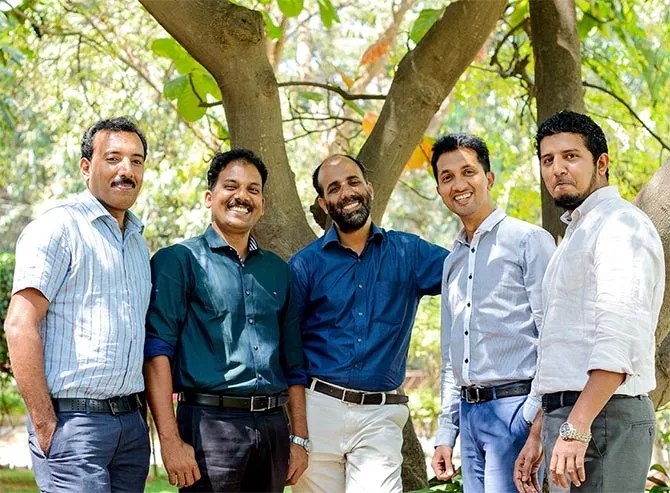
I met with my first objective by going to my village every weekend to be with my parents.

Instead of studying technology, I decided to do an MBA as I found management more interesting. I gave the CAT exam and got admission at IIM-Bangalore.

Even while studying at IIM-B, I would constantly discuss business plans with my cousins.

Shamsuddin, one of my cousins, had seen dosa batter being sold in plastic bags tied with a rubber band in nearby stores and suggested we make and supply dosa batter. That was an Aha! moment. I decided to invest Rs 25,000 and start a company immediately.

Five of us cousins — Nasser, Shamsu, Jaffer, Naushad and me — decided to join hands. The partnership was such that I had 50 per cent share in the company and the other 50 per cent was with the four of them.

We found a small place of around 550 square feet and started with two grinders, a mixer and a sealing machine.

ID is identity, not idli dosa

We were discussing names when a cousin suggested ID for idli dosa. We named the venture ID Fresh as we planned to supply fresh dosa and idli batter.

Our initial target were 20 stores in the neighbouring area. If we were able to sell 100 packets a day in six months, I would invest more and buy more machines.

We didn’t employ anyone; my cousin was in charge. We started very small with just 10 packets a day. Initially, the shopkeepers were not willing to keep a new brand. So we gave them a special offer — cash after sales.

When the customers asked for ID repeatedly, other stores also wanted to stock our product. But we stuck to the first 20 stores and waited to touch the 100 packet figure. By the ninth month, we were selling an average of 100 packets a day.

Making profits from day one

The best part of our venture was that we were making profits from day one. None of us took any salary initially. After paying the rent of Rs 500 and crossing off the expenditure of buying rice, dal, etc, our profit was Rs 400 in the first month.

Once we reached the target of 100 packets, I decided to invest Rs 6 lakh (Rs 600,000) and move to a bigger kitchen of 800 sq ft with 2,000 kg capacity, which is 2,000 packets with 15 wet grinders.

Nasser was handling the kitchen alone so we employed five people, all of whom were our relatives.

Joining as the CEO
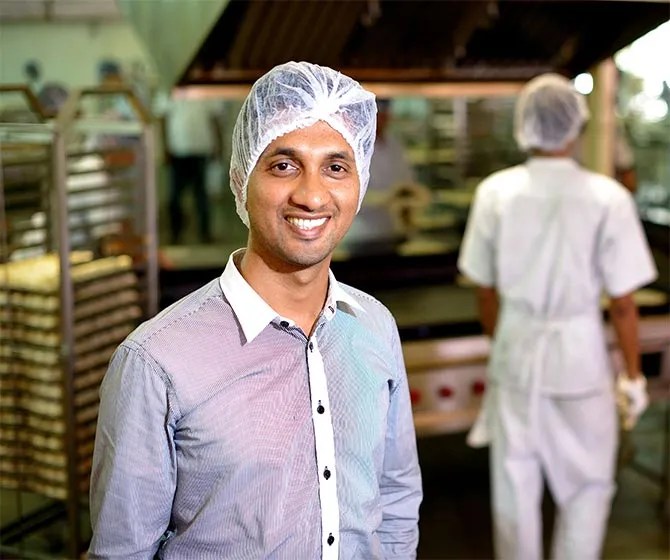
In 2007, I got my MBA and officially joined as the CEO in charge of marketing and finance. Till then, I was only remotely participating in the operation along with my cousins.

In two years, we increased the capacity to 3,500 kg a day. The number of stores we partnered with increased to 300, 400. We now had 30 employees working for us. We were operating our kitchen in a residential area till then.

As the demand increased, we decided to have a proper manufacturing plant in an industrial area. We were making a decent 10 to 12 per cent profit every month.

In 2008, I invested another Rs 40 lakh (Rs 4 million) and bought a 2,500 sq ft shed in the Hoskote Industrial Area. We imported five large wet grinders from America and customised them to fit our requirements.

In 2008, we added parathas to our list of products. We will soon introduce vada batter and also rava idli batter.

At ID Fresh, we only deal with natural fresh food. We do not add any preservatives to any of our products.

Expanding operations

In 2012, we expanded to other cities like Chennai, Mangaluru, Mumbai, Pune and Hyderabad. My friends and relatives joined me to take ID Fresh to the next level. We follow a partnership model in other cities, with a local manufacturing plant in each city. Each partner becomes a shareholder in the parent company.

In 2013, we started our operations in Dubai. We see the maximum demand for dosa batter in Dubai and are not able to match the demand.

Our experience in Bangalore helped us. We use the same raw materials, the same manufacturing process and the same business model everywhere. Expanding to other cities was a bit tough though, since we are not locally present there.

We are not looking at any other international market right now. India is such a huge market and we have so much to explore.

Rs 100 crore company

Today, we produce around 50,000 kg in our plant. The total investment must be around Rs 4 crore (Rs 40 million) and our revenue is Rs 100 crore (Rs 1 billion).

When we became a Rs 100 crore company in October 2015, we celebrated in grand scale. We have grown from producing 10 packets a day in 2005, with just my cousin managing the kitchen, to 50,000 packets a day with 1,100 employees in 10 years.

Employs only youngsters from rural areas

When I recruit someone, I ensure he is from a rural area. He has to be smart, honest and committed. Those who work in the plant make around Rs 40,000 a month.

Biggest challenge

The biggest challenge any start-up faces is getting the right people, the right team. I was lucky to have my cousins with me.

But balancing work and personal life is by far the toughest challenge.

Future plans

My aim is to make ID the most popular and trusted brand in the fresh food segment and make it Rs 1,000 crore (Rs 10 billion) company in the next five to six years.

By then, I am sure we will be able to employ at least 5,000 people.

Advice to aspiring entrepreneurs

If you have the passion to start something, do it immediately. Don’t wait for tomorrow. I had the passion to be an entrepreneur, but it took me a few years make that decision. I still regret the delay. I wish I had started five years earlier.

My words may sound like management jargon, but it is very important to maintain the quality of the product to be successful.

The three things that worked for us were that we were in the right city with the right product at the right time.

Photographs: Courtesy ID Fresh

Source…..Shobha Warrier in http://www.rediff.com

Natarajan


” I Draw Famous Cities from my Memory …” Says Stefan Bleekrode…

The city fascinates me, no it totally absorbes me, actually it excites me to such degree that I feel like spending hours, days, weeks and sometimes months recreating in fine detail my impressions of all great cities I’ve visited.

Mainly from memory, I reconstruct whole cities in pen and ink and not a single little detail is lost on me: streetlights, subway entrances, shopfronts, park benches, yes, even curtains in windows. None of it is left out so I can reproduce as much as possible the same sensation I had when walking through the places which hold my fascination even long after I’ve left. I must admit I do make sketches in pen or watercolour on the spot sometimes if I get stuck and in case of an creative emergency I resort to photographic material, but only as a support.

New York above all, but also Rome, London, Budapest, Paris, Amsterdam, Florence and many, many other places provide me with an endless amount of images and perspectives fit for reproduction or to be used in imaginary but highly realistic metropolises which could actually exist.

Below you can see a few examples of my work. Enjoy!

More info: stefanbleekrode.exto.org

I reconstruct whole cities in pen and ink and not a single little detail is lost

Spacca Napoli, Naples

New York

Centro Storico, Italy

Parisian Boulevard At Night

Vienna, Austria

Washington Square In New York

Berne, Switzerland

Evening In Paris

New York City At Night

Shard tower By The River Thames

Bucharest, Romania

My Imaginary American City

Broadway And 5th In Manhattan

My Invented Metropolis By The Sea

Source….

Stefan Bleekrode in

http://www.boredpanda.com

Natarajan

“படித்தேன் , பகர்கிறேன் உங்களுடன்… பெருமை நிறைந்த மார்கழி மாதப் பிறப்பு…! “

பெருமை நிறைந்த மார்கழி மாதப் பிறப்பு…!
மாதங்களில் மிகவும் உயர்ந்தது மார்கழி என்பார்கள்.
அதனால்தான், ‘மாதங்களில் நான் மார்கழியாக இருக்கிறேன்!’
என்று ஸ்ரீகிருஷ்ணனே கூறியிருக்கிறார்.
மேலும் அவரே, கீதையில் “மார்கழி மாதத்தை தேவர்களின் மாதம்” என்று சொல்கிறார்.
அத்தனை சிறப்புகள் வாய்ந்தது இந்த மார்கழி மாதம்.
அதிகாலை எழுந்து கோலம் இட்டு அதில் சாணத்தால் பிள்ளையார் பிடித்து வைத்து கோலத்தை பூக்களால் அலங்கரித்து மார்கழியை வரவேற்கிறோம்.
‘பீடு’ என்றால் ‘பெருமை’ என்று பொருள். பெருமை நிறைந்த மாதம் என்பதே மருவி ‘பீடை’ என்றானது.
அதுவரை இருந்த எல்லா கஷ்டங்களும் நீங்கி வரும் தைத் திங்களில் இருந்து புது வாழ்க்கை அமைய வேண்டும் என பிரார்த்திக்கப்படும் மாதமும் இது தான்.
மார்கழி முப்பது நாட்களும் பாவை விரதம் இருந்து தானே ஆண்டாள் அந்த பெருமாளையே மணாளனாகக் கொண்டாள்.
இதிலிருந்தே அந்த மாதத்தின் பெருமையை உணரலாம்.
விடியற்காலையில் இருந்தே, ஆலயங்களில் வழிபாடுகள் தொடங்கிவிடும்.
அதுபோலவே பல ஆலயங்களில் திருப்பள்ளி எழுச்சி பூஜை தொடங்கி விடும்.
மார்கழி மாதத்தில் கோலத்தில் பூ வைப்பதற்கும், சாணத்தால் பிள்ளையார் பிடித்து வைப்பதற்கும் முன்னோர்கள் காரணங்கள் சொல்லிச் சென்றுள்ளனர்.
பூ வைப்பது ஏன் ?
அக்காலத்தில், திருமணத் தரகர்களோ, மாப்பிள்ளை – பெண் தேவை என்பதற்காக வெளியிடப்படும் கல்யாண விளம்பரங்களோ கிடையாது.
எந்த வீட்டில் பெண் அல்லது பிள்ளை திருமணத்துக்குத் தயாராக இருக்கிறார்களோ,
அந்த வீட்டின் வாயிலில் மட்டும் கோலத்தின் மேல் பூசணிப் பூ வைப்பார்கள்.
ஒட்டு மொத்தமாக எல்லா வீடுகளிலும் வைக்க மாட்டார்கள்.
மார்கழி மாத அதிகாலையில் வீதி பஜனையில் வருபவர்களின் பார்வையில் இந்தப் பூக்கள் தென்படும்.
விவரத்தைப் புரிந்து கொள்வார்கள். தை மாதம் பிறந்த உடனே பேசி, கல்யாணத்தை முடிப்பார்கள்.
இதன் காரணமாகவே மார்கழி மாதத்தில் வீட்டு வாயிலில் இருக்கும் கோலத்தில் பூக்களை வைத்தார்கள்.
அது போலவே மார்கழி மாதத்தில் பல புராதன நிகழ்வுகளும் நடந்துள்ளன.
மகாபாரத யுத்தம் மார்கழி மாதத்தில் நடைபெற்றதாக இதிகாசம் கூறுகிறது.
எல்லாவற்றிற்கும் மேலாக ஆண்டாள் நாள்தோறும் வைகறையில் எழுந்து ,
{ஒவ்வொரு பாசுரமாகப் பாடி, திருமாலை திருப்பாவையால் திருவடித் தொழுது, திருமணம் புரிந்ததும் மார்கழி மாதம்}
என்னும் சிறப்பு மிக்க மார்கழி மாதத்தில் தான்.
இவ்வாறு பல மகத்துவத்தை தன்னுள் அடக்கி வைத்துள்ளது மார்கழி மாதம்.
சிதம்பரத்தில் மார்கழி மாதத்தில் நடைபெறும் ஆருத்ரா தரிசனமும், ஸ்ரீரங்கத்தில் நடைபெறும் வைகுண்ட ஏகாதசியும் மிக முக்கியமான விசேஷங்களுள் ஒன்று.

ஆன்மிக மலர்ச்சிக்கு சிறந்த மாதமாக கருதப்படும் இந்த
{மார்கழி மாதத்தில்} இறைவனை எண்ணத்தால் துதித்துப் போற்றுங்கள்…..
அனைத்து செல்வங்களையும் பெறுங்கள்…..
மார்கழி மாதம் அதிகாலை எழுந்து ஏன் கோலம் போட வேண்டும்?
இந்த மாதத்தில்தான் சூரியன் தட்சிணாயணத்திலிருந்து உத்தராயணத்திற்கு நகர்கிறான்.
அதாவது டிசம்பர் முதல் மே வரை சூரியன் தெற்கிலிருந்து வடக்கிற்கும்,
ஜுன் மாதத்திலிருந்து நவம்பர் வரை வடக்கிலிருந்து தெற்கு நோக்கியும் நகர்கிறான்.
சூரியனின் ஓட்டத்தில் இந்த மாற்றம் நிகழும்போது,
பூமியினுடைய சக்தி சூழ்நிலையிலும் பல மாற்றங்கள் நிகழ்கின்றன.
குறிப்பிட்ட விதத்தில் கோலம் இடுவதன் மூலம் அந்தச் சக்தியை நம் வீட்டிற்குள் கிரகித்துக் கொள்ள முடியும்.
இதனை நீங்கள் விஞ்ஞானப்பூர்வமாக செய்தால் உங்களுக்கு நிச்சயம் பலன் கிடைக்கும்.
குறிப்பாக பூமத்திய ரேகையிலிருந்து 32 டிகிரி அட்சரேகையில் (Latitude) பெரிய மாற்றங்கள் நடைபெறுகின்றன.
தமிழ்நாடு, ஆந்திரா, கர்நாடகா போன்ற மாநிலங்கள் இந்தப் பரப்பில்தான் உள்ளன.
இந்த மாற்றங்கள் நிகழ்கின்றபோது அதனை பயன்படுத்திக் கொள்ள பல கருவிகள் உருவாக்கப்பட்டன.
யோக முறைகளிலும் பலவிதமான பயிற்சிகள் வகுக்கப்பட்டுள்ளது. நீங்கள் மஹாபாரதக் கதை கேட்டிருப்பீர்கள்.
அதில் பீஷ்மர், தன் உடலில் அத்தனை அம்புகள் ஏறியிருந்தாலும் தன் உயிரை உத்தராயணத்தில் தான் துறக்க வேண்டும் என்று விடாமல் பிடித்து வைத்திருந்தது உங்களுக்கு தெரிந்திருக்கும்.
உத்தராயணத்தில் உடலை நீத்தால் முக்தி கிடைக்கும் என்னும் நம்பிக்கையே இதற்குக் காரணம்.
எனவே முக்தி நோக்கிலுள்ள மக்களுக்கு மார்கழியில் தொடங்கும் உத்தராயணம் முக்கியமானதாக இருக்கிறது.
எனவே சூரியனின் போக்கில் மாற்றங்கள் நிகழும் போதும், பூமிக்கும் சூரியனுக்குமான தொடர்பில் மாற்றங்கள் ஏற்படும்போதும்,
தேவையான { அறிவு, ஞானம் } இருந்தால், அப்போது ஏற்படும் சக்தி சூழ்நிலையை, நமக்கு சாதகமாக பயன்படுத்திக் கொள்ள முடியும்.
{ அதில் ஒன்று தான் கோலம் இடுவதும். }
குறிப்பிட்ட விதத்தில் கோலம் இடுவதன் மூலம் அந்தச் சக்தியை நம் வீட்டிற்குள் கிரகித்துக் கொள்ள முடியும்.
இதனை நீங்கள் விஞ்ஞானப் பூர்வமாக செய்தால் உங்களுக்கு நிச்சயம் பலன் கிடைக்கும்.
உங்களுக்கும், உங்கள் வீட்டில் இருப்பவர்களுக்கும், உங்கள் வீட்டு சூழ்நிலைக்கும் நன்மையைக் கொண்டு வர முடியும்.
இந்த மாதத்தில் அதற்கான வாய்ப்பு மிகத் தீவிரமாக உள்ளது…

Source….input from a friend of mine…

Natarajan

Message For the Day… ” Good and Noble action is Authentic Worship{Pooja} …”

The inborn desires and mental impressions (samskaras) make or mar the individual (jivi); they are the steps that take all individual souls to the goal. Samskaras make the individual wade through loss and grief. Only through good mental tendencies you can attain the Lord. So every individual has to be wholly engaged in good actions (sath-karmas).Good and noble action is authentic worship (puja). It is the best form of remembering the Lord. It is the highest devotional song. It spreads love, without distinction and difference. It is service done as the duty of the individual. Be engaged in such noble actions (karmas). Revel uninterruptedly in the thought of the Lord. This is the royal road to the goal you have to reach.

Sathya Sai Baba

” The Chennai Flood Happened Due to a Complete Lack of Urban Planning…”

Views of an Urban Planner and Architect  …” My View ” Column in http://www.the better india .com

Natarajan


After Chennai’s recent catastrophic floods, the one question that looms large is – ‘could proper urban planning have prevented such a disaster?’ My answer to that question is certainly ‘yes’.

The way our cities are planned has got a lot to do with inviting or avoiding such disasters. Chennai floods underline the importance of adhering to the fundamental urban planning principles, when we design our cities. Being an architect and an urban planner, I can’t over-emphasise this point enough.

Anil  Bhaskaran , Urban Planner and Architect

But before discussing about the kind of planning that should have been done in a city like Chennai, we must understand what the architecture of any ideal city should be like.

Chennai city planning

Photo Credit: ReflectedSerendipity/Flickr

Let us first look at the birth and growth pattern of a city, which is almost like a living human body. It is born, lives for a certain period of time, and then dies. Like a group of cells come together to form a human body, a group of people come together to form a city. Thus, any city must grow to its limit, attain maturity, cease to grow and eventually perish. It can function to the peak of its efficiency only for a limited period of time, after which it should be allowed to die its natural death. Adding newer parts to an old city is almost like transplanting new organs in the body of an old living organism. It distorts the fundamental body mechanism.

This leads us to the question – ‘what can we do to prevent the distortion of our cities like Chennai, and to prevent disasters like the recent floods?’ Here are three basic points that must be kept in mind:

1. A city must be designed for a specific number of people.

Chennai city planning

Photo Credit: Jared Smith/Flickr

As and when the limit is attained, newer cities should be designed and built. And this should be a continuous process. This is quite similar to the situation of a living being, who on achieving maturity, allows the next generation to come into existence through the method of reproduction.

2. We need to limit the migration from villages to cities.

Chennai city planning

Photo Credit: snotch/Flickr

Chennai is a classic example of this problem. However, the solution cannot be achieved by promulgating any law. Instead, we need to enhance the quality of life in our villages. This will require a change in the existing mindsets and policies.

3. A city should be walkable.

Chennai city planning

Photo Credit: Andrea/Flickr

On further analysis, one comes across another important element of city planning – Every city should be walkable, horizontally and vertically. This leads to the reduction in the amount of energy spent while commuting. Ideally, one should be able to walk from the outermost ring, to the centre of a city within twenty minutes.

Traditionally, cities were planned and built based on the principles mentioned above. Cities like Rome, Paris, Florence, Jaipur and Jaisalmer are all good examples of how well the city planners of the past understood these fundamentals and applied them prudently in the creation of their cities. But on comparing those with present-day cities like New York, Tokyo, Mumbai or Chennai — there is clearly a striking contrast.

But then, what is wrong with Indian cities like Chennai, which is a mix of the old and contemporary? Fundamentally, it is the unlimited growth that destroys the order in such cities beyond repair. In a human body, unlimited growth is considered cancerous. A city is no exception to this rule.

Chennai must accommodate the natural contours, slopes and drains, in its plan. One of the best ways of planning a water front city is to ensure that all the main streets are running perpendicular to the coast line. This will allow easy passage of excess rain water into the sea. A good example of such planning is the city of Minneapolis that sits on the banks of the Mississippi river.

Looking at the enormity of the problem in Chennai, the solutions have to be implemented at a large scale too! We need to take some hard steps here, such as:

Chennai city planning

1. Gravity drains should be created, taking into account the natural slopes of the terrain and quantum of water to be handled.
2. Existing natural drains and rivers should be de-silted and widened.
3. Low-lying areas should be spared of construction (have some mercy!). In some cases, dikes have to be built around them to protect such areas from flooding.

But in the end, we must remember that prevention is better than cure. We must plan, form and take care of our cities like we do our homes.

Netherlands, a country that has more than sixty percent of its land below sea level, has been taking some pioneering steps in the direction of water management and hydrology. The country has taught itself how to live with water, rather than fight it. In the recent years, it has been consistently voted as one of the top ten happiest countries in the world to live in. If they can top in happiness quotient, in spite of their problems with water management, so can we. What is needed is the will to face the challenges and solve the problems objectively and scientifically.

– Anil Bhaskaran

Anil Bhaskaran is an Urban Planner and Architect, and the MD of IDEA Centre Architects, Bangalore.

Source….www.the betterindia.com

Natarajan

Just for your Laugh …. Start Your day with a Smile !!!

A little girl comes back home from school and tells her mom:

“Mommy, today I got punished for something I didn’t even do!”
“What?! What do you mean?” Her mother says, angry, “I’m going to call your teacher right now! What is it you didn’t do?”
My homework.
 ………………………….
A rich businessman walks down the street when he spots an old man sitting with a fishing rod next to a puddle, trying to fish.
The businessman takes pity on the old deranged man, and invites him to lunch at the coffee shop close by.
After the meal, the businessman asks him with a smile: “So? Did you catch any fish today?”
Sure did,” answers the old man, “You’re my third one.
 …………………….
Mark spent a year in an asylum, thinking he was a mouse. After intensive therapy, he was released.  10 minutes later he appears back inside as if all hell broke loose.
“What happened to you??” Asked his surprised doctor.
“There’s a cat outside!” screams Mark.
“But Mark, I thought you got better! You know you’re not a mouse!” Cried the doctor.
I do!” Exclaims Mark, “but he doesn’t know that!
 …………………..
Teacher: “Daniel, if you had a dollar in your hand and you asked your dad for another dollar, how many dollars would you have in your hand?”
Daniel: “A dollar.”
Teacher: “Daniel, apparently you don’t know math…”
Daniel: “Apparently you don’t know my dad.
Source…..www.ba-bamail.com
Natarajan

Message for the Day….” God is your Protector…”

While struggling in the spiritual field, take on the Lord Himself as your protector. To instill courage in the child, the mother persuades it to walk a few steps and turns about, but she will never allow it to fall. If the child falters and is about to lose balance, she hurries from behind and catches it before it falls. The Lord too has His eyes fixed on the individual (jivi). He has in His hand the string of the kite, which is humanity. Sometimes He may give it a pull or push to loosen the hold; but whatever He does, be confident and carefree, for He is holding that string. This faith will harden into an innate desire (samskara) and will fill you with the essence of love (prema-rasa). The string is the bond of love and grace. You are the kite, bound to the Lord. Earn auspicious merit so the bond of love and grace is firm and grows.

Sathya Sai Baba

These Flower Lamps Bloom When People Stand Under Them…!!!

Pedestrians in Jerusalem’s Vallero Square can stop for some respite under these self-inflating, giant flowers. Installed by HQ Architects in 2014 and titled “Warde,” these nine by nine meter flowers “bloom” when someone approaches, or when a tram is about to arrive, brightening an otherwise depressed part of the city.

“This project is part of the municipality’s effort to improve the urban space of the city center and in this specific case, of the [square’s] poor condition,” reads the Designboom submission. “Warde’s attempt was not to fight the chaos but instead to try and lighten up the urban space, by spreading around these four elements that have a hint of fantasy, and with their help, overcome the reality of the square.”

More info: hqa.co.il | Facebook (h/t: designboom, contemporist)

inflating-flowers-warde-hq-architects-jerusalem-7

inflating-flowers-warde-hq-architects-jerusalem-gif-3

inflating-flowers-warde-hq-architects-jerusalem-2

inflating-flowers-warde-hq-architects-jerusalem-8

inflating-flowers-warde-hq-architects-jerusalem-13

inflating-flowers-warde-hq-architects-jerusalem-20

inflating-flowers-warde-hq-architects-jerusalem-12

inflating-flowers-warde-hq-architects-jerusalem-10

Image credits: Dor Kedmi

Source….www.boredpanda.com

natarajan

” நிமிடக் கட்டுரை – சென்னையைப் பாதுகாத்த பக்கிங்காம்…”

சென்னையின் கால்வாய்களையும் ஆறுகளையும் இணைத்துச் சமன்படுத்திவந்த பக்கிங்காம் கால்வாய் மட்டும் உயிர்ப் போடு இருந்திருந்தால் சென்னை இன்று நீரில் தத்தளித்திருக்காது.

1801-ல் வெளிவந்த மெட்ராஸ் கெஜட் அறிவிப்பின்படி சென்னையைச் சுற்றியுள்ள ஓடைகளை இணைக்க எண்ணூரிலிருந்து சென்னை வரை ஒரு கால்வாய் கட்டத் திட்டமிடப்பட்டது. பிறகு ஆந்திராவின் காக்கிநாடா பகுதியிலிருந்து தமிழகத்தின் விழுப்புரம் வரை பறந்து விரிந்த மிக நீண்ட கால்வாயாக அது கட்டப்பட்டது. இன்று சென்னையை முட்டித்தள்ளும் ஆறுகளும் ஏரிகளும் அன்று பக்கிங்காம் கால்வாய்க்குக் கட்டுப்பட்டிருந்தன. உதாரணத்துக்கு, கூவத்தையும் அடையாறையும் இணைக்கும் ஆற்று வழிப்பாதை இருந்தது.

கோதாவரி ஆற்றோடும் கிருஷ்ணா நதியோடும் கைகோத்த இந்த பக்கிங்காம் கால்வாயில் 1890-களில் வணிகப்பொருட்களை உற்சாகமாகப் பல படகுகள் சுமந்து சென்றன என்று ‘இந்தியன் பால்ம்’ என்னும் புத்தகத்தில் பால் ஹைலாந்த் குறிப்பிட்டுள்ளார். ஆனால் பின்னாளில் எதிர்பாராத வெள்ளத்தினாலும் வறட்சியினாலும் பக்கிங்காம் கால்வாய் வழி வணிகம் தடைபட்டுப்போனது என்பது தெரியவருகிறது.

இதேபோன்று, சென்னையின் மழை நிலவரம் குறித்து 64 ஆண்டுகள் தொடர்ந்து நடத்தப்பட்ட ஆய்வின் விவரங்களை 1832-ல் வெளியிட்டார் ஆர்தர் காட்டன். இதன்படி சென்னையில் மழை வரத்து சீராக இல்லாமல் ஏற்றம் இறக்கத்தோடு மாறி மாறிப் பொழிவதாகக் குறிப்பிட்டுள்ளார். 1827-ல் 88.41 அங்குலம் வரை சென்னையில் மழை பொழிந்திருக்கிறது. ஆனால் 1831-ல் 44.35 அங்குலமாக அது குறைந்திருக்கிறது. 1832-ல் வெறும் 18.45 அங்குலம் மட்டுமே பொழிந்திருக்கிறது. அடுத்த ஆண்டில் 37.11 அங்குலமாகத் திடீரெனப் பெருகியிருக்கிறது.

இவ்வாறாகச் சென்னையின் மழை நிலவரம் ஏற்ற இறக்கத்தோடு இருப்பதால் இப்பகுதிக்கான நீர் மேலாண்மை கண்ணும் கருத்துமாகத் திட்டமிடப்பட வேண்டும் என தன் அறிக்கையில் சுட்டிக்காட்டியுள்ளார். சென்னையின் நீர் மேலாண்மையில் பக்கிங்காம் கால்வாய் முக்கியப் பங்குவகித்தது என்பதற்கான பதிவுகளும் காணப்படுகின்றன. பழுதடையாமல் இருந்தவரை கொள்திறன் ஒரு நொடிக்கு 5,600 கன அடி நீரைக் கொள்திறனாகக் கொண்டிருந்தது.

ஆனால் சென்னையின் ஏரிகளுக்கும் பிற நீர்நிலைகளுக்கும் இடையிலான தொடர்பு துண்டிக்கப்பட்டவுடன் பக்கிங்காம் கால்வாய்க் கான முக்கியத்துவமும் மறைந்துபோனது. 1900 மே 10-ல் வெளியான

`தி இந்து’ ஆங்கில நாளிதழின் கட்டுரை ஒன்றில் இது துல்லியமாகப் பதிவுசெய்யப்பட்டிருக்கிறது. நீண்ட காலத்துக்குப் பிறகு பக்கிங்காமின் அருமை அறிந்து மீண்டும் காக்கிநாடா முதல் புதுச்சேரி வரை அதன் நீர் படுகையைச் செப்பனிட்டு தேசிய நீர்வழிப் பாதையை அமைக்க 2008-ல் திட்டமிடப்பட்டது. ஆனால் இன்றுவரை இந்தக் கனவுத் திட்டம் மெய்ப்படவில்லை. சென்னையின் இன்றைய அவல நிலையைப் பார்த்த பிறகாவது விடிவு காலம் பிறக்குமா?

– ‘தி பிஸினஸ் லைன்’
தமிழில் சுருக்கமாக: ம. சுசித்ரா

Source….ஜி. நாகா ஸ்ரீதர்….www.tamil.thehindu.com

Natarajan

Images of the Day…

Mirrored


Mirrored


Mirrored


Mirrored


Mirrored


Mirrored


Mirrored

Mirrored


Mirrored


Mirrored

Mirrored]

Mirrored

The keys to taking a good photo are timing and location. By being at the right place at the right time, photographers managed to capture these incredible pictures, thanks to nature’s mirror – water. The results are both unreal and majestic, leaving the spectator with a sense of awe.

Source…..www.ba-bamail.com

Natarajan