This is Egypt’s Only Waterfalls, And its Man-Made…

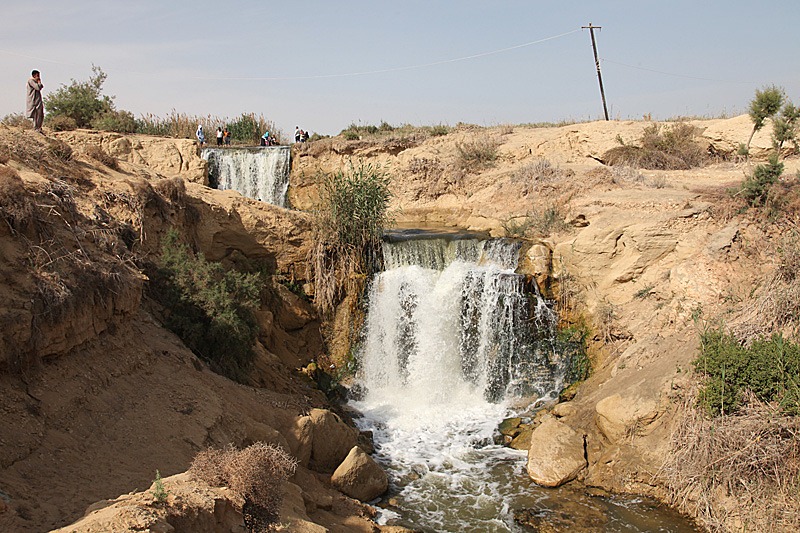
The valley of Wadi El-Rayan, 65 km southwest of Fayoum city, in Egypt, is home to two large artificial lakes created to divert excess agricultural drainage water from Fayoum oasis. It is also home to the country’s only waterfalls.

The Fayoum oasis originally drained into Lake Qarun in the north. But the lake can take only a certain volume of drainage water. Anything over this capacity and the lake level would rise and flood the surrounding land, often doing irreparable damage because of the waters high salt content. This means that the amount of water that can be used in the Fayoum is limited by the region’s maximum drainage capacity. Consequently, until recently water-intensive crops such as rice and reeds could be grown only in very small quantities. Furthermore, no new land could be reclaimed without causing swamping of existing farmland near Lake Qarun. There was a pressing need to find an alternative drainage basin, and the large depression of Wadi El Rayan was found to be suitable.

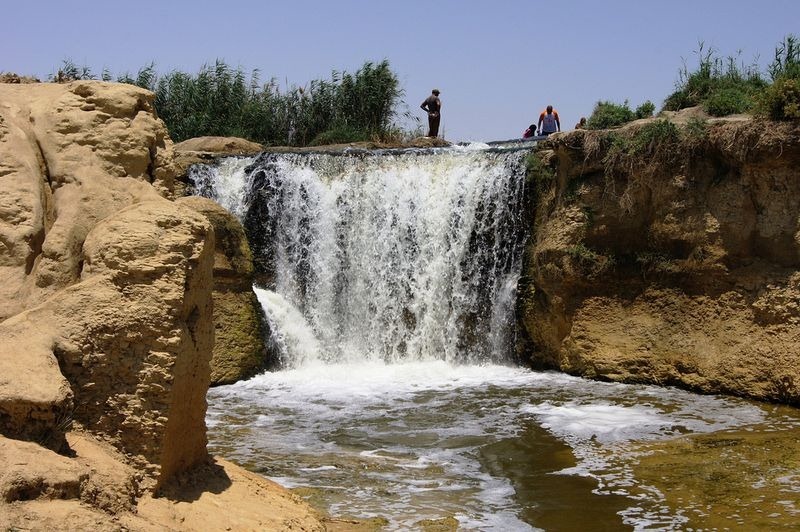
wadi-el-rayan-waterfalls-6

Photo credit: Roland Unger/Wikimedia

In 1974, a 9-kilometers open channel and an 8-kilometers tunnel were cut through the desert from the western side of the Fayoum depression to the large, dry depression of Wadi El Rayan. Drainage water now flows into Wadi El Rayan forming two large lakes. Water first reaches the northern lake and when it’s overwhelmed, a stream flows towards a deeper part of the depression, where another lake is formed. As the course of the stream was eroded, natural rocks were exposed and waterfalls formed over them.

There are several cascades on the stream, none of them taller than 2 to 4 meters. Yet, they have attracted considerable attention among the local Egyptians, as many have never seen waterfalls before. The waterfalls have also been featured in many Egyptian pop videos and films. The falls, however, will not last for ever as the level of the lower lake is continually rising and the falls will exist only until the expanding surface area allows a rate of evaporation equal to the amount of water flowing into it.

The shorelines of the lakes are densely vegetated making them perfect wintering habitats for migrating birds and breeding spot for many fishes. The area is now a nature reserve and is home to the world’s sole population of Slender-horned Gazelles, as well as 8 other mammal species and 13 species of bird.

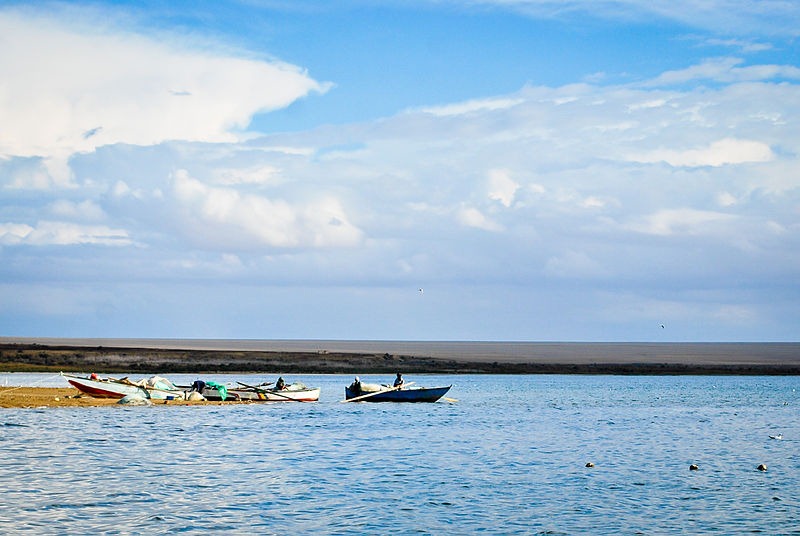
wadi-el-rayan-lake

Wadi El-Rayan Lake. Photo credit: Mohammed Moussa/Wikimedia


wadi-el-rayan-waterfalls-3

wadi-el-rayan-waterfalls-1

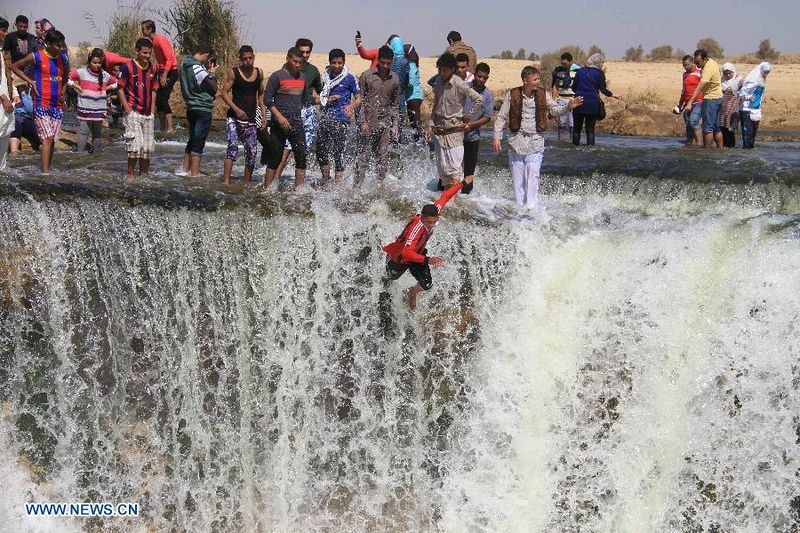
An Egyptian man jumps in the water of Wadi El-Rayan Waterfalls in Fayoum, Egypt, on March 6, 2015. Photo credit: Xinhua/Ahmed Gomaa

Source…..www.amusing planet.com

natarajan

Message for the Day..” Art of Spiritual Discipline….”

The attitude of the worshiper and the worshiped is the seed of devotion (bhakthi). First, the worshiper’s mind is attracted by the special qualities of the object of worship. The worshiper tries to acquire these special qualities. This is spiritual discipline (sadhana). In the early stages of spiritual discipline, the distinction between worshiper and worshiped is full, but as the spiritual discipline progresses, this feeling diminishes and, when attainment is reached, there is no distinction whatsoever. Irrespective of the object of worship one has grasped, loved and sought by spiritual discipline, one should have firm faith that the individual self(jivatma) is the supreme Lord (Paramatma). There is only one wish fit to be entertained by the aspirant: the realisation of the Lord (Iswara Sakshatkara). There is no room in the mind for any other wish.

Sathya Sai Baba

” The Man who led Chennai’s Rescue Effort …”

Soldiers join the resuce operations in Chennai

IMAGE: Soldiers join the rescue efforts in Chennai. Photograph: MoD/Twitter

‘Coordination between our 50 teams, each with a strength of 45 men, played a key role in rescuing flood-affected people in Chennai. In all, we succeeded in rescuing over 20,000 people.’

‘The NDRF, an exclusive dedicated standalone multi-disciplinary disaster response force, is the only one of its kind in the world.’

NDRF chief O P Singh on how his organisation helped rescue and relief in flood-ravaged Chennai.

NDRF chief O P Singh

National Disaster Response Force Director General O P Singh refuses to be drawn into any controversy regarding the unprecedented release of over 29,000 cusecs of water from the Chembarambakkam reservoir on the night of December 1, without having alerting the state government, the police or the power utility services.

Water experts believe this release was the main reason for the floods that devastated Chennai with the situation being made worse by the heavy rainfall.

Singh,  is a 1983 cadre Indian Police Service officer. As head of the NDRF he was responsible for the rescue of nearly 50,000 civilians during the disastrous flooding of Sringar in September last year. His organisation’s work during the Nepal earthquake earlier this year was much appreciated by the governments of Nepal and India. The NDRF was formed by an Act of Parliament in September 2014.

He spoke exclusively to Rashme Sehgal for Rediff.com

You had 50 NDRF teams working night and day to rescue people through this crisis. What has the NDRF learning curve been from this?

What we witnessed in Chennai is the phenomenon of urban flooding. It is very different from rural floods or floods in semi-urban areas. Its special feature is that as water levels start to rise, the water begins to flow in a very swift manner. This kind of urban flooding we are witness to can be described as a very recent phenomena.

We witnessed it in Mumbai ten years ago. Jammu and Kashmir was our first experience of intense urban flooding.

How did you go about tackling the situation in flood-hit Chennai?

We are the only official disaster response team in the country. We have a strength of 12 batallions of 15,000 men drawn from the Central Reserve Police Force, the Indo-Tibetan Border Police, the Border Security Force and the Central Industrial Security Force who join us for a period of deputation lasting five years.

The first two years are spent providing them very intensive and highly professional training in how to handle disaster situations in different areas, whether it be the collapse of structures, search and rescue, deep underwater diving, underwater communication, medical first responder and also how to deal with biological, radiological and nuclear emergencies.

Coordination between our 50 teams, each with a strength of 45 men, played a key role in rescuing the flood-affected people in Chennai.

In all, we succeeded in rescuing over 20,000 people.

If you spend two years training them, then why should they revert back to their earlier cadre three years later? Doesn’t all this intensive training go waste by this kind of reversion?

That is a very valid question. If you permanently keep them (in the NDRF) then they might lose their motivation. We are thinking of keeping them for a longer period and are considering the possibility of extending their deputation from five to ten years.

We are also looking at a possibility of allowing 12 per cent of our force to be kept in the NDRF on a permanent basis.

You need to remember that this is an exclusive dedicated standalone multi-disciplinary disaster response force. It is the only one of its kind in the world. They focus only on disasters and nothing else.

When there are no disasters, we spend our time trying to empower the community because the community is the first responder to a disaster. We also interact closely with the police, the fire brigade and also provide training to organisations like the NCC (National Cadet Corps), the National Service Scheme and the home guards. We are capable of reaching a disaster within 20 minutes.

Were you able to reach Chennai within 20 minutes of the flood occurring?

In Chennai, our 50 teams flew in from Bhatinda, Guwahati, Patna and Pune. We had already pre-positioned some teams around Chennai and were receiving regular reports from the Indian Meteorological Department.

You had pre-positioned your teams around Chennai prior to the massive flooding?

We had four teams that had been pre-positioned. We had teams in Cuddalore and Kanchipuram and had two teams in Puducherry. Within two to three hours of being informed about the heavy rainfall and about the release of water from the reservoir, our local battalion stationed in Ernakulam was there.

What were the immediate steps you took?

Our first steps were on how to evacuate the people who were marooned. We had to put them in boats and take them to a safer location. For that we needed divers, life jackets and boats.

In some areas there was eight to nine feet of water. Chennai airport was submerged in eight to nine feet of water. Several localities were completely submerged.

The second major problem we faced was the breakdown of power resulting in a major communication failure. People’s mobile phones had gone dead. There was also the apprehension was of people getting electrocuted.

The other problem we faced that even though people were marooned, they were not willing to leave their homes.

Why was that? Did people feel that in their absence, their homes would get looted?

People living in ground floor houses agreed to get evacuated, but those living on the first floor moved to the second floor and then onto the roof.

The settlements along the banks of the river Adyar which were all low lying areas, saw huge amounts of water collect there. Our teams found it very difficult to navigate these areas.

More than 300 people died in these floods.

A large number of these deaths took place in some hospitals because of the power failure. The ICU units in the hospitals were affected because of the lack of power.

Our 50 teams were using Quick Deployable Antennae (for satellite communications) which is a portable system and can be used both in the digital and analogue mode. But this QDA is an internal system that can be used only by us.

But on our helpline, we were getting information via SMS, e-mails and Whatsapp, and also from television channels. I was stationed in Chennai and constantly telling my response team to reach the area from where the alert had been sounded. I was acting as a link between the victim and the parent or others.

Obviously, during the flood, people were on edge, they had become nervous and very jittery. I had to keep assuring the public. It was a huge challenge to communicate and reach out to the people especially since the power facilities were down.

But our men were working round the clock. I would like to cite the example of one rescue mission that my men undertook of a woman called Deepthi who was in her final stages of pregnancy and living in the Ramapuram area. Two NDRF sub-inspectors Bijumon and Satish reached out to her in a boat, but could not load her onto a boat.

She had to finally be rescued by a chopper. The two jawans helped her climb onto a water tank from where they helped her climb her onto an IAF helicopter being flown by a team led by Wing Commander Simon and Squadron Leader Venkatraman.

The lady gave birth the next day to two twin girls and her father Mohan Raj sent me a letter commending the work done by the NDRF and hoping his twin grand-daughters would join the NDRF one day.

The NDRF received praise in Chennai, but the NDRF received criticism for its rescue operation work during the floods that hit Kashmir last year.

No, I don’t think so. The terrain of Srinagar is completely different from the terrain of Chennai. Srinagar is an extremely mountainous area. The Jhelum river had spilled over and mixed with the Dal Lake and the entire area looked like a vast sea.

The current there was very sharp and we had to use choppers. The flood water ended up dividing the old Srinagar city from the Dal Lake area. Our teams ended up rescuing 50,000 people in the operation.

Chennai used to be a dry city. But the incessant rain, unregulated construction and the release of a huge amount of water from the Chembarambakkam reservoir caused this deluge.

To go back to my earlier question, what is your learning from this deluge?

I believe we have to strengthen our response measures to meet disasters. But the long-term strategies would be to pay much greater attention to prevention and mitigation strategies. These will involve flood mapping and satellite imagery. But most important, we need to pay much greater attention to regulate development in our cities.

To take the example of Chennai, which as a city can be divided into three parts. No new construction must be allowed in the vulnerable parts of the city. The state government must take strong measures in this. I believe after witnessing two major floods that all urban construction must be regulated.

In terms of mitigation strategies, we need to construct water channels to drain out the water. More important, we need to revive the water channels that have been destroyed. We need to take very strong steps on this score.

Cities must develop resilience to face heavy rain and for that we need to take institutional measures to ensure that there can be no encroachment on marshlands, our traditional tanks and lakes that have shrunk must be restored and all the waterways that had been constructed to drain excess water must also be restored to ward off future threats.

Source…….Rashme Sehgal in http://www.rediff.com

Natarajan
Places Where Three Time Zones Meet……..

When Italian mathematician Quirico Filopanti first sounded the idea of time zones in his book Miranda! published in 1858, he proposed that the world be divided longitudinally into 24 equal time zones, where each zone differs from the last by one hour. But the real world is rarely that simple. Influenced by political, geographical and social changes, the world adopted a much more complicated system where time zones differed by three-quarter, half and even quarter of an hour. Today there are as many as 40 different time zones.

With so many different time zones around it’s imperative that some of them would meet at more than one point. There are exactly twenty-two places, according to various sources, where more than three time zones meet. Some of them are obvious, such as tri-point boundaries between nations observing different time zones. The strangest ones are located in Australia because the way the country’s different states follow time.


australia-tri-points

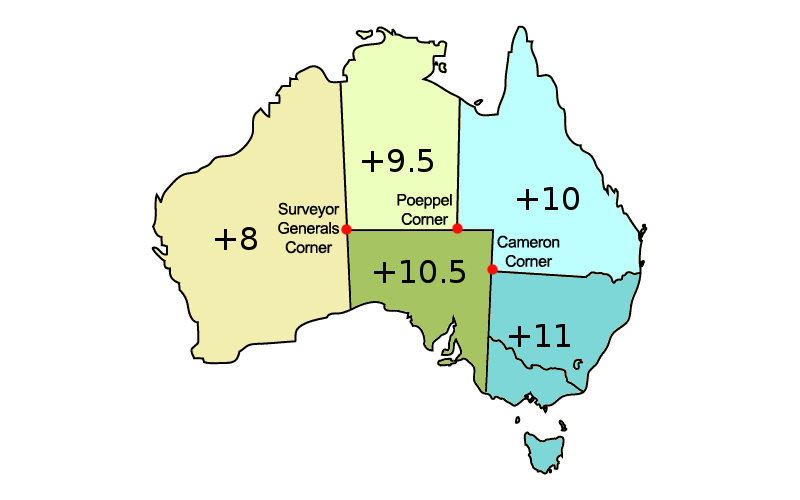
The time zones of Australia and the three state corners where three time zones meet.

Australia has three time zones, but from spring until autumn when New South Wales and South Australia adjust their clocks for daylight-savings, two additional time zones appear that horizontally break up the country’s two easternmost time zones into four. These time zones, which differ from each other by 30-minutes, meet at three different places. The most popular of them is Cameron Corner in the outback of eastern Australia, where the boundaries of states of Queensland, South Australia, and New South Wales meet. The other ones are Poeppel Corner (located at the corner of Queensland, South Australia and the Northern Territory) and Surveyor Generals Corner (located at the corner of South Australia, Western Australia and the Northern Territory). Standing at any one these locations allows any person to be at three different points of time at the same time. To take advantage of this anomaly, more than a thousand people descended on the tiny settlement of Cameron Corner on December 31, 1999, so they could celebrate the arrival of the new millennium three separate times.

cameron-corner-1

Marker at Cameron Corner. Photo credit: Kris H/Flickr


cameron-corner-2

Marker at Cameron Corner. Photo credit: Geoffrey Rhodes/Flickr


poeppel-corner

Marker at Poeppel Corner. Photo credit: Mark161/Panoramio

surveyor-generals-corner

Marker at Surveyor Generals Corner. Photo credit: jeza1/Panoramio

Another interesting place where a bunch of time zones meet is Antarctica. Being located on the South Pole, where every line of longitude meet, you might be tempted to think that all time zones meet here, but this is not the case, as time zones rarely adhere to geographical divisions. Because of the extreme day-night cycles near the times of the June and December solstices in Antarctica it is difficult to determine which time zone would be appropriate. Instead, researchers working on various stations in the Antarctic Circle observe time zones of the country the station is owned by, or the time zone of their supply base. For example, McMurdo Station and Amundsen–Scott South Pole Station use New Zealand time due to their main supply base being Christchurch, New Zealand. Many areas —those labeled in red in the map below— have no time zone at all, and follow Universal Time, by default.

antarctica-time-zones

Photo credit: Phoenix B 1of3/Wikimedia

Sources: CN Traveler / iO9

Story credit….www.amusingplanet.com
Natarajan

” Do Walking Palm Trees Really Walk…” ?

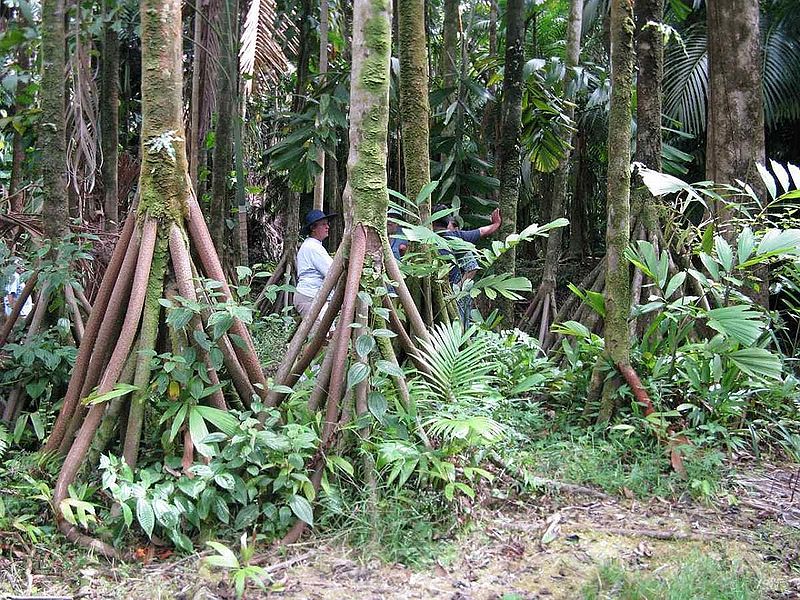
A recently published article on BBC’s website mentions a certain palm tree that has allegedly developed a rather unique ability unbecoming of a plant —the ability to walk. The palm in question is Socratea exorrhiza, also nicknamed the “Walking Palm”. The bizarre idea stems from the fact that scientists are unable to explain the tree’s strange stilt-like roots. Found in tropical rainforests of Central and South America, the Socratea exorrhiza develops long and sturdy roots that grow outwards from the base of the tree, several feet off the ground, and take root in the soil around, giving it the appearance of multiple legs. It wasn’t long before people started to believe that these roots actually act like legs enabling the palm tree to literally walk in the forest.

socratea-exorrhiza-walking-palms-6

Photo credit: www.palmpedia.net


The amazing story of the walking palm tree has been told by rainforest guides to tourists for years, and appears in many sources both in print and on the web. It is said that the tree “walks” from shade to sunlight by growing roots in the direction it wants to travel, and then allowing the old roots to slowly lift into the air and die. This allows the tree to slowly move towards the side where the new roots are growing. The process is said to take a couple of years, while one palaeobiologist suggesting the tree moves two or three centimeters per day.

It’s such a fascinating story that many tend to believe it, like our palaeobiologist from the Earth Science Institute in Bratislava. Unfortunately, the walking tree is a myth.

The idea of the walking tree was first suggested by John H. Bodley in 1980 who thought that such an ability allows the palm to “walk away” from the point of germination if another tree falls on the seedling and knocks it over. This way, the tree can move away from obstacles that are major hazards for immature palms.

Biologist Gerardo Avalos, director of the Center for Sustainable Development Studies in Atenas, Costa Rica, and —according to LiveScience.com— one of the world’s top experts on the Socratea exorrhiza, published a detailed study of the palm and its root in 2005 where he observed that the walking tree can’t walk because its roots don’t move. A few roots on one side or another may die off, but the trunk itself remains rooted to the spot.

Some people want to see the Socratea exorrhiza walking. Alas, no such time lapse movie exist.

“My paper proves that the belief of the walking palm is just a myth,” Avalos told Life’s Little Mysteries.”Thinking that a palm tree could actually track canopy light changes by moving slowly over the forest floor … is a myth that tourist guides find amusing to tell visitors to the rainforest.”

The myth was also debunked in the December 2009 issue of Skeptical Inquirer. “As interesting as it would be to think that when no one is around trees walk the rainforest floor, it is a mere myth,” it read. The article also cited two detailed studies that came to this conclusion.

Researchers are still unsure what role these unique stilt roots play. Some suggest that the multiple roots allow the tree to be more stable in swampy areas, or when there is too much debris in the ground as they can avoid it by moving their roots. It has been suggested that stilt roots allow the palm to grow taller to reach light without having to increase the diameter of the stem, thus investing in less biomass in underground roots than other palms. Of course, none of these theories have ever been confirmed. More importantly, nobody has seen these palm trees walk.

socratea-exorrhiza-walking-palms-2

Photo credit: Sandor Weisz/Flickr

socratea-exorrhiza-walking-palms-3

socratea-exorrhiza-walking-palms-5

Photo credit: www.palmpedia.net

Source……www.amusingplanet.com
Natarajan


” பீடுடைய மாதம்- மார்கழி!’….

மாதங்களில் நான் மார்கழி என்று மாதவனால் பெருமை பெற்று மனிதனை உயர்வழிக்கு அழைத்துச் செல்லும் மார்கழி மாதம். தேவலோகத்தில் வாழும் தேவர்களுக்கு தை மாதம் முதல் ஆனி மாதம் வரையில் பகல் பொழுதாகவும், ஆடியில் இருந்து மார்கழி மாதம் வரையில் இரவாகவும் கருதப்படுகிறது. இதில் பகலை உத்தராயனம் என்றும் இரவை தட்சிணாயனம் என்றும் அழைப்பார்கள். இவ்வாறு பார்க்கும்பொழுது மார்கழி மாதம், தேவர்கள் விழிப்பதற்கு ஆயத்தமாகும் விடியற்காலை நேரமாகிறது. அக்காலத்தையே பிரம்ம முகூர்த்தம் என்கிறோம். இந்த மாதத்தில் அதிகாலையிலேயே எழுந்து நீராடி தெய்வத்தை வணங்கினால் நோய் நீங்கி, குடும்பத்தில் ஐஸ்வர்யம் பெருகும் என்பது நம்பிக்கையாகும். அதனாலேயே இம் மாதத்தில் எல்லோரும் அதிகாலையில் எழுவது என்பது வழக்கமான நடைமுறையில் ஒன்றாக இருக்கிறது. இதற்கு ஒரு அறிவியல் காரணமும் உண்டு.

மார்கழியில் அதிகாலைப் பொழுதில், (4.30 மணி முதல் 6.00 மணி) வளி மண்டலத்தில் தூய்மையான ஒசோன் படலம் பூமிக்கு மிகத் தாழ்வாய் இறங்கி வருகிறது. ஓúஸôன் என்பது அடர்த்தியான ஆக்ஸிஜனாகும். அதை சுவாசித்தால், நோய் எதிர்ப்பு சக்தியும், ஆரோக்கியமும் கிடைப்பதால் உடல் இயக்கம் எளிதாகிறது. ஆகவே அதன் பலனைப் பெற இம்மாதத்தில் பெண்களை காலையில் கோலமும் ஆண்களை பஜனை பாடல்களை பாடவும் செய்தனர் என்று அறிவியலார் கூறுகின்றனர்.

மார்கழி மாதத்தை சூன்ய மாதம் என்பர். சூன்யம் என்றால், ஒன்றுமில்லாதது எனப் பொருள். நம் வாழ்க்கை ஒன்றுமில்லாதது, நிலையற்றது. இந்த வாழ்வை அர்த்தமுள்ளதாக்கிக் கொள்ள வேண்டுமானால், சரணாகதி எனும் உயர் தத்துவத்தைக் கடைபிடிக்க வேண்டும். லௌகீகங்களுக்காக இல்லாமல், ஆன்மீக நிகழ்வுகளுக்காக மட்டுமே என்று இம்மாதத்தை முன்னோர் ஒதுக்கி வைத்தார்கள். நமது உடலையும் உள்ளத்தையும் நல்ல விதமாக ஆக்கிக்கொள்வதற்கு உரிய மாதம் மார்கழி மாதம். இம்மாதங்களில், சுபநிகழ்ச்சி நடத்தினால், வழிபாடு பாதிக்கும் என்பதாலேயே, இம்மாதங்களில் அவற்றை நடத்தாமல் தவிர்த்தனர். இதற்காகவே, ஆண்டாளும், மாணிக்கவாசகரும், திருப்பாவை, திருவெம்பாவை பாடி, நமக்கு வழிகாட்டியுள்ளனர்.

சிவபெருமான் உண்ட நஞ்சை அவர் கண்டத்திலேயே தடுத்து, அந்த நஞ்சு அவரைத் தீண்டா வண்ணம் காத்த கார்த்யாயனியை வேண்டி தங்கள் கணவரின் நீண்ட ஆயுளுக்காக இம்மாதத்தில் வருகின்ற திருவாதிரை அன்று விரதமிருக்கிறார்கள். இதையே பாகவதம் மார்கழி மாதத்தில் ஆயர் மகளிர் கார்த்தியாயினியை வழிபட்டு, அவியுணவு உண்டு கண்ணனை அடைந்தார்கள் என்றும் கூறுகிறது. கன்னியர் இந்நோன்பிருந்து கார்த்தியாயினி தேவியை வழிபட, தகுந்த கணவன் கிடைப்பான். சுமங்கலிகள் கடைப்பிடித்தால், தம்பதியர் ஒற்றுமை கூடும்.

மார்கழி மாதத்தை, மார்கசீர்ஷம் என்று வடமொழியில் சொல்வர். மார்கம் என்றால், வழி – சீர்ஷம் என்றால், உயர்ந்த – வழிகளுக்குள் தலைசிறந்தது என்பது பொருள். இறைவனை அடையும் உயர்வழியே சரணாகதி.

ஆண்டாள் பொழுது புலர்வதற்குமுன் எழுந்து தமது தோழியர்களை அழைத்து ஆற்றில் நீராடி, அங்குள்ள மணலினால் பாவை போன்ற உருவம் செய்து, மலர்கள் சூட்டி, அப்பாவையை கெüரி தேவியாக பாவித்து, “பாற்கடலுள் பையத்துயின்ற பரமன் அடிபாடி’ பாடித் துதித்து பின் ஆலயம் சென்று வழிபட்டு நோன்பு நோற்றாள். அவளுடைய அன்பை உணர்ந்த ஸ்ரீரங்கநாதர், ஆண்டாளை ஸ்ரீரங்கத்துக்கு அழைத்து வரச் செய்தார். ஆண்டாள் ஸ்ரீரங்கநாதனின் திருவடிகளை வணங்கி நாகணையை மீதேறி பெருமாளுடன் சேர்ந்து அவருடன் ஒன்றானாள். உண்மையான பக்தியின் மூலம் ஆண்டவனை நிச்சயம் அடைய முடியும் என்று, இந்த கலியுகத்திலும் வாழ்ந்து காட்டியவள் ஆண்டாள். அவள் செய்த நோன்பையே பாவை நோன்பென்று குறிப்பிடுகின்றனர்.

இம்மாதத்தில் வரும் திருவாதிரை விரதம் சைவர்களுக்கு இன்றியமையாதது. மார்கழி மாத திருவாதிரையை இறுதி நாளாகக் கொண்டு, பத்துத் திங்கள் திருவெம்பாவை நோன்பு நோற்கப்படுகின்றது. பத்தாவது நாளான திருவாதிரை அன்று அதை நிறைவு செய்வார்கள். இவ்விரதம், இவ் வருடம் 26.12.2015 அன்று கொண்டாடப்படுகிறது.

இந்த மார்கழியில் சிவபெருமானும், ஏனைய தேவர்களும் பூமிக்கு வந்து தவமிருப்பதாக ஐதீகம். சிவபெருமான், சிதம்பரத்தில் நந்தனாரை ஆட்கொண்ட நாள் திருவாதிரைத் திருநாள்! மார்கழித் திருவாதிரை நாளில் நடராஜப் பெருமானை வழிபடவேண்டும். திருவாதிரை நாளில் உமையம்மை, பதஞ்சலி முனிவர் கண்டு மகிழ, சிவபெருமான் திருநடனம் ஆடினார். தாருகாவனத்து முனிவர்களின் செருக்கை அடக்கி, அவர்களால் ஏவப்பட்ட மதயானையைக் கொன்று, அதன் தோலை அணிந்து, முயலகன் மீது வலது காலை ஊன்றி இடது காலைத் தூக்கி நடனமாடி, முனிவர்களுக்கு உண்மையை உணர்த்தியதே “ஆருத்ரா தரிசனம்’ என்று சொல்லப்படுகின்றது.

அசுர சம்ஹாரத்திற்காக பகவான் பூலோகத்திற்கு மூன்று கோடி தேவர்களுடன் எழுந்தருளிய “வைகுண்ட ஏகாதசி’ இம்மாதம் 21.12.2015 அன்று கொண்டாடப்படுகிறது. கலியுகத்தில் நம்மாழ்வாருக்கு முன்னதாக வைகுண்டத்திற்கு சென்றவர் யாருமில்லை என்பதால் வைகுண்ட வாசல் மூடப்பட்டிருந்ததாகவும் பின்னர் வைகுண்ட ஏகாதசி அன்று அது திறக்கப்படுவதாகவும் ஐதீகம். இந்த வைபவத்தை முதன்முதலாக திருமங்கையாழ்வார் திருவரங்கத்தில் ஏற்படுத்தினார் என்பர்.

மார்கழி மாதம் இருபத்து ஏழாம் தேதி திருப்பாவை 27 ஆம் பாடலில் “கூடாரை வெல்லும் சீர் கோவிந்தா’ என்று தொடங்குகிறது. “பாற்சோறு மூட நெய் பெய்து முழங்கை வழி வார’ என்று 27 ஆம் பாடலில் சொன்னவாறு இன்று எல்லா விஷ்ணு கோயில்களிலும் நெய்வழிய சர்க்கரைப் பொங்கல் நிவேதனம் செய்து “கூடாரைவல்லி’ என்று விசேஷமாகக் கொண்டாடுவர்.

ராம நாம ஜபத்தினையே தனது உயிராகக் கொண்டிருக்கும் அனுமன் அவதாரமும் மார்கழியில்தான் நடைபெற்றது. கீதை அருளப்பட்டது மார்கழி வளர்பிறை 11 ஆம் நாளாகிய ஏகாதசி தினத்தில் தான். அன்றைய தினத்தை “கீதா ஜயந்தி’ எனச் சிறப்பிக்கப்படுகிறது. மார்கழிப் பெüர்ணமியன்று “தத்தாத்ரேயர் ஜயந்தி’ தினம். மேலும் தொண்டரடிப்பொடியாழ்வார் பிறந்த மாதமும் மார்கழியே.

மார்கழி மாத வியாழக்கிழமைகளில் மகாலட்சுமி பூஜையை ஆண், பெண் இருபாலரும் செய்வர். இதற்கு “குருவார பூஜை’ எனப் பெயர். இப்பூஜை செய்வதால் சகல ஐஸ்வர்யங்களும் கிடைக்கும்.

மார்கழியில் விரதம் இருப்பது உடல் நலத்திற்கு மட்டுமல்லாது மன வலிமையை வளர்க்கவும் உதவும். இந்த ஒரு மாதத்தை இறை உணர்வுடன் சிரத்தையாய்க் கழித்தால் அதனால் வரும் உன்னத குணங்களும், உடல் மற்றும் மன நலன்களும் நம் வாழ்நாள் முழுவதும் நம்முடனிருக்கும். இந்த வாழ்க்கையை சிறப்பாய் வாழவும், நம் குறிக்கோள்களை நோக்கிய பயணத்தை விரைவுபடுத்தவும் மார்கழி நமக்குத் துணை செய்யும். பக்தி மார்க்கத்திற்கு வழிகாட்டும் மாதமாகவும், வீடுபேறு எனும் மோட்சத்தினை அடைய உதவும் மாதமாகவும் முன்னோர் கருதியதாலேயே இதனை “பீடுடைய மாதம்’ என்றனர்.

” I Draw Famous Cities from my Memory …” Says Stefan Bleekrode…

The city fascinates me, no it totally absorbes me, actually it excites me to such degree that I feel like spending hours, days, weeks and sometimes months recreating in fine detail my impressions of all great cities I’ve visited.

Mainly from memory, I reconstruct whole cities in pen and ink and not a single little detail is lost on me: streetlights, subway entrances, shopfronts, park benches, yes, even curtains in windows. None of it is left out so I can reproduce as much as possible the same sensation I had when walking through the places which hold my fascination even long after I’ve left. I must admit I do make sketches in pen or watercolour on the spot sometimes if I get stuck and in case of an creative emergency I resort to photographic material, but only as a support.

New York above all, but also Rome, London, Budapest, Paris, Amsterdam, Florence and many, many other places provide me with an endless amount of images and perspectives fit for reproduction or to be used in imaginary but highly realistic metropolises which could actually exist.

Below you can see a few examples of my work. Enjoy!

More info: stefanbleekrode.exto.org

I reconstruct whole cities in pen and ink and not a single little detail is lost

Spacca Napoli, Naples

New York

Centro Storico, Italy

Parisian Boulevard At Night

Vienna, Austria

Washington Square In New York

Berne, Switzerland

Evening In Paris

New York City At Night

Shard tower By The River Thames

Bucharest, Romania

My Imaginary American City

Broadway And 5th In Manhattan

My Invented Metropolis By The Sea

Source….

Stefan Bleekrode in

http://www.boredpanda.com

Natarajan

“படித்தேன் , பகர்கிறேன் உங்களுடன்… பெருமை நிறைந்த மார்கழி மாதப் பிறப்பு…! “

பெருமை நிறைந்த மார்கழி மாதப் பிறப்பு…!
மாதங்களில் மிகவும் உயர்ந்தது மார்கழி என்பார்கள்.
அதனால்தான், ‘மாதங்களில் நான் மார்கழியாக இருக்கிறேன்!’
என்று ஸ்ரீகிருஷ்ணனே கூறியிருக்கிறார்.
மேலும் அவரே, கீதையில் “மார்கழி மாதத்தை தேவர்களின் மாதம்” என்று சொல்கிறார்.
அத்தனை சிறப்புகள் வாய்ந்தது இந்த மார்கழி மாதம்.
அதிகாலை எழுந்து கோலம் இட்டு அதில் சாணத்தால் பிள்ளையார் பிடித்து வைத்து கோலத்தை பூக்களால் அலங்கரித்து மார்கழியை வரவேற்கிறோம்.
‘பீடு’ என்றால் ‘பெருமை’ என்று பொருள். பெருமை நிறைந்த மாதம் என்பதே மருவி ‘பீடை’ என்றானது.
அதுவரை இருந்த எல்லா கஷ்டங்களும் நீங்கி வரும் தைத் திங்களில் இருந்து புது வாழ்க்கை அமைய வேண்டும் என பிரார்த்திக்கப்படும் மாதமும் இது தான்.
மார்கழி முப்பது நாட்களும் பாவை விரதம் இருந்து தானே ஆண்டாள் அந்த பெருமாளையே மணாளனாகக் கொண்டாள்.
இதிலிருந்தே அந்த மாதத்தின் பெருமையை உணரலாம்.
விடியற்காலையில் இருந்தே, ஆலயங்களில் வழிபாடுகள் தொடங்கிவிடும்.
அதுபோலவே பல ஆலயங்களில் திருப்பள்ளி எழுச்சி பூஜை தொடங்கி விடும்.
மார்கழி மாதத்தில் கோலத்தில் பூ வைப்பதற்கும், சாணத்தால் பிள்ளையார் பிடித்து வைப்பதற்கும் முன்னோர்கள் காரணங்கள் சொல்லிச் சென்றுள்ளனர்.
பூ வைப்பது ஏன் ?
அக்காலத்தில், திருமணத் தரகர்களோ, மாப்பிள்ளை – பெண் தேவை என்பதற்காக வெளியிடப்படும் கல்யாண விளம்பரங்களோ கிடையாது.
எந்த வீட்டில் பெண் அல்லது பிள்ளை திருமணத்துக்குத் தயாராக இருக்கிறார்களோ,
அந்த வீட்டின் வாயிலில் மட்டும் கோலத்தின் மேல் பூசணிப் பூ வைப்பார்கள்.
ஒட்டு மொத்தமாக எல்லா வீடுகளிலும் வைக்க மாட்டார்கள்.
மார்கழி மாத அதிகாலையில் வீதி பஜனையில் வருபவர்களின் பார்வையில் இந்தப் பூக்கள் தென்படும்.
விவரத்தைப் புரிந்து கொள்வார்கள். தை மாதம் பிறந்த உடனே பேசி, கல்யாணத்தை முடிப்பார்கள்.
இதன் காரணமாகவே மார்கழி மாதத்தில் வீட்டு வாயிலில் இருக்கும் கோலத்தில் பூக்களை வைத்தார்கள்.
அது போலவே மார்கழி மாதத்தில் பல புராதன நிகழ்வுகளும் நடந்துள்ளன.
மகாபாரத யுத்தம் மார்கழி மாதத்தில் நடைபெற்றதாக இதிகாசம் கூறுகிறது.
எல்லாவற்றிற்கும் மேலாக ஆண்டாள் நாள்தோறும் வைகறையில் எழுந்து ,
{ஒவ்வொரு பாசுரமாகப் பாடி, திருமாலை திருப்பாவையால் திருவடித் தொழுது, திருமணம் புரிந்ததும் மார்கழி மாதம்}
என்னும் சிறப்பு மிக்க மார்கழி மாதத்தில் தான்.
இவ்வாறு பல மகத்துவத்தை தன்னுள் அடக்கி வைத்துள்ளது மார்கழி மாதம்.
சிதம்பரத்தில் மார்கழி மாதத்தில் நடைபெறும் ஆருத்ரா தரிசனமும், ஸ்ரீரங்கத்தில் நடைபெறும் வைகுண்ட ஏகாதசியும் மிக முக்கியமான விசேஷங்களுள் ஒன்று.

ஆன்மிக மலர்ச்சிக்கு சிறந்த மாதமாக கருதப்படும் இந்த
{மார்கழி மாதத்தில்} இறைவனை எண்ணத்தால் துதித்துப் போற்றுங்கள்…..
அனைத்து செல்வங்களையும் பெறுங்கள்…..
மார்கழி மாதம் அதிகாலை எழுந்து ஏன் கோலம் போட வேண்டும்?
இந்த மாதத்தில்தான் சூரியன் தட்சிணாயணத்திலிருந்து உத்தராயணத்திற்கு நகர்கிறான்.
அதாவது டிசம்பர் முதல் மே வரை சூரியன் தெற்கிலிருந்து வடக்கிற்கும்,
ஜுன் மாதத்திலிருந்து நவம்பர் வரை வடக்கிலிருந்து தெற்கு நோக்கியும் நகர்கிறான்.
சூரியனின் ஓட்டத்தில் இந்த மாற்றம் நிகழும்போது,
பூமியினுடைய சக்தி சூழ்நிலையிலும் பல மாற்றங்கள் நிகழ்கின்றன.
குறிப்பிட்ட விதத்தில் கோலம் இடுவதன் மூலம் அந்தச் சக்தியை நம் வீட்டிற்குள் கிரகித்துக் கொள்ள முடியும்.
இதனை நீங்கள் விஞ்ஞானப்பூர்வமாக செய்தால் உங்களுக்கு நிச்சயம் பலன் கிடைக்கும்.
குறிப்பாக பூமத்திய ரேகையிலிருந்து 32 டிகிரி அட்சரேகையில் (Latitude) பெரிய மாற்றங்கள் நடைபெறுகின்றன.
தமிழ்நாடு, ஆந்திரா, கர்நாடகா போன்ற மாநிலங்கள் இந்தப் பரப்பில்தான் உள்ளன.
இந்த மாற்றங்கள் நிகழ்கின்றபோது அதனை பயன்படுத்திக் கொள்ள பல கருவிகள் உருவாக்கப்பட்டன.
யோக முறைகளிலும் பலவிதமான பயிற்சிகள் வகுக்கப்பட்டுள்ளது. நீங்கள் மஹாபாரதக் கதை கேட்டிருப்பீர்கள்.
அதில் பீஷ்மர், தன் உடலில் அத்தனை அம்புகள் ஏறியிருந்தாலும் தன் உயிரை உத்தராயணத்தில் தான் துறக்க வேண்டும் என்று விடாமல் பிடித்து வைத்திருந்தது உங்களுக்கு தெரிந்திருக்கும்.
உத்தராயணத்தில் உடலை நீத்தால் முக்தி கிடைக்கும் என்னும் நம்பிக்கையே இதற்குக் காரணம்.
எனவே முக்தி நோக்கிலுள்ள மக்களுக்கு மார்கழியில் தொடங்கும் உத்தராயணம் முக்கியமானதாக இருக்கிறது.
எனவே சூரியனின் போக்கில் மாற்றங்கள் நிகழும் போதும், பூமிக்கும் சூரியனுக்குமான தொடர்பில் மாற்றங்கள் ஏற்படும்போதும்,
தேவையான { அறிவு, ஞானம் } இருந்தால், அப்போது ஏற்படும் சக்தி சூழ்நிலையை, நமக்கு சாதகமாக பயன்படுத்திக் கொள்ள முடியும்.
{ அதில் ஒன்று தான் கோலம் இடுவதும். }
குறிப்பிட்ட விதத்தில் கோலம் இடுவதன் மூலம் அந்தச் சக்தியை நம் வீட்டிற்குள் கிரகித்துக் கொள்ள முடியும்.
இதனை நீங்கள் விஞ்ஞானப் பூர்வமாக செய்தால் உங்களுக்கு நிச்சயம் பலன் கிடைக்கும்.
உங்களுக்கும், உங்கள் வீட்டில் இருப்பவர்களுக்கும், உங்கள் வீட்டு சூழ்நிலைக்கும் நன்மையைக் கொண்டு வர முடியும்.
இந்த மாதத்தில் அதற்கான வாய்ப்பு மிகத் தீவிரமாக உள்ளது…

Source….input from a friend of mine…

Natarajan

” The Chennai Flood Happened Due to a Complete Lack of Urban Planning…”

Views of an Urban Planner and Architect  …” My View ” Column in http://www.the better india .com

Natarajan


After Chennai’s recent catastrophic floods, the one question that looms large is – ‘could proper urban planning have prevented such a disaster?’ My answer to that question is certainly ‘yes’.

The way our cities are planned has got a lot to do with inviting or avoiding such disasters. Chennai floods underline the importance of adhering to the fundamental urban planning principles, when we design our cities. Being an architect and an urban planner, I can’t over-emphasise this point enough.

Anil  Bhaskaran , Urban Planner and Architect

But before discussing about the kind of planning that should have been done in a city like Chennai, we must understand what the architecture of any ideal city should be like.

Chennai city planning

Photo Credit: ReflectedSerendipity/Flickr

Let us first look at the birth and growth pattern of a city, which is almost like a living human body. It is born, lives for a certain period of time, and then dies. Like a group of cells come together to form a human body, a group of people come together to form a city. Thus, any city must grow to its limit, attain maturity, cease to grow and eventually perish. It can function to the peak of its efficiency only for a limited period of time, after which it should be allowed to die its natural death. Adding newer parts to an old city is almost like transplanting new organs in the body of an old living organism. It distorts the fundamental body mechanism.

This leads us to the question – ‘what can we do to prevent the distortion of our cities like Chennai, and to prevent disasters like the recent floods?’ Here are three basic points that must be kept in mind:

1. A city must be designed for a specific number of people.

Chennai city planning

Photo Credit: Jared Smith/Flickr

As and when the limit is attained, newer cities should be designed and built. And this should be a continuous process. This is quite similar to the situation of a living being, who on achieving maturity, allows the next generation to come into existence through the method of reproduction.

2. We need to limit the migration from villages to cities.

Chennai city planning

Photo Credit: snotch/Flickr

Chennai is a classic example of this problem. However, the solution cannot be achieved by promulgating any law. Instead, we need to enhance the quality of life in our villages. This will require a change in the existing mindsets and policies.

3. A city should be walkable.

Chennai city planning

Photo Credit: Andrea/Flickr

On further analysis, one comes across another important element of city planning – Every city should be walkable, horizontally and vertically. This leads to the reduction in the amount of energy spent while commuting. Ideally, one should be able to walk from the outermost ring, to the centre of a city within twenty minutes.

Traditionally, cities were planned and built based on the principles mentioned above. Cities like Rome, Paris, Florence, Jaipur and Jaisalmer are all good examples of how well the city planners of the past understood these fundamentals and applied them prudently in the creation of their cities. But on comparing those with present-day cities like New York, Tokyo, Mumbai or Chennai — there is clearly a striking contrast.

But then, what is wrong with Indian cities like Chennai, which is a mix of the old and contemporary? Fundamentally, it is the unlimited growth that destroys the order in such cities beyond repair. In a human body, unlimited growth is considered cancerous. A city is no exception to this rule.

Chennai must accommodate the natural contours, slopes and drains, in its plan. One of the best ways of planning a water front city is to ensure that all the main streets are running perpendicular to the coast line. This will allow easy passage of excess rain water into the sea. A good example of such planning is the city of Minneapolis that sits on the banks of the Mississippi river.

Looking at the enormity of the problem in Chennai, the solutions have to be implemented at a large scale too! We need to take some hard steps here, such as:

Chennai city planning

1. Gravity drains should be created, taking into account the natural slopes of the terrain and quantum of water to be handled.
2. Existing natural drains and rivers should be de-silted and widened.
3. Low-lying areas should be spared of construction (have some mercy!). In some cases, dikes have to be built around them to protect such areas from flooding.

But in the end, we must remember that prevention is better than cure. We must plan, form and take care of our cities like we do our homes.

Netherlands, a country that has more than sixty percent of its land below sea level, has been taking some pioneering steps in the direction of water management and hydrology. The country has taught itself how to live with water, rather than fight it. In the recent years, it has been consistently voted as one of the top ten happiest countries in the world to live in. If they can top in happiness quotient, in spite of their problems with water management, so can we. What is needed is the will to face the challenges and solve the problems objectively and scientifically.

– Anil Bhaskaran

Anil Bhaskaran is an Urban Planner and Architect, and the MD of IDEA Centre Architects, Bangalore.

Source….www.the betterindia.com

Natarajan

Inside the world’s most dangerous airport….

Flying into Nepal’s Lukla airport demands courage and precision.

FLYING into Nepal’s Lukla airport — the gateway to Mount Everest — demands courage and precision, thanks to its tiny, treacherous runway perched on a steep cliff.

For half a century pilots have needed to navigate snow-capped peaks and endure erratic weather to land on a runway just 500 metres long that has been carved into a mountain ridge and sits by a perilous three-kilometre drop.

A litany of deadly crashes, including one in October 2008 that killed all 18 on board except the pilot, has earned Lukla the nickname of the “world’s most dangerous airport”.

But when a massive earthquake hit Nepal eight months ago, triggering Everest’s deadliest avalanche and leaving hundreds of climbers and trekkers stranded, the tiny airfield faced its toughest test yet.

Helicopter pilot Nischal KC says that even on an average day constant “weather changes and the steep terrain sometimes make landing impossible”.

“It’s high-stakes work and there’s very little room for error,” he added.

Also known as Tenzing-Hillary Airport after the first men to summit Everest, it has no radar system because of the high cost of installation, forcing officials to rely on an outdated voice communications system to track movements in the air.

“The pilots tell us when they are approaching, we give them updates on wind and traffic, then as the aircraft enters Lukla valley, we warn choppers to steer clear for the landing,” said air traffic controller Dinesh Koirala.

People stand around the wreckage of a Yeti Airlines plane in 2008.

People stand around the wreckage of a Yeti Airlines plane in 2008.Source:News Limited

Things became even tougher in the aftermath of the April 25 earthquake, which killed nearly 8900 people across the impoverished Himalayan nation.

Rescue pilots seeking to reach Everest base camp, where an avalanche set off by the 7.8-magnitude quake killed 18 people, were held back for a day because of hostile weather.

When they were finally able to fly, rippling aftershocks raised the threat of further damage.

“Aftershocks kept coming that day but I was more stressed out by the weather. I knew that unless it cleared up, we could not send any choppers to rescue people injured by the avalanche,” air traffic controller Koirala said.

Pilot KC, who has been flying in the Everest region for 14 years, recalls starting the day with a prayer.

“My first priority was to get the injured out of base camp but people higher up the mountain were panicking because of all the aftershocks,” the Manang Air pilot said.

He made dozens of trips that day to rescue terrified climbers desperate to get off the mountain, and to base camp to rescue the injured.

Things became tougher after the earthquake earlier this year.

Things became tougher after the earthquake earlier this year.Source:Supplied

The frequency of aftershocks and the precarious terrain made landing even more difficult than usual, prompting the pilots to hover overhead and haul climbers up with ropes instead.

As rescuers carried dozens of quake victims into Lukla on sleeping bags doubling as stretchers, the tiny airport began to swell with hundreds of tourists haggling with airline officials for a ticket out.

Back in the control tower, Koirala and his colleagues embarked on the busiest week of their lives, closely monitoring the movement of planes and helicopters to ensure no accidents occurred midair.

“The whole week was a blur of flights — the fact that there were so many more aircraft than usual in the air made the job very stressful,” Koirala said.

Before the airport’s construction in 1964, porters would spend days walking from Kathmandu to Lukla, carrying hundreds of kilos of expedition gear on their backs.

The wreckage of a plane.

The wreckage of a plane.Source:AFP

Mountaineering legend Sir Edmund Hillary originally planned to build the airfield on flat ground — but local farmers refused to part with their fertile land.

Undeterred, he bought a steep slope for $US635 ($871) and recruited scores of Sherpa villagers to cut down scrub with knives. The climber then plied villagers with local liquor and asked them to perform a foot-stomping traditional dance to flatten the land.

“A very festive mood prevailed and the earth received a most resounding thumping. Two days of this rather reduced the Sherpas’ enthusiasm for the dance but produced a firm and smooth surface for our airfield,” Hillary wrote in his 1998 memoir, View from the Summit.

As the number of climbers taking on the world’s highest mountain has boomed in recent decades, so has traffic at Lukla airport, which can be accessed by helicopter or small aircraft.

Spring and autumn tourist seasons are the busiest, but closures are common since clear skies are essential for safe landing on the clifftop runway.

Despite the challenges, some say its reputation for danger is undeserved.

“It’s unfair to call Lukla the most dangerous airport when there’s not much we can do about the terrain or the weather,” said Koirala.

“I have no doubt many lives were saved because this airport remained open after the quake.”

It’s busier here these days.

It’s busier here these days.Source:News Limited

Source………Ammu KannampillyAFP in http://www.news.com.au

Natarajan