” கலாம் கட் …” …

கலாம் கடைசியாக தைக்க கொடுத்த ஆடைகள்: ஞாபகார்த்தமாக வைத்திருக்க டெய்லர் முடிவு

அப்துல்கலாம் இறுதியாக தைக்கக் கொடுத்த கோட்டுடன், டெய்லர் அமன் ஜெயின் சகோதரர் ஆசிஷ் ஜெயின், படம்: சிவகுமார் புஷ்பாகர்

அப்துல்கலாம் இறுதியாக தைக்கக் கொடுத்த கோட்டுடன், டெய்லர் அமன் ஜெயின் சகோதரர் ஆசிஷ் ஜெயின், படம்: சிவகுமார் புஷ்பாகர்

மறைந்த முன்னாள் குடியரசுத் தலைவர் அப்துல்கலாம், இறப்பதற்கு முன்பாக இரு புதிய ஆடைகளை வடிவமைத்துக் கொடுக்கும்படி, தனக்கு வழக்கமாக ஆடைகள் தைக்கும் டெய்லரிடம் கூறியுள்ளார். ஆடைகள் தயாராகிவிட்ட நிலையில், கலாம் இறந்துவிட்டதால் அவரின் நினைவாக அந்த ஆடைகளை தானே பத்திரமாக பராமரிக் கப்போவதாக அந்த டெய்லர் தெரிவித்துள்ளார்.

டெல்லி ஆரிய சமாஜ் சாலையில் ‘ஃபேர் டீல் ஷாப்’ எனும் பெயரில் தையலகம் நடத்தி வருபவர் அமர் ஜெயின். இவர் கடந்த 20 ஆண்டுகளாக அப்துல் கலாமுக்கு ஆடைகள் தைத்துக் கொடுத்து வந்துள்ளார்.

இவரிடம் ரம்ஜான் பண்டிகைக்கு முன்பாக சென்ற கலாம், இரண்டு கோட்- சூட் ஆடைகளை தைத்துக் கொடுக்கும்படி கூறியுள்ளார். வெள்ளிக்கிழமை பெற்றுக் கொள்வதாகவும் தெரிவித்திருக்கிறார். தைக்கப்பட்ட ஆடைகளை கலாம் டெல்லியில் வசித்த 10, ராஜாஜி மார்க்கில் உள்ள அரசு இல்லத்தில் கொடுப்பது டெய்லர் அமனின் வழக்கம்.

ஆடைகள் தயாராகிவிட்ட நிலையில், கலாம் அமரராகி விட்டார். இதையடுத்து அந்த ஆடைகளை, அப்துல் கலாமின் நினைவாக போற்றிப் பாதுகாக்க அமன் திட்டமிட்டுள்ளார்.

இது தொடர்பாக அமன், ‘தி இந்து’ விடம் கூறியதாவது: சுமார் 20 ஆண்டுகளுக்கு முன்பு என்னிடம் அவர் முதன்முறையாக வந்தபோது, டிஆர்டிஓ-வில் பணி யாற்றி வந்தார். மிகவும் வெளிறிய நிறங்களே அவருக்குப் பிடிக்கும்.

மேல் சட்டையில் தங்க நிற பொத்தான்களும், அதற்கு மேல் அணியும் கோட்டில் வெள்ளி நிற பொத்தான்களும் எப்போதும் இருக்கும். ஆண்டுக்கு, இரண்டு முறை மட்டுமே புதிய உடைகள் அணிவார். உடைகள் சீக்கிரம் கிழியாமல் இருக்க சில சமயம் அதிகமான தையல்கள் போடக் கூறுவார்.

அவர் குடியரசுத் தலைவராக தேர்ந்தெடுக்கப்பட்ட பின்பும் என்னிடமே ‘பந்த் கலா (கழுத்தை மூடியபடி இருப்பது)’ வகை சூட் வடிவமைக்க கொடுத்திருந்தார். அப்போது, அது கழுத்தை இறுக்கியபடி இருந்த அந்த உடை அவருக்கு வசதியாக இல்லை போலும். இதனால், அடுத்த முறை கழுத்துக்கு அருகே சற்று இடைவெளி விட்டே தைக்கும்படி கூறினார்.

காரணம் கேட்டபோது அவர், ‘இப்படி ஒரு குடியரசு தலைவரின் குரல்வளையை நசுக்கினால் இந்த நாட்டின் முன் அவர் எப்படி பேசுவார்? மக்களிடம் தனது கருத்தை எப்படி சொல்வார்?’ என சிரித்தபடி பதில் அளித்தார். அதன் பிறகு பந்த் கலா சூட்டின் கழுத்தில் பொத்தான் இன்றி விடப்படும் இடைவெளிக்கு ‘கலாம் கட்’ எனப் பெயர் வந்தது. இவ்வாறு அவர் தெரிவித்தார்.

Source…www.tamil.the hindu.com

Natarajan


“அரைக்காசு அம்மன்….”

ஆடி மாதம் என்றாலே சக்தி வழிபாடுதான். நடைபாதை அம்மன் என்றாலும், பெரும் கோயில்களில் உள்ள அம்மன் என்றாலும் கோலாகலமாகக் கொண்டாடப்படுவது இந்த ஆடி மாதத்தில்தான். இது பெண்களுக்கான மாதம்

என்றே சொல்லலாம். புற்றுள்ள அம்மன் கோயில்களில், பெண்கள் புற்றுக்குப் பால் வார்ப்பதும், அம்மனை ஆராதிக்கும் வண்ணம் குலவை இடுவதும் வழக்கம்.

வீதிதோறும் உள்ள அம்மன்களுக்குக் கூழ் காய்ச்சுதலும், நைவேத்தியத்திற்குப் பின் அவற்றை ஏழை, எளியோருக்கு வழங்குதலும் வாடிக்கை. இவ்விழாக்களில் வாண வேடிக்கையும் உண்டு. பிரமாதமான அலங்காரங்களில் வீதி உலா வரும் அம்மன், விடிய, விடிய ஊர்க்காவலில் இருப்பவள் என்கிறார்கள்.

சின்னஞ்சிறிய கிராமங்களில்கூட விநாயகர் சன்னிதியும், மாரியம்மன் கோயிலும் இருப்பது சர்வ சகஜம். அருகம்புல் விநாயகருக்கு உரியது என்றால், வேப்பம் தழை அம்மனுக்கு உரியது. அம்மை நோய் கண்டால் வேப்ப இலைகளையே அம்மனின் பிரசாதமாகக் கருதித் தலையில் சூட்டிக்கொள்வர். இல்லத்தின் வாயிலில் கட்டித் தொங்க விடுவதன் மூலம் மேலும் நோய்க் கிருமிகள் இல்லத்தில் அண்ட விடாமலும், வெளியே பரவி விடாமலும் காப்பது வழக்கம். இல்லத்தில் வேப்ப மரம் இருந்தால் ஆடி மாதத்தில் அதனையே தெய்வமாகப் பூஜிப்பதும் உண்டு.

அரைக்காசு அம்மன்

புதுக்கோட்டை மன்னர்களில் சிலர் திருக்கோகர்ணம் திருக்கோயிலில் உள்ள அன்னை பிரகதாம்பாளைக் குலதெய்வமாகவும், பலர் இஷ்ட தெய்வமாகவும் வணங்கிவந்தனர். அந்நாளில் இந்த அன்னைக்கு நவராத்திரி விழாவினை மன்னர்கள் விமரிசையாகக் கொண்டாடுவார்கள். அப்போது அன்றைய தினத்திற்கு மட்டுமல்லாமல் பல நாட்களுக்கும் அன்னம் கிடைக்க வேண்டும் என்பதற்காக அரிசி, வெல்லம் போன்ற பொருட்களையும், அம்மன் பொறிக்கப்பட்ட அக்காலத்தில் புழக்கத்தில் இருந்த அரைக்காசு ஒன்றையும் சேர்த்து மக்களுக்கு அவர்கள் தானம் செய்து வந்தனர்.

இந்த நிலையில்தான் மன்னர் ஒருவரின் முக்கியமான பொருள் ஒன்று தொலைந்துவிட்டது. எங்கு தேடியும் கிடைக்காத அந்தப் பொருள் கிடைக்க வேண்டும் என்று திருக்கோகர்ணம் பிரகதாம்பாளிடம் பிரார்த்தனை செய்தாராம் மன்னர். தான் வணங்கும் இந்த அரைக்காசு அம்மனே அதனை மீட்டுத் தர வேண்டும் என்று கூறி பிரார்த்தனையை தீவிரப்படுத்தினார். அவர் பிரார்த்தனை பலித்து, தேடிய பொருள் கைக்கு வந்தது என்பது நம்பிக்கை.

அதற்கு நன்றி தெரிவிக்கும் விதமாக, வெல்லத்தைப் பிடித்து வைத்து பூஜை செய்துள்ளார். பின்னர் அந்த வெல்லப் பிரசாதத்தைத் தானும் உண்டு, பக்தர்களுக்கும் வழங்கினார். அதனால் அரைக்காசு அம்மனை வேண்டினால் தொலைந்த பொருள் கிடைக்கும் என்ற செய்தி நாடு முழுவதும் பரவியது. அந்த பழக்கம் இன்றும் நடைமுறையில் உள்ளது.

Source….www.tamil.thehindu.com

Natarajan

“All Human Beings Carry Divinity Inside Themselves….” Says A P J Abdul Kalam …

‘This can lift us out of confusion, misery, melancholy and failure, and indeed guide us when it is contacted.’

‘For us to ignite our spirituality, we need to look inward and transcend our egos. We need to recognize, connect with and integrate the eternal spirit within,’ says A P J Abdul Kalam in his latest book, Transcendence.

President A P J Abdul Kalam, right, with Pramukh Swami Maharaj.

I have vivid memories of my childhood in Rameswaram, but one memory particularly stands out, and comes to mind occasionally. As a ten-year-old boy, I recall seeing three contrasting personalities meet from time to time in our home: Pakshi Lakshmana Shastrigal, the Vedic scholar and head priest of the famous Rameswaram temple; Rev Father Bodal, who built the first church on Rameswaram Island; and my father, who was an imam in the mosque. These three would sit in our courtyard, each with a cup of tea; and they would discuss and find solutions to the various problems facing our community.

Reflecting on this, I can see that my father and his religious counterparts in Rameswaram were expressing a long-standing cultural trait. India has shown a healthy propensity for integrating diverse ideas and reaching a consensus, for thousands of years. And I cannot help but feel that the example of those inter-religious meetings at my family home is most worthy of emulation. Because now, throughout the nation and the world, the need for such frank and genial dialogue among cultures, religions and civilizations is more urgent than ever.

Starting with my father, Jainulabdeen, I have been blessed with some great teachers, who appeared at different stages of my life. My father taught me to view one’s role in life as that of an instrument or vessel, through which one takes with one hand and gives with the other. “There is only one light, and you and I are holes in the lampshade,” he would say.

My father lived a simple life as it unfolded before him but never lost sight of the underlying divinity. Throughout my life, I have tried to emulate my father in this regard. My experiences of eight decades have validated the teaching I received from him.

I do believe that all human beings carry divinity inside themselves, and that this can lift us out of confusion, misery, melancholy and failure, and indeed guide us when it is contacted.

As a young engineer, I worked with Dr Brahma Prakash. He taught me how tolerance of others’ views and opinions is essential in building teams and accomplishing tasks that are beyond the individuals’ capacities.

He taught me that life is a precious gift, but it comes with responsibility. With this gift, we are expected to use our talents to make the world a better place, to live an ethical and well-balanced life, and to prepare for the spiritual life, which is eternal.

Dr Brahma Prakash changed the way I saw the world. He once told me, “Kalam, if you see this world as mean and rude, it will interfere with your concentration. Negative thinking is similar to carrying twenty bags of luggage on a trip. This baggage will make your trip miserable, and progress will be slow.”

As a project director, I worked with Professor Satish Dhawan, who taught me that a good leader takes the responsibility for the failures of his team, but gives the credit of his success to his colleagues.

His academic accomplishments were awesome. He had a Bachelor of Arts in mathematics and a Bachelor of Science in physics, followed by a Master of Arts in mathematics. These were augmented with a Bachelor of Engineering in mechanical engineering, a Master of Science in aerospace engineering.

When I asked him the secret of his brilliance, he told me: “Academic brilliance is no different than the brilliance of a mirror. Once dust is removed, the mirror shines and the reflection is clear. We can remove impurities by living pure and ethical lives and serving humanity, and God will shine through us.”

Later, I met Jain muni Acharya Mahapragya, who made me realize the affirmation of a divine life upon earth and an immortal sense in mortal existence. He taught me that our consciousness is the birthplace of our ethics. He said, “We know something is right when our consciences are clear. Our consciences are our true friends.”

Together we wrote Family and Nation and articulated two steps to the process of listening to our conscience — to become self-aware so that we can connect to our conscience, and to act on what our conscience says.

A P J Abdul Kalam with Pramukh Swami Maharaj.

I met Pramukh Swamiji, my ultimate teacher, unwittingly. Fate and my curiosity had drawn me to him. Earlier, as principal scientific advisor to the Government of India, I had visited Bhuj to review the rehabilitation work in the aftermath of the earthquake.

There, on 15 March 2001, I met Sadhu Brahmaviharidas, a disciple of Pramukh Swamiji. He asked me a startling question which elicited a spiritual response. He asked: “After the detonation of the first atomic bomb, Robert Oppenheimer remembered the Gita: ‘Time I am the shatterer of the world.’ What came to your mind after you detonated India’s first atomic bomb?”

I was puzzled by this question, and said, “The energy of God does not shatter, it unifies,” to which he replied, “Our spiritual leader, Pramukh Swami Maharaj, is a great unifier. He has unified all our energies to regenerate and restore life from the rubble of damage.”

I was moved and expressed my desire to meet such a swami. What began as a chance introduction became a divine destiny.

Over several years and multiple meetings with Pramukh Swamiji, I realized that a divine life can have no base unless we recognize the eternal spirit as the inhabitant of this bodily mansion, and integrate all of which the eternal spirit is comprised.

That all those living on this planet Earth — around me, away from me, in my country, in other countries; even other species and vegetation and minerals — are all different forms of a great unity.

At the most elementary level, all nature is one. Only one noble material weaves constantly different garbs. The nascent convergence of Nano-Bio-Info-Cogno technologies is testimony to this. How can we ensure that this convergence leads to human good and not harm; to the benefit of the marginalized and poor and not to merely an influential few?

With these thoughts on my mind, I travelled to Sarangpur, Gujarat, on 11 March 2014 to see Pramukh Swamiji. This was our latest meeting. We met in a garden inhabited by peacocks, surrounded by beautiful flowers.

In an emotionally and spiritually charged atmosphere, Swamiji held my hand for ten minutes. No words were spoken. We looked into each other’s eyes in a profound communication of consciousness. It was a great spiritual experience.

I have had a few spiritual experiences even earlier. On 30 September 2001, I survived a helicopter mishap. That night, I had a very vivid dream. I saw myself in a desert on a moonlit night, surrounded by miles of sand. Five great men, namely Emperor Ashoka, Mahatma Gandhi Albert Einstein, Abraham Lincoln and Caliph Umar, communicated a mission to me for igniting the minds of the young with hope.

On 28 April 2007, in the cave on Philopappos Hill — the place of imprisonment and self-sacrifice of the great soul Socrates — I saw in my mind’s eye a powerful streak of lighting.

Out of the dark corners of the cave came four apparitions, walking towards me in white robes. Foremost among them was Socrates, who said in a soft voice, ‘Thinking is freedom.’ Next came Abraham Lincoln who said, ‘No human being can be a slave of another.’ Then I saw Mahatma Gandhi, who said, ‘Eliminate violence in all human missions, let peace prevail.’ Finally, I saw Galileo Galilei, who said, ‘Truth is beyond human laws.’

President A P J Abdul Kalam with Pramukh Swami Maharaj. Also seen: Then Gujarat chief minister Narendra Modi.

But at the garden in Sarangpur with Pramukh Swamiji, there was a difference. On the earlier two occasions, I felt that perhaps my own imagination was at play. This time, Pramukh Swamiji was holding my hand. I became oblivious to the people around us, and was drawn into a kind of timeless silence.

I felt that his was the hand of transformation that could bring a change that the world needed today. In these moments, a world vision based on Mother Earth was intuitively communicated to me.

Pramukh Swamiji is Gunatit Satpurush, a spiritual person. He has transcended the ephemeral and the modes of nature. I felt as if through Pramukh Swamiji a divine message was transferred to me about something endowed to mankind by God almighty, but forgotten by humanity.

In a revelatory flash, I realized that the struggle between happiness and unhappiness that had so far been the story of human existence — and the struggle between peace and war that had been the history of the human race — must change.

I heard in the silence of his grip on my hand, “Kalam, go and tell everyone that the power that would lead us to eternal victory amid these struggles is the power of good within us. Communicate to mankind the vision of a harmonious world. This vision would be greater than any other goal ever aspired to by humanity.”

A harmonious world may seem an impossibly utopian vision. But with the guidance of the Divine, and in acknowledging the unity of all creation — and with the helping hand of such transcendent souls as Pramukh Swamiji — the impossible may be achievable. And a harmonious world begins with a harmonious inner world — an unavoidably spiritual quest.

For us to ignite our spirituality, we need to look inward and transcend our egos. We need to recognize, connect with and integrate the eternal spirit within.

There are four steps for this: Search in the right place, Remove the dust, Open your inner eye and See your destiny waiting for your effort to be realized.

Accordingly, I have written this book in four parts. The book starts with my spiritual experiences in the presence of Pramukh Swamiji. The second part reflects on the social work undertaken by the Bochasanwasi Shri Akshar Purushottam Swaminarayan Sanstha (BAPS) under the stewardship of Pramukh Swamiji. The third part shows the way ahead for humanity, with a vision of the fusion of science and spirituality. The fourth part calls for creative leadership, which is essential for the realization of this vision.

The spirit of inclusiveness of BAPS offers a seed to build a glorious crystal of a peaceful and prosperous world, where all civilizations coexist harmoniously and accommodate each other.

Pramukh Swamiji has already made an example, by creating a reflective society living through its cultural heritage. He has taken the glory of India to Africa, Europe, America and the Far East in the form of magnificent Swaminarayan temples, strong fellowship of devotees and well-wishers that encompasses millions world wide.

Let it now expand into public dealings — transparent governance and ethical business — based on truth. Driven by the convergence of Bio-Nano-Info-Eco-Cogno technologies, human beings will have unprecedented power.

A vision is required to ensure that living conditions at the bottom of the social pyramid will improve across social, political and economic boundaries.

A P J Abdul Kalam with Pramukh Swami Maharaj.

When this book was almost complete, my elder brother A P J Muhammad Muthu Meera Lebbai Maracayer called me from Rameswaram one morning after fajr prayers. Such a call so early in the morning initially worried me, but I was relieved upon hearing his cheerful voice. He asked me, “Tell me, brother, what is the most important thing you are doing these days?” I had told him about this book. I expressed my doubt to him: Whether it is appropriate for me as a Muslim to write about the leader of another religion.

I have much respect for my brother Maracayer’s judgement. He is fourteen years my senior and had lived a very pious life, grounded in Islamic religion and service. He said, “Kalam, when Prophet Muhammad, sallallahu alayhi wa sallam, arrived in Medina, there were Jewish and Christian tribes living there. He entered into a treaty with them within a larger framework dealing with inter-Muslim relationships. One of the clauses laid down in the treaty required that each party hold counsel with the other. Mutual relations shall be founded on righteousness; sin is totally excluded.”

My brother concluded by asking me to go ahead with the book, and share with everyone details of the pious and virtuous life of Pramukh Swamiji. Thus, the book was finally completed.

I dedicate this book to all the righteous people of the world wherever they are. The Swaminarayan temples and Akshardhams are indeed the sanctuaries of pious and virtuous living. They are abodes of peace and beacons of hope, rescuing people from the bottomless pit of self-indulgence, and, through service, reminding them of their true selves and allowing them to become wholesome human beings.

An increasing number of people, particularly in the developed world, are finding freedom from superficial relationships, trivial communications and the constant noise that pervade the modern world, in the counsel and guidance of BAPS saints.

May this divine presence increase!

Excerpted from Transcendence, by A P J Abdul Kalam and Arun Tiwari, with the kind permission of publishers, Harper Element, an imprint of HarperCollins Publishers.

IMAGES: President A P J Abdul Kalam with Pramukh Swami Maharaj. Kind courtesy: Trancendence.

Source…..www.rediff.com

Natarajan


Do You Know These Facts …?

High & Low

The hottest place in the world….Death Valley National Park, U.S.A. – The highest recorded temperature, was taken on July 10, 1913, and it reached 134°f (56°c).

High & Low

The coldest place in the world….Antarctica – In August 2010, the lowest recorded temperature was recorded in the East Antarctic Plateau. The record temperature was -135.8°f (-93°c).


The most populated city in the world

High & Low

Shanghai, China – With a population of over 24 million residents.

The least populated city in the world

High & Low

Vatican City – With a population of 842 residents, Vatican City also boasts the title of smallest state in the world.


The wealthiest city in the world

High & Low

Tokyo, Japan – The city of Tokyo has the highest GDP ($1,520 billion) of any other city in the world.

The poorest city in the world

High & Low

Kinshasa, D.R.C. – The Democratic Republic of Congo is the poorest state in the world, and its capital, Kinshasa, is the poorest city. It has a GDP of $55 billion, and most of its residents live on less than $1 a day.

The most photographed place in the world

High & Low

Guggenheim Museum, New York, U.S.A. – By running an algorithm that scanned through the internet’s immense collection of photos, the Guggenheim was found to be the most photographed place on earth.

The wettest place in the world

High & Low

Mawsynram, India – This region in the Indian subcontinent enjoys an average of 467.35 inches (1187cm) of rain per year. (In 1985, it had an amazing 1000 inches, or 25.4 meters of rain!)

The driest place in the world

High & Low

Atacama Desert, South America – It may be hard to believe, but the Atacama Desert gets about 4 inches (10cm) of rain every 1000 years. (Yes, 1000 years!)

The most expensive city in the world

High & Low

Singapore – In 2014, Singapore dethroned Tokyo and earned the title “world’s most expensive city”. An American travelling to Singapore will be shocked to see that the prices of cars are 4-6 times more expensive than in the U.S.

The least expensive city in the world

High & Low

Mumbai, India – A stark contrast to Singapore, Mumbai is 2014’s cheapest city. On average, a person would need to spend 4 times as much in Singapore, compared to Mumbai.

The Oldest city in the world (still exists)

High & Low

Damascus, Syria – While there are many older cities that no longer stand, the city of Damascus has evidence of civilization going back 11,000 years, and is the oldest city that still stands.

The newest country in the world

High & Low

South Sudan – Following a bloody genocide, the southern part of Sudan, which consists mainly of Christians, split from the northern part (Muslim majority) in 2011, making it the youngest country in the world.

The most visited city in the world

High & Low

London, England – London sees 18.69 million international visitors every year, making it the most visited city in the world.

The country that drinks the most coffee in the world

High & Low

Sweden – If you thought it would be the U.S.A. then you’d be wrong. The average Swede consumes 388mg of coffee per day.

The country that drinks the most alcohol in the world

High & Low

Belarus – On average, every person above the age of 15 drinks 4.62 gallons (17 liters) per year, earning Belarus this dubious title.

The most bicycle-friendly city in the world

High & Low

Groningen, Netherlands – Around 50% of the population of Groningen commutes on bicycles every day, making it the city with the most bicycles per capita.

The most energy efficient city in the world

High & Low

Reykjavik, Iceland – All of the energy in the capital of Iceland comes from geothermal power plants and hydropower. The city aims to be completely free of fossil-fuel by 2050.

The country with the highest longevity in the world

High & Low

Monaco – The World Health Organization (WHO) found that the average life expectancy in Monaco is 87.2 years.

The country with the lowest longevity in the world

High & Low

Sierra Leone – Sadly, with an average life expectancy of 47 years, Sierra Leone is the country with the shortest life expectancy in 2014.

The country with the highest IQ in the world

High & Low

Honk Kong – The average IQ score in Hong Kong is 107 points.

The country with the lowest IQ in the world

High & Low

Equatorial Guinea – The average IQ score in Equatorial Guinea is 59 points.

The city with the best internet connectivity in the world

High & Low

Seoul, South Korea – South Korea has been enjoying some of the most advanced technology when it comes to internet connectivity, and with 10,000 government-sponsored free Wi-Fi spots in the city, it easily earns its title.

Sources….www.ba-bamail.com

Natarajan

Image of the Day…. Blue Moon….


Patrick Casaert – whose community on Facebook is called La Lune The Moon – used a blue filter to capture this shot of the moon on July 27, 2015.

Blue Moon coming! As seen in the photo above by Patrick Casaert – whose community on Facebook is called La Lune The Moon – the moon has been waxing to full this week. Patrick used a blue filter to create his moon photo, and if you see the moon in tonight’s sky, you’ll see it’s nearly full … but not at all blue in color. Yet, as the second full moon for the month of July, many will call it a Blue Moon.

Calendars will say that this month’s second full moon falls tomorrow – on July 31, 2015. However, for much of North America, the moon will turn precisely full before sunrise on July 31.

Thus many will call tomorrow’s full moon – and probably tonight’s nearly full moon as well – a Blue Moon.

Will either of these moons be blue in color? Nope. The name Blue Moon has nothing to do with the color blue. It’s just a name for the second full moon in a calendar month.

If the moon won’t be blue in color tonight or tomorrow night, what will it look like? It’ll look like any ordinary full moon.

Source….www.earhskynews.org

natarajan

July 29…” Mohun Bagan Day”….Read this story to know the Reason…

Imagine India in 1911.

Lord Curzon had recently announced the partition of Bengal between East and West Bengal along Hindu and Muslim lines. When the whole country was fighting against the British and the movement was at its peak…

…THE SUCCESS OF MOHUN BAGAN in IFA SHIELD in 1911 is remembered as an eventful event in the social history of Indian sports.

Mohun Bagan’s barefooted Bengalis defeated the British Army’s East Yorkshire Regiment to win the Indian Football Association Shield. This IFA Shield victory of 1911 is one of the most commented upon events in Indian histories. This victory was much more than just the greatest day in the history of Indian football. It provided an inspiration to a movement which was gathering pace in India then.

1911-2

Mohun Bagan, considered the national club of India, became the first Asian football club when it was set up in 1889 in Calcutta. On 29th July 1911, Mohun Bagan was up against the East Yorkshire Regiment, a major British team. Over 80,000 Indians had gathered in and around the stadium to witness the real-life Lagaan moment.

After drubbing St. Xavier’s College 3-0 in the first round, they defeated Rangers Football Club in the second round. A 1-0 win over Rifle Brigade secured a semi-final berth for Mohun Bagan, under the leadership of inspirational Shibdas Bhaduri.

The final was as exciting as any game played today by players who cost their clubs millions. Perhaps more, because Mohun Bagan played that day with one thing on their mind – FREEDOM.

1911-1

Mohun Bagan captain Shibdas Bhaduri scored an equalizer after the British team drew first blood. Then with just two minutes to go from the final whistle, Abhilash Ghosh received a pass from the captain and scored the winner with a thunderous strike.

The ground erupted in celebration. It started to rain in shirts and shoes within the ground. Mohun Bagan became the first Indian team to lift the IFA Shield. Indian football was born on 29 July 1911, and at the same time it pumped the freedom movement with much-needed enthusiasm.

3

29th July came to be known as Mohun Bagan Day.

This victory was highly praised not only by the Indian media. The British media wrote,“What the Congress failed to achieve, Mohun Bagan has”.

This day is remembered, for the bare-footed warriors who gave direction to a freedom movement. Not only that, it also has a nationalist, social, cultural and economic significance in historical perspective.

Source….www.storypick,com

natarajan

Image of the Day….Solar Halo Over Sweden…

Solar halo over Sweden

Halos are a sign of high thin cirrus clouds drifting high above our heads. The clouds contain millions of tiny ice crystals, which both refract (split) and also reflect sunlight.

View larger. | Visit Fotograf Goran Strand on Facebook.

Göran Strand in Sweden posted this photo of a wonderful solar halo to EarthSky Facebook this week (July 26, 2015). He wrote:

Yesterday while I was documenting the ongoing Storsjöyran [a music festival], I saw a faint solar halo that was slowly growing in strength. This statue placed in Badhusparken, Östersund, and is called the Father and Son.

source…..www.earthskynews.org

Natarajan

Meet Siddharth Jayakumar Whose Life Changed after a Meeting with ” People’s President”…

Siddharth Jaykumar (left) says Dr Kalam "taught him to be a good human being"

Siddharth Jaykumar (left) says Dr Kalam “taught him to be a good human being”

Former Indian president APJ Abdul Kalam died on Monday at the age of 83. He was known for his humble and friendly nature and touched many lives during his illustrious career. BBC Monitoring’s Vikas Pandey speaks to Siddharth Jaykumar, whose life changed after meeting the former president.

Mr Jaykumar still remembers every detail of his first meeting with Dr Kalam on 2 December, 2005.

The president had written to him after reading his story of “grit and determination” in an article on web portal Rediff.com.

Mr Jayakumar has cerebral palsy, but he overcame the odds to get a degree in economics and become an executive in a private bank.

Dr Kalam, who was the president at the time, was impressed with his story and wanted to meet him.

Start of friendship

The banking executive vividly remembers how he was mesmerised with Dr Kalam’s humble nature when they met for the first time in the southern Indian city of Chennai (Madras).

“I did not feel even for a second that I was meeting the president of India. He told me he was proud of what I had achieved. He encouraged me to continue doing well in life,” Mr Jaykumar says.

That was the start of a “friendship” that lasted for more than a decade.

“I really don’t know what to say. All the memories of the times spent with him are coming back to my mind and heart,” he says.

The 35-year-old still remembers that he was surprised and amazed when Dr Kalam shared his story with the world in a speech on the International Day for Persons with Disabilities in December 2005.

The two interacted several times after their first meeting, but Mr Jaykumar fondly remembers one “unplanned encounter” three years ago.

“I had gone to listen to him at an event in Chennai. He recognised me from the stage and broke the protocol to come and meet me in the crowd,” he remembers.

He adds that the incident explains why people loved him so much, earning him the unofficial title of the “people’s president”.

‘Great human being’

He broke protocols to meet people, specially children, wherever he went and always wore his infectious smile.

This was in stark contrast with most Indian politicians who usually follow strict rules and stay behind layers of security.

He is also known as India’s “missile man” for his contributions to the country’s satellite programmes, guided and ballistic missile projects and nuclear weapons programme.

He loved sharing his experiences and knowledge with young minds through his books and speeches.

And that is what he did until his last moments. He suffered a cardiac arrest while giving a lecture at a management institute in Shillong, Meghalaya.

He inspired a generation of Indians and Mr Jaykumar feels proud that he knew him personally.

“He was a beautiful human being. He inspired me to share my experiences with the world,” he says.

Mr Jaykumar suffered great difficulties in his childhood. Doctors had “diagnosed him as mentally retarded”.

He also faced problems in getting admissions at schools and colleges. But he says he loves winning against difficult situations.

Dr Kalam too liked this quality and encouraged him to study further and inspire others.

Mr Jaykumar today is a well-known motivational speaker, but he never forgets to thank Dr Kalam.

Mr Jaykumar has given more than 130 motivational talks in different parts of the country

Mr Jaykumar has given more than 130 motivational talks in different parts of the country


“I always mention him and his stories in my talks. I became a better human being after meeting him. I also became more visible after he mentioned my story in his speech in 2005,” he says.

He adds that Dr Kalam taught him a valuable lesson in life that “no matter who you are, you must be a good human being above everything else”.

Mr Jaykumar says that he will now honour “his friend’s” wish and write a book.

“I think I will definitely write a motivational book in honour of a great president, a great scientist, but above all, a great human being and a friend,” he says.


The banking executive adds that he still takes refuge in Dr Kalam’s teaching whenever he faces difficult situations.

“He changed my life in so many ways. Professional success aside, I give him more than 100% credit for making me the person I am today. He taught me to dream,” he says.

Many agree that Dr Kalam’s legacy lies in the people he inspired and nurtured.

It’s hardly surprising that there are many like Mr Jaykumar who are feeling that “one of their own” has died.

Source…..www.bbc.com

Natarajan

Rare Photographs of Dr. Abdul Kalam ….From The Archives of Indian Express…

abdul kalam, abdul kalam rare photos, abdul kalam photos, photos abdul kalam, apj abdul kalam, apj abdul kalam photos, photos abdul kalam, abdul kalam photo, photos kalam, kalam photos, latest photos, photos 27 July abdul kalam

The journey of A P J Abdul Kalam as a space scientist began in early 1960s at Thumba, a coastal village near here, which housed India’s first rocket launcher, Thumba Equatorial Rocket Launcher.

I K Gujral congratulating former President Dr. APJ Abdul Kalam after he was conferred with the Bharat Ratna at Rashtrapati Bhawan in New Delhi. (Source: Express photo by Virendra Singh) –


abdul kalam, abdul kalam rare photos, abdul kalam photos, photos abdul kalam, apj abdul kalam, apj abdul kalam photos, photos abdul kalam, abdul kalam photo, photos kalam, kalam photos, latest photos, photos 27 July abdul kalam

One of the little known facts about former President A P J Abdul Kalam is that he has a medical invention to his name — a coronary stent built with missile composites that dramatically brought down the cost of heart stents from Rs 55,000 to Rs 10,000 in the mid-1990s.

Former president Dr APJ Kalam deliver lecture on Homi Bhabha Birth Centenary Commemoration TIFR Foundation Day at Colaba. (Source: Express Photo by Ganesh Shirsekar) –


abdul kalam, abdul kalam rare photos, abdul kalam photos, photos abdul kalam, apj abdul kalam, apj abdul kalam photos, photos abdul kalam, abdul kalam photo, photos kalam, kalam photos, latest photos, photos 27 July abdul kalam

Dr. Abdul Kalam, who received several prestigious awards including Bharat Ratna, played a crucial role when India tested its nuclear weapons at Pokhran in 1998 when the Vajpayee government was in power.

Former prime minister Atal Bihari Vajpayee, George Fernandes, Pramod Mahajan, Bhairon singh Shekhawat and other senior sceintist and army officals at the site of 1998 Pokharan nuclear missile launch. (Source: Express photo by Ravi Batra) –

abdul kalam, abdul kalam rare photos, abdul kalam photos, photos abdul kalam, apj abdul kalam, apj abdul kalam photos, photos abdul kalam, abdul kalam photo, photos kalam, kalam photos, latest photos, photos 27 July abdul kalam

Dr. APJ Abdul Kalam felicitated 100-year-old body builder from Kolkata Manohar Aich during the celebration of Shanmukhananda Hall Diamond Jubilee. (Source: Express photo by Prashant Nadka) –

abdul kalam, abdul kalam rare photos, abdul kalam photos, photos abdul kalam, apj abdul kalam, apj abdul kalam photos, photos abdul kalam, abdul kalam photo, photos kalam, kalam photos, latest photos, photos 27 July abdul kalam

“At Rashtrapati Bhawan I found a letter from our first President, Rajendra Prasad to Nobel laureate Sir C V Raman in 1954 asking him to come to Rashtrapati Bhawan to accept the Bharat Ratna. Anyone would have jumped at the offer. Then I read Sir CV Raman’s reply to the invitation. It said, “Dear Mr President, I thank you for giving me such a great honour, but I have a problem. I am guiding a scholar and he is submitting his thesis in December-January. I have to sign the thesis and won’t be able to accept the invitation, ” Dr. Kalam said at Idea Exchange. (Source: Express archive) –

abdul kalam, abdul kalam rare photos, abdul kalam photos, photos abdul kalam, apj abdul kalam, apj abdul kalam photos, photos abdul kalam, abdul kalam photo, photos kalam, kalam photos, latest photos, photos 27 July abdul kalam

Dr. APJ Abdul Kalam being sworn-in as the 11th President of India by the then Chief Justice of India B N Kirpal at the central hall of Parliament in New Delhi. (Source: PTI file photo) –


abdul kalam, abdul kalam rare photos, abdul kalam photos, photos abdul kalam, apj abdul kalam, apj abdul kalam photos, photos abdul kalam, abdul kalam photo, photos kalam, kalam photos, latest photos, photos 27 July abdul kalam

Former President A P J Abdul Kalam intervenes in the debate after presenting the second Ramnath Goenka Excellence in Journalism awards on Monday night. On stage (from left): moderators Rajdeep Sardesai of CNN-IBN and Barkha Dutt of NDTV; panelists Shobhana Bhartia of The Hindustan Times, N Ram of The Hindu, Ravi Dhariwal of Bennett, Coleman (publishers of The Times of India), Pankaj Pachauri of NDTV India and Shekhar Gupta of The Indian Express. (Source: Express archive) –

abdul kalam, abdul kalam rare photos, abdul kalam photos, photos abdul kalam, apj abdul kalam, apj abdul kalam photos, photos abdul kalam, abdul kalam photo, photos kalam, kalam photos, latest photos, photos 27 July abdul kalam

During the Ramnath Goenka Awards, Dr. Kalam had broken protocol and sat on the dais to interact with the journalists present at the ceremony. (Source: Express archive) –

abdul kalam, abdul kalam rare photos, abdul kalam photos, photos abdul kalam, apj abdul kalam, apj abdul kalam photos, photos abdul kalam, abdul kalam photo, photos kalam, kalam photos, latest photos, photos 27 July abdul kalam

Dr. APJ Abdul Kalam in Sukhoi-30 MKI. (Source: Express photo by Ravindra Joshi)

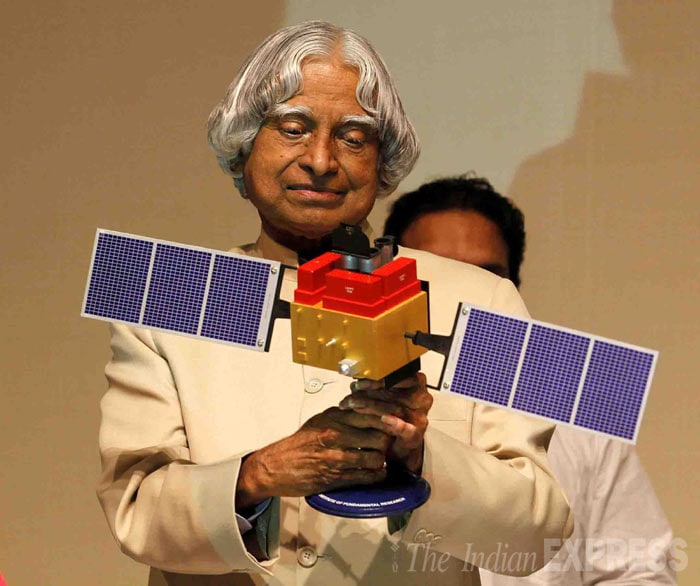
APJ Abdul Kalam's rare photos from Indian Express archive

Dr. Abdul Kalam at his residence at 10 Rajaji Marg in New Delhi. (Source: Express photo by Oinam Anand) –

See more at: http://indianexpress.com/photos/photo-archives/apj-abdul-kalams-rare-photos-from-indian-express-archive/15/#sthash.0VnQg57H.dpuf


Source….www.indianexpress.com

Natarajan

” When a Problem Arises , Become the Captain of the Problem and Defeat it…” Dr. A P J Abdul Kalam

From the Archives of Rediff.com …. This   Article dates back to 6 NOV 2014….

Once, during his Presidency, President A P J Abdul Kalam received a letter from a student shocked with his class 12th mark-sheet.

He had secured 10 per cent in Maths and Physics, whereas throughout his school career, he had always scored 90 per cent and above.

In utter dismay, he wrote to the President of India, asking for his help.

President Kalam referred his case to the authorities and two weeks later got a reply that indeed there was a mistake in the evaluation and a rectification had been done.

APJ Abdul Kalam

In the last 15 years, President Kalam — arguably India’s most popular President and among the founders of the country’s space programme — has interacted with 18 million young Indians, face-to-face, through e-mail and over Facebook.

He receives 300 e-mails everyday.

Some of these letters have been turned into his latest book Forge Your Future, which provides an insight into the issues which concern and engage the minds of young Indians today. President Kalam’s replies are based on his personal experiences, his reading and his interactions with political and spiritual leaders.

The title of the book was selected after an online public vote.

In his quiet bungalow in Lutyens’ Delhi, President Kalam speaks to Archana Masih/Rediff.com about India becoming a developed country by 2020-2022, the heroes he admires, how 90 per cent of India’s space programme is intended for the people and the individual’s potential to become unique.

Photographs: Rajesh Karkera/Rediff.com

Dr Kalam, please can you tell me a little about your daily schedule? What’s it like 

The garden here has a 107-year old tree. Edwin Lutyens himself built and stayed in this house — so he maybe somewhere here (laughs).

His relatives had come to see this building.

The 107-year-old tree is beautiful. Parrots and various other birds live at the top and at the bottom live peacocks. Every year there are baby peacocks. I have a very bioactive tree.

I walk for 1 hour and 15 minutes every day. I spend time in my library.

In a month, I spend 15 days travelling in India. For ten days in a year, I go abroad. I am an honorary professor at the University of Beijing.

Every month, I meet a minimum of 100,000 young people. A million people in a year. So far I have met 18 million young people below the age of 25 in my country.

You get 300 e-mails everyday and spend two hours answering them. When did this process begin? When did you start actively engaging with young people?

It all started when I wrote Wings of Fire, in which I conveyed my life, how I had lived it, how I got myself educated, how I started meeting youth…

I was also teaching at Anna University at that time. After my work as scientific advisor, then projector director SLV 3, programme director AGNI — after all that I went in 2001 to Anna University as a professor.

I also get some handwritten letters. I consider them very important and I love to reply to them because they come from people from the grassroots who do not have access to the Internet. They come with unique questions and I have to give unique answers.

APJ Abdul Kalam

You mention what President Mandela told you about courage in your book — who are some of the most inspiring world leaders you have met?

Two world leaders exclusively come to my mind — Mahatma Gandhi and his unique life. Similarly, Nelson Mandela. I went to the prison where Mandela lived.

Where there is righteousness in the heart, there is beauty in the character. That’s the example of Mahatma Gandhi throughout his life.

In 2006, I travelled in the same kind of train with a steam engine from Durban to Pietermaritzburg. I could imagine the courage which Gandhiji showed in that cold winter.

Ahimsa dharma came after the battle of Kalinga. It transformed King Ashoka. The second time ahimsa dharma was put into action was by Mahatma Gandhi at Pietermaritzburg.

This book gives three messages. First: You can become a unique personality. Mahatma Gandhi and Nelson Mandela were unique.

The other important thing about this book is about continuously acquiring knowledge. Thirdly, when the problem arises — become the captain of the problem and defeat it.

You envisioned a growth plan for India called Vision 2020. How close are we to achieving that vision, in view of that deadline being six years away?

Actually India 2020 is a vision for an economically developed India by 2020. Up to 2008 our GDP was 8 to 9 per cent. Then there was a problem across the Atlantic Ocean, and our GDP crashed to 6 to 7 per cent, then to 5.5 and then to 5 per cent.

So in the 2008-2014 period, we had a slack in our development programme.

Six years is a long period in a nation like India with 600 million youth, nowhere in the democratic world there exists this strength.

We also have a natural way of life. Our agriculture is doing well. We have 250 to 260 million tons of food. Our IT, small scale and pharma industries are doing very well.

Of course, we have to do lots in the development of the rural area. We have 600,000 villages where 700 million people live. We have to Provide Urban Amenities to Rural Areas (PURA). Seven thousand PURAS are needed to lift 600,000 villages.

Even now it is not too late. Fortunately, I understand the present government is taking a priority for PURAS. If they push it along with small scale industry and smart waterways, then definitely 2020 — plus or minus 2 years — we can get there.

So you are confident by 2022, that we may be able to do it?

We can do it, provided we have a national vision.

Do we have that national vision?

From 1930 to 1947, we wanted Freedom. Our caste system vanished, our religions vanished, our differences vanished and we were fighting only for Independence. I call that the first mission that India had.

The second vision: Economic development. If you work like that and declare that mission in Parliament and people and government work for it, irrespective of whichever party they belong to, it is possible. Because our resources are youth power and our natural resources.

The Book Cover

Image: President Kalam’s latest book Forge Your Future

In your book, you say ‘The orientation must turn from the past to the future and focus on how India can become a developed nation. The real issue is that we are not to see ourselves as a nation and because of that there is no national vision.’

Why do you think we have not been able to see ourselves as a nation?

When we see the types of conflicts all around — religious conflict, caste system, language problems — any big nation will have such types of problems but the nation can be united for a big cause.

Independence was a big cause that united us. That’s why I am pushing this idea that the tool for India Vision 2020 is Providing Urban Amenities to Rural Areas. This way we can enhance village development. I have talked about all this in my book.

Independence was a common goal that united people, but some would say that India today is more divided than what it was then.

Any nation goes through a number of problems in various decades, but India has the experience of bringing together people on a big cause.

I am a believer.

The second great movement that India needs is India 2020 Vision and this will make people come together. Plus if the economic programme grows, the poverty level will come down.

Only a national vision can lift 300 million — that’s one third of the population — below the poverty line out of poverty.

As one of the co-founders of India’s space programme, you must be very proud of our Mars achievement. But at the same time when you say that we have to lift the large masses that remain poor, should not basic needs like healthcare, education, infrastructure precede loftier goals or at least go hand in hand?

The space programme is targeted at uplifting the people. In geosynchronised orbit, more than 200 transponders are communicating to the Indian earth station.

These transponders transmit communication, weather reports, 24 hour TV broadcast, the path of cyclones.

All the recent major cyclones have been forecast by various satellites. 90 per cent of the space programme is for remote sensing and communication. You can remote sense what is the kind of wealth we have on earth like water, minerals etc — so it is intended for the people. 90 per cent of the space programme is intended for the people. It is a people’s programme.

You asked about the Moon and Mars programme. We are spending less than 10 per cent of our space programme for finding and research on Moon and Mars so that we are partners in the research and no one can claim that it belongs to them. I don’t want to see Moon and Mars as the property of some other nation. It should be international property.

Ours is the lowest cost of going to the Moon or Mars and we found trace of water also on the moon. From Mars we don’t know… some revolutionary ideas will come from our Mars programme.

What kind of a leader was Vikram Sarabhai, the founder of India’s Space programme?

When you read this book Forge Your Future, you will know how to become a unique person. It contains the experience of great thinkers and doers. Dr Vikram Sarabhai was a unique personality.

He was a visionary. In 1970 he gave a report about what the nation’s space programme should be for the next 20 years.

What according to you are India’s greatest strengths?

One is our farmer community. Whatever weather condition, whatever shortfall — they will give us 200 million tones of food.

Hats off to our farmers and our agriculture scientists!

Second is youth power. No other democratic nation has 600 million youth. The ignited mind of the youth is the most powerful resource — on the earth, above the earth, under the earth — and we have that.

Third, just like every family asks the government for an economically developed nation; every family has the responsibility to give a great citizen to the nation.

We have 200 million families. Parents have the responsibility to make their children righteous — where there is righteousness in the heart, there is beauty in the character.

Only three people can give a good citizen before s/he turns 17. Father, mother, the spiritual environment and the primary school teacher.

You mention women like Marie Curie and Sister Antonia as role models. Who are some contemporary Indian women role models you admire?

I have great respect for Dr V Shanta, for her contribution towards cancer diagnosis, treatment and teaching how to avoid cancer. I admire the mission of Ela Bhatt, founder of the Self-Employed Women’s Association of India and, of course my favourite, whom I respect because I like Carnatic music — M S Subbulakshmi. I love her music.

When she was alive, I used to go to her music festival.

President A P J Abdul Kalam

You say in the book that India needs to cast off its inferiority complex vis-a-vis China and work towards coming together to become a master civilisation because together they constitute 37% of the world’s population.

How can this be achieved in the background of the tension, hostility and border incursions?
I remember in April 2007, I addressed the European Parliament. There were around 800 parliament members from 23 nations.

I told them when I see you all — for hundreds of years you were fighting each other and you generated two World Wars, so a billion Indian people congratulate you. Forgetting all your wars, forgetting the difference of society, you formed a European Union for prosperity and peace.

This should be an example. I had composed a poem and recited it there. They gave a standing ovation.

That is not the issue, the issue is that such nations that created World War I and II, when they came together, we — China and India — are a people of great civilisation, in spite of all the differences, there are some great philosophy that is common.

Buddha and Confucius are common to us.

I believe we have to have a great mission. I suggested when the Chinese president came here that we have a World Knowledge Platform. I teach at the University of Beijing, I told them the time has come that both nations should combine our core competence, our 60 billion dollar business, should become 250 billion dollars.

The border issue we should sort out once for all. People of the European Union fought for hundreds of years, a people who generated two World Wars and Hitler and lost millions of people are a union today for economic growth and peace and it happened in front of our eyes.

So for me the differences between nations can be solved by mutual discussions.

Both sides should decide what we can give and what we cannot. It should be an intensive one month discussion with experts and we should sort it out. I hope the present governments in India and China will do that.

What are your thoughts on the present government?

We are getting into politics, next question!

I just asked your thoughts…

Any elected government will perform in five years. We have to give time.

You believe social media affected the results in 30 to 40 per cent Lok Sabha constituencies. How will social media and the Internet affect future elections?

Social media and the type of information flow should have credibility. It reaches fast. It connects people. It is one of the important mediums for putting forth ideas, thoughts and discussing problems.

In India, we also need contact on the ground, but in the future I see that you can sit in your home with a biometric signature and security approved and you can vote. That way you will have 100 per cent voting. It is a long way off, but I visualise it.

Selection of the candidates will also follow an electronic process — to determine if s/he is a good or bad candidate, how many cases s/he has etc. This will happen, it is only a question of time.

Archana Masih/Rediff.com in New Delhi 

Source….From The Archives of  www.rediff.com

Natarajan