Image of the Day… Lunar shadow across Earth..

Lunar shadow moves across Earth

This is way cool. Watch the moon’s shadow move across Earth during the March 9 total solar eclipse. A first ever animation from deep space.

March 9, 2016. Image credit: NASA

A camera aboard the DSCOVR satellite captured a unique view of this week’s solar eclipse. On March 9, 2016, residents of the Western Pacific looked up in the early morning hours to observe the only total solar eclipse of 2016, while DSCOVR looked down from a million miles away and captured the shadow of the moon crossing the planet.

In the animation above, the shadow of the new moon starts crossing the Indian Ocean and marches past Indonesia and Australia into the open waters and islands of Oceania (Melanesia, Micronesia, and Polynesia) and the Pacific Ocean. Note how the shadow moves in the same direction as Earth rotates. The bright spot in the center of each disk is sunglint — the reflection of sunlight directly back at the satellite’s camera.

NOAA’s DSCOVR satellite is the Nation’s first operational satellite in deep space. DSCOVR hovers between the sun and Earth at all times, maintaining a constant view of the sun and sun-lit side of Earth.

Adam Szabo is NASA’s project scientist for DSCOVR. He said:

What is unique for us is that being near the sun-Earth line, we follow the complete passage of the lunar shadow from one edge of the Earth to the other. A geosynchronous satellite would have to be lucky to have the middle of an eclipse at noon local time for it. I am not aware of anybody ever capturing the full eclipse in one set of images or video.

The animation above was assembled from 13 images acquired on March 9, 2016, by NASA’s Earth Polychromatic Imaging Camera (EPIC), a four-megapixel charge-coupled device (CCD) and Cassegrain telescope on the DSCOVR satellite.

Japan’s Himawari-8 satellite also captured a series of images showing the procession of the shadow during this eclipse, which you can view here.

Bottom line: On March 9, 2016, a camera aboard the DSCOVR satellite captured the shadow of the moon crossing Earth from a million miles away during the only total solar eclipse of 2016.

Source…..www.earthsky.org

Natarajan

How to see a solar eclipse at 35,000 ft in the air?…. Here’s the answer!

It’s very rare that a company fulfill its customer’s wish. And that too at about 35,000 feet in the air.

But Alaska Airlines has done that by changing its flight path on Tuesday, so that passengers could enjoy the view of solar eclipse.

IMAGE: Treat your eyes with this breathtaking view. Solar eclipse from Alaska Airlines flight. Photograph: Alaska Airlines/Twitter 

The airliner made this plan a year ago when one of the passengers, Joseph Rao, who is the associate astronomer at the American Museum of Natural History’s Hayden Planetarium, informed it that Alaska Airlines flight 870 from Anchorage to Honolulu would intersect the eclipse’s path.

But there was a catch. The flight’s scheduled departure time was 25 minutes too early to see the eclipse.

After several deliberations the airline decided to adjust the timing to give passengers a chance to witness the grand spectacle.

HERE (external link) is the full video.

IMAGE: Solar eclipse from Alaska Airlines flight. Photograph: Alaska Airlines/Twitter

Source…..www.rediff.com

Natarajan

One Doctor Is Quietly Building a World-Class Cancer Hospital for the Poor in Assam….

Dr. Ravi Kannan’s vision has turned a small cancer centre into a full-fledged hospital in Assam’s Barak valley.
Barak Valley is a remote area on the Indo-Bangladesh border in Assam. For years, the people in the area had limited access to medical care. In fact, the nearest hospital was in Guwahati, which is 350 km away. This journey would often take 24 hours to complete, due to the difficult terrain as well as the threat of landslides.

The high incidence of cancer in the region, possibly due to extensive tobacco use, prompted citizens of the valley to come together and set up a hospital in 1996.

dr 1

The Cachar Cancer Hospital Society faced multiple challenges, including a severe financial crunch and lack of infrastructure, right from the start. In fact, the hospital got its first radiation unit only in 2006.
The first qualified nurse came on board in 2008. Though there were other trained personnel in the region, they were choosing to migrate to bigger cities in search of better employment.

The hospital continued to reel under all these problems till 2007, when it got a saviour in the form of Dr. Ravi Kannan.

“When I got the offer to come and work in Assam, my wife was hesitant. But after coaxing her, we came and spent some time here. I worked at the hospital and interacted with the patients. Meanwhile, my wife and daughter mingled with the members of the community. All of us realised that there was much work to be done here and this is where we should be,” he says.

So Dr. Kannan, who was a renowned oncologist at the Adyar Cancer Institute in Chennai, and his family, packed their bags and moved to Silchar.

dr2

It was a big change for the family. For instance, his daughter, who studied in a school which didn’t have exams, had to take her first exam to get admission into Kendriya Vidyalya. The weather was different and so was the language. And life here was harder in comparison to their hometown of Chennai. However, slowly, they all settled into the new place and Dr. Kannan got to work.

“From day one, we just kept reacting to situations, whether they were related to finance or manpower or infrastructure,” says Dr. Kannan.

Over the years, this doctor and his incredible team managed to turn the place around.  There were only 23 staff members when he joined. Today, there is a 200-member strong team.

From 25 beds, the hospital now has 100 beds. And from 6, the number of nurses has grown to 102.

dr3

It is his selfless service and vision that have transformed this unknown cancer hospital into a comprehensive cancer centre that is providing free and heavily subsidised treatment to thousands of poor cancer patients every year,” says Rajeev Kumar, Dr. Kannan’s colleague.

In the early days, Dr. Kannan noticed that only a few patients who came for the initial check-up would come back again for a follow up. Every year, the hospital would conduct a review and find that most patients didn’t return a second time. Finally, it dawned on the administration that most people couldn’t afford the treatment.
Over 60% of the patients visiting the hospital have an income of Rs. 3,000 or less per month. As many as 80% are daily wage earners – labourers, tea garden workers and agricultural workers.

“We realised that most of them were the sole breadwinners of their families. They couldn’t afford to not work. The challenge was to figure out how to get them to undergo medical treatment, without taking away their daily bread,” he says.

This is how the hospital started home visits. The doctors started going to the villages to provide treatment to cancer patients. The patients do not have to pay for home-based care and follow up. Slowly, the hospital started satellite clinics for patients who are unable to travel long distances to visit the hospital. The doctors also provide phone consultations and stay in touch with patients who have returned home with prescriptions.

Dr. Kannan and his team discovered yet another way to get the patients to come in. They started employing those who come as attendants with the patients. These attendants help out in the garden or do other small tasks. Initially they were paid Rs. 30 but now they get about Rs. 100 per day for their work.

According to Dr. Kannan, because of the free food available at the hospital and the opportunity to work, some patients stay behind even after their treatment is completed.
The hospital has a desk in the outpatient department where the staff proactively assess the economic needs of the patients and assist them in getting treatment from the hospital at subsidised rates or for free.

They also provide patients with a better understanding of their treatment options.

“We make efforts to offer the best treatment possible to all the patients, irrespective of their socio-economic status. No one should be denied access to treatment due to want of money,” Dr. Kannan says.
The hospital now has a strict follow up policy. The supervisors of each ward are given cell phones. They are required to call up people and find out why they have missed their appointments. They maintain contact with patients and their families and motivate them to complete their treatment as advised.

At present, the hospital has an annual inflow of 3,000 new and 14,000 follow-up patients. It also gets patients from other states, as well as from neighbouring Bangladesh.
For Dr. Kannan and his team, every day presents a new challenge.

“There have been times when my colleagues and I have conducted surgeries in fields we have not specialised in. The patients cannot always go rushing to Guwahati. How can we say no to someone who is critical? By taking up these surgeries, we have also been pushed out of our comfort zones,” he says.

The hospital runs on the funds it receives from various organisations and individuals. A grant from the Indo-American Cancer Association helped establish the Department of Pain and Palliative Care in the hospital in 2011. A Department of Dental Surgery has also been set up. The pharmacy offers medicines at highly discounted prices. An ICU was started from the contributions made by individuals and NGOs.

The hospital is now awaiting permission to set up a blood bank in the region.

dr5

“The expenses just keep increasing. We rely on contributions to run this place and provide treatment to so many people. My amazing team has chosen to work here despite the fact that they would be better remunerated in bigger cities. The satisfaction we get from serving the community here is indescribable,” he says.

The Cachar Cancer Hospital Society is raising funds to support cancer patients. For more details visit its page onKetto.
To get in touch with Dr. Ravi, mail him at ravi.kannan@cacharcancerhospital.org

Source…….Meryl Garcia in http://www.the betterindia.com

Natarajan

Meeting Latha: A woman mechanic fighting stereotypes in Theni …!!!

“I really don’t think there is any job that men alone can do,” says Latha.

Untouched by the pomp and fanfare of the women’s day celebrations elsewhere, Latha is busy looking at the punctured tyre of a bike that has left its owner stranded.

Latha is such an inconspicuous figure under a tamarind tree on the Theni-Periyakulam road that she can be easily missed. She runs her vulcanising shop from under the shade of a tamarind tree.

“More often than not, many people see our equipment first from a distance and come closer. But when they see me handling it all, they pause and sometimes prepare to leave. I tell them I can fix their tyres and do it in no time. After all, I have been doing it for two decades now” she says with an unmistakable pride in her voice.

At 43, Latha is a good mechanic. “I have four brothers and a sister. My father was a mechanic and as a child, I would keenly watch the way he would fix a punctured tyre. But he would never allow me to touch any of it.”

At 20, she got married to a man who ran a small textile shop. Her father had to sell his vulcanising shop to settle the debts of her sister’s wedding. “My brothers refused to take care of my father and I accommodated him in my place. After discussing with my husband, I took his help and with an investment of Rs 13,000 started this shop.”

Until recently, she would take care of the punctured tyres of all vehicles including lorries and cars. “But now due to ill-health, I do only two-wheeler tyres,” Latha says. Students from an Industrial Training Institute nearby often visit her shop to get hands-on experience. “I really don’t think there is any job that men alone can do.”

Though her father never allowed her to touch any of the two wheelers he was working on, he was a role model for Latha. “He treated all of us equally. I never felt I was a daughter and hence inferior. That was not the case with many of my friends. Even when I was young, I had learnt to drive almost all vehicles. With that kind of encouragement, I think any woman can do what a man can – sometimes even what a man can’t. I only wish the government encouraged women more.”

Perhaps the only woman mechanic of Theni district, Latha has a dream: To have a properly constructed shop. “I only have this thatched roof for a shop all these years. I have never been to a government office or approached any politician for help. But I do wish they will help me get a shop. I can even train students if need be”, she says.

For someone who speaks so passionately about the need for women to be independent, Latha had both her daughters married off before they turned 18. “I had little choice. We are living in such a system which does not support independent women. Also I come from a village and you know how it is. My poor health is another reason. I wish it was different though.”

All photographs by Satheesh Lakshmanan

Source…..Satheesh Lakshmanan in http://www.the newsminute.com

Natarajan


The Feng Shui Skyscrapers of Hong Kong….!!!

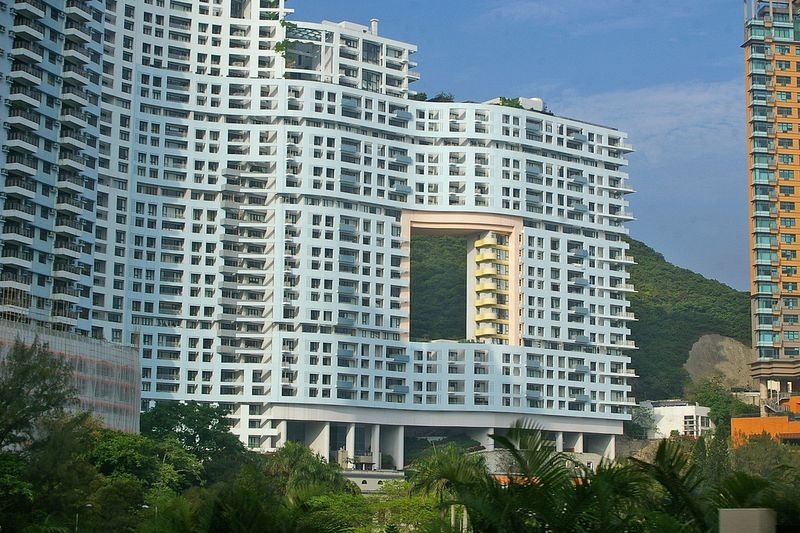
In Hong Kong, a city with one of the most beautiful skyline, the plan and design of a building is determined as much as by architects and engineers as by feng shui masters. This ancient Chinese philosophy of positioning objects and buildings in harmony with nature to bring about good fortune, is deeply rooted in Hong Kong’s culture. Everything from the orientation of a building, the shape of the building, the position of the entrance and position of furniture within are believed to influence the prosperity of a business or the homeowner. Because of this belief, feng shui practitioners are consulted in almost every new home purchase and office floor plans, and even enormous architectural and engineering projects around this island nation are dictated to a large degree by feng shui. It’s not apparent but examples of feng shui practice are almost everywhere in Hong Kong.

hong-kong-dragon-holes-2

Why do these buildings have holes in the middle? Keep reading for the answer. Photo credit: shottapaul/Flickr

Feng shui was suppressed in mainland China during the Cultural Revolution in the 1960s but has made a dramatic revival in recent years, especially in the superstitious South. Even in modern Central, where feng shui is regarded as superstition, most developers still consult feng shui experts because they figure it’s better to be safe than sorry. Indeed, many corporations set aside a portion of their annual budget for feng shui consultation. Some of the suggestions that feng shui experts offer can be as simple as repositioning the desk of the CEO or placing coins under the carpet. Others can be as expensive as demolishing and reconstructing parts of the building.

When the famous HSBC headquarters with two bronze lions sitting in front were built in the mid-1980s, the escalators were reoriented from their original straight position to an angle with the entrance to prevent evil spirits from flowing straight off the Victoria Harbor and into the office.

feng-shui-hsbc-3

The HSBC building in Hong Kong. Photo credit: Ishak J/Flickr

The Bank of China Tower, on the other hand, neglected good feng shui practices and is now considered so unlucky that it sits empty most of the year. The tower with its many sharp edges is also said to be leaking its negative energy to its surrounding businesses. The owner of the Lippo Centre, which faces one of the building’s edges, went bankrupt and had to sell the building. Similarly, the Government House, which also faces one of the angles of the Bank of China Tower, had its share of troubles.

To prevent such misfortunes from befalling HSBC, the bank had two cannon-like structures installed at the top of their building. These cannons, which are pointed towards the Bank of China building, supposedly protects HSBC from the dreaded Bank of China Tower’s negative energy by deflecting the energy back to its source.

Hong Kong’s growth in recent years has been attributed to good feng shui. Its geographical location with the mountains behind and waters in front is said to be excellent in accordance to feng shui principles. Legend holds that these mountains are home to the dragons that are said to be the bearer of positive and powerful energy. This energy blows through Hong Kong as the dragons make their way from the mountains to the sea to drink and bathe.

This explains why many buildings along the waterline have gaping holes in the middle. These holes provide the dragons an unobstructed path to the water, so that the winds of positive energy continue to flow through the city.

hong-kong-dragon-holes-1

The “dragon hole” of The Repulse Bay building in Hong Kong. Photo credit: Paul Griffin/Flickr

hong-kong-dragon-holes-3

Photo credit: See-ming Lee/Flickr

hong-kong-dragon-holes-5

Photo credit: See-ming Lee/Flickr

Sources: NY Times / Discover Hong Kong / A Passport Affair / Wall Street Journal Blog

Source…….www.amusingplanet.com

Natarajan

Woman I admire: ‘My daughter is a super hero’….

Here, Jaya Alex writes about her daughter, who, despite the odds, chose to teach in a backward and underprivileged district in India.  

Woman I admire

Justey P Alex

My elder daughter Justey P Alex is presently working among the tribes in Kalahandi district of Odisha, the second most backward and underprivileged district in India.

There she is teaching in a mission school which provides education to poor children. It is the only English medium school in that area.

After her graduation from the Delhi University (BA English Hon), she told us of her desire to serve the needy and downtrodden children through education. She had taken the decision during a visit to this place when a tour programme was conducted by the Youths of Church Mission.

Being parents of a grown-up girl child we were very worried about her decision.

Woman I admire

Jaya Alex with her daughter Justey

All other family members, friends and our well-wishers were also against it because of her well-being.

The place where she was planning to work is prone with diseases like malaria, jaundice, typhoid, etc.

Death due to these diseases is very common there. The nearest hospital is at least 20 km away from this remote village. If you want to buy a pen, book or even recharge your mobile phone you have to travel at least 20 km.

Everybody asked her to rethink the decision, but she stood firm on her ground as she felt that it was right.

At last we agreed and allowed her to go and work there. We thought that she will be back within a month because it is not so easy for a child, born and brought up in metropolitan city. to work in such a remote area.

But she got the willpower to overcome all hurdles and hardships by seeing the happiness of the poor kids studying there and has now completed 10 months. She is one among the three graduate teachers in her school. She is also pursuing her post graduation from IGNOU.

I think an ordinary girl cannot think in this way and I feel that my daughter is a ‘super hero’. I am proud of her.

Source…..Jaya Alex in http://www.rediff.com

Natarajan

This date in science: Yuri Gagarin’s birthday….9th March

He was a Russian Soviet pilot and the first human to travel to space, in 1961. Later, he became one of the world’s true heroes …


“Let’s go! (Poyekhali!)” Image via ESA.

March 9, 2016. Yuri Alekseyevitch Gagarin (1934 – 1968) would have been 82 today. He became the first human ever to travel into space on April 12, 1961, flying into orbit around Earth for 89.1 minutes in Russia’s Vostok 1 spacecraft. He circled the Earth once and flew as high as 200 miles (327 km). The entire mission, from launching to landing lasted 108 minutes.

Yuri was born on a small farm west of Moscow. His father was a bricklayer, a carpenter, and a farmer. His mother was a milkmaid. He was the third in a family of four children.

During the Second World War, the Gagarin family was broken apart as two of Yuri’s older sisters were taken into labor camps by the Nazis. The Gagarins were forced out of their house, and dug a hideout in the ground, where they stayed until the end of the war. After the war, the family moved to Gziatsk.

Gagarin was inspired to become a pilot while still a teenager. When a Russian Yak fighter plane was forced to land in a field near his home, the praise those pilots received left a mark on the young Gagarin. He wanted to be like them.

He studied to become a foundryman (a foundry is a factory that melts metals in special furnaces and pours the molten metal into molds for making products). He was singled out for his skillfulness to further his studies in the Saratov Technical School.

Vostok 1 via Wikimedia Commons.

Vostok 1 via Wikimedia Commons.

There, his dream to become a pilot took root, as during his 4th and last year at Saratov, he had the chance to join a local flying club. He learned to operate a plane, and flew by himself for the first time in 1955.

That same year, he also graduated from school, and was recruited by the Soviet Army.

At the advice of his flying mentor, he joined the Soviet Air Force, and went on studying at the Orenburg School of Aviation. There, he was taught to fly MIGs.

During his studies at Orenburg, he also met his future wife, Valentina Ivanova Goryacheva, who was a nursing student at the time.

In November, 1957, when Gagarin was 23, he graduated from Orenburg with honors and married Valentina. Later, the couple had two girls, Yelena, and Galina.

In 1959, after the Russians succeeded at photographing the far side of the moon for the first time with Luna 3, many – including Yuri – felt it was about time for the first man to be sent to space. He and a few other men were accepted for cosmonaut training in 1960 after a lot of selection.

The selected candidates underwent not only physical training, but also mental and psychological training.

Gagarin was known for his good humour, perseverance, and calm.

On April 12, 1961, the Russians amazed the world by launching Vostok 3KA-3 (Vostok 1) from the Baikonur Cosmodrome with Yuri Gagarin aboard. Vostok means East in Russian.

East for sunrise, and for the rise of the Space Age.

Hear a recording of Yuri Gagarin saying “poyekhali” (“let’s go”) before the launch.

Yuri  Gagarin in Warsaw in 1961.  Image via Wikimedia Commons.

Yuri Gagarin in Warsaw in 1961. Image via Wikimedia Commons.

Gagarin on a visit to Sweden, 1964.  Image via Wikimedia Commons.

Gagarin in Sweden in 1964. Image via Wikimedia Commons.

After coming back from space, Gagarin became an international celebrity. Khrushchev awarded him with the title of Hero of the Soviet Union.

His dream had come true.

Gagarin and his wife began touring the world, where Yuri was decorated for his legendary accomplishment. It’s rumored that Gagarin didn’t handle his fame very well, however.

In 1962, he was appointed as a deputy of the Soviet Union, and he was elected to the Central Committee of the Young Communist League. But Gagarin was not entirely happy. He felt he didn’t train to fly only once. He wanted to fly more, but – according to the stories about him – those around him tried to stop him for fear of losing the great Soviet hero.

In 1963, Gagarin later became deputy training director of the Cosmonaut Training Center outside Moscow. Later, the training center was named for him.

The following year he started extensive training to become a fighter pilot. He died on March 27, 1968, at the age of 34 due to the crash of a MiG – 15UTI that he and colleague Vladimir Seryogin were flying from the Chkalovski Air Base.

Their bodies were collected near the small town of Khirzach, and were cremated. Their ashes are a part of the Kremlin Building in the Red Square, in Moscow.

Yuri's plaque at the Kremlin in Moscow, via Wikimedia Commons.

Yuri’s plaque at the Kremlin in Moscow, via Wikimedia Commons.

Bottom line: Born on March 9, 1934, Yuri Alekseyevitch Gagarin (1934 – 1968) was the first human being ever to travel into space. His historic flight took place on on April 12, 1961, when he orbited Earth for 89.1 minutes in Russia’s Vostok 1 spacecraft.

Source……www.earthsky.org

Natarajan

Celebrating International Women’s Day….

NASA astronauts and JAXA astronaut at work inside International Space Station's Robotics Workstation

In this April 8, 2010 photograph, STS-131 mission specialists Stephanie Wilson of NASA, Naoko Yamazaki of the Japanese Aerospace Exploration Agency (JAXA), Dorothy Metcalf-Lindenburger of NASA, and Expedition 23 flight engineer Tracy Caldwell Dyson (top left) work at the robotics workstation on the International Space Station, in support of transfer operations using the station’s Canadarm2 robotic arm to move cargo from the Multi-Purpose Logistics Module.

The STS-131 mission’s seven-member crew launched aboard space shuttle Discovery on April 5 from NASA’s Kennedy Space Center, joining the six residents of the space station when the shuttle docked on April 7. The merging of the two crews marked the first time four women were in space at the same time.

Image Credit: NASA

Source….www.nasa .gov

Natarajan

Photos of today’s Solar Eclipse….

View larger. | March 9, 2016 total eclipse of the sun by Justin Ng of Singapore.

Justin Ng at Amazing City Beach Resort in Palu, Indonesia captured this photo of the March 9, 2016 total eclipse of the sun. He captured what is one of the most famous of all eclipse phenomena: the legendary diamond ring effect. It happens twice in a total eclipse … in the final moments before totality, and just as totality ends. You can also see a flare from the sun, on its lefthand limb.

A Kannan in Singapore caught the partial phases, too.  He wrote:

A Kannan in Singapore caught the partial phases, too. He wrote: “The partial solar eclipse was observed in Singapore skies this morning covering about 85% of the sun from Earth.”

Source…..www.earthsky.org

Natarajan
” தமிழ் பழம் அருஞ்சொற்பொருள்/TAMIL FRUITS GLOSSARY….”


பழங்களின் பெயா்கள் / தமிழ் மற்றும் ஆங்கிலத்தில்:-

தமிழ் பழம் அருஞ்சொற்பொருள்/TAMIL FRUITS GLOSSARY

A – வரிசை
APPLE – அரத்திப்பழம், குமளிப்பழம்
APRICOT – சர்க்கரை பாதாமி
AVOCADO – வெண்ணைப் பழம்

B – வரிசை
BANANA – வாழைப்பழம்
BELL FRUIT – பஞ்சலிப்பழம்
BILBERRY – அவுரிநெல்லி
BLACK CURRANT – கருந்திராட்சை, கருங்கொடிமுந்திரி
BLACKBERRY – நாகப்பழம்
BLUEBERRY – அவுரிநெல்லி
BITTER WATERMELON – கெச்சி
BREADFRUIT – சீமைப்பலா, ஈரப்பலா

C – வரிசை
CANTALOUPE – மஞ்சள் முலாம்பழம்
CARAMBOLA – விளிம்பிப்பழம்
CASHEWFRUIT – முந்திரிப்பழம்
CHERRY – சேலா(ப்பழம்)
CHICKOO – சீமையிலுப்பை
CITRON – கடாரநாரத்தை
CITRUS AURANTIFOLIA – நாரத்தை
CITRUS AURANTIUM – கிச்சிலிப்பழம்
CITRUS MEDICA – கடரநாரத்தை
CITRUS RETICULATA – கமலாப்பழம்
CITRUS SINENSIS – சாத்துக்கொடி
CRANBERRY – குருதிநெல்லி
CUCUMUS TRIGONUS – கெச்சி
CUSTARD APPLE – சீத்தாப்பழம்

D – வரிசை
DEVIL FIG – பேயத்தி
DURIAN – முள்நாரிப்பழம்

E – வரிசை
EUGENIA RUBICUNDA – சிறுநாவல்

F – வரிசை

G – வரிசை
GOOSEBERRY – நெல்லிக்காய்
GRAPE – கொடிமுந்திரி, திராட்சைப்பழம்
GRAPEFRUIT – பம்பரமாசு
GUAVA – கொய்யாப்பழம்

H – வரிசை
HANEPOOT – அரபுக் கொடிமுந்திரி
HARFAROWRIE – அரைநெல்லி

I – வரிசை

J – வரிசை
JACKFRUIT – பலாப்பழம்
JAMBU FRUIT – நாவல்பழம்
JAMUN FRUIT – நாகப்பழம்

K – வரிசை
KIWI – பசலிப்பழம்

L – வரிசை
LYCHEE – விளச்சிப்பழம்

M – வரிசை
MANGO FRUIT – மாம்பழம்
MANGOSTEEN – கடார முருகல்
MELON – வெள்ளரிப்பழம்
MULBERRY – முசுக்கட்டைப்பழம்
MUSCAT GRAPE – அரபுக் கொடிமுந்திரி

N – வரிசை

O – வரிசை
ORANGE – தோடைப்பழம், நரந்தம்பழம்
ORANGE (SWEET) – சாத்துக்கொடி
ORANGE (LOOSE JACKET) – கமலாப்பழம்

P – வரிசை
PAIR – பேரிக்காய்
PAPAYA – பப்பாளி
PASSIONFRUIT – கொடித்தோடைப்பழம்
PEACH – குழிப்பேரி
PERSIMMON – சீமைப் பனிச்சை
PHYLLANTHUS DISTICHUS – அரைநெல்லி
PLUM – ஆல்பக்கோடா
POMELO – பம்பரமாசு
PRUNE – உலர்த்தியப் பழம்

Q – வரிசை
QUINCE – சீமைமாதுளை, சீமைமாதுளம்பழம்

R – வரிசை
RAISIN – உலர் கொடிமுந்திரி, உலர் திராட்சை
RASPBERRY – புற்றுப்பழம்
RED BANANA – செவ்வாழைப்பழம்
RED CURRANT – செந்திராட்சை, செங்கொடிமுந்திரி

S – வரிசை
SAPODILLA – சீமையிலுப்பை
STAR-FRUIT – விளிம்பிப்பழம்
STRAWBERRY – செம்புற்றுப்பழம்
SWEET SOP – சீத்தாப்பழம்

T – வரிசை
TAMARILLO – குறுந்தக்காளி
TANGERINE – தேனரந்தம்பழம்

U – வரிசை
UGLI FRUIT – முரட்டுத் தோடை

V – வரிசை

W – வரிசை
WATERMELON – குமட்டிப்பழம், தர்பூசணி
WOOD APPLE – விளாம்பழம்

 Source…..www.facebook.com/Tamil-Traditional-Foods… information credit…Harini Parthasarathy in facebook
Natarajan