International Yoga Day…June 21 …” This Day may Pave the Way for Positioning India as the Spiritual Capital of the World…”

It was none other than Prime Minister Narendra Modi on whose behest the United Nations decided to declare 21 June 2015 as ‘International Yoga Day’.

Export of Indian spirituality to the West started with Swami Vivekananda’s historic speech at the Parliament of Religions at Chicago in 1893.

It was followed by setting up of a Vedanta Society in New York in 1894, in Northern California in 1900 and in Boston 1910. Thereafter many respected sages visited the US — for e.g. Swami Turiyananda/Swami Trigunatita of the Ramakrishna Mission Order, Paramhansa Yogananda, Swami Prabhupada, Mahesh Yogi, Swami Rama, Swami Vishnudevananda and many others who planted the flag of Vedanta and Yoga in North America.

Depression in the 1930’s and World War II brought an overemphasis on material advancement. But soon the tide turned again as disenchantment with the existing forms of worship, the desire for healthy and joyful living, and the rise of the hippie generation of the 1960-70’s resulted in Americans seeking refuge in eastern spirituality. Many visited pilgrimage towns – including Steve Jobs, who went to Kashi.

In this century, Baba Ramdev broke man-made barriers to bring Yoga into our homes. He used TV and shibhirs(camps) to make it immensely popular worldwide.

So what is the importance of this unique initiative?

One, as Swami Vivekananda said, “Life is expansion, and if you stand against it, you become decadent or you die. It is the sign of our recovery of the spirit of ancient India – that we have begun to send representatives of our culture to foreign lands with the gift of our rich traditions.” Selfless sharing of her philosophy and spirituality has always been part of India’s Svadharma. India is once again getting closer to its true nature.

Two, the internationalisation of Yoga will aid harmony and peace. India’s expansion has never been fuelled by conquest of nations or the power of the sword. The high regard that resident Tibetans, Thais, etc., have to this day for India’s spiritual heritage proves the non-aggressive nature of India’s interactions. Yoga is timeless and there is something that today’s entrepreneurs can learn from India’s past.

In a deeper sense the practice of Yoga brings balance, inner peace and contentment. It reduces conflict in human interaction, promotes creative thinking and innovation. As its practices and thoughts take root in humankind, an era of transformation can take place worldwide.

Three, it is known that India is the home of Yoga. With this new global zeal towards Yoga, its origin and association with Sanatan/Buddhist/Jain Dharmas now stands reinforced.

Four, Yoga Day also refers to the various schools and the eight limbs of Yoga before instructions are given for asanas. It dispels the often held belief that Yoga is only asanas.

Every nation is like a brand and has to be associated with key attributes. For example Italy is known for Nostradamus/pizza, Russia for Tolstoy/vodka, Japan for zen/cars, China for Confucianism/low-cost products, Germany for Marx/engineering, etc. So also India’s attribute is spirituality among other things.

Five, just like the Y2K problem did wonders for India’s IT industry, International Yoga Day could position India as the spiritual capital of the world. This could lead to renewed interest in spirituality and has huge employment potential. There would be a greater demand for Yoga instructors and possibly teachers of Darshanas (schools of Indian philosophy).

Six, the government must play the role of facilitator for more training schools and improve infrastructure in pilgrimage towns. For example a school for yoga instructors in Arunachal Pradesh and Manipur would give locals a skill that makes them employable worldwide. (Read Shad Darshanas).

Seven, for probably the first time, Indian embassies worldwide are tuned to promote India’s rich spiritual tradition. There is no denying that improving the well being of people is a great way to connect and bond.

It is well established that numerals originated in India but are called Arabic numerals. June 21 will ensure that Yoga cannot be appropriated by any other nation as its own. What is left unsaid is that 177 of the 193 countries in the UN General Assembly supported a India-sponsored move to celebrate International Yoga Day for the benefit of mankind. The jingoistic must not believe this support will get us a Security Council seat!

Should India market Yoga like a product? The moment you hardsell something it runs a danger of rejection. People discovered Yoga through word of mouth, liked it and spread the word.

Indians must become messengers of harmony and peace and not Yoga evangelists. We must accept that the world will first turn to Yoga for its physical benefits. Those who chose to delve deeper might discover Indian spirituality. The key is to let the user discover at his or her pace what yogha has to offer, just as Sanatana Dharma is meant to be, a journey of self-discovery.

Now, a few points on impact in India.

One, wholehearted celebration of the International Yoga Day was a Allah-given opportunity for Indian Muslims to put behind the bitterness of the Ayodhya movement and reconnect with the ‘Followers of Dharma’ at a deeper level. Protests against Surya Namaskar meant the conservatives have won once again.

Can someone tell Muslims that the posture in which namaz is offered is Vajrasana. It is surprising that a secular Yoga became a problem for some religions.

Nevertheless a closer look at a picture of Muslim girls doing Yoga at an Ahmedabad school shows their fingers are in Gyan Mudra pose. Once a child knows this mudra is good for ‘stresses and strains, insomnia, emotional instability, indecisiveness, idleness, laziness, indolence, increasing memory and IQ’, she will be keen to follow it.

For too long have Indian Muslims viewed the followers of dharma through British and Arabic eyes. They need to reflect and realise that dharma is beyond the religious concepts they are familiar with.

Two, popularity of Yoga in urban India is due to its practice in the West and channels like Aastha. June 21 has ensured that lakhs of Indians, across government offices and homes, take to Yoga and realise its benefits in everyday living.

Sadhguru Jaggi Vasudev put it nicely, “Yoga means to be in perfect tune with yourself—your body, mind and inner nature are in absolute tune. When you fine-tune yourself to such a point where everything functions so beautifully within you, naturally the best of your abilities will flow out of you.”

Practice of Yoga is inclusive and will help every Indian realise his or her potential. Spiritual progress invariably leads to material progress.

Proponents of Yoga must emphasise its scientific basis and call for Yoga departments in medical colleges and business schools.

Yoga points the road to peace and harmony, and a shloka is instructive.

Shanti Path

Om Sarve Bhavantu Sukhinah,

Sarve Santu Nirāmayah

Sarve Bhadrani Paśyantu,

Maa Kascit Duhkha Bhāgbhavet

Om Shantih Shantih Shantih

(May All become Happy, May All be Free from Illness.

May All See what is Auspicious, May no one Suffer.

Om Peace, Peace, Peace)

By Sanjeev Nayyar (The author is an independent columnist and founder of www.esamskriti.com)

Source…www.firstpost.com

Natarajan

” Untold Story of Indians Served in World war 1….”

Over one million people served in various battlefronts during World War I. And yet, even today, we know so very little about them.’

‘It is absolutely essential to acknowledge this part of India’s colonial history,’ Santanu Das tells Vaihayasi Pande Daniel/Rediff.com  

Indian soldiers training with bayonets.

Image: Indian soldiers training with bayonets.
Photograph courtesy: Imperial War Museums

A little over 10 years ago Santanu Das, who teaches English at King’s College, London, and whose fascination with World War I began with its poetry, started, on a whim, researching the Indian involvement in that war.

The sheer breadth of the statistics that confronted him was startling. And the attendant historical poignancy, of the duty India discharged for Britain, fascinating!

Das was hooked.

His examination of the Great War veered from poetry and became increasingly historical as he delved further and further into the lives of the brave, sturdy Indian soldiers who left Indian shores for distant and strange parts of the world to fight a war they had little understanding of.

They discharged their duty diligently and mostly with distinction, thousands of them dying far from home.

The result of Das’s research is his most recent work, 1914-1918: Indian Troops In Europe(external link), a visual history based on rare archival photographs from Europe and India.

It was published in India by Mapin, January 2015, and will hit bookstores in the US and Europe September 25, to mark the 100th anniversary of the beginning of the Battle of Loos, the major last battle fought by the Indian infantry on the Western Front before they were transferred to Mesopotamia.

Das was educated in Kolkata and Cambridge and is the author of Touch And Intimacy In First World War Literature(Cambridge, 2006) which was awarded the Philip Leverhulme Prize and is the editor of Race, Empire And First World War Writing (Cambridge, 2011) and theCambridge Companion To The Poetry Of The First World War (2013).

He is currently completing for Cambridge University Press a monograph titled India, Empire And The First World War: Words, Images, Objects And Music which formed the basis of a two-part series he presented for BBC Radio 4 titled Soldiers Of The Empire (external link).

Some of his archival material is showcased in a film titled From Bombay To The Western Front: Indian Soldiers Of The First World War (external link).

In an e-mail interview with Vaihayasi Pande Daniel/Rediff.com, Das describes, with a wealth of bittersweet details, the outstanding historical debt Britain owes the lowly but heroic Indian Sepoy:

How did you come to be interested in the history of Indian soldiers in World War I?

I was introduced to First World War poetry during my time at Presidency College, Kolkata.

It was while doing my first book, Touch And Intimacy In First World War Literature, that I became fully aware — and increasingly disturbed — by the enormity of the Indian involvement in the war and their erasure from ‘Great War and modern memory’. That was in 2004.

I then researched and found out that four million non-white men were drafted for the war in the European and American armies; over a million of them were Indians. And yet, even today, we know so very little about them. I became increasingly absorbed.

It was about this time — almost 10 years ago now — that I visited the French Institute at Chandernagore in West Bengal and discovered the broken and bloodstained glasses of ‘Jon’ Sen, the only non-white member of Leeds Pals Battalion, who was killed May 22, 1916. It was a revelation; there was no going back.

What particular challenges do we face in trying to recover the Indian experience of the First World War?

The majority of the Indian soldiers were semi-literate or non-literate and did not leave behind the abundance of diaries, memoirs, poems or novels that form the cornerstone of European memory of the First World War.

Indian soldiers, wounded during World War I, convalesce in England

Indian soldiers, wounded during World War I, convalesce in England. Photograph courtesy: British Library

Of course, we have the censored letters of the Indian soldiers: they were dictated by the sepoys to the scribes or occasionally written by the sepoys themselves, then translated and extracted by the colonial censors in order to judge the morale of the troops, and these extracts have survived today.

They are important documents, but are also problematic sources because of the process of mediation. Some of these letters are collected in a very helpful anthology by David Omissi (Indian Voices Of The Great War, 1914-1918).

In addition to these, we have hundreds of photographs of the Indian troops — in trenches, fields, farms, billets, markets, towns, cities, railway stations, hospitals, prisoners-of-war camps. Though framed by the European gaze, they are some of the most eloquent testimonies and capture most vividly the daily texture of their lives. In the absence of substantial written documents, these photographs break the silence around them.

Indeed, this is what prompted me to compile these photographs from various archives in India and Europe (France, Belgium, Britain and Germany) for my visual history 1914-1918 Indians Troops In Europe. A selection of pictures from this book can be found at here(external link).

Why are the Indian soldiers forgotten?

After the devastation of the war, Europe naturally turned its attention to its own dead, wounded and bereaved; the colonial contribution, visible and acknowledged during the war years, became increasingly sidelined in the post-war years in the ‘Great War and (European) memory’.

On the other hand, in India, the country’s involvement in the First World War was immediately followed — and gradually eclipsed — by a general sense of betrayal and disillusionment with British rule, the anti-Rowlatt act demonstrations and the massacre at Amritsar (Jallianwala Bagh) in 1919 and the gradual rise of the anti-colonial nationalist movement under the leadership of Gandhi.

In post-Independence years, the nationalist narrative understandably supplanted and almost erased the country’s participation in an imperial war. So the Indian contribution to the First World War gets written out of both the European and Indian narratives.

Yet, we are talking about the experience of over one million people who served in the various battlefronts during the First World War; it is absolutely essential to acknowledge their experience and this part of India’s colonial history.

In 1914-1918: Indian Troops In Europe (Mapin, 2015), I focussed on the most visible group — the ones who fought on the Western Front — through rare photographs from various archives across India and Europe.

In India And The First World War: Objects, Images, Words And Music, to be published by Cambridge next year, I seek to weave together the first socio-cultural history on the subject.

India’s involvement in the First World War cannot be confined to a narrow ‘military history,’ but has to be integrated into a much broader framework of cultural, social and political history.

However, to recover the Indian war experience does not, and in my view should not, involve any attempt to ‘glorify’ an imperial — or for that matter any — war or ‘celebrate’ the achievements of these soldiers. We are talking about traumatic events.

Moreover, these sepoys were the sentinels of the empire, let that be clearly acknowledged at the outset. Yet it is important to understand and analyse their involvement in the war without trying in any way to whitewash the ills of colonialism or falling prey to post-imperial nostalgia in any way.

Indeed we should try to understand the imperial war effort and the nationalist struggle in an expanded frame of reference that bears witness to the country’s complex and contradictory histories.

Indian bicycle troops at Somme, France, during World War I.

Image: Indian bicycle troops in Somme, France, during World War I.
Photograph courtesy: Wikimedia Commons

What are some of the most interesting nuggets of history that you might have uncovered about the Indian soldier in WWI during your research?

I have been researching this subject for nearly 10 years now.

In the Australian War Memorial in Canberra, I came once across a page in the diary of an Australian private where an Indian soldier had signed his name ‘Pakkar Singh’ in Urdu, Gurmukhi and English.

The most moving artefact I found was a pair of broken, bloodstained glasses belonging to ‘Jon’ Sen the only non-white member of the famous Leeds Pals Battalion — who was killed May 22, 1916. The discovery of the glasses led to a lot of media interest both in the UK and in India and to a short BBC documentary (external link).

A search through my extended family and friends in my hometown, Kolkata, revealed the war mementos of Captain Dr Manindranath Das: his uniform, whistle, brandy bottle and tiffin box, as well as the Military Cross he was awarded for tending to his men under perilous circumstances. Das was one among several distinguished doctors from the Indian Medical Services who served in Mesopotamia.

Over the years, I have had many such finds. I found this particular archival part of the research immensely moving: these objects are the mute witnesses to the war experiences of these men, the repository of what in my first book I call ‘touch and intimacy’.

Approximately how many Indians fought in World War I?

Although I provide more detailed figures in my book 1914-1918: Indian Troops In Europe, here are some rough statistics.

Between August 1914 and December 1919, India recruited, for purposes of war, 877,068 combatants and 563,369 non-combatants, making a total of 1,440,437 recruits; of them, over a million, including 621,224 combatants and 474,789 non-combatants, served overseas during this timeframe.

These included the infantry, artillery and cavalry units as well as sappers, miners and signallers, Labour and Porter Corps, Supply and Transport Corps, Indian Medical Service and Remount and Veterinary Services.

Where did they serve? Which battlefields?

During the war years, undivided India (which would today comprise India, Pakistan, Bangladesh and Burma) sent overseas seven expeditionary forces: the Indian Expeditionary Force A to Europe, IEFs B and C to East Africa, IEF D to Mesopotamia, IEFs E and F to Egypt and IEF G to Gallipoli.

In the course of the war, they served in almost all parts of the world — from the mud-clogged trenches of the Western Front and the vast tracts of Mesopotamia to the tetse-fly infested savannah of East Africa and the shores of Gallipoli; they also served in East and West Persia, Palestine, Egypt, Salonika, Aden, Tsingtao and Trans-Caspia.

Indeed, to follow the routes of the Indian sepoy during the First World War is to trace its global course.

Parisians cheer Indian soldiers after the Bastille Day Parade.

Image: The cover of Das’s latest book shows Parisians cheering Indian soldiers after the Bastille Day Parade.
Photograph courtesy: Santanu Das

What parts of India did they hail from? And what strata of society?

In 1914, India had the largest voluntary army in the world.

But the men were recruited from a very narrow strata of its huge population, comprising largely the peasant-warrior classes spread across northern and central India, the North-West Frontier Province, as well as the kingdom of Nepal, in accordance with the prevalent colonial theory of ‘martial races’.

A combination of shrewd political calculation, indigenous notions of caste and imported social Darwinism, it formed the backbone of British army recruitment in India.

It deemed that certain ethnic groups — such as Pathans, Dogras, Jats, Garwahlis, Gurkhas — were ‘naturally’ more war-like than others. These communities had often low literacy rates, were traditionally loyal and thus least likely to challenge the British Raj — very different from the politically active and articulate Bengalis who were cast as ‘effeminate’ and barred from joining the army.

Of its 600,000 combatants, more than half came from the Punjab (now spread across India and Pakistan) which saw some of the most intense recruitment campaigns.

How many casualties were there and what happened to their remains? 

Prime Minister Narendra Modi at the World War I Memorial in Neuve-Chapelle, France, April 11, 2015. Photograph: Press Information Bureau

Image: Prime Minister Narendra Modi at the World War I Memorial in Neuve-Chapelle, France, April 11, 2015. Photograph: Press Information Bureau  

It is difficult to provide a precise figure for the number of Indians killed and wounded in the First World War. Between 60,000 and 70,000 of these men were killed.

If one visits the battlefields of the Western Front, one comes across gravestones with their names and inscriptions etched in the appropriate language and carefully maintained by the Commonwealth War Graves Commission — not to mention the names of the Indians killed etched on the Menin Gate itself at Ypres.

One of the most moving places in the Western Front is the beautiful Indian memorial at Neuve Chapelle dedicated to the memory of the 4,700 Indian soldiers and labourers who have no known graves.

In the war cemetery in Dar-es-Salaam in Tanzania (then German East Africa), I have seen huge memorial tablets with the names of Indian combatants and non-combatants, but not a single gravestone. However I don’t know whether these men were cremated or the remains of these men were not found or it was decided as a matter of colonial (discriminatory) policy to commemorate them only on memorial tablet rather than bury them with individual gravestones (as with the white soldiers buried and honoured in the same cemetery in Dar-es-Salaam).

I understand that while the Indian soldiers, killed in Europe, were commemorated with individual gravestones, those — particularly the privates — killed in Mesopotamia and East Africa were denied such honour.

On the other hand, in Britain, where some of the wounded soldiers died, they were either buried in the Woking Cemetery or cremated at Patcham in the Sussex Downs, with appropriate religious rites.

In Iraq, the names of the Indian fallen are etched on the Basra Memorial. So the practice varied widely and it is difficult to pinpoint the exact impulses at work — sometimes it was race, sometimes religion, sometimes it was where they died, and sometimes a matter of contingency and the whim of the local authority.

In 2011, I edited a book, Race, Empire And First World War Writing. (Noted social theorist and an expert on the cultural and social history of World War I) Michele Barrett explores some of these issues in the ‘afterword’ to the book.

And what happened to the families left behind in India?

Devastation presumably, as with hundreds of thousands of families around the world, but we do not know the precise details. Many of the families these soldiers came from villages dotted around northern and north-west India and the North-West Frontier province. They were non-literate and hence have not left memoirs or diaries or letters.

There’s the extraordinary and immensely moving local tradition of songs of mourning sung by the village women which give us some insight into the grief and devastation the war caused across parts of North India, particularly in the province of Punjab.

The Punjabi poet Amarjit Chandan collected some of these songs. One of the songs goes (originally in Punjabi, here in Chandan’s translation):

War destroys towns and ports, it destroys huts
I shed tears, come and speak to me
All birds, all smiles have vanished
And the boats sunk
Graves devour our flesh and blood.

A few years ago, I interviewed Punjabi novelist Mohan Kahlon in Kolkata. He mentioned how his two uncles — peasant-warriors from Punjab — perished in Mesopotamia, and how his grandmother became deranged with grief. In the village, their house came to be branded aspagal khana (the mad house).

If you have any Indian First World War anecdote, papers or objects, please feel free to contact Santanu Das at santanu.das@kings.ac.uk

1914-1918: Indian Troops in Europe, by Santanu Das will be published (external link) in the US and Europe on September 25, 2015, to mark the 100th anniversary of the beginning of The Battle of Loos, by Mapin Publishing in hardback.

Vaihayasi Pande Daniel / Rediff.com

source….www.rediff.com
natarajan

Gandhiji’s Letters to Hitler….

By the late 1930s, Gandhi’s method of peaceful non-cooperation had already won significant concessions from the British Raj, including the founding of a national administration and local and national legislative assemblies, albeit still under British oversight.

Gandhi, himself, was internationally famous for his various acts of non-violent, civil disobedience, including his 241-mile Salt March, which, while protesting Britain’s monopoly on salt and its high tariff, also galvanized the Indian people against British rule altogether.

With his reputation for effective, nonviolent change well established, many implored Gandhi to write to Adolph Hitler, whose increasingly aggressive regime in Germany had them worried that a second world war was imminent.

For example, by February 1935, Hitler had ordered the establishment of a German air force, the Luftwaffe, and by March 1936, Hitler had sent troops into the Rhineland – both in violation of the Treaty of Versailles. Also in 1936, Hitler had established pacts with Italy and Japan, and in March 1938, Germany invaded Austria.

At this time (1938), Hitler was named Man of the Year by Time magazine. They stated, “Lesser men of the year seemed small indeed beside the Führer.” That said, their reasoning for picking him was not to honor his actions up to that point, but to widely publicize his exploits. They noted, among other knocks against him, “Germany’s 700,000 Jews have been tortured physically, robbed of homes and properties, denied a chance to earn a living, chased off the streets. Now they are being held for ‘ransom,’ a gangster trick through the ages.” They ended their article on their decision to name Hitler the Man of the Year on the ominous note, “To those who watched the closing events of the year it seemed more than probable that the Man of 1938 may make 1939 a year to be remembered.”

Indeed, although Britain and France thought they had “appeased” Hitler’s ambition, and ensured “peace in our time,” with the Munich Pact (that handed only a portion of Czechoslovakia over to Germany) in September 1938, by March 1939, Hitler had breached that agreement by soon occupying the entire country. At this point, finally realizing that Hitler couldn’t be trusted, Britain pledged to defend Poland if Germany invaded the latter.

Seeing the writing on the wall, Gandhi sent a short, typewritten letter to Hitler on July 23, 1939, telling the dictator:

“Dear friend,

Friends have been urging me to write to you for the sake of humanity. But I have resisted their request, because of the feeling that any letter from me would be an impertinence. Something tells me that I must not calculate and that I must make my appeal for whatever it may be worth.

It is quite clear that you are today the one person in the world who can prevent a war which may reduce humanity to the savage state. Must

you pay the price for an object however worthy it may appear to you to be? Will you listen to the appeal of one who has deliberately shunned the method of war not without considerable success? Any way I anticipate your forgiveness, if I have erred in writing to you.

I remain,
Your sincere friend
M.K.Gandhi”

However, this letter never reached the German Chancellor, as it was, apparently, intercepted by the British government.

Shortly thereafter, Germany signed a non-aggression pact with the Soviet Union on August 23, 1939 (which kept the USSR out of the war until 1941), and Britain signed the formal Anglo-Polish Common Defence Pact two days later. Germany then invaded Poland with its Blitzkrieg (“lightning war”) on September 1, 1939, and on September 3, 1939, World War II formally began when Britain and France declared war on Germany.

Despite facing two powerful enemies, Germany encountered little real resistance during those early months of the war. It tore through the European continent, and by May 1940, Belgium, Denmark, France, Luxembourg, Netherlands and Norway were all occupied by Nazi forces. The Battle of Britain, which saw the British homeland pummeled by a months-long bombing campaign, began in July 1940. Over the coming months, nearly 30,000 bombs were dropped on London, during which more than 15,000 people were injured or killed.

Once again, on December 24, 1940, Gandhi sent a letter to Hitler, this onesignificantly longer. Again addressing him as “Dear Friend,” Gandhi explainedthat: “That I address you as a friend is no formality. I own no foes. My business in life has been for the past 33 years to enlist the friendship of the whole of humanity by befriending mankind, irrespective of race, colour or creed.” But, taking a harder line this time, Gandhi chastised the Chancellor:

“Your own writings and pronouncements . . . leave no room for doubt that many of your acts are monstrous and unbecoming of human dignity. . . . Such are your humiliation of Czechoslovakia, the rape of Poland and the swallowing of Denmark.

He also challenged Hitler, noting that although Nazi Germany had lifted the “science of destruction” to a level of “perfection”:

“It is a marvel to me that you do not see that it is nobody’s monopoly. If not the British, some other power will certainly improve upon your method and beat you with your own weapon. You are leaving no legacy to your people of which they would feel proud. They cannot take pride in a recital of cruel deed, however skilfully planned. I, therefore, appeal to you in the name of humanity to stop the war.


Accepted that both men shared a common disdain of Britain, Gandhi continued:

“We know what the British heel means for us and the non-European races of the world. But we would never wish to end the British rule with German aid. We have found in non-violence a force, which, if organized, can without doubt match itself against a combination of all the most violent forces of the world.

He ended with a final appeal:

“During this season when the hearts of the peoples of Europe yearn for peace . . . is it too much to ask you to make and effort for peace?

If this letter ever reached Hitler, it apparently was too much to ask.

Source……..www.today i foundout.com

Natarajan

” Make in India…” A Must Watch VIdeo Clip…!!!

Please watch this u tube video of the  inauguration of industrial fair in Germany recently.
This is a must watch 15 minutes programme.
Particularly so as this clip will leave you speechless;
and, that we still have so much to showcase to the world.
Mind boggling performance.
And such precision and timing.

               
Indian cultural presentation at the worlds largest industrial fair, Hannover Messe, in front of top CEOs and Indian and German leaders. 
 If you don’t have full 15 mins, just watch  last 3 mins for an animated Lion entry… …such excellence from the Government of India wasn’t seen before on a world stage.  
Source……….www.you tube.com
Natarajan


How India Brought Over 5000 Indians back From war -torn Yemen …

The evacuation mission mounted by the government helped more than 5,000 Indians leave war-torn Yemen. The author goes behind the scenes to find out how this was achieved .

Evacuees from Yemen rest on the deck of INS Sumitra as they make their way home from Djibouti. Photograph: @spokespersonMoD/Twitter 

General sahab, aap march kijiye (General, please march),” Prime Minister Narendra Modi said, looking at former army chief V K Singh. The senior ministers, intelligence officials and three service chiefs attending the meeting hurriedly convened by Modi on March 30 nodded their assent. The situation in Yemen was dire after a coalition of countries led by Saudi Arabia had launched an offensive three days earlier against the anti-government Zaidi Shia rebels known as the Houthis.

The contours of what was to become Operation Rahaat, a massive evacuation exercise to bring back hundreds of Indians from Yemen, were discussed at the meeting and Singh, minister of state in the external affairs ministry, was asked to immediately embark for the troubled country at the southern end of the Arabian Peninsula. He was to oversee the withdrawal of Indians from Yemen’s capital, Sana’a, and the cities of Aden, Ash Shihr, Al Mukalla and Al Hudaydah.

Singh took the only available flight on the evening of March 31 and landed in Djibouti in Africa, from where Sana’a is an hour’s flight across the Gulf of Aden. By then, the government had pulled out two merchant ships, MV Kavaratti and MV Corals, from their regular services and directed them to leave for Djibouti, which was to become Ground Zero for the Indian rescue operations over two weeks.

On the night of March 30, Indian Navy’s INS Tarkash, a stealth frigate, and INS Mumbai, a destroyer, also left for Djibouti. INS Sumitra, which was already on anti-piracy patrolling in the Gulf of Aden, reached the Yemeni port of Aden on the night of March 31.

General V K Singh (retd) interacts with evacuees who are on their way home. Photograph: @GenVKsingh/Twitter

The control rooms of the three branches of the armed forces, external affairs ministry and Air India in New Delhi were connected with one another and with the Indian missions concerned on a real-time basis. A makeshift control room was set up at the Kempinski Hotel in Djibouti. An Indian Navy satellite was repositioned to provide minute-to-minute data on the ground situation. A navy personnel later said the satellite streaming was so flawless that those monitoring the control room could actually count the number of people moving around in Yemen, a scene straight out of a Hollywood movie.

Singh, with his years of army training, got the operation going smoothly. He held the first briefing at the Kempinski control room at 9.30 am on April 1, after which he went to meet the first tranche of 349 Indians who had arrived at Djibouti on board INS Sumitra from Aden. “After disembarking, many of them started chanting ‘Bharat mata ki jai, Indian Navy ki jai’,” recounts an official who was present at the scene. The rescued citizens rested in a commodious marriage hall at the hotel till the Indian Air Force and Air India aircraft arrived.

Indian Navy personnel help people aboard a ship. Photograph: @spokespersonMoD/Twitter

The navy official says the rescue of the first 349 passengers was one of the toughest challenges he had faced ever. The warring Yemeni factions were engaged in a gun battle at Aden and the immigration officers had abandoned the port.

This forced Indian naval troops to first secure the port before INS Sumitra could lower its boats to ferry the stranded Indians. The task was tough also because the Saudis, who had control over the Yemeni airspace, had refused the Indian Air Force permission to land its airplanes in Sana’a.

It was Air India that had to take up the task of bridging Sana’a and Djibouti. “The Saudis gave us permission to fly for only two-and-a-half hours in a day,” Singh says. “The situation in Sana’a was so chaotic that it was difficult to land two planes, segregate passengers for Kochi and Mumbai, check their papers, get them on board and fly them back within the stipulated 150 minutes.” A big problem was handling people who wanted to return home, but didn’t have relevant documents or exit visas and permission from the employers. “It was costly, but the government had to arrange emergency exit documents for them,” says Singh.

A man embarks from a plane as he returns to India from war-torn Yemen. Photograph: @spokespersonMoD/Twitter 

Singh flew five times to Sana’a and even stayed a night there to get a first-hand experience, all the while remaining in constant touch with External Affairs Minister Sushma Swaraj. On his last flight to Sana’a, where around 450 Indians and 120 foreign nationals awaited to be extricated, Singh and his staff were told to turn back to Djibouti since the coalition fighter planes were bombing areas close to the airport. It was a tight situation — an Indian minister was on a flight that was allegedly encroaching into the airspace controlled by the Saudis.

An official recalls the event: “As the plane was approaching the Sana’a airport, we got the shock of our life with the news that fighter planes were carrying out bombings and the pilot of our aircraft had been asked to return to Djibouti immediately. The plane was diverted, but all of us, though very nervous, were anxious to reach Yemen. Amid all this, Singh stood up and said that there was no question of going back. He calmly remarked that there must be some funny military exercises going on and that we had to land at Sana’a to evacuate the last group of Indians and nationals of other countries waiting there.

Singh then approached the cockpit and spoke to the pilots and told them what to convey to the Air Traffic Control at Sana’a. Having taken an arc back to Djibouti after the initial order, the aircraft did an about turn and again headed towards the Yemeni capital. “Upon landing, we came to know that the area near the airport had been bombed not long before our plane touched down,” says Singh.

Till April 9, Indian Navy, Indian Air Force, and Air India jointly evacuated 4,640 Indian citizens and around 960 foreign nationals from 41 countries from the strife-torn country. They were brought in the five vessels assembled by the government to Djibouti from where they were flown to India on Air India planes and Indian Air Force C-17 Globemasters.

INS Tarkash and INS Mumbai have since returned to India, and the Indian embassy in Sana’a is now closed. INS Sumitra has returned to its patrolling duty in the Gulf of Aden.

Singh attributes the success of Operation Rahaat — the second-largest undertaken by the government of India after Operation Safe Homecoming in Libya in 2011 when 15,000 Indians were evacuated — to team work. “It was not only the government officers who worked hard to help the stranded people, but also the local Bohra community and the Indian associations there,” he says.

Source……www.rediff.com

Natarajan

Message For the Day…” Regard anything That Happens as a Gift from God …”

The devotee’s feelings determine their concept of God. When a devotee prays, “Oh Lord! I am suffering intensely. Can’t you see the troubles I am going through?” The Lord appears to him only as a pair of eyes. Today, most people meditate and during meditation, they appear like yogis. After the meditation is over, they return to their daily activities, immersing themselves in mundane pleasures. This is not the way of life the Lord preached. Lord Krishna declared: Sathatham Yoginah (Be yogis at all times). Think of the Divine at all times, in all situations, in whatever you see, do, say or experience. To pray to God when you are comfortable and to blame God when you are in trouble reflects a selfish and narrow outlook. What is bound to happen cannot be prevented. Regard anything that happens as a gift from God. It is only when you develop such faith and love for God that true spirituality can grow.

Sathya Sai Baba

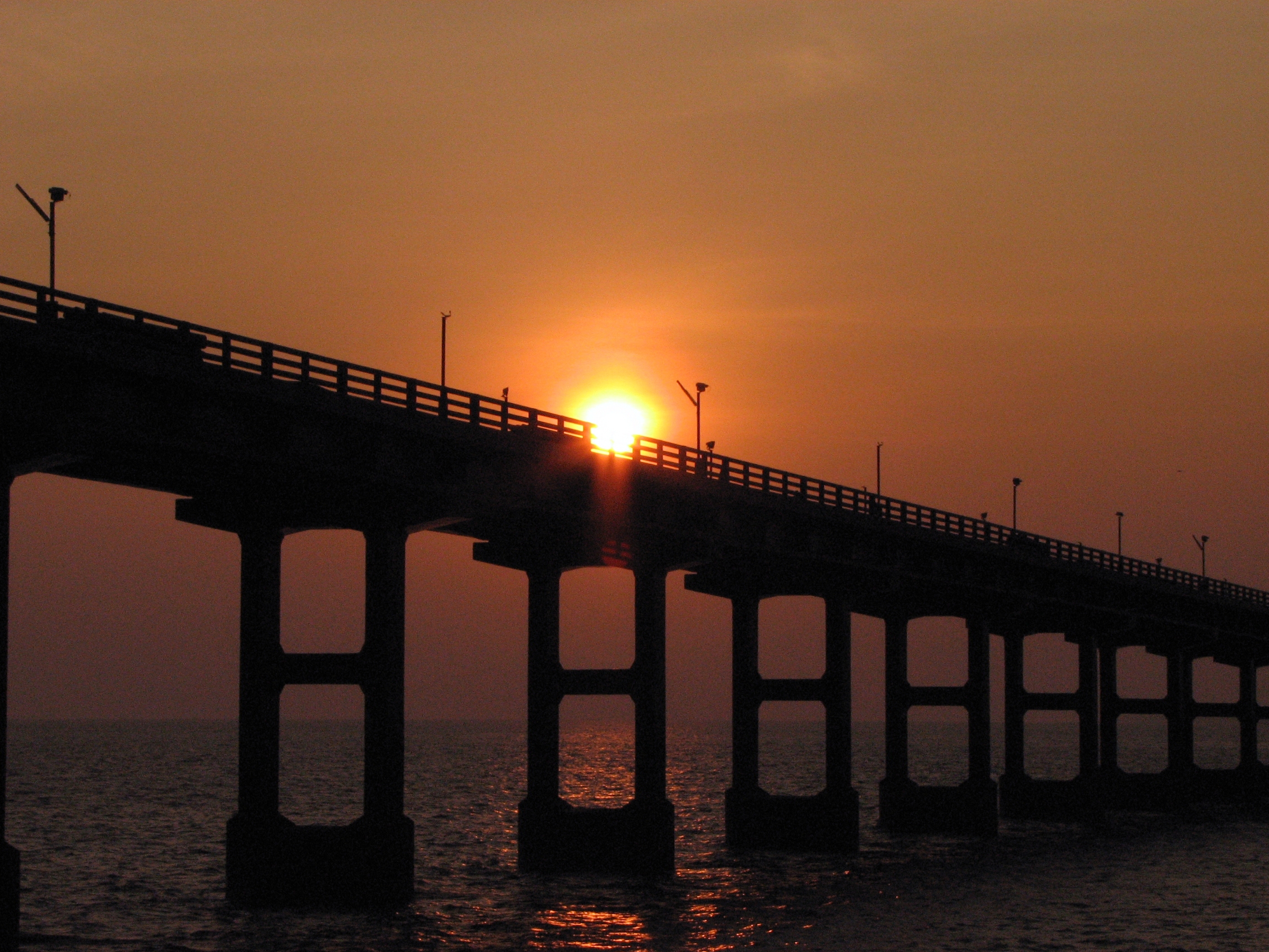
Pamban Bridge… A Fascinating One !!!


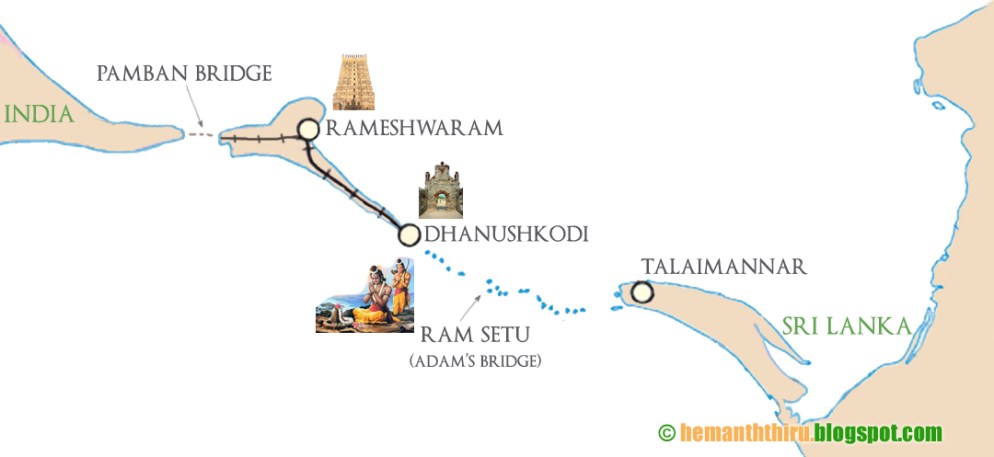
Pamban Bridge (named after the place at one end) lies between Indian main land
and Rameswaram island. It was the longest sea bridge for almost a century in India
(built in 1914) until Worli – Bandra sea bridge was built in Mumbai a few years ago.
Now it is the second.

Besides this, it is also a cantilever bridge that opens up in the middle to allow
ships to pass by like the Tower Bridge in London.

It was damaged in a cyclone in 1964 and was restored in just 46 days by E Sreedharan
the father of Delhi Metro.That cyclone had however damaged the link from Pamban to
Dhanuskodi town that vanished in the cyclone, thereby cutting the rail link between India
and Sri Lanka. Along with it went away the name Boat Mail for Madras – Dhanuskodi train.
Boat mail ? yes, because from Dhanuskodi, the passengers used to take a ferry to
Thalaimannar in Sri Lanka and continued their onward train journey all the way to Colombo.
Since the Madras train connected to a boat at the end of the journey, it was called
Boat Mail. This train was also known as Indo Ceylon Express in very early days.
https://i0.wp.com/static.panoramio.com/photos/large/41963310.jpg
https://i0.wp.com/i1.trekearth.com/photos/18313/img_2671.jpg
https://i0.wp.com/www.ramnad.tn.nic.in/images/Final_Scissors%20Bridge%20001.jpg
SOURCE:::: iNPUT FROM A FRIEND OF MINE
Natarajan

Arunima Sinha ….On the Top of the World…. Hats off To This Brave Lady …

http://inktalks.com

You Might Have watched a plenty of Motivational and Inspirational Videos and Talks …

But this Talk by Arunima Sinha  on her goal and experience is totally on a different platform.

My request to you  is to watch this video  and Listen to her talk … Also share this Video Talk with your Kids and friends …You need not listen to any Gurus …both Religious and Management… after listening to her.

HATS OF TO THIS COURAGEOUS LADY …

Natarajan

 
In April 2011, Arunima Sinha, a national level volleyball player, was thrown out of a running train by robbers who were after her gold chain. Her left leg crushed by the passing trains had to be amputated. This did not stop her from dreaming the impossible, on May 21st, 2013, Arunima summited Mount Everest. Watch as she takes us along on her journey in this passionate talk.

Please Note: This talk is available with English subtitles. Please enable YouTube Captions if the subtitles are not appearing.

ABOUT INK: INKtalks are personal narratives that get straight to the heart of issues in 18 minutes or less. We are committed to capturing and sharing breakthrough ideas, inspiring stories and surprising perspectives–for free!

Watch an INKtalk and meet the people who are designing the future–now.

Connect with us:
http://inktalks.com
http://facebook.com/inktalks
http://twitter.com/inktalks

ABOUT ARUNIMA SINHA:
Arunima is a former national level volleyball player who was thrown off a moving train in 2011. In order to save her life, the doctors had to amputate part of her left leg. In light of this event, Arunima became inspired by Yuvarj Singh, an international cricket player who successfully won his battle with cancer. As such, she was determined to climb Mount Everest. In 2013, Arunima became the first female amputee (and the first Indian amputee) to make the climb.

Arunima then went on to be the first female amputee to climb Mt. Kilamanjaro in Africa and Mt. Elbrus in Europe. She has been honoured with numerous awards and recognitions. Currently she is busy planning to open a sports academy for underprivileged and physically disabled children.

SOURCE::::: http://www.You Tube.com and ink talks.com

Natarajan

68 வருடம் சேவை … ஒரே அலுவலகம் … 95 வயதில் ஓய்வு…!!!..

சிறந்த அலுவலகமாக தேர்வு செய்யப்பட்ட செண்பகனூர் கிளை அஞ்சல் அலுவலகம். (உள்படம்) கே.வி.பீட்டர்.

சிறந்த அலுவலகமாக தேர்வு செய்யப்பட்ட செண்பகனூர் கிளை அஞ்சல் அலுவலகம். (உள்படம்) கே.வி.பீட்டர்.

கடந்த கால் நூற்றாண்டுக்கு முன்பு வரை தபால்காரர் என்பவர் எல்லோராலும் ஆவலுடன் எதிர்பார்க்கப்பட்ட கதாநாயகர்.

இவை எல்லாம் மறக்க முடியாத சிறந்த காலக்கட்டம் அது. அப்போது இந்தியாவின் சிறந்த அஞ்சல் அலுவலகமாக கொடைக்கானல் அருகேயுள்ள செண்பகனூர் கிளை அஞ்சல் அலுவலகம் தேர்ந்தெடுக்கப்பட்டது. இதற்குக் காரணம், அந்த அலுவலகத்தில் பணியாற்றிய போஸ்ட் மாஸ்டர் (கிளை அஞ்சலக அதிகாரி) கே.வி. பீட்டர்.

தொடக்கத்தில், கொடைக்கானல் மலைவாழ் மக்களிடையே கிறிஸ்தவ மத போதகராகத்தான் வாழ்க்கையைத் தொடங்கினார் கே.வி.பீட்டர். அடர்ந்த மலைப் பகுதியான செண்பகனூர் அஞ்சல் அலுவலகத்துக்கு போஸ்ட்மாஸ்டராக பணிபுரிய யாருமே முன்வராதபோது, 1913-ல் தனது 27-வது வயதில் சேவை அடிப்படையில் பணியில் சேர்ந்தார் கே.வி.பீட்டர். அந்த ஒரே அலுவலகத்தில் 95 வயது வரை அதாவது 68 ஆண்டுகள் தொடர்ந்து பணிபுரிந்தார்.

இதுகுறித்து தேசிய விருது பெற்ற முன்னாள் அஞ்சல் அலுவலர் கோவை என். ஹரிஹரன் ‘தி இந்து’ விடம் கூறும்போது, ‘பேருக்குத்தான் கே.வி.பீட்டர் செண்பகனூர் அஞ்சல் அதிகாரி. ஆனால், அங்கு அவர்தான் போஸ்ட் மாஸ்டர், தபால்காரர், அலுவலக எழுத்தர், விற்பனையாளர் என எல்லாம். இப்போதுதான் கொடைக்கானல் சர்வதேச கோடைவாசஸ்தலம்.

அப்போது, கொடைக்கானல், செண்பகனூர் பகுதிகள் மக்கள் நடமாட்டமே இல்லாத அடர்ந்த மலைப்பிரதேசமாக இருந்தன. கரடுமுரடான மலைப் பாதையில் நடந்துதான் அலுவலகத்துக்கு வர வேண்டும். நடந்து சென்றுதான் தபால்களை பட்டுவாடா செய்ய வேண்டும். அப்போது, கொடைக்கானல் செண்பகனூர் பகுதியில் ஆங்கிலேய அரசின் உயர் அதிகாரிகள், வெளிநாட்டு சுற்றுலாப் பயணிகள் நிரந்தரமாகவும், மாதக்கணக்கிலும் தங்கியிருப்பர். ஆங்கிலேயருக்கு ஏராளமான தபால்கள் வரும். அவர்களும் தபால், மணியார்டர்களை வெளியூர்களுக்கு அனுப்புவர்.

கே.வி.பீட்டர் தனி ஆளாக, தனது முழு சக்தியையும் அஞ்சல் துறைக்காகவே செலவிட்டார். தபால்களை அவரே பிரிப்பார்; பட்டுவாடா செய்வார்.

நேரம், காலம் பாராமல் திருமணம் செய்து கொள்ளாமலே அஞ்சல் அலுவலகத்தையே வாழ்க்கையாக நினைத்தார். அன்றைய காலக்கட்டத் தில் ஓராண்டில் 16 ஆயிரம் ரூபாய்க்கு தபால்தலைகளை விற்று சாதனை படைத்தார் (கிளை அஞ்சல் அலுவலக வரலாற்றில் அப்போதைய சாதனை). அதனால், செண்பகனூர் அஞ்சல் அலுவலகத்தை 1983-ல் இந்தியா வின் சிறந்த அஞ்சல் அலுவலகமாக மத்திய அரசு அறிவித்தது.

இதற்கு காரணமான கே.வி.பீட்டருக்கு மத்திய அரசு பத்ம விருது வழங்கி கவுரவித்தது. ஓய்வே இல்லாமல் பணிபுரிந்த அவருக்கு, அவரது 62-வது வயதில் 62 நாட்கள் முழு ஊதியத்துடன் அஞ்சல் துறை விடுமுறை வழங்கியது. அஞ்சல் துறை மீது அவருக்கு இருந்த ஈடுபாட்டை பாராட்டி, ஆயுட்காலம் வரை அங்கேயே பணிபுரிய கே.வி.பீட்டருக்கு மத்திய அரசு சிறப்பு அனுமதி வழங்கி உத்தரவிட்டது.

அதனால், 95 வயது வரை அங்கேயே பணிபுரிந்த அவர், முதுமை காரணமாக ஓய்வு பெற்றார்.

10 ரூபாய்க்கு பணியில் சேர்ந்த கே.வி.பீட்டர், 210 ரூபாய் ஊதியம் வாங்கும்போது ஓய்வுபெற்றார். ஆனாலும், 105-வது வயதில் தான் இறக்கும்வரை செண்பகனூர் அஞ்சல் அலுவலகத்தை தன் கண்காணிப்பிலேயே வைத்திருந் தார். சமூக அமைப்புகள் உதவிய தால், கே.வி.பீட்டர் ஊதியத்தை எதிர்பார்க்காமல் வாழ்நாள் முழுவ தும் கடைசி மூச்சு வரை தபால் துறைக்காக வாழ்ந்தார்’’ என்றார்.

சிறந்த அலுவலகமாக தேர்வு செய்யப்பட்ட செண்பகனூர் கிளை அஞ்சல் அலுவலகம். (உள்படம்) கே.வி.பீட்டர்.

இந்திரா காந்தியின் பாராட்டுக் கடிதம்

இந்திரா காந்தி பிரதமராக இருந்தபோது அவரது உதவியாளர் மூலம் கே.வி.பீட்டருக்கு அனுப்பிய பாராட்டுக் கடிதத்தில், ‘சாதாரண பணியிலும் ஒருவரால் திறம்படச் செயல்பட முடியும் என்பதற்கு உதாரணமாகத் திகழ்கிறீர்கள்’ என்று குறிப்பிடப்பட்டிருந்தது. 1946-ல் தகவல் தொடர்புத் துறை அரசு செயலராக இருந்த கிருஷ்ணபிரசாத், கே.வி.பீட்டரின் சேவையைப் பாராட்டி தங்க கைகடிகாரத்தை பரிசாக வழங்கினார்.

கொடைக்கானலுக்கு சுற்றுலா செல்பவர்கள், அலுவல் நிமித்தமாக கொடைக்கானல் செல்லும் அஞ்சலக அதிகாரிகள், இன்றும் செண்பகனூர் அஞ்சல் அலுவலகத்தை சுற்றுலாத் தலம்போல பார்வையிட்டுச் செல்கின்றனர்.

SOURCE:::::ஒய்.ஆண்டனி செல்வராஜ்  in http://www.tamil.the hindu.com
Natarajan