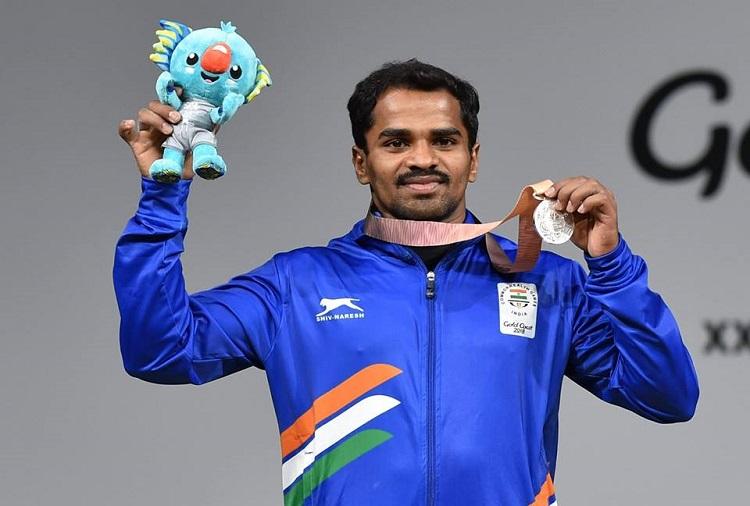
Meet Gururaja…CWG 2018 Medallist…

‘His victory is our victory,” said his family as they watched him bag the silver medal in weightlifting, in Australia.


At 7.30 am on Thursday morning all eyes in the Poojary household in Vanse, a tiny village near Kundapur in Karnataka, were glued to the television.

One of their own, Gururaja Poojary, was taking part in the men’s 56-kg weightlifting competition in the 2018 Commonwealth Games in Australia. After failing to lift the weight of 138 kg in his first two attempts, it appeared as if Gururaja’s medal prospects were slipping away

The 25-year old weightlifter, however, was the very picture of strength in his final attempt to take his final tally to 249 kg and clinch the silver medal.

This medal in the Gold Coast is not only Gururaja’s first taste of success on the international stage right on his debut, but is also the product of a journey where he overcame poverty and personal setbacks to reach where he is.

But for his family members, it came as no surprise.

He comes from a sporting family – all five of his brothers dabbled in Kabaddi and were athletes. “But it was Gururaj who was always going to achieve his dream,” says Manohar Poojary, Gururaja’s elder brother.

Gururaja’s father, Mahabala Poojary, is a goods-truck driver, who struggled to make ends meet to take care of his six sons. “Poverty is something we have lived in all our life. If we were a little bit well-off financially or received the necessary support and encouragement, maybe all of my sons could have made our country proud,” says Mahabala, speaking after his son’s success in Australia.

But due to poverty and unforeseen circumstances at home, Gururaja’s older brothers – Mohan, Manohar, Udaya and Rajendra – had to drop out of school and, with that, from sports. Only Gururaja and his youngest brother, Rajesh, completed their studies amongst the six sons.

His mother, Padhu Poojarthi, is a homemaker.

But his family was not willing to let Gururaja tread the same path. “Our father worked extra hard to ensure that Gururaja strove to achieve his dream. Seeing my father’s and brother’s struggles, even we chipped-in, taking on extra work to help in whatever way we could. Today, his victory is as much our victory,” says Manohar.

While studying at Sri Dharmastala Manjunatheshwara (SDM) College in Ujire, in Dakshina Kannada, Gururaja was looking for a wrestling coach rather than a weightlifting one. This was around the time Sushil Kumar had won his first Olympic medal in wrestling in 2008. While his search for a wrestling coach proved to be fruitless, he met powerlifters at the local gym and was soon representing his college in powerlifting.

It was here he met his coach Rajendra Prasad, who gave him his first lessons in weightlifting.”I still remember, in 2011, Gururaja was a young boy who had just joined a graduation course. He was a Kabaddi player and a wrestler, and did not have any idea about powerlifting. We selected him for the club and, seeing his talent, guided him in powerlifting,” says Rajendra Prasad, who works as a coach at the SDM Sports Club.

He added that Gururaja was proficient at the University level and even broke a record set by him in 1999 by lifting 193 kg (total in snatch and knee jerk) in 2012. He improved to 243 kg in 2015, a record which still stands to this day.

It was only in 2013 that he became a national-level athlete and in 2014, after a gold medal at the national-level, he started becoming a serious contender for a Commonwealth Games berth.

With his superlative rise in the sport, Gururaja also enrolled in the Indian Air Force three years ago, after which the Air Force took care of all the training expenses. “Until then, it was the family, college-mates and generous philanthropists who gave wings to his dream, hoping he would bring glory to the region,” says Manohar.

By the time the financial strain on his family was eased, 25-year-old Gururaja was ready to take on the world stage.

With the win in Australia, he has now vaulted straight into the national limelight and Pramod Madhwaraj, Karnataka Minister for Youth, Fisheries and Sport, who also hails from Udupi, said that Gururaja is likely to get a government job as a group-B officer and also a cash prize for his achievements.

When TNM caught up with Gururaja, he was, understandably, elated. “I am very happy that I have represented India in the Commonwealth Games and won the first silver medal for India (this year). This is my first Commonwealth Games and I want to thank my parents, family, my weightlifting coach Rajendra Prasad, SDM institution and everyone from my village who supported me,” he says.

His family members, who were nervously watching from home, was over the moon. Although his mother says she doesn’t quite understand the world of sport, she adds she is overwhelmed by the media visits.

But Gururaja’s family was quick to add that the journey is still not over. “We want him to make our country proud. Our biggest dream is that he participates and wins in the Olympics,” says Mahabala.

There is still some way to go before Gururaja can qualify for the Olympics. His final tally of 249 kgs will have to improve closer to 300 kgs. But throughout his journey, he has broken barriers and after his latest success in Australia, Gururaja will no doubt be willing to go the mile to chase his Olympic dream.

Source…….Harsha Raja Gatty and Prajwal Bhat in https://www.thenewsminute.com

Natarajan

ஒழுக்கத்திற்கு வழிகாட்டும் தாத்தா…


தாத்தா ஒருவரால் தான் குடும்பத்தில் எல்லோரையும் மன்னிக்க, கண்டிக்க ஏன்… தண்டிக்கவும் முடியும். வானளாவிய குடும்ப அதிகாரம் படைத்திருந்த தாத்தா இப்போது எங்கே?

தாத்தா, பாட்டி உறவு தாமரை இலை மேல் தண்ணீர் போல ஒட்டாமல் போனதால் தான் இன்றைய பல குடும்பங்கள் சுக்கு நுாறாய் உடைந்து, சிதறிப் போயிருக்கின்றன. வீட்டில் சாப்பிடாமல், நாக்கில் ருசியின்றி கிடக்கும் குழந்தைகளை, மருமகளிடம் திட்டு வாங்கினாலும் பரவாயில்லை என்று ஓட்டலுக்கு கூட்டிச்சென்று புரோட்டா, ஸ்பெஷல் தோசை, ஐஸ்கிரீம் என வாங்கி கொடுத்து வீட்டிற்கு அழைத்து வந்த நாட்கள் என்ன… காய்ச்சலோ, வயிற்று போக்கோ வண்டி கட்டிக்கொண்டு முதல் ஆளாய் டவுன் ஆஸ்பத்திரிக்கு, பெரிய டாக்டரை பார்க்க அழைத்து போகும் உத்வேகம் என்ன… அந்த தாத்தாக்கள் எங்கே?

கயிற்று கட்டிலில் நிலாவை காட்டிக்கொண்டே காற்றோட்டத்துடன் கதை சொல்லும் பக்குவம் என்ன… அவை எல்லாம் இந்த காலத்து குழந்தைகளுக்கு கிடைக்காத பாசபிணைப்பு காலங்கள்.

தாத்தாவின் அதிகாரம்:
தாத்தா கையில் தான் வீட்டின் சாவிக் கொத்து இருக்கும். கல்யாண நாளில் திடீரென ஒரு பெரும் தொகையை மருமகளிடம் கொடுத்து, பிடித்த நகை வாங்கிக்கொள்ளம்மா என்று குடும்ப சக்கரத்தை பக்குவமாக நகர்த்தி செல்லும் தாத்தாக்கள் இல்லாததால் பல குடும்பங்கள் தடம் புரண்டு கிடக்கின்றன. வீட்டிற்கு யாராவது புதிய ஆள் வந்தாலோ, ஆண் குரல் கேட்டாலோ யாரு என சத்தமாக கர்ஜிக்கும் குரலில் எதிராளி சற்று ஆடிப்போய் விடுவார்.

குழந்தைகளை முதல் நாள் பள்ளியில் கொண்டுபோய் விடுவதிலிருந்து, மருமகளை அடுத்த பிரசவத்துக்கு ஆஸ்பத்திரியில் சேர்க்கும் வரை தாத்தா தானாகவே இழுத்து போட்டுக்கொண்டு செய்யும் வேலைகளை இப்பொழுது செய்ய யாரும் இல்லை. ஆட்டோக்காரர், கால் டாக்சிகாரர்கள் அந்த பணியை செய்ய வேண்டிய நிலை. இதுவேதனையானது மட்டுமல்ல மூத்த உறவுகளை உதறிய பாவத்தின் தண்டனை தான்.

ஒழுக்கத்தின் அடையாளம்:
தாத்தா வீட்டில் இருந்ததால் பெரும்பாலான குடும்பங்களில் ஆண்கள் மது அருந்துவதையும், புகை பிடித்தலையும் தவிர்த்தார்கள். லேட்டாக வீட்டிற்கு வந்தால், கதவை தட்டியவுடன் முதல் ஆளாய் கதவை திறந்து ‘ஏன்டா லேட்’ என மகனையும், பேரனையும் அதிகாரத்துடன் கேட்கும் உரிமை தாத்தாவிற்கு மட்டும் தான் இருந்தது. அந்த உரிமையை பறித்ததால் இன்று வீட்டிற்கு ஒன்றிரண்டு ‘குடிமகன்கள்’முளைத்துவிட்டனர்.

பாடம் சொல்லி கொடுப்பதாகட்டும், வாத்தியாரிடம் சென்று ‘படிக்கலைனா நல்லா அடிங்க’ என்று சொல்லிவிட்டு, பேரன் போன பின்பு ‘அடிச்சு கிடிச்சுப்புடாதீங்க; ஒரு பேச்சுக்கு சொன்னேன்,” என்று மறுநிமிடமே வாத்தியாரிடம் மல்லுகட்டும் அந்த தாத்தாவின் அன்புக்கு ஈடு இணையே இல்லை. குழந்தை பருவத்தில் உண்டியல் தான் தாத்தா கொடுக்கும் முதல் பரிசு. சேமிப்பு பழக்கத்தை முதல் காசு போட்டு தொடங்கி வைக்கும் தாத்தாக்கள் உண்டு. ‘தாத்தா நீ செத்துப்போனா எனக்கு யாரு பொம்மை வாங்கித்தருவா? யாரு காசு கொடுப்பா?’ என விளையாட்டாய் கேட்கும் போதெல்லாம் சிரித்துக் கொண்டே ‘உன் கல்யாணத்தை பார்த்துட்டுதான்டா நான் சாவேன்’ என முத்தமிட்டவாறே சொல்லும் அந்த முதிய குழந்தை தாத்தா இப்போது இருப்பதெல்லாம் முதியோர் இல்லங்களில்.

முதுமையை போற்றுவோம்:
குடும்ப உறுப்பினர்களின் மூக்கணாங்கயிற்றை அதிகாரமாக கையில் வைத்திருந்த பல முதியவர்கள் இன்று முதியோர் இல்லங்களில் கட்டிப்போடப்பட்டிருக்கின்றனர். சமீபத்தில் ஒரு ஆதரவற்றோர் இல்லத்தில் எழுதிப்போட்டிருந்த வாசகம் நெஞ்சை உருக்கியது. ‘இது மனிதர்களை பார்க்க விலங்குகள் வந்து போகும் மனித காட்சி சாலை’. பல ஆயிரம் அர்த்தங்களை உள்ளடக்கிய வாசகம் இது. தங்கள் வீட்டின் முதியவர்களை முதியோர் இல்லங்களில் கொண்டுபோய்விடும் மகன்கள் அங்கு சொல்வதெல்லாம், ‘இங்கேயே ஏதும்ஆனா கூட பரவாயில்லை! நாங்க உங்களை ஏதும் சொல்லமாட்டோம். திரும்ப எங்க வீட்டுக்கு மட்டும் அனுப்பிவிடாதீங்க!’ குடும்ப உறவுகள் அந்நியமாகிப்போனதின் முதல் அபாயமே, வீட்டின் முதியோர் புறக்கணிப்பு தான்.

கேள்விக்குறி உறவுகள்:
தாத்தா பாட்டி உறவுகள் தற்போதைய குழந்தைகளுக்கு கிடைக்கிறதா என்றால் கேள்விக்குறிதான். தாத்தாக்கள் கிராமங்களில் தனியாக ரேடியோவோ, தொலைக்காட்சியோபார்த்து அன்றாட பொழுதை ஓட்டிக்கொண்டிருக்க, நகரத்து குழந்தைகள் பள்ளி, டியூஷன், டான்ஸ் என பிசியாக காலம் கழிக்க, என்றாவது வரும் தாத்தாவும் நகரத்து வீட்டில் தனியாகவே இருக்க, தாத்தா- குழந்தை உறவுப்பாலம் நுாலிழையில் தொங்கிக்கொண்டு இருக்கிறது. டிரங்கால் போட்டு கூடுதல் பணம் செலவு செய்து போனில் தாத்தாவிடம் நலம் விசாரித்த காலம் போய், இப்போது பணம், அலைபேசி, நேரம் இருந்தும் மனம் இல்லாமல் தாத்தாவுடன் போனில் பேசுவதையே தவிர்த்துவிட்டோம்.

தாயின் அன்பை போன்றே தாத்தாவின் அன்பும் ஈடு இணையற்றது. ‘தாத்தா நீ செத்துப்போயிட்டேன்னு சொல்லி இன்னிக்கு நான் லீவு போடப்போறேன்’ என்று பேரன் தாத்தாவை கிண்டல் செய்து ஓடுவதும், ‘இரு உன்னை உங்க வாத்தியார் கிட்ட சொல்லித்தரேன்’ என்று சொல்லி தாத்தா செல்லமாய் துரத்துவதும் இனி கிடைக்காத நாட்கள். எந்த ஒரு செயலையும் பக்குவமாய் அணுகி தீர்வு சொல்வது தாத்தாவின் கைவண்ணம். வயதும், அனுபவமும் தாத்தாவை பக்குவப்படுத்துகிறது. ஆனால், அந்த நிதானமும் பொறுமையும் இல்லாததால், இன்று இளைய தலைமுறை இயந்திர கதியாக இயங்குகிறது.

கோடையில் தாத்தா வீடு:
கோடை விடுமுறையில் தாத்தா வீட்டிற்கு கிராமத்திற்கு செல்வதை குழந்தை பருவத்தில் ரசிப்போம். தாத்தாவும், பாட்டியும் சேர்ந்து தலைக்கு நல்லெண்ணெய் தேய்த்து குளிப்பாட்டிவிடுவார்கள். மாலையில் வடை, இரவு சுடச்சுட தோசை சுட்டு கொடுப்பார்கள். திடீரென எல்லா குழந்தைகளுக்கும் விளக்கெண்ணெய் கொடுத்து பேதியாக்கி, வயிற்றை சுத்தம் செய்வார்கள். பள்ளி திறக்கும் முன்பாக சென்ட்ரப்பர், பென்சில், நான்கு வண்ண ரீபில் பேனா, புது ஜாமின்ட்ரி பாக்ஸ் என தாத்தா குழந்தைகளை கவனிக்கும் விதமே தனி தான். பெரியப்பா, பெரியம்மா, சித்தி, சித்தப்பா, மாமா, அத்தை என சம உறவுகளோடு கிராமத்து வீட்டில் குழந்தைகளாக ஆட்டம் போட்ட நாட்கள், குளத்திலும், கண்மாயிலும் நீச்சல் கற்றுக் கொண்டு நாட்கள், பம்புசெட்டில் குளித்தநாட்கள், கோடை மழையில் நனைந்தவாறே கிராமத்து வீட்டு முற்றத்தில் குதித்த நாட்கள் இன்றும் ரம்யமானவை. அந்த நாட்களின் பாசப்பிணைப்பு தான் இன்றும் நம்மை நமது சொந்தங்களோடு இணைத்து வைத்திருக்கிறது.

குடும்ப உறவுகள் அறுந்து போகாமல், நேசங்களும், பாசங்களும் விரிசல் விடாமல் ஆண்டுதோறும் புதுப்பித்து கொண்டிருந்த ஒரே உறவு தாத்தா தான். டேய் என்ற தாத்தாவின் கம்பீரக்குரலுக்கு அப்பா, பெரியப்பா, சித்தப்பா, மாமா, அண்ணன், தம்பி என அத்தனை பேரும் சர்வநாடியெல்லாம் அடங்கி பதுங்கி இருந்த காலம் மறக்க முடியாதவை. தாத்தாவின் குரலுக்கு ஆதரவாய் புதிதாய் வந்த மருமகள்களும் இணைந்து போய், கூட்டுக்குடும்ப உறவுகளும், வரவுகளும் சங்கமிக்கும் கோடை விடுமுறை இப்போது டியூசன், இசை, நடன பயிற்சி என்று தடம் புரண்டு போய்விட்டது. 40 ஆண்டுகளுக்கு முன் குழந்தைகளுக்கு மே மாதத்தில் கிராமத்துவீட்டில் கிடைத்தது எல்லாமே தாத்தாவின் அன்பு அரவணைப்பு தான்.

இழந்துவிட்ட நமது கலாசார உறவு மேம்பாட்டுக்கு குழந்தைகளை கோடை விடுமுறைக்கு தாத்தா வீட்டிற்கு அழைத்து போவோம். ஒதுக்கப்பட்ட முதிய உறவுகளிடம் அன்பு கேட்டு தஞ்சம் புகுவோம். உங்கள் குழந்தைகளுக்கு தாத்தாக்களை நீங்கள் அடையாளம் காட்டுங்கள். பேரக்குழந்தைகள் தாத்தா உறவை கற்றுக்கொள்ளும் மே மாதம், கோடை விடுமுறையில் தாத்தாவிடம் சங்கமிப்போம். கொடுப்பதற்கு ஒன்றுமில்லை என்றாலும் தன் நடுங்கும் கரங்களால் தங்கள் பேரக்குழந்தைகளை வாஞ்சையுடன் தாத்தாக்கள் தடவி, வருடும் போது இருக்கும் அன்பு எதற்கும் ஈடாகாது. உறவின் ஆழத்தையும், அன்பின் விளிம்பையும் குழந்தைகள் உணரும் தருணம் அது.

-ஜெ.ஜெயவெங்கடேஷ்சித்த மருத்துவர், மதுரை

98421 67567

Source….www.dinamalar.com

This 69 year old Man has helped start free Libraries across Chennai , and YOU can too !

No membership, no one to supervise, and no last date to return books: Mahendra Kumar’s libraries run on no rules, and plenty of goodwill.

Chennai-based Mahendra Kumar speaks about reading and books with reverence and passion. “It is a character-building activity,” he says earnestly.

In April 2015, he decided to do something which he hoped would encourage people to read: He opened a library in Thirumullaivoyal, Chennai.

It wasn’t just your run-of-the-mill library. The most unique part about it wasn’t even that it was set up in a cement shop, where 69-year-old Mahendra shared a table with the shopkeeper.

What truly set it apart was there was no membership fee, no register to keep track. Literally anyone could walk in, pick up one of the 20 books, and take it home. They could return it whenever they wanted.   

This was the first Read and Return Free Library (RFL). Now, Mahendra says that there are 66 of them across TN, and a few other states, with 10,000 books in all.

His first library in Thirumillaivoyal has now expanded to three cupboards, which he keeps outside his house,bursting with books. It stands completely unmanned.

“I could have kept a register perhaps, where people could sign with the book they were taking,” he adds as an afterthought. But Mahendra snaps out of it the very next moment. “I wanted no protocols, no control. Just people free to read and return books, as per their conscience.”

Encouraging others

Presently, there are 48 RFL libraries in Chennai alone. The others are in Nilgiris, Coimbatore, Aurangabad and Mumbai.

But setting these up has not been an easy task. Unable to travel to these places himself, Mahendra would try to convince others to start such libraries.

“I would sometimes see contact numbers in books. Someone who has written an introduction or a foreword – I’d try to find their numbers. I would try to convince them then to start this in their locality. And I would send whatever little money I could to help them,” Mahendra shares.

One such person he convinced was a former classmate of his, Captain R Venkataraman, who started a RFL library in T Nagar, Chennai, in 2016.

“But there are only so many friends or family members who can be convinced,” Mahendra says. “If there are 66 libraries today, you can assume I made 6,000 calls for them.”

Not as easy as it seems

In the past two years, RFL libraries have sprung up in many different places – gated communities, railway stations, hospitals and even a barber shop.

RFL at a Railway Station….

Mahendra is reluctant to share that this has required a considerable amount of legwork and resources from him. He believes it will discourage people, and make them wary of starting more RFLs.

“When people initially came to know about the concept, they wanted to donate books. So I would speak to a few of them, start at 5 am in the morning, make a round with multiple stops and come back with a car full of books,” he recounts. “Sometimes, I would sleep in the car because I’d get tired.”

The problem was that everyone wanted to donate books, but no one wanted to start the library. “Sometimes, people seemed on board with the idea, but they don’t really follow it up with action. I have been wanting to start one RFL library in Bengaluru as well, and got a volunteer too. But they have not really taken it forward after that.”

Mahendra says that he is ready to send some books, and whatever token amount he can from his pocket to help them get started, if only people volunteer.

He also mentions that he is grateful for his wife, who has never raised an objection against him going around the city at odd hours to collect books, and spending money for the RFLs.

Helping students

Mahendra put together the RFL website in 2016. While he is not very familiar with the internet, he says that he somehow learnt some basics and put it together. “The logo looks very childish, no? I made it on Microsoft Paint,” he says, sounding anxious.

The sole purpose for starting the website, he says, is to promote something called ‘Students Corner’.

It allows students to post requirements for second-hand course books, as well as if they have books to donate. Once they fill a form under that section on the site, other students can see it and get in touch. The donor can either mail the books or have them collected by the recipient, as per convenience.

However, Mahendra rues that this has not become as popular as he would have liked it to be.

He also wishes for more people to start RFLs in their localities. “But, it is quite simple really. You just have to see it from time to time to ensure that the infrastructure, wherever you’ve put it, is okay. You can also start it, madam!” he says, cheerfully.

Source…..Geetika Mantri in https://www.thenewsminute.com/

Natarajan

World’s Best Airports for 2018 ….Named by Skytrax …Changi Singapore is No.1 !!!

Once again the region’s aviation hubs are leading the world when it comes to passenger satisfaction, scooping top prizes in the prestigious annual Skytrax World Airport Awards.
Maintaining its position at the top of that chart for an amazing sixth year in a row is Singapore’s Changi Airport.
The city-state’s gleaming facilities fended off stiff competition from the likes of Doha’s Hamad International and Hong Kong’s International Airport.
“To be voted the World’s Best Airport for the sixth consecutive year is a fabulous achievement for Changi Airport, and this award yet again demonstrates the airport’s popularity with international air travelers,” Edward Plaisted, CEO of UK-based Skytrax, said in a statement.
The annual awards, which were held in Stockholm on Wednesday, are based on millions of airport passenger surveys and have been dubbed “the Oscars of the aviation industry.”

On top of the world

Changi Airport, which celebrated serving 60 million passengers from almost 100 countries across the world in 2017, has 5,000 arrivals and departures a week, connecting customers to over 200 destinations.
Amenities on offer include two 24-hour movie theaters screening the latest blockbusters for free, a rooftop swimming pool and a sunflower garden that features several varieties of sunflowers grown in the airport’s on site nursery.
This is the ninth time it’s received the “world’s best airport” title at the annual awards in the past two decades.
While there were no new entries among the Top 10, Seoul’s Incheon International Airport moved up one place to No. 2, while last year’s second place holder Tokyo International Airport (Haneda) dropped to No. 3, keeping Asia’s stranglehold on the top slots.
Doha’s Hamad International Airport progressed to fifth place after coming in at No. 6 in 2017, while Munich Airport dropped from fourth to sixth place.

Moving up and down the ranks

There were few surprises in the Top 100, however Rome Fiumicino Airport achieved one of the biggest jumps, moving from 158th place to 85th, while Bahrain International Airport saw its ranking fall from 57th place to number 73.
Vancouver was the No.1 airport in North America yet again, although its ranking dropped one place to 14th.
Denver International Airport came out on top in the United States, claiming 29th place, while Cincinnati/Northern Kentucky International Airport fell eight spots from 26th to 34th on the list.
Houston’s George Bush Intercontinental Airport ranked number 48, Atlanta Airport at 50, San Francisco International Airport at 51, Dallas/Fort Worth International Airport at 56, Seattle-Tacoma International Airport at 62 and New York’s JFK International Airport at 69.
Skytrax also singled out airports for a variety of more specific awards, with categories such as food, shopping facilities and even cleanliness.
Tokyo International Airport won the vote as “the world’s cleanest airport,” while Incheon International Airport was awarded for its airport staff.
Hong Kong International Airport was voted the “world’s best transit airport” and the “best airport for dining,” but Japan’s Chubu Centrair Nagoya stole the title for “world’s best regional airport.”
For the full list, visit the World Airports Awards website.

2018 Skytrax World Airport Awards

1. Singapore Changi Airport
2. Incheon International Airport (Seoul, South Korea)
3. Tokyo International Airport (Haneda)
4. Hong Kong International Airport
5. Hamad International Airport (Doha, Qatar)
6. Munich Airport (Germany)
7. Chubu Centrair Nagoya (Japan)
8. London Heathrow Airport
9. Zurich Airport (Switzerland)
10. Frankfurt Airport (Germany)
Source…….. https://edition.cnn.com/
Natarajan

Mumbai Beach Welcomes Olive Ridley Turtles After 20 Years….!!!

On Thursday morning, the Versova beach in Mumbai welcomed around 80 palm-sized turtles, making their way slowly but surely in the Arabian Sea.

Why is this event so special?

Well, for starters, the turtles in question are Olive Ridley Turtle, and their eggs hatched on a Mumbai beach after 20 years, and it was all thanks to the efforts of hundreds of Mumbaikars who have been cleaning the Versova beach for over two years now.

The Olive Ridley Turtle has been classified by the International Union for Conservation of Nature (IUCN) as a vulnerable species, which is likely to become endangered unless the circumstances that are threatening its survival and reproduction improve.

According to WWF India, “Olive Ridley Turtles are the smallest and most abundant of all sea turtles found in the world” and live in the warm parts Pacific, Atlantic and Indian oceans.

The females lay their eggs on the same beach that they hatched from!

However, for the past 20 years, these turtles had stopped visiting Mumbai, thanks to the number of pollutants and plastic on the beaches. Not only is the trash an unwelcoming home to lay eggs, but is also a threat to the lives of the tiny turtles who have to walk from their nesting site to the sea all by themselves.

Afroz Shah had taken the initiative to clean up Versova beaches and collect all the plastic dumped there. According to the Hindustan Times, in only 126 weeks, Afroz Shah and the Versova Residents Volunteers’ team has successfully cleared 13 million kg of garbage, which included plastic from the beach.

Speaking about the Olive Ridley Turtle hatchlings, Prashant Deshmukh, range forest officer, Mumbai Mangrove Conservation Unit said,

“Such an incident happened after 20 years. The presence of more turtle nesting sites cannot be ruled out. We will push for the development of a turtle rescue centre close to this nesting site, and we expect it to be built soon.”

Week 127 .

Fantastic news for Mumbai .

We got back Olive Ridley Sea Turtle after 20 years. Historic moment

Nested and Hatched at our beach. We facilitate their journey to ocean.

Constant cleaning helps marine species.

Marine conservation centre needed at @versovabeach

Apart from Versova, these turtles are found on the beaches of Velas, Anjarle, Harihareshwar, Maral and Diveagar in Maharashtra.

The largest nesting site of the world is in Odisha along the coasts of the Bay of Bengal. Villagers in Odisha, too, have made attempts to save the nesting sites and ensure safety to the newborn turtles. You can read more about this story here.

Edited by Gayatri Mishra.

Source……. Tanvi Patel in http://www.the better india.com

Natarajan


Green Glory: This Indian State Is Ahead of Denmark and Sweden In Wind Energy!!!

With 14.3% of its energy needs being fulfilled through wind and solar energy, it is also a global leader in renewable energy!

In a recent report, the Institute for Energy Economics and Financial Analysis(IEEFA), a US-based think tank, ranked Tamil Nadu as one of the top nine markets in the world for acquiring a high percentage of net energy needs from renewable energy sources.

The study was an assessment of the top 15 countries or power markets in the world, where the share of solar and wind energy in proportion to their total energy requirements is high. Denmark leads the way, with 53% of its energy coming from renewable sources in 2017, followed by Southern Australia and Uruguay.

In 2016-17, Tamil Nadu acquired 14.3% of its energy needs from wind and solar energy sources.

“Tamil Nadu also leads India in installed renewable energy capacity. Of the total 30 GW of installed capacity across the state as of March 2017, variable wind and solar power accounted for 9.6 GW or 32% of the total. Firm hydroelectricity added another 2.2 GW or 7%, nuclear 8% and biomass and run of river, 3%. As such, zero emissions capacity represents a leading 50% of Tamil Nadu’s total installed renewable energy. With much of Tamil Nadu’s renewable energy coming from end-of-life wind farms installed 15-25 years ago, average utilisation rates are a low 18%, making the contribution of variable renewables to total generation even more impressive,” says the IEEFA report.

Total installed renewable energy capacity for Tamil Nadu stands at approximately 10,800 megawatts (MW), of which 7870 MW comes from wind and 1,697 MW solar, while the rest comes from biomass and small hydro projects. Although it comes third in solar energy capacity behind Andhra Pradesh (2,010 MW) and Rajasthan (1,961 MW), the state tops the charts in wind power capacity ahead of Gujarat (5429 MW) and Maharashtra (4,752 MW). Tamil Nadu generates more wind energy than Sweden (6.7 GW) and Denmark (5.5 GW), the birthplace of wind energy.

“This rise in renewables is predicted to coincide with a slide in coal’s share in Tamil Nadu’s electricity mix, from 69% in 2017 to 42% 10 years later,” says the World Economic Forum. The state has also diversified into biogas and small hydro plants as well.

“As of March 2017, the state had 1 GW of biomass and run-of-river small-scale hydro, 2.2 GW of conventional hydroelectricity, and 1 GW of gas fired power capacity operational (plus another 1 GW of gas under construction),” reports the IEEFA. In an interesting aside, it also hosts the second largest solar farm (Kamuthi) in the country with a capacity of 648 MW.

This is a heartening development as it comes a time when the Government of India has set a target of sourcing 175 gigawatts of energy from renewable sources by 2022.

When it comes to renewable energy in India, one could consider Tamil Nadu as a pioneer of sorts. Most of its wind farms, for example, were built approximately 25 years back.

The natural conditions in the state favour the growth and development of solar and wind energy. The Tamil Nadu coast receives high wind density and velocity. For six months it receives heavy wind flows, while four months see moderate flows. Also, the state receives 300 or more days of sunshine.

The state’s sojourn into renewable energy began as an emergency attempt to fill the growing deficit between supply and demand of power.

Major industries like automotive parts, textiles, cement and leather-tanning, for example, demanded large amounts of power and consequently, the feed-in tariff (payments to ordinary energy users—people or businesses—for the renewable electricity they generate) for the wind energy sector was encouraging.

The price at which wind energy is sold to the people today is determined at an open auction for power utilities. Earlier, the state power regulators had a stranglehold on determining prices but changed to an auction system in 2016.

With the local textile sector first grabbing the bull by its horns, Tamil Nadu also became one of the first states to allow industrial units to establish their own wind power plants. These 20-year-old wind farms owned by the Tamil Nadu Spinning Mills Association (TASMA) generates a little less than 40% of the state’s total wind energy capacity (3000 MW). The Muppandal wind farm outside Madurai, for example, generates 1.5 GW of energy, making it the largest wind farm outside China.

With favourable tariff conditions, the state also made serious progress in the solar energy arena.

“In recent years, the government has also worked to improve its transmission infrastructure, encouraging firms to expand. Since renewable energy is infirm, managing the fluctuation in power generation is key. Tamil Nadu has begun forecasting the flow so that the grid is ready to handle things,” says this recent report in Quartz India.

Having said that, the IEEFA has argued in its report titled ‘Electricity Transformation in India: A Case Study of Tamil Nadu’, it argued how the state’s growth in wind and solar energy generation isn’t enough.

“Tamil Nadu should double its wind energy capacity to 15GW and increase its solar capacity to 13.8GW by 2026-27 to deliver cheaper electricity to customers,” the report said.

Instead, what the state is doing is looking to build 25,000 MW of thermal power projects. “Despite being a world leader in wind energy, Tamil Nadu’s wind farms have ageing and outdated technology. Upgrading the existing turbines alone could double the state’s leading wind energy capacity,” said Tim Buckley, IEEFA’s director of energy finance studies, Australia.

There are other concerns, as well. “Renewable energy assets in Tamil Nadu are facing significant back down (as state power utilities are buying little power from these plants). This adversely impacts their feasibility,” Kanika Chawla, a renewable energy expert at Delhi-based non-profit Council on Energy, Environment, and Water, told Quartz India.

Primarily, the major concerns stem from state regulation-related issues. For starters, the state-owned power utility Tangedco has proposed an additional imposition of taxes on rooftop solar plants, says this Times of India report.

Last July, Tamil Nadu was unable to use all the solar power it generated. In the wind energy sector, the government could stymie TASMA’s ability to drawing back the excess power it delivers to the power grid in the event of a shortage (wind banking). What one must understand is that TASMA generates and delivers excess wind energy to the power grid.

However, the biggest concern is the dire financial condition of the state power utility. In 2016-17, the Tamil Nadu Generation and Distribution Corporation Limited (TANGEDCO) posted a loss of Rs 3,783 crore, besides year-long delays in the payment of dues to power-generating units.

As a result, these power generation units are unable to repay loans they had taken from the banks to install all the necessary equipment. The poor state of regulation in the state’s power sector is a real concern.

Source….  

in http://www.the betterindia.com

Natarajan


The Hindi-Speaking Aussie who loves India …

Charles ‘Biharilal’ Thomson, is an Australian who speaks fluent Hindi learnt on the streets, trains and buses of India’s hinterland.
Biharilal tells Rediff.com‘s Archana Masih how India has bewitched him.


Photograph: Kind courtesy Charles Thomson/Facebook

Biharilal Thomson is a white Australian who speaks Hindi better than many Indians.

The first time he saw a non-white person was as a 10 year old. His mother had invited an Indian yogi from Bihar into their home in Australia and asked her son to share his room with the sadhu for a few weeks.

“I had only seen white Australians till then, not even native Aboriginals — and here was an Indian in a langoti in my room!” he exclaims in good humour, sitting in a film producer’s home in suburban Mumbai, wearing a kurta-pajama and a yellow stole.

In the two hour conversation, he only speaks Hindi, a language he learnt in the streets, trains and buses of Bihar where he had arrived at age 13 in December 1974.

He loved his new home on the banks of the Ganga so much that he did not return to Australia for the next 11 years. Accounts of his experiences in India’s rural underbelly in the 1970s-1980s, include encounters with dacoits on horseback on at least two railway journeys.

“I saw real sadhus, I saw real dacoits — and I thought I had reached an amazing place,” says Biharilal with a grin. His life experiences, he says are so unbelievable that he sometimes thinks it is like a film.

It also reveals an India of another time — one that was simpler, wilder, unfamiliar and distant from what it is today.

“India was friendly with the Soviet Union, and I came across Indians who were desperate to emigrate to the USA, Canada or UK — not to the USSR.”

“The other thing that was common was cycles. Only the DM (district magistrate) and SP (superintendent of police) had cars — and in the trains people sometimes travelled with their own cooks!”

After going back to Australia in 1985, he returned to formally work in India in 2011.

India has seen a giant leap ahead since, and he has spent nearly 16 years here, but one question posed to him that hasn’t changed over the years is — “Why did you come to India?”

“This is what I am routinely asked, especially by the youth. They ask ‘Why have you come here when we want to settle abroad?’,” says Biharilal, who applied for Indian citizenship in 2014 and hopes to hold an Indian passport soon.

“The other thing I am amazed with is this craze for English. Even if I speak to those who know Hindi in Hindi, they reply in English!”

“Why?”

His fluency in Hindi has fetched him invites to Hindi events by the Indian high commission in Australia, to symposia at Savitribai Phule Pune university and Delhi’s Hansraj College. He has anchored a few film festivals and done some acting roles.

It has also brought him an FM radio show that he hopes to receive a confirmation for by April.

“In independent India it will be the first time that an angrez will do a radio show in Hindi,” he says enthusiastically.

Not wanting to be boxed into roles of the typical gora speaking tooti-phooti Hindi, he refers to the accomplished actor Tom Alter.

“He is an asli Hindustani, I’m nakli, but because earlier directors made him speak broken Hindi like an angrez, people thought he was English.”

“People didn’t know he was Indian, a Padma Shri, who spoke fluent Hindi and Urdu.”

Biharilal works at Josh Talks, a media company that invites guests to share inspirational stories. His focus is on all regional languages and tier-2 cities.

He has also done a few acting roles in Hindi and Marathi television serials, and recently appeared in an airline commercial for Scoot, a budget airline owned by Singapore Airlines.

There are quirky benefits to a white man speaking Hindi too — like the number of wedding invitations he receives. Many wedding organisers in the Delhi area send him invitations only to have a foreigner on display!

“I get so many invitations for chief guest. In the marriage season, I’ll be booked,” he laughs.

“People want a gora who speaks Hindi to show at their weddings.”

The move from Australia to India may have been a continental shift, but for Charles ‘Biharilal’ Thompson, it was like coming home.

It was a life introduced to him by his mother, a ballerina and an early convert to yoga, who came to learn at the Bihar School of Yoga in Munger in 1972.

“At that time only 1% of the world travelled by aeroplane,” says Biharilal, who is often recognised as ‘Biharilal Autowale Babu’ after a show on Zee TV where he covered the 2017 Delhi municipal election in a colourful autorickshaw.

He also covered the UP assembly election last year for WION, Zee’s English news channel.

“We used to fly to the Gold Coast to visit my grandparents every year. I made my father promise that he would send me to India instead, if I stood 1st or 2nd in school.”

He stood 2nd and travelled to Calcutta, he says, taking a train to Jamalpur and then a bus to Munger.

“I was shocked to see the poverty in Calcutta, but hearing ‘garam chai‘ by tea vendors in the train was like music,” he remembers.

Eight weeks later, his father returned to take him home.

“I told him I wanted to stay for one more year,” he says over a cup of tea.

“But I stayed for 11.”

blob:https://ishare.rediff.com/d8239350-f845-46f6-86e1-762bd67d53b5

He has now spent 16 years in India — first at the Bihar School of Yoga in Munger, then working in a financial tech start up Eko India, and currently in the entertainment industry.

At the famed yoga school in Munger, he says he learnt yoga and managed the library. He helped in the institute’s office work which would take him to Patna and Delhi.

It was on one these travels that he found himself in the middle of a dacoity.

He had bought a third class ticket and boarded a train from Jamalpur to Patna in Bihar. The TT saw his ticket and upgraded him to first class. Along the way, dacoits came riding alongside the train, detached the first class compartment and started looting passengers.

When they reached his coupe, he held out his hands, and said, “Ruko, ruko! (stop, stop!)”

The dacoits stopped.

“I was a young boy and did not know very good Hindi at that time, so I just managed to ask a dacoit if he had any videshifriend?”

The dacoit said ‘No’ and Biharilal told him that he would be his friend.

“He smiled and did not take anything from me.”

Caught in another dacoity on a railway platform — this time on a dark railway platform surrounded by crop fields — his saffron clothes came to his rescue.

“When they came to me, I just sprang up and started chanting Bum, Bum Bole-Bum, Bum Bole and they said, ‘Yeh toh Ganga jal wala aadmi hai‘ and let me go,” he chuckles.

India was very different then, he says. Yoga institutes were very austere and drew only the most committed.

He remembers the first function he organised which had a generator as backup for electricity failure. When the lights went off and the generator was switched on — the crowd left the sammelan and rushed to get a first glimpse of a generator at the back.

At fifty-seven, Biharilal has seen the arc of India’s history from Indira Gandhi’s Emergency to her assassination to the post liberalisation. He has travelled widely, even taken his mother to the Kumbh Mela.

In between, he returned to Australia and ran a Thai vegetarian restaurant but kept coming back to India.

“I started coming back in the late 80s, but visas were very difficult. Till the Modi Sarkar came, getting a visa to India was not easy. Sushma Swaraj is doing a good job,” he says.

In 2009, a startup started by Biharis, Eko India, offered him a job and he moved to India.

But it was a chance encounter with an Indian student at a Sydney swimming pool that opened the door to acting.

Shashank Ketkar, now a popular television actor, had got talking to him by the pool hearing his Hindi and came to eat at his Thai restaurant.

Few years later, Biharilal would visit him on the sets of his show whenever he was in Mumbai. His kurta-pajama style of dressing and fluency in Hindi caught the eyes of the director and led to small roles. He also got to play an angrez in a Marathi film Shashank Ketkar was acting in.

“I went to Kohlapur and shot a scene where I was seated on a horse in 40 degrees heat. I loved it. I thought I had become Shah Rukh Khan!”

He has also acted in a Hindi suspense thriller that will release this year.

Every day, he receives a large number of messages on Facebook and makes it a point to at least say ‘Ram, Ram’ or ‘Namaste’ to them.

“I feel the whole of Hindustan is made for me. Yeh kamal ka desh hai, yaha aapko sab kuch mil jayega (this is a great country, there is nothing you can’t find here),” he says, adjusting the famous Australian Akubra hat he is wearing and steps into the hot Mumbai sun.

Archana Masih / Rediff.com

Source…..www.rediff.com

Natarajan

A Tribute to a Genius – Stephen Hawking…

Stephen Hawking, the world-renowned theoretical physicist and cosmologist, has passed away at the age of 76, leaving a scientific legacy behind him that will undoubtedly be remembered for many centuries to come.

Stephen Hawking

Hawking was born on January 8th, 1942 in Oxford, the United Kingdom to two Oxford University graduates, Frank and Isobel. He had two younger sisters, Philippa and Mary, as well as an adopted brother named Edward.

The family moved to St. Alban’s, Hertfordshire, where they were considered to be both highly intelligent and somewhat eccentric by the locals. They lived frugally in a large, messy house and got around in a converted London taxi cab.

Following his primary and secondary school education, Hawking began his university education as an undergraduate at University College, Oxford in 1959. He was just 17 years old. Although the world only pictures him as a man confined to a wheelchair due to debilitating motor neuron disease that he was diagnosed with aged just 22, Hawking actually gained a reputation as being something of a daredevil during his university years.

He was the coxswain of a rowing crew at the University College Boat Club, and became notorious for steering his crew on risky courses, inevitably leading to a string of damaged rowing boats. He left University College with a Bachelor of Arts in natural science in 1962 prior to starting to work on his doctorate.

Stephen Hawking

His diagnosis with a rare form of motor neuron disease occurred at that time, and it led to him becoming deeply depressed. Nevertheless, he was encouraged to continue his studies by his supervisor, Dennis William Sciama, and was eventually able to demonstrate that Einstein’s general theory of relativity implies space and time would have a beginning in the Big Bang and end in black holes.

During his graduate years at Cambridge, Hawking fell in love with his first wife, Jane Wilde, with whom he had three children. The marriage would end some 30 years later after the marriage succumbed to the pressures of Hawking’s fame, ideological differences and the difficulties surrounding caring for him in light of his disability.

Despite beginning to use crutches in the early 1960s, he long fought off having to use a wheelchair, but when he finally couldn’t do so any longer, he gained notoriety for wild driving on the streets of Cambridge. He also used to run over students’ toes intentionally and would even spin himself on the dancefloor at college parties.

Together with Roger Penrose, Hawking had his first major breakthrough in 1970. They were able to use mathematics to show that a singularity, a region of infinite curvature in space-time, was the point from which the big bang emanated.

Stephen Hawking

After he realized that he was wrong in his argument about black holes being able to radiate, Hawking was in a Cambridge pub with his students when he suddenly turned up his voice synthesizer to full volume and bellowed that he was conceding defeat. Anyone who studied under his tuition or knew him personally knew him for his wicked sense of humor.

Hawking was elected to the Royal Society in 1974 aged just 32 after the series of radical discoveries he made during his early career, and would become the Lucasian professor of mathematics at Cambridge. The latter is often thought as the UK’s most distinguished academic chair and was once held by Isaac Newton.

His 1988 book, A Brief History of Time, catapulted Hawking to international stardom. It sold over 10 million copies and was translated into no less than 40 different languages. It was around that time that his marriage would begin to break down, but he would go on to remarry in the mid-1990s.

During his lifetime, he won the Albert Einstein Award, the Wolf Prize, the Copley Medal and the Fundamental Physics Prize, however, the Nobel Prize for Physics eluded him. He also returned to the White House (he had also visited during the Clinton administration) to receive the Presidential Medal of Freedom from Barack Obama.

Stephen Hawking

His life has also been immortalized on screen, not least thanks to the multiple award-winning movie, the Theory of Everything. He also lent his voice and know-how to various documentaries over the years.

Perhaps it’s not surprising to know that Hawking was not a religious man, and dismissed the comforts of religious belief. With that being said, he had once told an interviewee that he wasn’t afraid of death, but he added that he wasn’t in any hurry to die due to how much work he had left to do. The great cosmologist is survived by his three children from his first marriage, together with his three grandchildren.

Watch Stephen Hawking being interviewed by Charlie Rose:

Source……..www.ba-ba mail.com

natarajan

Phenomenal domestic growth fuels India’s aircraft demand…

India’s exponential rise in both passenger and freight traffic means the country will need 1,750 new aircraft over the next 20 years, according to estimates from Airbus.

With air traffic growth driven by a fast expanding economy, rising wealth and urbanisation, and government-backed regional connectivity programmes, India will require 1,320 new single-aisle aircraft and 430 widebody aircraft over the next two decades.

That’s according to European aircraft manufacturer Airbus in its latest India Market Forecast. It said the total value of the aircraft would be $255bn.

The report predicted that by 2036, Indians will each make four times as many flights as today. As a result, traffic serving the Indian market is forecast to grow 8.1 percent per year over the next 20 years, almost twice as fast as the world average of 4.4 percent.

Domestic Indian traffic is expected to grow five-and-half times over by 2036, reaching the same level as US domestic traffic today.

According to figures from OAG Schedules, domestic air capacity in India rose from 74.2 million available seats in 2008 to 143.2 million in 2017. In the last calendar year alone, domestic capacity increased by 13.8 percent after adding more than 17 million available seats.

The domestic growth comes as India’s government pushes its regional connectivity scheme (RCS), also known as UDAN, which aims to make air travel affordable and widespread.

The programme seeks to develop new and enhance the existing regional airports, as well as connecting more than 100 underserved and unserved airports in smaller towns.

Source…..David Casey in https://www.routesonline.com

Natarajan