Parents Don’t Have to Worry About Their Child’s School Bus Anymore. All Thanks to This 15-Year-Old!

Parents are often worried about the safety of their children whenever they are going to or coming back from school. Why is the bus late? Did my child reach safely? Did my child get on the bus? But not anymore! A 15-year-old has developed a solution in the form of an app.

Getting irritated because your school bus is stuck in a traffic jam due to heavy rains is one thing. But to reach home late, find your parents worried, and develop an app so they won’t be stressed the next time – that’s called combining innovation with care. Arjun S. is a 15-year-old student of Class 10 in Velammal Vidhyashram School in Chennai. He has developed an app that can help parents track the position of their children’s school buses whenever they want.

“I got the idea after a cyclone hit Chennai in 2012. I reached home late one day and my parents were really scared because they had no way of finding out if I was safe. I thought that if there could be a way to track school buses easily, it would be so much better for parents and school authorities. I was learning more about building apps and the android programming language at that time, and decided to find a solution,” says Arjun.

The young boy’s love for technology led to the development of LOCATERA – an app to find out where exactly a school bus is located at any given time, and to know if a particular child is there in the bus or not.

track a school bus

“I have been using computers since the age of two. My dad had a system and I would stack up some pillows on the chair to reach the keyboard to use some basic electronics simulation software. My parents were always careful about giving me age-appropriate tools for using the system,” he says, talking about his interest in this field.

The first app developed by Arjun was called Ez School Bus Locator. He shared it with many schools, including his own, and collected the feedback from administrators and parents about their specific requirements. “I collected the information about the schools’ basic requirements and modified the app accordingly. LOCATERA is a modified version of Ez School Bus Locator, and it came two years after the first one. Unlike other solutions that require some kind of hardware installation, all this app needs is the presence of a phone inside the bus,” he adds.

LOCATERA is basically a tri-app solution, which means three apps working together. These include the attendant, admin, and parent apps.

1. LOCATERA attendant:

track a school bus

This app captures the location of the bus and shares it with parents and the school if required. The bus attendant can install and keep it on his/her phone. The attendant adds all students to the app by scanning their Quick Response (QR) Code-based ID cards, using bar code scanning, as and when the students board or get off the bus. Student activities are recorded on the Cloud – to be used by schools in case of emergencies.

2. LOCATERA admin:

track a school bus

The admin version has to be with the administrator of the school transport system so he/she can see all the buses together, locate the position of a particular bus, get information about it, and find out which students are present in the bus at any given time.

3. LOCATERA parent:

track a school bus

Parents have to get their mobile numbers verified before they get access to the app. Once they are in, they can find the location of the bus by clicking on the ‘Bus on Map’ option. Alternatively, they can tap on ‘Bus Location’ and ‘Distance & Time’ options to find out the exact address of the bus and how soon the child will reach home. To find out if the child is there in the bus or not, they just have to select the ‘Child in Bus’ option. Parents who don’t have android phones can give a missed call to the attendant’s phone whenever they want the information. The LOCATERA attendant looks into the bank of registered numbers to find out which parent has called. He/she then sends an SMS with information about the child and the bus location.

Arjun used Massachusetts Institute of Technology (MIT)’s programming tool called MIT App Inventor to develop LOCATERA. It is basically a programming language tool with a more graphical user interface, instead of codes.

Arjun submitted the app to ‘Google India Code to Learn Contest 2015’ and was declared the winner. He also won the MIT ‘App of the Month (Best Design)’ award in December 2012 for Ez School Bus Locator.

Among other awards, he also received the 2014 ‘National Child Award for Exceptional Achievements for Computer Technology’, which was initiated by the Ministry of Women and Child Development, Government of India.

track a school bus

“I would like to work in the field of computer science itself, and would like to go to IIT or MIT or something like that,” says Arjun, talking about his future plans.

He also started a company named LateraLogics in 2012, which has several products including some other apps that Arjun has developed over the past three years. Currently, only the demo version of LOCATERA is available on Play Store, for all three stakeholders. Those who want to use the complete version can fill out the LOCATERA Flexi Plan Enquiry Form to receive the pricing details for that particular school. Arjun keeps receiving constant feedback from the schools that are already using it.

As he is also preparing for his board exams, Arjun has a tough time juggling his studies and his passion. “But I somehow manage it,” he says.

track a school bus

Arjun at the award ceremony

He also likes to play the keyboard, and is a badminton enthusiast in his free time.

“We have been supporting Arjun from a very young age…He has always been passionate about technology. We gave him the right kinds of tools from the start and he has always been serious about what he does. He does a lot of research and discusses his ideas before finalising anything. We are also in touch with the state and Central government to see how the app can be implemented all over the country. The Ez School Bus Locator version is free of cost and it is being used in more than 10 countries right now. We think it can be used in India as well,” says Arjun’s father Santhosh Kumar.

The agreement for using the app for one academic year includes a one-time activation fee (per child, per year) and a monthly maintenance fee option (per month, per child). After a successful pilot project in his school, Arjun is having discussions with other schools for implementation the same. Trial runs have been scheduled for some schools in Tamil Nadu, Kerala, and other parts of the country as well.

The agreement for using the app for one academic year includes a one-time activation fee (per child, per year) and a monthly maintenance fee option (per month, per child). After a successful pilot project in his school, Arjun is having discussions with other schools for implementation the same. Trial runs have been scheduled for some schools in Tamil Nadu, Kerala, and other parts of the country as well.

“Look for problems around you and get inspired by them. You’ll see a lot of opportunities to make this world a better place using your own skills,” is Arjun’s advice to other youngsters like him.

Download the demo versions of the app here:
LOCATERA attendant
LOCATERA admin
LOCATERA parent

You can find other details about installing the app here.

Source…….Tanaya Singh in http://www.the betterindia.com

Natarajan
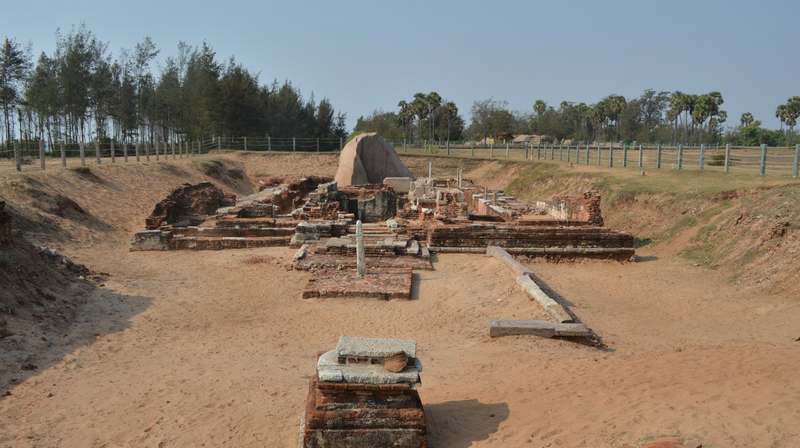
Subramanya Temple, Saluvankuppam….Ancient Sangam period Murugan temple unearthed !

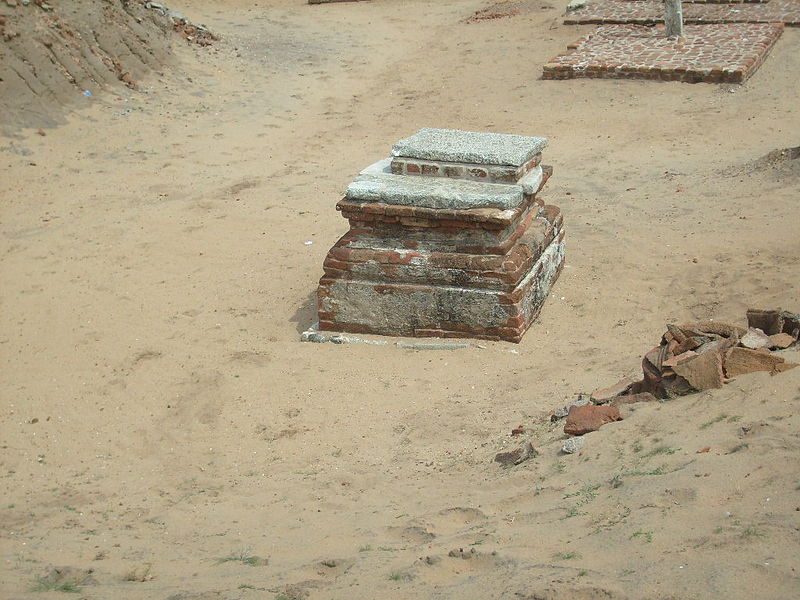
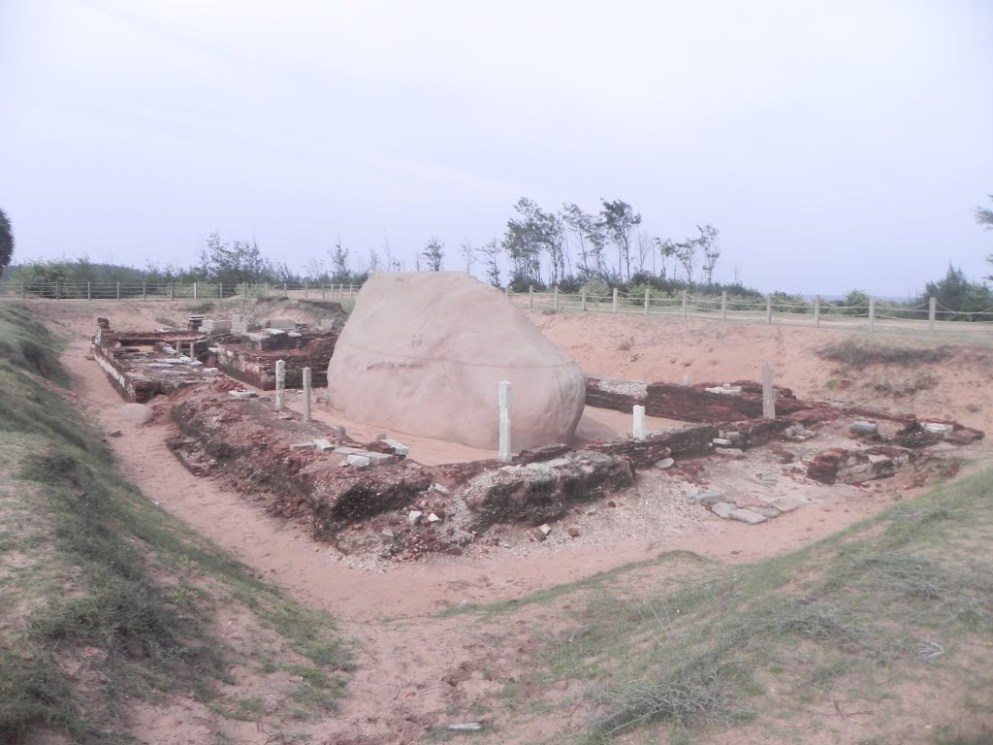
The Subramanya Temple at SaluvankuppamTamil Nadu, is a shrine dedicated to the Hindu deity Murugan. Archaeologists believe that the shrine, unearthed in 2005, consists of two layers: a brick temple constructed during the Sangam period (the 3rd century BC to the 3rd century AD) and a granite Pallava temple dating from the 8th century AD and constructed on top of the brick shrine. The Archaeological Survey of India (ASI) team which conducted the excavation believes that brick temple could be the oldest of its kind to be discovered in Tamil Nadu. However, noted Indian archaeologist R. Nagaswamy is critical of this claim owing to lack of references to the shrine in the popular literature of the period.

The temple was discovered by a team of archaeologists from the ASI based on clues found in a rock inscription left exposed by the 2004 Indian Ocean tsunami. Initially, excavations revealed an 8th-century Pallava-era shrine. Further excavations revealed that the 8th-century shrine had been built on the brick foundation of an earlier shrine. The brick shrine has been dated to the Sangam period.
The temple faces north, unlike most Hindu temples. Artifacts from two phases, the Sangam phase as well as the Pallava phase, have been found. The temple is Tamil Nadu’s oldest shrine to Murugan. It is also believed to be one of only two pre-Pallava temples to be discovered in the state, the other being the Veetrirundha Perumal Temple at Veppathur.
Discovery
After the 2004 Indian Ocean tsunami had subsided, archaeologists discovered rock inscriptions which had been exposed by the tsunami waves close to the hamlet of Saluvankuppam, near the UNESCO-designated World Heritage Site of Mahabalipuram. The inscriptions by the Rashtrakuta king Krishna III and the Chola kings Parantaka I and Kulothunga Chola I spoke of a Subramanya Temple at Thiruvizhchil (the present day Saluvankuppam). S. Rajavelu, epigraphist with the Archaeological Survey of India (ASI), identified a nearby mound as the site of the temple. In 2005, archaeologists unearthed an 8th-century Pallava temple under the mound. G. Thirumoorthy, ASI Assistant Archaeologist, believed that the shrine could be the oldest Subramanya temple to be excavated in Tamil Nadu. There were speculations on whether the temple could be one of the “Seven Pagodas“.

However, further excavations revealed that the 8th-century temple was constructed over the remains of an older brick temple. According to Thirumoorthy, the garbhagriha or sanctum Sanctorum of the brick temple was filled with sand and covered with granite slabs upon which the newer temple was constructed. Sathyamurthy, Superintendent, ASI Chennai Circle, said that the brick temple could be dated to the Sangam period as the shrine faced north unlike modern temples which face either east or west. This proved conclusively that the temple was constructed before the 6th or 7th century AD when the shilpa shastras, the canonical texts of temple architecture, were written. It has been estimated that the age of the brick shrine range from 1700 to 2200 years.
Archaeologists believe that the brick shrine was destroyed either by a cyclone or a tsunami which took place 2,200 years ago. The Pallavas built a granite temple on the brick foundation in the 8th century AD, which also was likely to have been destroyed by a tsunami. Archaeologists believe that the second tsunami must have occurred in the 13th century AD as the latest inscriptions which speak of the shrine have been dated to 1215.
The remains of a brick temple, dating back to the late Tamil Sangam period [circa 1st century B.C. to 2nd century A.D.], have been discovered on the seafront near the Tiger Cave at Saluvankuppam, a few km ahead of the world-famous Mamallapuram monuments.
“The brick temple is the most ancient temple discovered so far in Tamil Nadu. There is no doubt that it is about 2,000 years old,” said T. Sathyamurthy, Superintending Archaeologist, ASI, Chennai Circle. Twenty-seven courses of bricks with a square garbha griha (sanctum sanctorum) that made the Sangam age temple form the center piece of the discovery. The temple is dedicated to Muruga, the presiding deity of “Kurinji” [hill] tracts. The sanctum measures 2 metres by 2.2 metres. The bricks measure 40 cm x 20 cm x 7 cm. They are still sturdy.
The big-sized bricks are typical of the period and are similar to those found at Kaveripoompattinam near Thanjavur; Uraiyur in Tiruchi district — Uraiyur was the capital of the Cholas of the Sangam age; Mangudi near Tirunelveli; and Arikkamedu near Pondicherry.
Dr. Sathyamurthy was sure the brick temple was built before the canonical period because it faced north. “Agama” texts, which came into existence in the sixth or seventh century A.D., and “shilpa shastras”, had prescribed rules for construction of temples including the directions they should face. Normally, temples faced east or west. But this one did not follow “agama” texts and hence looked north. Tsunami or tidal waves that occurred twice had pulled down the entire temple complex. There is telltale evidence of wave action from the excavation. Deposits of shells and debris of the temple have been found on the eastern side of the complex, towards the shoreline. “What is interesting is not the discovery of the brick temple but that we can record stratigraphically the remains of palaeo-tsunami deposits. The impact of the tidal wave is seen on the eastern side of the temple, close to the sea. Such a feature is absent on the western side,” Dr. Sathyamurthy said.
G. Thirumoorthy, Assistant Archaeologist, ASI, said the temple belonged to two periods: the late Sangam age and the Pallava period. After the brick temple collapsed, the Pallava kings of the 8th and 9th century A.D., built another temple over it, using granite slabs. This temple too collapsed.
Artifacts found at the site include broken stucco figurines, obviously under worship; a painted hand portion with a bangle of a stucco figurine, simple-looking terracotta lamps, beads, roofing tiles made of terracotta, spinning whorls, a broken animal terracotta figurine and hop-scotches. A “prakara” (compound) wall of the same period has been excavated.
Archaeologists’ conclusions are:
From the evidences like temple orientation, brick size and artifacts collected from this site, the ASI team concluded that this structure immediately antedates the Pallavas. They are also of the opinion that this one is the earliest brick temple in Tamil Nadu identified as of now. Further to this they also infer that no other temple of such nature is reported from south India.
Presence two evidences granite spear and the plaque depicting women dancing ‘Kuravai Koothu’ allow the ASI experts to conclude this one as Lord Subramanya temple.
The Reach foundation, Chennai conducted carbon – 14 dating on the paleo-tsunami evidences (sea shells and other debris) proved that they got deposited in different periods between 405 A.D. and 564 A.D. and between 1019 A.D. and 1161 A.D.
According to T.Sathyamurthy, Superintendent, ASI Chennai Circle, (now Reach foundation trustee) conclude that the shrine belongs to Sangam period since it faces northwards. The modern temples built according to Shilpa Shastras (written between 6th or 7th century A.D.) are facing either east or west. This fact encouraged him to conclude that the temple was constructed before the 6th or 7th century A.D. He also estimated the age of the brick shrine ranging between 1700 and 2200 years.
However, noted Indian archaeologist R. Nagaswamy is critical of this claim due to lack of references to the shrine in the popular literature of the period.
Historical background
Although the city of Mahabalipuram was constructed by the Pallava king Narasimhavarman I in the 7th century AD, there is evidence that a small port might have functioned at the site even earlier. Megalithic burial urns dating to the very dawn of the Christian era have been discovered near Mahabalipuram. The Sangam age poem Perumpānattuppadai describes a port called Nirppeyyaru which some scholars identify with the present-day Mahabalipuram. Sadras near Mahabalipuram has been identified as the site of the port of Sopatma mentioned in the Periplus of the Erythraean Sea.
Inscriptions
Number of rock inscriptions is found near the shrine. The specific three granite pillars, which lead for the discovery of the shrine, bears inscriptions of grants offered to this shrine (Ref. 1-3). Later five more inscriptions discovered (Ref. 4-8). Now three more inscriptions identified Ref. (9-11).
Ø Kirarpiriyan of Mamallapuram made grants of ten ‘kazhanjus’ (small sized gold balls) First pillar inscription
Ø Vasanthanar, a Brahmin woman offered a grant of 16 kazhanjus Second pillar inscription which can be dated back to 813 A.D.
Ø Raja Raja Chola I (985–1014 A.D.) Third pillar inscription is about the grant
Ø Pallava king Dantivarman (795 to 846 A.D.) Fourth pillar inscriptions which can be dated back to 813 A.D.
Ø Pallava kings Nandivarman III (846 to 869 A.D.) Fifth pillar inscriptions which can be dated back to 858 A.D.
Ø Pallava kings Kambavarman (9th century A.D) sixth pillar inscriptions
7. Krishna III (939-68 A.D) Rashtrakuta king Seventh pillar inscriptions which can be dated back to 976 AD,
Ø Pallava king Kambavarman (9th century A.D) Eighth  pillar inscriptions
Ø Krishna III (939-68 A.D) Rashtrakuta king Ninth pillar which can be dated back to 971 A.D.   in his 21st regnal year
Ø Rajendra III Chola (1216–1256 A.D) Tenth pillar inscriptions
Ø Kulothunga Chola III (1178–1218 A.D.) which can be dated back to 1215 A.D.
All the inscriptions in ancient Tamil script record about the donations of land and gold for the maintenance of the Subramanya temple at Thiruvizhchil and it continuously received grants. All these inscriptions mention the village as Thiruvizhchil.
Architecture
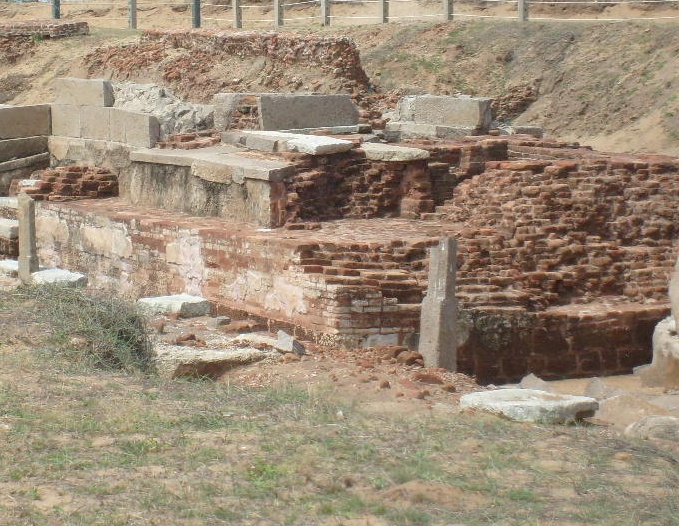
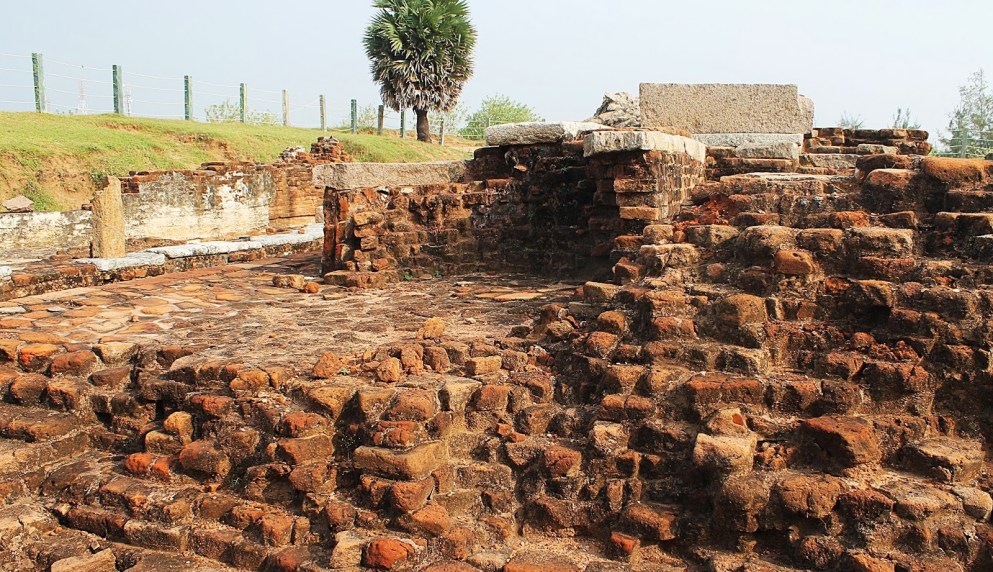
While the thin, tabular bricks at the top were laid by the Pallavas, the larger bricks underneath date from the Sangam period
The temple is dedicated to the Hindu deity Murugan and faces north. The garbhagriha or sanctum sanctorum is 2 metres long and 2.2 metres wide and is made of 27 courses of bricks. The bricks used are similar to the ones used in other Sangam age sites such as PuharUraiyur, Mangudi and Arikkamedu.
A stone Vel is positioned at the entrance of the shrine. During the excavations, a terracotta plaque depicting a Kuravai Koothu, a dance which is mentioned in the 1st century AD Tamil epic Silappadikaram, was discovered. Sathyamurthy feels that there may not have been any idol in the square garbhagriha as it is too small to house one. The temple is surrounded by a prakara or a compound wall dating from the Sangam period. According to Thirumoorthy, the shrine is “the biggest brick temple complex dating to the pre-Pallava period”.
The temple is built on a cushion of alluvium on which a layer of man-made bricks were laid. On top of this were another four layers of man-made bricks separated by four layers of laterite. There were two types of bricks used: large-sized laterite bricks of the Sangam period and thin, tabular bricks of a later age. The bricks were plastered together with lime.
Artifacts unearthed
A terracotta Nandi (the bull of the god Shiva – father of Murugan), head of a woman, terracotta lamps, potsherds and a shivalinga (aniconic symbol of Shiva) made of green stone are some of the important artifacts found at the site. The Nandi is the first one made of terracotta to be found. While most of the items unearthed belong to the Sangam period, artifacts of a later period including a Chola copper coin have also been found.

Meet Rupa Devi – the Woman Selected by FIFA to Officiate International Matches…..

Rupa Devi, a 26-year-old woman from Dindigul, Tamil Nadu, has been selected by the Fédération Internationale de Football Association (FIFA) to officiate international matches.

According to reports, she is the first woman referee from Tamil Nadu to be selected by FIFA.

rupa_f

Photo Credit: (L) YouTube, (R) Flickr

Rupa started playing football when she was a student of Class 6 at St. Joseph’s Girl’s School in Dindigul. Her love for the game continued to grow and she started playing at the sub-junior level in her school very soon. She also started participating in district level football tournaments and became a part of the Dindigul Football Federation in 2006. The federation helped her participate in many national matches and also sponsored her education. She continued to play when she went to GTN college in Dindigul for her BSc degree, and then to Annamalai University in Chidambaram for a BEd in Physical Education. She currently works as a physical training school teacher in Dindigul.

“As a child, I used to stand on the sides of the ground where the game was played and kick the ball, whenever it came to me,” she told The Times of India.

According to a report in The News Minute, Rupa lost her parents in 2010 and 2011. She supported herself through the matches she went to play. But during the same period, there were no matches for women at the national level for two years. This was when senior referees advised that she should become a referee. She joined the referee development school in 2012.

She has been a referee for many matches since then. She was chosen as a referee for Asian Football Confederation (AFC) in 2013, for the under-14 football festival held in Doha. She was the only Indian selected as part of the Asian body’s ‘Future referees’ project at that time.

Three years after beginning to officiate matches and giving the FIFA examination, she qualified as an international referee.

Source……Tanaya Singh in http://www.the betterindia.com

Natarajan

” உன்னால் முடியும்” : உணவு தேடலில் உருவான தொழில் வாய்ப்பு ….

படித்து முடித்ததும் வேலை தேடி சென்னை வரும் ஆயிரக்கணக்கான இளைஞர்களில் ஒருவராக சென்னை வந்தவர் வினோத். சொந்த ஊர் திருப் பத்தூர் அருகில் உள்ள கிராமம். படித்தது எம்டெக் பயோ டெக்னாலஜி. வீட்டு உணவு சாப்பிட்டே பழகியவருக்கு, தங்குமிடத்துக்கு அருகில் உள்ள ஓட்டல் உணவு சரி யில்லாததால் பல அவஸ்தைகள். அதன் பிறகு யோசித்ததுதான் வீட்டில் சமைக்கும் உணவுகளை தேவைப்படுபவர்களுக்கு ஒருங்கிணைக்கும் இணையதளம்.

ஒரு வருட திட்டமிடலுக்குப் பிறகு, உணவு சமைத்து தரும் வீடுகளையும், தேவைப்படும் வாடிக்கையாளர்களையும் ஒருங்கிணைத்து வெற்றி பெற்றுள்ளார். வளரும் தொழில்முனைவோரான இவர் தனது அனுபவத்தை இந்த வாரம் பகிர்ந்து கொள்கிறார்.

வேலை தேடி வந்த புதிதில் மேடவாக்கத்தில் தங்கினேன். வீட்டு சாப்பாட்டுக்கு பழகிய எனக்கு அங்கிருந்த ஓட்டல் உணவை சாப்பிட முடியவில்லை. அந்த பகுதியில் சிறிய ஓட்டல்கள்தான் இருந்தன. தரமான பெரிய ஓட்டல்களும் கிடையாது. பெரிய ஓட்டல்கள் இருந்தாலும் சாப்பிடும் வசதி இல்லை.

ஐடி நிறுவனங்களில் பணிபுரியும் பல பேச்சிலர்களும் இந்த ஓட்டல்களில்தான் சாப்பிடுவார்கள். சப்பாத்தி சரியில்லை என்று புகார் செய்தால் நாளைக்கு சரி பண்ணிடுறோம் தம்பி என்று அனுப்பி விடுவார்கள், அடுத்த நாளும் அதே போல் இருக்கும். திரும்ப புகார் செய் தால் இஷ்டம் இருந்தால் சாப்பிடுங்கள் என்று முகத்தில் அடித்ததுபோல பதில் வரும். இவர்களை விட்டால் வேறு வழியும் இல்லை. சொந்தமாக சமைத்து சாப்பிடலாம் என்று முயற்சி செய்தால், எல்லோருக்கும் நேரம் ஒத்துழைக்க வில்லை.

தங்கியிருந்த பிளாட்டின் ஐந்து வீடுகளில் நாங்கள் மட்டும்தான் பேச்சிலர்கள். நான்கு குடும்பங்கள் ஆளுக்கு ஒரு நாள் எங்களுக்காக எக்ஸ்ட்ராவாக சமைத்து கொடுத்தால் நிம்மதியாக இருக்கலாம் என அவ்வப்போது நண்பர்களுக்குள் பேசிக்கொள்வோம். ஆனால் இந்த யோசனை சரியான தீர்வாக இருக்கும் என்று எனக்குப் பட்டது.

வீட்டு சாப்பாடு வழங்குகிறோம் என பல உணவகங்கள் ஏற்கெனவே ஆன்லைன் மூலம் ஆர்டர் எடுக்கின்றன. ஆனால் இவர் களும் கிட்டத்தட்ட ஒட்டல் போலவே ஒரு இடத்தில் சமைத்து ஆர்டர்களுக்கு ஏற்ப டெலிவரி செய்கின்றனர்.

ஆனால் எனது திட்டம் வீடுகளில் சமைப்பதையே வாடிக்கையாளர்களுக்கு கொடுப்பது. அதாவது ஒரு வீட்டில் தினசரி ஐந்து சாப்பாடு சமைத்து தர முடியும் என்றால் அதை வாங்கி வாடிக் கையாளர்களுக்குக் கொடுப்பது. பல குடும்பங்கள் இப்படி இணைந்தால் பேச்சிலர்களில் உணவு சிக்கல் தீரும் என்பது எனது எண்ணம். இதற்காக வேலையிலிருந்து விலகி ஒரு வருடம் ஆய்வு, ஆரம்ப வேலைகளில் இறங் கினேன்.

இணையதள உருவாக்கம், மார்க் கெட்டிங், ஒருங்கிணைப்பது போன்ற வேலைகளோடு நிறுவனத்தை பதிவு செய்து கடந்த ஆண்டு பிப்ரவரி மாதம் ப்ரம்எஹோம் இணையதளத்தை அறிமுகப்படுத்தினேன்.

எங்களது இணையதளத்தில் உணவுகளை ஆர்டர் கொடுப்பதற்கு என்று தனியாக உணவு பட்டியலோ, விலையோ கிடையாது. குடும்பத் தலைவிகள் தாங்களால் என்ன சமைக்க முடியும், அதற்கான விலை என்ன என்பதை முன்கூட்டியே பதிவு செய்து விடுவார்கள். வாடிக்கையாளர்கள் அவரது மெனுவை பார்த்து ஆர்டர் செய்து கொள்ளலாம்.

இந்த திட்டத்தில் கேரள குடும்பம் இணைந்தால் கேரள உணவும், பெங்காலி குடும்பம் இணைந்தால் பெங்காலி உணவும் அவர்களது பாரம்பரிய முறைப்படியே கிடைக்கும்.

குடும்பத் தலைவிகள் தாங்கள் சிறப்பு உணவுகள் மூலம் வாடிக்கையாளர்களை தக்க வைத்துக் கொள்ளவும் முடியும்.

உணவு சமைத்து தர விரும்புவோரின் சமையல் திறன், வீடுகளின் கிச்சன், அவர்களது வாழ்க்கைதரம், சமைக்கப் பயன்படுத்தும் தண்ணீர் ஏரியா என ஒவ்வொன்றையும் பார்த்து பார்த்து மேற்கொள்கிறோம். இவர்களுக்கு கிடைக் கும் ஆர்டர்களிலிருந்து கிடைக்கும் கமிஷன் தான் எங்களது வருமானம்.

ஆரம்பத்தில் பேச்சிலர்களை குறி வைத்தே இதை தொடங்கினேன். ஆனால் தற்போது வயதானவர்கள்தான் அதிக வாடிக்கையாளர்களாக இருக்கின் றனர். தற்போது நேரடியாக எட்டு பேர் வேலைபார்க்கிறார்கள்.

சுமார் 15-க்கும் மேற்பட்ட குடும்பத் தலைவிகள் சுயமாக சம்பாதிக்க வைத்துள்ளேன். உணவு சார்ந்த தொழில் என்பதால் மிகுந்த கவனமும் பொறுப்பும் இருப்பதை உணர்கிறேன்.

தவிர நானே தொழில்முனைவோராக இருந்து, குடும்பத்தலைவிகள் பலரும் சுயமாக சம்பாதிக்க பாலமாக இருக்கி றேன் என்கிறபோது பொறுப்பு பல மடங்கு மகிழ்ச்சியை கொடுக்கிறது என்றார். இவருக்கு ஏற்பட்டது உணவு பசி மட்டுமல்ல… அதுக்கு மேலே என்கிறது அனுபவம்.

maheswaran.p@thehindutamil.co.in

Source …….நீரை மகேந்திரன்  in http://www.tamil.thehindu.com

Natarajan

இந்த வாரக் கவிதை …..” புதுமை பொங்கல் ” !!!

புதுமை பொங்கல்
…………….
தை பிறந்தால் நல் வழி பிறக்கும் …வாழ்வு சிறக்கும்  !
பிறக்கும் தை மாதமதை நாம்  கை தட்டி வரவேற்போம் !
இரு கரம் கூப்பி  தை தாய்க்கு வந்தனமும்  செய்வோம்
நம் வாழ்வு சிறக்க ..  நாடு செழிக்க வேண்டி !
புதுப் பானையில்  மஞ்சள் கொத்துடன் ,செங்கரும்பு சூழ
 நம் வீட்டில் பொங்கல்  பொங்கும் நேரம்
நமக்கு பொன்னான நேரம் !…நாம் தொடுவதெல்லாம்
பொன்னாக மாற  இதுவே  அச்சாரம் !
பொங்கலுடன் சேர்ந்து மங்களமும்   பொங்கட்டும் …பொங்கும்
மங்களம் தங்கட்டும் நம் எல்லோர்  இல்லத்திலும் உள்ளத்திலும் !
பொங்கல் வாழ்த்து பிறருக்கு நாம் சொல்லும் அதே நேரம்
மறக்காமல்  சொல்லவேண்டும்  பல்லாயிரம்   நன்றி …
புத்தரிசி கொடுத்த பெருமகன் , வேளாண் குடிமகன் அவனுக்கு !
சேற்றில் கால் வைக்க அவன் மறுத்தால்  , பொங்கல் சோற்றில்
கை வைக்க முடியுமா நம்மால் ? மறுக்க முடியாது  இந்த உண்மையை !
உன்ன உணவு கொடுக்க உழைக்கும்  உழவனவன் இறைவனே நமக்கு!
வரும் தை பொங்கல் நன்னாளில் நம் வீட்டு பொங்கலை உழவர்
 குடும்பம் ஒன்றுடன் சேர்ந்து அமர்ந்து பகிர்ந்து நாம் உண்ணும்
தருணம் நம் வீட்டு பொங்கலுக்கு பெருமை சேர்க்கும் !
தித்திக்கும் பொங்கல் நன்னாளில் புதுமை இதை
நாம் செய்தால் நம் வீட்டு பொங்கலின் தித்திப்பு மேலும் கூடும் !
Credit……. My kavithai  published in http://www.dinamani.com  on 18 Jan 2016
natarajan

“கம்பீரப் பார்வையும் சிலிர்த்து நிற்கும் திமிலும்: தமிழக மாட்டினங்களின் மரபும் பெருமையும்”

நம்ம ஊர் மாடுகள் என்ற வார்த்தையைக் கேட்டவுடன், அடுத்த கணம் நம் மனதில் தோன்றி மறைபவை துள்ளி ஓடும் காளைகளே. அவை எதுவும் சாதாரணக் காளைகள் அல்ல, கம்பீரப் பார்வையும் மேலெழுந்த திமிலுடனும் சிலிர்த்து நிற்கும் காங்கேயம் காளைகள்.

எந்தச் சந்தேகமும் இல்லாமல் காங்கேயம் காளை, நம் மண்ணின் பெருமிதம்தான். காங்கேயம் மட்டுமின்றி உம்பளச்சேரி, புளியகுளம், பர்கூர் மலை மாடு, தேனி மலை மாடு போன்றவையும் நம் மரபின் பெருமைகளைத் தூக்கிப் பிடிப்பவையே. தமிழ் மண்ணின் அடையாளமாகத் திகழ்ந்துவந்த ஆறு மரபார்ந்த மாட்டினங்களில் தர்மபுரி, ஓசூர், கிருஷ்ணகிரி பகுதிகளில் இருந்த ஆலம்பாடி வகை மட்டும் இன்றைக்கு இல்லை, அற்றுப்போய்விட்டது.

மற்ற உள்ளூர் மாட்டினங்களின் நிலையும் மகிழ்ச்சி யடைய வைக்கும் நிலையில் இல்லை. நம்முடைய மாட்டினங்கள் வேகமாக அழிந்துவருவதற்கு, அவற்றின் பெருமைகள் சரியாக உணரப்படாததே முக்கியக் காரணம். உள்ளூர் மாட்டினங்களின் இனப்பெருக்க நடைமுறைகளுள் ஒன்றான ஜல்லிக்கட்டு ஒருபுறம் கண்மூடித்தனமாக எதிர்க்கப்படுகிறது. மற்றொருபுறம் காலம்காலமாகக் கிடைத்துவந்த ஆதரவையும் பராமரிப்பையும் வேகமாக இழந்துவரும் உள்ளூர் மாட்டினங்கள் அழிவை நோக்கி நகர்ந்து வருகின்றன.

இந்தப் பின்னணியில் காங்கேயம் அருகே குட்டப்பாளையத்தில் செயல்பட்டுவரும் சேனாபதி காங்கேயம் மாடுகள் ஆராய்ச்சி அறக்கட்டளையின் நிர்வாக அறங்காவலர் கார்த்திகேய சிவசேனாபதி, நம் மாடுகளின் பெருமைகளை பகிர்ந்துகொள்கிறார்:

காங்கேயம்: கம்பீரமும் அழகும்

ஆங்கிலேய கவர்னர் ஒருவர் காங்கேயம் அருகேயுள்ள பழையக்கோட்டை கிராமத்துக்குச் சென்றிருந்தபோது, ராவ் பகதூர் சர்க்கரை மன்றாடியாரின் பண்ணையில் இருந்த காங்கேயம் காளைகளைப் பார்த்துவிட்டு, ‘அந்தப் பண்ணையின் அழகு’ (Beauty of the farm) என்று அவற்றை பெருமிதத்துடன் குறிப்பிட்டிருக்கிறார். இப்படிப் பலராலும் பாராட்டப்பட்ட காங்கேயம் மாட்டினமே, தமிழக மாட்டினங்களின் தாய் இனம்.


காங்கேயம் காளைகள் சாதாரணமாக 4,000-5,000 கிலோ வண்டிபாரத்தை இழுக்கும் திறன் கொண்டவை. எந்தக் காலநிலையையும் சமாளித்து வாழும் திறன் பெற்றவை, உள்ளூர் சூழ்நிலைக்கு ஏற்ப தகவமைத்து வாழக்கூடியவை. எல்லாம் நன்றாக இருக்கும் சூழ்நிலையில் மட்டுமல்லாமல் கடுமையான வெயில், பஞ்ச காலத்திலும் நொடித்துப் போகாமல் பனையோலை, எள்ளு சக்கை, கரும்புத் தோகை, வேப்பந்தழை எனக் கிடைப்பதைச் சாப்பிட்டு உயிர் வாழக்கூடியவை.

காங்கேயம் மாட்டினம் என்றாலே காளைகள் மட்டும்தான் என்று நம்புகிறோம். பால் கொடுக்கும் பசுக்களும் காங்கேயம் வகையில் உண்டு. இறைச்சி உண்ணும் நம்முடைய பண்பாட்டில் பாலுக்கான தேவை அதிகமாக இல்லாததால், உழைப்புக்குப் பெயர் பெற்ற காளைகளே பிரபலமடைந்தன.

நமது உள்ளூர் மாட்டினங்கள் உழைப்புக்காகவே பெரிதும் அறியப்பட்டவை. ஆனால், ‘வெள்ளைப் புரட்சி’க்குப் பிறகு உழைக்கும் காளைகளைத் தாழ்வாகப் பார்க்கும் குணம் உருவாகி, இன்றைக்கு அந்தப் பார்வை பெரிதாகப் பரவலாகிவிட்டதே உள்ளூர் மாட்டினங்களின் வீழ்ச்சிக்கு முக்கியக் காரணம்.

தமிழகத்தில் 1990-ல் 11 லட்சத்து 74 ஆயிரம் காங்கேயம் மாடுகள் இருந்தன. 2000-ல் அது நான்கு லட்சம் மாடுகளாகக் குறைந்து, 2015-ல் ஒரு லட்சம் மாடுகள்கூட இல்லை என்று சொல்லும் நிலைக்குச் சரிந்திருக்கின்றன.

தமிழக மாட்டினங்களின் தாய் இனம், காங்கேயம் என்று கூறப்படுவதற்குக் காரணம், தமிழகத்தின் பல்வேறு பகுதிகளுக்குக் கொண்டு செல்லப்பட்ட காங்கேயம் மாடுகள், அந்தந்த பகுதிக்கு ஏற்ப தகவமைத்துக்கொண்டதால் பின்னர் தனித்தனி மாட்டினங்களாகப் பரிணமித்துள்ளன.

வாழிடம்: கொங்கு, கோவை, கரூர், திண்டுக்கல், நாமக்கல், சேலம் ஆகிய பகுதிகள்.

தர்மபுரி, ஓசூர், கிருஷ்ணகிரி பகுதிகளில் இருந்த ஆலம்பாடி வகை மட்டும் இன்றைக்கு இல்லை, அற்றுப்போய்விட்டது.

உம்பளச்சேரி: உறுதிமிக்க கால்கள்

உம்பளச்சேரி மாடுகள் குட்டையானவை என்றாலும், கால்கள் மிகவும் உறுதியானவை. காவிரி பாசனப் பகுதி வயல்களில் உழ வேண்டுமென்றால், ஆழமான சேற்றில் மாடுகள் இறங்கியாக வேண்டும். அதற்கு ஏற்ப சிறந்த தகவமைப்பைப் பெற்றவை உம்பளச்சேரி மாடுகள். நன்கு உழக்கூடிய இவை, தஞ்சை டெல்டா பகுதியில் பரிணமித்தவை.

வாழிடம்: தஞ்சை, திருவாரூர், நாகை எனப்படும் பழைய தஞ்சை மாவட்டம்.

பர்கூர் மலை மாடு: கெட்டியான குளம்புகள்

இதற்கு செம்மறை என்று மற்றொரு பெயரும் உண்டு. இந்த மாட்டினத்தின் பாதங்களை வலுப்படுத்துவதற்கு லாடம் அடிக்கத் தேவையில்லை. அவற்றின் குளம்பே லாடத்தைப் போல கெட்டியாகவும் உறுதியாகவும் இருக்கும். காட்டில் அதிகம் மேயக்கூடிய மாட்டினம் இது. மத்திய அரசு கொண்டுவந்த வன உரிமைச் சட்டத்தைத் தமிழகம் உட்பட பல மாநிலங்கள் இன்னும் சட்டமாக ஏற்றுக்கொண்டு அறிவிக்காததால், இந்த மாட்டை வைத்திருக்கும் பழங்குடிகள் பெருமளவு பாதிக்கப்படுகிறார்கள். வயலில் பட்டி போடுவதற்காக இந்த மாட்டினம் அதிகம் பயன்படுத்தப்பட்டுவருகிறது.

வாழிடம்: ஈரோடு, அந்தியூர் 

புளியகுளம்: நிலம் காக்கும் பட்டி மாடு

புளியகுளம் மாட்டின் பெயரே ‘பட்டி மாடு’தான். ‘நிலம் தரிசாதல் அதிகரித்துவருகிறது என்றும், அதைத் தடுக்கும் சக்தி ஆடு-மாடு பட்டி போடுதலில் அடங்கியிருக்கிறது’ என்றும் குறிப்பிடுகிறார் ஸிம்பாப்வே சூழலியலாளர் ஆலன் சேவரி. ஒரு வயலில் ஒரு நாள் இரவு முழுக்க ஆடு அல்லது மாடுகளைப் பட்டிபோட்டுத் தங்கவைப்பதால் அவற்றின் சிறுநீர், புளுக்கை, சாணம் போன்றவை நிலத்தில் விழும்.

இயற்கையான, இந்த உடனடி உரம் மூலம் நிலம் வளமாகும். புளியகுளம் மாடு பட்டிபோட்டால் மூன்று ஆண்டுகளுக்கு உரம் தேவையில்லை என்கிறார்கள். பட்டி போடுபவருக்கு ஒரு மாட்டுக்கு ரூ. 10-ம், ஆட்டுக்கு ரூ. 5 ம் கிடைக்கிறது. கேரளப் பகுதியில் இயற்கை வேளாண் முறையில் மேற்கொள்ளப்படும் திராட்சை சாகுபடிக்குப் புளியகுளம் மாடுகளே பேருதவி புரிந்துவருகின்றன. ஜல்லிக்கட்டிலும் இந்த மாட்டினம் அதிகமாக ஈடுபடுத்தப்படுகிறது.

வாழிடம்: புளியகுளம், சிவகங்கை, பழைய மதுரை, ராமநாதபுரம், புதுக்கோட்டை ஆகிய பகுதிகள். தேனி பகுதியில் இருப்பது தேனி மலை மாடு.

காங்கேயம் பசு (பெண் மாடு) கன்றுடன் - காங்கேயம் காளையுடன் கார்த்திகேய சிவசேனாபதி

காங்கேயம் பசு (பெண் மாடு) கன்றுடன் – காங்கேயம் காளையுடன் கார்த்திகேய சிவசேனாபதி

பர்கூர் மலையினக் காளை

பர்கூர் மலையினக் காளை

கம்பீரம் நிறைந்த காங்கேயம் காளை

கம்பீரம் நிறைந்த காங்கேயம் காளை

வண்டியிழுக்கும் உம்பளச்சேரி காளைகள்

வண்டியிழுக்கும் உம்பளச்சேரி காளைகள்

புளியகுளம் மாடுகள்

புளியகுளம் மாடுகள்

தொடர்புக்கு: 04257 294234, 96295 28888
‘தி இந்து’ 2016 பொங்கல் மலரில் வெளியாகியுள்ள படத்தொகுப்பின் ஒரு பகுதி

Source……தொகுப்பு: ஆதி  in http://www.tamil.thehindu.com

Natarajan

ஜனவரி 8 1994….பெரியவா மஹா சமாதி அடைந்த நாள் …

1994 ஜனவரி 8 ஆம் தேதி ஐயன் மஹா சமாதி அடைந்த பின், வெளி வந்த ஆனந்த விகடனில், அப்போது தொடராக வந்து கொண்டிருந்த ‘அன்பே அருளே’ கட்டுரையின் 8 ஆவது அத்தியாயம். ஸ்ரீ பரணீதரன் மாமா அவர்கள் கைவண்ணம்…

சாக்கியர் கூத்தை பற்றி தொடர்வதற்குள் ஒரு பிரளய கால ஊழிக்கூத்தே நடந்து முடிந்து விட்டது.

நூற்றாண்டு பிறந்த தின வைபவமாக கடந்த மே மாதம் கனகாபிஷேக காட்சியருளி, கோடிக்கணக்கான பக்தர்களின் நெஞ்சங்களை குளிர்வித்த பெரியவா, ஒரே நொடியில் தமது சரீர உடையை உதறிவிட்டு நம் கண்ணிலிருந்து மறைந்து விட்டார்.

1994 ஆம் ஆண்டு ஜனவரி மாதம் 8 ஆம் தேதி – சனிக்கிழமை பிற்பகல் 2.58 மணிக்கு துவாதசியன்று பெரியவா மகா சமாதி அடைந்து விட்ட செய்தி ஊரெங்கும், நகரங்கள் என்றும், கிராமங்கள் தோறும், நாடு முழுவதும், உலகம் பூராவும், எட்டி விடுகிறது. கோடிக்கணக்கானவர்களின் நெஞ்சங்கள் பதறி துடித்தன. கண்ணீர் பொங்கி பொங்கி பெருகியது. பாசத்தை வளர்த்து கொண்டு விட்ட பக்தர்கள் குமுறி குமுறி அழுதார்கள்.

‘பெரியவா என்னை அனாதையா விட்டுட்டு போயிட்டாளே…’

‘திடீர்ன்னு இப்படி ஏமாத்திட்டு போயிட்டாரே…’

‘இனிமே பெரியவாளை தரிசனம் பண்ண முடியாதே..அந்த கருணை வடிவத்தை காண முடியாதே…அன்பு சிரிப்பை பார்க்க முடியாதே… அமுத பேச்சை கேட்க முடியாதே…’

அப்பா அம்மா போனப்ப ஆறுதலுக்கு, பெரியவா கிட்டே ஓடி வந்தேன். இப்ப பெரியவாளே போயிட்டாளே யாருகிட்டே போவேன்?

‘பெரியவாளுக்கு முன்னாலே நான் போயிடணும் ன்னு பிரார்த்தனை பண்ணிண்டு இருந்தேன். என்னாலே யாருக்கு என்ன பிரயோஜனம்?

பெரியவா இருந்தா உலகத்துக்கே க்ஷேமமாச்சே…’

‘நான் கொடுத்து வெச்சவன் சார், பெரியவா மௌனவிரதம் ஏற்பதற்கு முன்னே ஒரு நாள் தரிசனத்துக்கு போயி இருந்தேன். நிறைய பேசினார் அமோகமா அனுக்கிரகம் பண்ணினா…இப்படியே பேசாம ரொம்ப நாள் உக்காந்திருப்பார் ன்னு நெனைச்சனே… மோசம் போயிட்டேனே…’

‘பெரியவாளை தவிர எனக்கு வேறு யாரையும் தெரியாதே..நாற்பது வருஷமா பெரியவா கூட இருந்து தொண்டு பண்ணினேன்…எவ்வளவு பேசி இருக்கா…ஒரு தரம் என்னை கோவிச்சிண்டுட்டா…ஏண்டா, உன்னை ரொம்ப கோவிச்சிண்டுட்டேனா? வருத்தமா இருந்ததா ன்னு அடுத்த நிமிஷமே குழந்தை மாதிரி விசாரிச்சாளே…எப்பு கோவிச்சிக்க இப்ப பெரியவா இல்லியே…’

‘பெரிய எசமான் உள்ளே படுத்துண்டு இருக்காங்க ன்னு ஒரு தைரியம் இருந்துதுங்க. எட்டி பார்த்தா அவங்க இருக்க மாட்டாங்களே…’

‘தெய்வம் என்னை தனியா விட்டுட்டு போயிடுச்சுங்க…உலகமே இருளோன்னு இருக்குதே..’

இப்படி பல்வேறு தரப்பட்ட பக்தர்கள் கதறி கதறி தீர்த்துவிட்டனர். தன் தாய், தந்தை, குழந்தை, நெருங்கிய உறவினர் இவர்களை இழந்து விட்டவர்கள் போல் என்னிடம் தேம்பி தேம்பி அழுதனர். என் சொந்த துயரத்தை உள்ளடக்கி பொங்கிய கண்ணீரை தேக்கி நிறுத்தி, அவர்களுக்கு ஆறுதல் வார்த்தை சொல்லி தேற்றிக்கொண்டு இருந்தேன்.

என்னால் தேற்ற முடியாமல் போனது அந்த ஆறு வயது சிறுமியைத்தான்.

‘எனக்கு மூணு வயசு இருக்கறப்போ பெரியவா கல்கண்டு கொடுத்தா. அதுக்கப்பறம் பெரியவாளை நான் பார்க்கவே இல்லை. அழைச்சிண்டு போ ன்னு அப்பா கிட்ட எத்தனையோ தடவை சொன்னேன். அழைச்சிண்டு போகலே. இப்போ சாமி கிட்டே போயிட்டாரே.நான் இனிமே பெரியவாளை எப்படி பார்க்கிறது?’ என்று அந்த சிறுமி கண்கலங்கிய போது, எப்படி தேற்றுவது என்று கலங்கி போனேன் நான்.

ஜனவரி முதல் தேதியன்று பத்து நிமிடங்கள் மட்டுமே பெரியவா தரிசனம் இருந்திருக்கிறது. அதற்கு பிறகு பொது தரிசனமே இல்லை. உடல்நிலை சரியில்லை. வைத்தியர்கள் அருகிலேயே இருந்து தேவையான சிகிச்சைகள் அளித்து கொண்டு இருந்தார்கள்.

8-ஆம் தேதி சனிக்கிழமை அன்று உடல் நிலை தேறியது. ஈச்சங்குடியில் வாங்கியுள்ள பெரியவாளின் பூர்வாச்ரம தாயாரின் இல்லத்தில் வைப்பதற்காக தயாரான அப்பா அம்மா படங்கள் அவரிடம் காட்டப்பட்டது. அதை சற்று நேரம் பார்த்து கொண்டிருந்தார்.

பாலுவிடம், ‘நீ கலவை பார்த்திருக்கியோ அங்கே போயிருக்கியோ?’ என்று கேட்டிருக்கிறார்.

எதற்கு திடீர் என்று கலவையை நினைத்துக்கொண்டாரோ?

யாரோ ஒருவர் தரிசனத்துக்கு வந்தார். ‘சௌக்கியமா இருக்கேளா?’ என்று உரத்த குரலில் கேட்டிருக்கிறார்.

‘பெரியவாளோட பழைய குரல் மாதிரி இருந்தது. எங்களுக்கெல்லாம் ஆச்சிரியமாக போய்விட்டது…’ என்றார் திருக்காளாவூர் ராமமூர்த்தி.

‘பிரும்ம ஸ்ரீ சாஸ்த்ரிகள்’ என்று பெரியவா பெயரிட்ட வேதபுரியை பார்த்து ‘கையில் என்ன?’ என்று கேட்டாராம். ‘பெரியவாளோட மரக்குவளை…அலம்ப எடுத்துண்டு போறேன்…’ என்று பதில் கூறி விட்டு போயிருக்கிறார்.

பெரியவா சாதாரணமாக இருப்பதை அறிந்து எல்லோருக்கும் மகிழ்ச்சி. பிக்ஷையை ஏற்றுக்கொண்டு இருக்கிறார். பிறகு படுக்க வைத்து இருக்கிறார்கள். அரை நொடியில்…அனாயாசமாக அப்போது மணி 2.58…

அல்லும் பகலும் ஒவ்வொரு கணமும் கண்ணிமை போல் பாதுகாத்து வந்த திவ்ய சரீரத்தை பார்த்து கதறி தீர்த்து விட்டார்கள் அந்த புண்ணியசாலிகள். மஹா சுவாமிகளுக்கு கைங்கர்யம் செய்தவர்கள் அத்தனை பெரும் பாக்கியசாலிகள். யார் பெயராவது விட்டு போய் விடுமோ என்பதால் அவர்களது பெயர்களை நான் இங்கு குறிப்பிடவில்லை.

அன்று மதியம் இரண்டரை மணி அளவில் ஸ்ரீ ஜெயேந்திர சரஸ்வதி சுவாமிகள், பால சுவாமிகளுடன் தாம்பரம் நிகழ்ச்சி ஒன்றுக்கு சென்று வர, பெரியவாளிடம் உத்தரவு பெற்று சென்றதை கண் கலங்கியவாறு கூறினார். சென்னைக்கு செய்தி சென்று, தாம்பரத்தை அடைவதற்கு முன்பே தெரிவிக்கப்பட்டு, இரு சுவாமிகளும் மாலை ஐந்து மணியளவில் ஸ்ரீ மடத்துக்கு வந்திருக்கிறார்கள்.

துறவியேனும் நாற்பது ஆண்டு கால தொடர்பின் பின்னணியும், பல்வேறு நிகழ்ச்சிகளும் நினைவில் அலைமோத ஸ்ரீ ஜெயேந்திரர் நெஞ்சம் குமுறி கண்ணீர் வடித்ததில் வியப்பென்ன? ஒப்புயர்வற்ற குருவின் உபதேசம் பெற்றதற்கும், பிரம்ம ஞானியிடம் பாடம் பயின்றதற்கும், மகானிடம் அறிவுரை கேட்டதற்கும் முற்பிறவியின் நற்பேறு அன்றோ காரணம் என்ற நன்றி கண்ணீர் அல்லவா அது!

அத்தருணம் உள்ளத்தில் எழுந்த சிந்தனைகள் எல்லாம் கூற முடியாமல் துயரமே உருவாக சோகமே வடிவாக அமர்ந்திருந்தாலும் – மறுநாள் நடக்க வேண்டிய சடங்குகளில் தீவிர கவனம் செலுத்தி, பக்தர்களிடம் ஆணைகள் பிறப்பித்துக்கொண்டு இருந்தார்.

பால சுவாமிகள் அங்கும் இங்கும் எங்கும் காணப்பட்டார். ஒரு கணம் தரிசித்து ஆறுதல் பெற காத்திருக்கும் பக்தர்களை சந்தித்தவாறே, தேவையான ஏற்பாடுகளில் கவனம் செலுத்தி கொண்டு இருந்தார்.

என்னை கண்டதும் தனியே அழைத்து சென்று, ‘ஏமாந்து போயிட்டோம்…இன்னிக்கு நன்னா தான் இருந்தா. பேசினா, சிரிச்சா, பிக்ஷை பண்ணினா…தைரியமா இருந்தது. தாம்பரம் போயிட்டு வந்துடலாம் ன்னு புறப்பட்டோம்…எதிர்பார்க்காம சேதி வந்தது.’என்று நடந்தவற்றை கூற தொடங்கினார். நடந்து சென்றவாறே ஒருவருக்கு கையசைப்பு, ஒருவரை அருகில் வரசொல்வது, இன்னொருவரை பார்த்து, ‘ஒ, வந்திருக்கேளா?’ என்று கேட்பது. ‘உங்களுக்கு எப்போ தெரியும்?’ என்று பரிவுடன் விசாரிப்பது…’பிருந்தாவன வேலை வேகமா நடந்து கொண்டு இருக்கிறதா?’என்று பார்வையிடுவது… பம்பரமாக சுற்றி சுழன்று கொண்டிருந்தார் பால பெரியவர்.

பக்தர்கள் கூட்டம் பெருகி கொண்டே இருந்தது. வேகமாக நகர்ந்த க்யு இரண்டு கிலோ மீட்டர் வரை நீண்டது. வெகு விரைவில் தேவையான ஏற்பாடுகள் செய்யப்பட்டிருந்தன. காவலர்கள் பணி போற்றத்தக்கதாய் இருந்தது.

மேடையில் பெரியவாளின் திருமேனி ஒளிர்ந்து கொண்டு இருந்தது. நான்கு ஆண்டுகளாக நாம் கண்ட தரிசனம். ஒரே ஒரு வித்தியாசம்…எவ்வித அசைவும் இல்லை…மூலவராகிவிட்ட நிலையில், தெய்வீக சாந்நித்யம் நிலவியது. சுற்றிலும் மடத்து சிப்பந்திகள். அவ்வப்போது, இரு சிஷ்ய சுவாமிகளும் வந்து உடனிருந்தார்கள்.

எதிரில் நகர்ந்த க்யூ வில் கும்பிட்டவர்கள், குமுறி அழுதவர்கள், கன்னத்தில் போட்டு கொண்டவர்கள், கண்ணீர் அஞ்சலி செலுத்தியவர்கள், இஸ்லாமிய பெருமக்கள், கிறிஸ்துவ சகோதர-சகோதரிகள், வெளிநாட்டினர், பல சமயத்தினர், பல மொழியினர் பொது வாழ்வில் பலதுறை சேர்ந்தவர்கள், பெரும் செல்வந்தர்கள், பரம ஏழைகள், தள்ளாடும் முதியவர்கள், ஆண்கள், பெண்கள், சிறுவர்-சிறுமியர்…

ஒரு புறம் ஒலிப்பெருக்கியில் ‘ஜெய ஜெய சங்கர…ஹர ஹர சங்கர…’கோஷம், நாம சங்கீர்த்தனம், பக்தி பாடல்கள், தேவாரம், திருப்புகழ், சகஸ்ர நாம பாராயணம், வேத முழக்கம்…. மேடை நிரம்ப மணம் பரப்பும் மலர் கொத்துக்கள், வாசனை திரவியங்களின் புகை மண்டலம்…தேவலோக சூழ்நிலை…

பன்னிரண்டு மணிக்கு மேல் மகாபிஷேகம் தொடங்கியது. பிரதம சீடர் ஸ்ரீ ஜெயேந்திர சுவாமிகள், குருவின் திருமேனிக்கு முறைப்படி அபிஷேக, அர்ச்சனைகள் செய்வித்து, தூப தீப கற்பூர ஆரத்தி எடுத்து வழிபட்டது, ஆலயம் ஒன்றில் சிவபூஜை நடைபெற்றது போன்ற உணர்வை தோற்றுவித்தது.

இறுதியாக நான்கு மணியளவில் பிருந்தாவன பிரவேச ஊர்வலம் புறப்பட்டு அருகிலிருந்த மாளிகைக்குள் சென்றது.

வெளியே இருந்தவர்களுக்கு புனித திருமேனியின் கடைசி புண்ணிய தரிசனம் அதுவே

Read more: http://periva.proboards.com/thread/10890/06-01-2016/#ixzz3wZpAMVSV

Source…….www.periva.proboards.com

Natarajan


“Periva’s Miracles- Always race with the time-Living example “

Periva’s Miracles- Always race with the time-Living example 

I wish to inform to the members of Periva forum, devotees of Maha Periva and readers of my post that my son, who is at Australia with his family, has reached Chennai after floods on 10th of this month. (December 2015). This is his annual visit to Chennai to take care of us every year.

After a couple of days, my only son Mr.Bharath and his wife Sow. Lakshmi wanted to go out for lunch to some good hotel along with me and my wife. I should make special mention about my small family members and their unmatched character and attitude in a short statement.

 My only son Mr.Bharath, who Exemplify the relation-ship between parents and children and we are fortunate enough to have a son like Bharath.

 My only daughter in law Sow. Lakshmi not only Lakshmi by name but Goddess Lakshmi in real sense to our sweet home.

 We are also blessed with a granddaughter by name Kriti who equals all aishwaryam to our sweet home.

Thanks to Periva’s Grace. 

We all started, on 13th December 2015 (Sunday) after noon at 12.00 Noon and reached a well reputed and posh star hotel. We all had nice time and very good lunch. The occasion was like a get together of our family after two years. All possible selfee were taken and we could reach home at 4.00 P.M. As everyone was tired, we all retired for sleep at 9.00 P.M.

Next day morning, my son got up from sleep and he was not comfortable. He was complaining of nausea and vomiting along with stomach pain. The excruciating pain was escalating every second and he said that that the pain was unbearable and he did not feel like having his Tiffin.

The pain was too much at 8.45 A.M. Myself and my wife were mentally disturbed and we did not know what to do. I am also a paralytic stoke patient and could not go out to reach any doctor. I immediately went to Maha Periva and prayed for my son’s sufferings. I prayed and took some “Vibhuti” from Maha Periva and put some Vibhuthi in my son’s mouth and applied little on his forehead also.

He slept for 10 minitues and exactly at 9.00 A.M. he came to kitchen and asked me to prepare doshas for him. I enquired about his stomach pain and he said that he is relieved of all sufferings including stomach pain. Absolutely, no traces of pain or any sufferings from 9.00 A.M, thanks to Maha Periva for HIS instant reply to my prayer.


I am sure that the experience of mine in my son’s case is a living example for the devotees of Maha Periva. Our faith on Periva never let us down in problems and crisis. Still HE is living among us and take care of devotees at all times.

What a way Maha Periva gave relief to my son. The treatment of Maha Periva is always very much clinical in nature. Even medicines may take some time to give relief or cure a disorder But Maha Periva’s blessings out beat even time.

Periva’s blessings are always  
Racing with the time, 
In serving the devotees needs. 

Read more: http://periva.proboards.com/thread/10884/periva-miracles-race-living-example#ixzz3wZkSJ99X

Source..

Gayathri Rajagopal in http://www.periva.proboards.com

Natarajan


22 Times in 2015 That Indians made India Proud……….

“…And when all the wars are over, a butterfly will still be beautiful,” wrote Ruskin Bond.

As we approach the end of 2015, it is quite natural to look back and search for the kind of beauty he was talking about – the beauty amidst chaos that helped us throughout the year and also gave hope for the next one. No matter the dark times and the harsh memories, everybody seeks that hope to wake up with each day. And on several occasions this year, India helped us believe in that hope, and in happiness, humanity and pride.

Many times this year, different people and incidents made Indians proud of being a part of this country. Here are the 22 best ones:

1. When a Cab Driver Created a Rooftop Garden on His Taxi:

2015 positive stories

Mr. Dhananjay Chakraborty, a taxi driver in Kolkata, has a garden on the roof of his cab, and many potted plants in the trunk. He calls his car the green chariot, and it is a great way of promoting the message of green living while driving around the city.

2. When This 11-Year-Old Became the World’s First Visually Impaired News Anchor:

2015 positive stories

T Sriramanujam, a visually impaired student of Class 5, fulfilled his childhood dream of becoming a TV news anchor. He read his first live news bulletin for 22 minutes with the help of Braille.

3. When Farmers in Rural Maharashtra decided to Become Tech-Savvy and Created a Brilliant WhatsApp Group:


2015 positive stories

On a WhatsApp group named ‘Baliraja’, over 400 farmers from various villages in Maharashtra are seeking and sharing agriculture advice, connecting with experts in various fields and learning new practices. The group simply rocks!

4. When an Inspiring Ragpicker Spoke at an International Conference

2015 positive stories

Photo: YouTube

Suman More, a 50-year-old waste picker from Pune, runs a 9,000 member organization named Kagad Kach Patra Kashtakari Panchayat, and has been giving a new identity to ragpickers. This year, she spoke before more than 2,000 experts from across the world at a conference organized by the International Labour Organisation in Geneva.

5. And When This Guy Quit His Job to Fight for Our Right to Drive Without Borders:

2015 positive stories

Waseem Memon and his group of over 25,000 people are fighting for our right to use our cars all across the country, challenging the existing laws regarding registration. He started the Drive Without Borders campaign to protest against the injustice meted out by road transport officials of various states while checking non-state vehicles.

6. When a Sarpanch in Haryana brought girls into the spotlight with his ‘Selfie with Daughter’ Contest:

2015 positive stories

Parents across India proudly took pictures with their daughters and sent them to Sunil Jaglan, the sarpanch of Bibipur village in Haryana, who started a WhatsApp contest named ‘Selfie with Daughter’. He received more than 500 entries in just a few days.

7. When this Muslim girl won the Bhagwad Gita Championship and Donated the Prize Money for the Education of Girls

2015 positive stories

Source: Facebook

Maryam Siddiqui won a Bhagwad Gita competition and was felicitated by many political figures across the country. She politely returned all the money received in the form of rewards, with a note that the money should be utilised for a scheme or something related to providing better education for girls.

8. And Many Beautiful Stories of Communal Harmony Kept our Hopes Alive:

2015 positive stories

The Muslim man who performed the last rights of his Hindu friend, the Hindus who opened up a Ganesha pandalfor Muslims to celebrate Eid, and the Hindu man who wrote Prophet Muhammad’s biography in Marwari – all helped break the shackles of narrow religious confines.

9. Then Came This Man Who Filled 1100 Potholes with His Pension Money:

2015 positive stories

Gangadhara Tilak Katnam, a 67-year-old retired Railway employee, quit his job to single-handedly fill up potholes in Hyderabad. He used his pension money to fill over 1,125 potholes in two and half years.

10. And This 13-Year-Old Went to an Orphanage for a Special Purpose:

2015 positive stories

Nikhiya Shamsher started a project named Bags, Books and Blessings. She collected around 2,500 books, about 150 bags, water bottles, a lot of stationery, and more from the students in her school, and donated all of it to an orphanage in Bangalore. She stood out as an inspiration for many students of her age.

11. When an Engineer Transformed a Railway Station and Amazed Everyone:

2015 positive stories

Gaurang Damani, an electrical engineer, adopted the King’s Circle railway station in Mumbai and transformed it into a very beautiful and clean place in just four months. Find more about his work here.

12. And ISRO Went on Creating History:

2015 positive stories

13. When a 17-Year-Old Built a Bridge to Help Slum Kids Reach School:


2015 positive stories

When Eshan Balbale saw that students in Sathe Nagar had to walk through a 1.5 km long, filthy, sewage-filled stretch to reach school every day, he made a 4-feet-wide and 100-feet-long bamboo bridge for them in just eight days.

14. And Twitterati Helped This Man Who Lost His Source of Income:

2015 positive stories

65-year-old Kishan Kumar lost his typewriter when a police official kicked it in his attempt to evict footpath dwellers and vendors. When Indians on Twitter came to know about this incident, they simply made sure that he got his typewriter back.

15. When a Cop Jumped off a 20-Feet-High Bridge to Save a Man:


2015 positive stories

A 24-year-old policeman, Manoj Barahate, did not think of his own life before diving off a 20-feet high bridge to save the life of a man who had jumped into the water during Kumbh Mela. Had it not been for this quick-thinking brave cop, the man would have lost his life.

16. When Karnataka Government Honoured a Transgender:

2015 positive stories

Of the 60 people who were honoured with the prestigious Karnataka Rajyotsava Award this year, one is a transgender – Akkai Padmashali – who has been fighting for the rights and acceptance of her community for years. This was the first time that a transgender won this award.

17. And This Woman Showed the Way by Inviting Her Maid’s Family Home for Dinner on Diwali:

2015 positive stories

“It looks like this is the beginning of a beautiful new tradition in our family, which I hope we will only enhance as time goes on. It touched and opened my heart in many ways,” wrote her daughter.

18. When Indian Railways Showed That It Can Deliver – More than Once

2015 positive stories

All of these tweets were answered, and help reached the passengers in almost no time.

19. And Children Showed That They Can Change the World, Whenever They Want

2015 positive stories

20. When Bengaluru’s Chinnaswamy Stadium Became the World’s First Solar-Powered Cricket Venue

2015 positive stories

21. And When These Army Men Gave Their Lives So We Can Sleep Safely in our Homes


2015 positive stories


22. Finally, When Chennai Showed That All Our Differences Mean Nothing When We’re Fighting Back Disaster

2015 positive stories

We are all Indians at the end of the day. And we stand by each other.

Source…….www.the betterindia.com

Natarajan
Message for the Day….” Remember the name of God Every minute….”

Sathya Sai Baba

Look at the blossoms in the garden! When the gardener plucks the flowers, the buds exult that tomorrow is their turn to be gathered into the gardener’s hands, and their faces are full of joy when they unfold in that hope. Do they feel any sadness? Do their faces droop? Are they any the less bright? No. The moment they know that the next day is their turn, they make themselves ready with great gusto and excitement. In the same way, you must be ready on the path of spiritual practice! Enthusiastically remember the name of the Lord every minute, without worrying and feeling sad that your turn is tomorrow or because someone died today. For people who transformed themselves into spiritual aspirants, their mind (manas)is Mathura, the birthplace of Lord Krishna), their heart is Dwaraka (Lord Krishna’s playground), and their body is Kashi (holiest land of Lord Shiva).