Origin of the Phrase …” Run Amok “….

If like me, you ever found yourself using the phrase “run amok” and began wondering, “What’s an ‘amok’?” look no further, because here’s your answer.

For those not familiar, today the phrase “run amok” (also spelled “amuck”) is often used to describe such things as children making a mess while they run around and play or the like. Classically, though, it more resembled the modern phrase “going postal” or someone who just snaps for various reasons and goes on a murderous rampage, very similar to what is depicted in the Michael Douglas’ film, Falling Down.

One false etymology of “run amok” derives from sailors running a ship aground, literally running the ship into “muck”. This isn’t where the word came from. The English word most directly comes from the Malay “amuck” (also spelled amuk, and amuco) more or less meaning “attacking furiously” or “attacking with uncontrollable rage” or more aptly “homicidal mania”.

Some theorize this Malay word may have Indian origins or be from the name of a group of professional assassins in Malabar, the “Amuco”.  Others theorize that it came from the Malay word “amar”, meaning “fight”, specifically via “Amar-khan”, which was a certain type of warrior.   Yet another theory is that the Malay “amuck” ultimately comes from the Sanskrit “amokshya”, meaning “that cannot be loosed”.

Whatever the case, “amok” first popped up in English around the 16th century, associated with the people of Malaysia and Java, first described in the 1516 text The Book of Duarte Barbosa: An Account of the Countries Bordering on the Indian Ocean and Their Inhabitants]:

There are some of them [the Javanese] who go out into the streets, and kill as many persons as they meet. These are called Amuco.

The phrase “run amok” was partially popularized by Captain James Cook in 1772.  From Cook’s book:

To run amock is to get drunk with opium… to sally forth from the house, kill the person or persons supposed to have injured the Amock, and any other person that attempts to impede his passage…  indiscriminately killing and maiming villagers and animals in a frenzied attack.

In the Malay culture at the time, some believed the state of amok was caused by an evil spirit, “hantu belia”, entering the body of a person, who would then run amok, attacking and attempting to kill anyone they came across, only to recover later and return to normal, if they weren’t killed first.  Because it was thought an evil spirit caused this, rather than the person doing it of their own free will, punishments for someone who ran amok and survived were typically light or even non-existent, with the person sometimes getting off scot-free.

However, usually the person would be killed while running amok and some speculate this was generally the point of doing this as people who ran amok were and are often those who suddenly experience great trauma in their life, like the death of several loved ones or the loss of the ability to provide for themselves or their family.  So basically, the person wants to die, but doesn’t want to commit suicide directly, so goes on a murderous rampage until someone kills them.  Even today, this sort of thing can be seen in the news practically every day where someone is really just attempting “death by cop”, going on a rampage until the police manage to kill them.

Source….www.todayifoundout.com

Natarajan


Message For ONAM Day…” Strive to Manifest , Cultivate and Express Love, Suppressing Ego and Pride …”

Sathya Sai Baba

When you eat a banana, you have to first remove the skin; so it is with other fruits as well be it a mango or an orange. The sweet substance has to be reached after removal of the bitter skin. For Emperor Bali to be received and accepted by God, the bitter cover of egoism and power-mania had to be removed. Ignorance,maya (delusion), illusion, pride, etc. are the components of the skin. The festival of Onam comes and goes, but you are no way nearer to God. This is because while Onam is thoroughly welcomed and enjoyed, generosity, renunciation, love and the spirit of service are not given an equally hearty welcome. Take this as the Onam Message – strive to manifest, cultivate and express Love, suppressing pride and egoism, so that you win the Grace of God.

World’s worst airlines named in Skytrax rankings…..

North Korea’s Koryo Air has been named the world’s worst airline again for the fourth year running by Skytrax, which holds the annual World Airline Awards. It is the only airline listed by Skytrax to receive a lowly one-star rating out of a possible five, due to its Soviet-era planes, rudimentary safety belts, and questionable safety.

Bulgaria Air, Bulgaria: Customer rating 6/10. "It seemed that the best I could get from them [the crew] was ignorance".

Koryo Air has been named the world’s worst airline again for the fourth year running by Skytrax, which holds the annual World Airline Awards for best airline in the world.

It is the only airline listed by Skytrax to receive a lowly one-star rating out of a possible five, due to its Soviet-era planes, rudimentary safety belts, and questionable safety.

The next worst airlines, according to the Skytrax rating system, are those given two stars out of five. There are 21 airlines in this category, which Skytrax says indicates “a lower quality performance, below the industry quality average across many of the rating sectors.”

Ryanair is one of these.

Two star-rated airlines (in alphabetical order)

Bahamasair – Bahamas

Passengers saeem to agree with Skytrax here – the customer reviews on the same website give the airline an average 2/10.

“A two-star airline rating,” Skytrax’ website states, “normally signifies poorer or inconsistent standards of product and front-line staff service for the cabin service and the home-base airport environment.”

Biman Bangladesh – Bangladesh

Customer rating: 5/10

“Checking in was totally disorganised.”

Bulgaria Air – Bulgaria

Customer rating: 6/10

“It seemed that the best I could get from them [the crew] was ignorance”.

China United Airlines – China

Customer rating: 8/10 (from only two reviews)

“China United is the only airline that uses Beijing Nanyuan a former military airport in the South of Beijing. Check-in was quick easy but the check-in area is noisy and dilapidated. Toilets at the airport weren’t great.”

Cubana Airlines – Cuba

Customer rating: 4/10

“So many things went wrong with this flight but the customer service or lack of was ridiculous.”

Iran Air – Iran

Customer rating: 5/10

“IranAir does not serve any alcohol but that’s part of the current Iran experience I guess.”

Lion Air – Indonesia

Customer rating: 4/10

“Once seated another passenger showed me his boarding pass that was the same seat as mine.”

Mahan Air – Iran

Customer rating: 7/10 – shortly to be moving out of the two-star catgory perhaps?

“I always select Mahan for my Dubai – Tehran trips. It’s a budget airline but the food service and staff hospitality are on par with any top airlines of the world.”

Nepal Airlines – Nepal

Customer rating: 5/10 (from only two reviews)

“New plane but limited legroom between seats.”

Onur Air – Turkey

Customer rating: 5/10

“The seat was very uncomfortable. Water was not free, they charge 3 Euros for a small bottle.”

Pegasus Airlines – Turkey

Customer rating: 5/10

“I had four flights booked on Pegasus for business and vacation and the four of these flights were delayed – not by a few minutes, at least an hour or hour and a half.”

Rossiya Airlines – Russia

Customer rating: 5/10

“Meal service is the worst in the air.”

Ryanair – Ireland

Customer rating: 5/10

“In Dublin, when I approached the desk to say that we had our boarding passes on a laptop, the customer service worker starting yelling at us. “How am I supposed to stamp your boarding pass if it’s on a device?””

SmartWings – Czech Republic

Customer rating: 5/10

“Flight was on time (sic), but that was the first and last good thing about it. Flight staff was rude, there is almost no service, you get 1 glass of water or cheap soda and one distasteful sandwich, seats were not comfortable and plane looked old.”

Spirit Airlines – USA

Customer rating: 3/10

“Everything negative everyone has said about Spirit is true. Spirit ruined my trip with unnecessary stress and anxiety.”

Sudan Airways – Sudan

Customer rating: 1/10 (from only one review)

“Aircraft very scruffy inside and needed some real attention and cleaning.”

Syrianair – Syria

Customer rating: 2/10

“The cabin staff on the way out smoked behind the curtain and when my husband challenged them about this they actually offered him a cigarette.”

Tajik Air – Tajikistan

Customer rating: 0/10 (from only four reviews)

“The whole plane was as smelly – in brief the worst of all airlines.”

Turkmenistan Airlines – Turkmenistan

Customer rating: 4/10

“Worst airline and customer service I’ve seen miserable staff who don’t smile.”

Ukraine Int’l Airlines – Ukraine

Customer rating: 5/10

“Long drive (again no air-conditioning) to the airplane. It was a very old 737-500, with signs in Portuguese and Russian.”

Yemenia – Yemen

Customer rating: 4/10

“Seats standard economy not too clean though and interior showed serious signs of wear.”

Source…..www.traveller.com.au

Natarajan


WHY DO THEY CALL GRANDFATHER CLOCKS BY THAT NAME?…..

J.Kaus asks: Why are Grandfather clocks called Grandfather clocks?

grandfather-clock

At first glance, the answer seems obvious. Think about it- when was the last time you saw a grandfather clock in the house of anyone under the age of 70?

Grandfather clocks- with their long cases, pendulums, echoing chimes, and Roman numerals- seem to belong to the world of courting parlors, Model-T Fords, silent movies, and going out on a date for an ice cream soda. In short, the world of grandparents.

Yes, this may seem logical and obvious, but the real reason these timekeeping devices (technically called “Longcase clocks”) picked up the grandfatherly nickname has nothing to do with grandparents per se.

So how did grandfather clocks get this name?  Here’s the scoop…

In 1875, an American songwriter named Henry Clay Work was visiting England. While there, he checked in to the George Hotel in North Yorkshire.

In the hotel’s lobby was a large pendulum clock. The clock had stopped long ago and just sat in the lobby, serving no apparent purpose. This unmoving clock fascinated Work and he asked about its history.

He was told a story by the proprietors, whether true or not (probably not) isn’t important to how grandfather clocks got their name. The story was that the clock had belonged to the inn’s previous two owners, the Jenkins brothers, both deceased. It seems the clock had kept perfect time during their lives, but when the first Jenkins brother died, the clock started becoming less accurate.

After this, the story went that the clock stopped completely dead- to the minute and second Jenkins brother had died.  Maybe because it was his job to wind it and nobody else wanted the task, you say? ;-) According to the story Work was told, it was actually because it broke.  Despite the best efforts of a host of repairmen supposedly hired by the new owners of the inn, they couldn’t get the clock going again.

Now, of course, what probably actually happened was the clock died and was prohibitively expensive to fix, but looked nice, so the new owners of the hotel came up with a great story for the clock to hide the fact that they maybe just didn’t want to pay to get it fixed nor have it hauled off.

Whatever the case, the bemused Work thought it was a great story.  Being a song writer, he then wrote a song about the incident. The song was called “My Grandfather’s Clock”, released in 1876.

The lyrics were as follows:

1. My grandfather’s clock was too large for the shelf, So it stood ninety years on the floor;

It was taller by half than the old man himself, Though it weighed not a pennyweight more.

It was bought on the morn of the day that he was born, And was always his treasure and pride;

But it stopp’d short – never to go again – When the old man died.


CHORUS

Ninety years without slumbering (tick, tick, tick, tick),

His life seconds numbering (tick, tick, tick, tick),

It stopp’d short – never to go again – When the old man died.


2. In watching its pendulum swing to and fro, Many hours had he spent while a boy;

And in childhood and manhood the clock seemed to know And to share both his grief and his joy.

For it struck twenty-four when he entered at the door, With a blooming and beautiful bride;

But it stopp’d short – never to go again – When the old man died.

(CHORUS)


3. My grandfather said that of those he could hire, Not a servant so faithful he found;

For it wasted no time, and had but one desire – At the close of each week to be wound.

And it kept in its place – not a frown upon its face, And the hands never hung by its side;

But it stopp’d short – never to go again – When the old man died.


(CHORUS)


4. It rang an alarm in the dead of the night – An alarm that for years had been dumb;

And we knew that his spirit was pluming for flight – That his hour of departure had come.

Still the clock kept the time, with a soft and muffled chime, As we silently stood by his side;

But it stopp’d short – never to go again – When the old man died.

The public went crazy over the song. “My Grandfather’s Clock” went on to sell over a million copies in sheet music, which was fairly unprecedented for the day (Work had previously set that precedent selling over a million copies of the song Marching Through Georgia, which is still commonly played by marching bands today).

The previous term for “grandfather clock”, the rather un-catchy “longcase clock”, was dropped almost immediately by the public in favor of the new moniker for the clocks.

With the advent of digital technology and atomic clocks, some clock lovers worry that the old pendulum-swinging grandfather clocks may not be long for the current timekeeping world. However, despite its inanity, H.C. Work’s song lives on. It was recorded multiple times in the 20th century, and as recently as 2004 by the R & B act Boys II Men. It’s a song that, like grandfather clocks, keeps on ticking.

Bonus Facts:

  • Henry Clay Work wrote and composed a total of 75 songs, most of which sold well.  The most popular of them, besides My Grandfather’s Clock and Marching Through Georgia, were: Kingdom Coming; Come Home, Father; Wake Nicodemus; and Thy Ship That Never Returned.
  • Besides composing music, Work also was an abolitionist, as was his father. Work’s family home was a popular stop on the Underground Railroad, helping runaway slaves get to Canada.  For this, Work’s father was imprisoned for several years.
  • Work was inducted into the Songwriters Hall of Fame in 1970.
  • Work’s cousin, Frances Work, was the great-grandmother of the late Princess Diana of Wales.
  • The first grandfather clock was created around 1680 by British clockmaker William Clement.  These tall style clocks were made possible thanks to the anchor escapement system, which allowed for much smaller motion in the pendulum than used to be necessary.  Before this system, pendulums in clocks needed 80-100° of swing.  After this mechanism was invented in the 1670s, a swing of just 4°-6° was all that was needed.  The advantage of the longer pendulum and shallower swing is that less power, in the form of weights driving the clock, was needed, as well as slower beats and less wear on the moving parts.  All this makes for better long term accuracy of the clock.
  • Grandfather clocks classically were made in 8 day and 30 hour varieties (lasting this length of time when wound up).  Eight day clocks used two weights, one for the striking mechanism to cause a chime at the appropriate moment, and one for driving the clock.  This would then typically require two winding holes (where you’d stick the winding “key” to wind the weights back up).
  • 30 hour clocks were cheaper, using the same weight to power the clock and chimes, thus only needed one winding hole, but needed winding every day.  However, because people often wanted to make other people think they owned a more expensive 8 day clock, some 30 hour clocks featured two holes, one for the actual winding hole, the other a dummy winding hole to make guests think it was an 8 day clock.
  • An alternative design to the “key hole” system was to use a chain or cable driven system, so instead of winding the weight back up, you pull the chain to raise the weights back up to the top to power the clock.
  • The melody that the vast majority of grandfather clocks use for their chimes is Westminster Quarters.  This little tune is thought to have been borrowed/inspired by Handel’s Messiah during the 5th and 6th measures of “I Know That My Redeemer Liveth”.  As to the person who first put this little ditty in a clock, Dr. Joseph Jowett was hired to make the tune, possibly with the help of Professor of Music, Dr. John Randall and/or one of Jowett’s students, William Crotch.  Whatever the case, the piece of music was written in 1793 for the St. Mary the Great clock at the University Church in Cambridge.  It was later adopted for the “Big Ben” clock at the Palace of Westminster, which is what spawned its widespread popularity.
  • The specific note sequence for the melody is in E major and is as follows (varies in length based on the time of the hour, but the full length is): g♯, f♯, e, b | e, g♯, f♯, b | e, f♯, g♯, e | g♯, e, f♯, b | b, f♯, g♯, e

Source….www.todayifoundout.com

Natarajan

Google Doodle Celebrates India’s Independence Day…

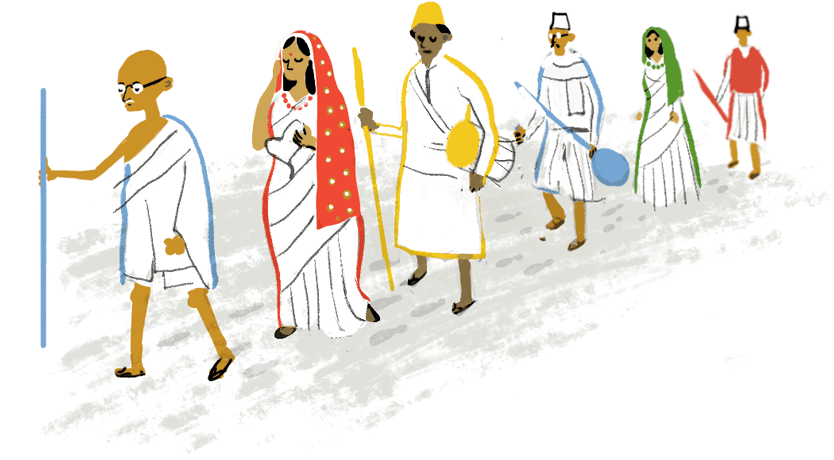
Illustration on Google India shows Gandhi leading the Dandi March of 1930

In honor of the 69th Anniversary of India’s Independence on Aug. 15,Google India’s Doodle features Mahatma Gandhi leading the Dandi March of 1930.

India Independence Day 2015

The scene depicts a significant moment in India’s push for freedom from the rule of the British Raj and the beginning of the Civil Disobedience Movement. Seventy-eight Congress volunteers participated in the 240-mile march in protest of unfair salt laws.

Leon Hong illustrated the Doodle for Google users in India as they celebrate the Indian Independence Act of 1947 on Saturday.


Source…Julia Zorthian   http://www.times.com

Natarajan

Dhanushkodi….A Ghost Town Hopes to Come Alive…

50 years after a cyclone wiped it out, Dhanushkodi is slowly finding its feet. A tourist attraction precisely for its desolateness, road connectivity could soon transform it. Saisuresh Sivaswamy, who spent a few hours there, comes back enchanted. Photographs: Saisuresh Sivaswamy

As the doughty, packed to the gills Mahindra 4WD vehicle bounces along the tracks left by others of its ilk, along the undulating sand dunes leading up to the seaside, you strain your eyes to see the desolate yet mesmerising sights outside.

It is just sand dunes, as far as the eye can see, in various shapes and grey shades. But on the horizon is a sliver of silver that expands as you weave across towards it, into the glorious sea that is at times green as emerald and suddenly azure as a clear summer sky.

The sand and the sea. Photograph: Saisuresh Sivaswamy/Rediff.com

Just as the waters of Indian Ocean and Bay of Bengal merge here in many hues, Dhanushkodi is where legend, faith and macabre recent history mingle to form a skein of emotions as you gaze across the severe, sere, landscape.

Legend has it that Ram crossed over to Lanka to rescue his wife Sita from Ravan’s clutches from here. This is where he built the Ram Setu, with floating rocks (one of them is under lock and key in a temple in the ghost town), to cross over to Thalaimannar, a few kilometres across the Palk Straits.

Legend further tells that on his successful return he destroyed the bridge with the tip of his arrow on the request of the new king of Lanka, Vibhishan, thus immortalising the town’s name (dhanush + kodi meaning end of a bow).

Political parties may squabble over the legend’s veracity but for the local folk this is all part of history, just as there are spots associated with Ram and his life in distant Ayodhya. On the way from Rameswaram to Dhanushkodi is the Kodhandaramar temple, where Vibhishan is said to have surrendered to Ram and anointed king of Lanka.

The association with Ram, and the proximity to Rameswaram, where the ancient warrior-king is said to have prayed to Lord Siva before embarking on his journey to Lanka, vest the town with divinity.

For most devotees who visit the eponymous Siva temple in the temple town, a visit to Dhanushkodi, around 25 kilometres away, is a must, a bath in the ocean not advised owing to the treacherous waters but still indulged in.

Lore has it too that a pilgrimage to Kasi/Varanasi/Benaras is incomplete without praying at Rameswaram.

The church destroyed in the cyclone 50 years ago. Photograph: Saisuresh Sivaswamy/Rediff.com

But growing up in Tamil Nadu in the 1970s-’80s it is not distant happenings or the power of faith that you remember the town for but a horrid December night from 50 years ago.

When a furious cyclone swept the then bustling town, people, buildings, everything into the all-devouring oceanic maws, the metres-high tidal waves even swallowing up a whole train with all 115 on board.

It was something that stays seared into your memory the way only a nightmare can.

What about the people on the train? What were their last thoughts as their carriages were yanked into the sea by forces beyond comprehension?

What of the townfolk, did anyone survive? What is the place like today?

What’s left of the railway tracks. Photograph: Saisuresh Sivaswamy/Rediff.com

Till the disaster, Dhanushkodi was like any other Indian town. It had a port for traffic to and from Sri Lanka; it had a railway station, a post office, hotels, the usual urban accoutrements you will find in any town of that vintage.

Pamban, the island in Ramnad district which houses Rameswaram and Dhanushkodi, was connected to Mannar in the mainland via a railway line. And regular trains would ply between Madras Egmore and the tip of the island, disgorging and collecting men and materials from the ships from Thalaimannar that would come calling at the port.

Today, all that is left of the town are skeletons of what was, and a splattering of hutments occupied by the fishermen families who continue to live there.

After the December 23-23, 1964, cyclone the town was declared ‘unfit for occupation’ and it doesn’t look like anything has changed on the ground.

The ‘tempos’ that ferry you to and fro Dhanushkodi. Photograph: Saisuresh Sivaswamy/Rediff.com

To get to Dhanushkodi you will have to drive down from Rameswaram, from where a clutch of ‘tempos’, as the ancient Mahindra 4WDs are called, ferry you till land’s end, the south-east corner of Pamban island.

Traffic is regulated, so even if you have a 4WD of your own you will need to register it at the checkpoint at Mukundarayar Chathiram where all tempos, waiting for passengers, are grouped.

Once upon a time there was no regulation and movement was easy. But once Sri Lanka’s Tamil ethnic problem began to intensify, this was where boatloads of Tamil refugees would alight, and as the militancy in the island-nation grew virulent the authorities moved in, clamping down on any illegal entry.

On a clear night, it is said, the lights of Thalaimannar can be seen.

***

The road from Rameswaram goes beyond the barricade at Mukundarayar Chathiram but no vehicles are allowed beyond this point. One can walk all the way on this road, which looks like a good half hour’s trek. There are stalls selling vaazhakkai bajji (coconut fritters), sugarcane juice and such. Fried fish is also sold here, but usually in the evenings, we are told.

This point is, for those who don’t wish to undertake the short but time-consuming drive in decrepit vehicles to land’s end, known poetically as Arichal Munai in Tamil (or, Erosion Point), the walk along the coast will do fine. But if you decide to go all the way, remember, some tempo drivers really pack it in, like ours did, and charge Rs 100 per head, otherwise the norm is Rs 150. They are also open to hiring out their vehicles for smaller groups but on fixed payment, say, around Rs 2000.

If your driver is a voluble man, like ours was, you will get a running commentary of the scenery on the way. ‘There, that was the track there that got blown away.’ ‘Here, you can see the tracks from that night.’ All this is in first person, like he was witness to that traumatic night from 50 years ago.

The mesmerising Arichal Munal or Erosion Point. Photograph: Saisuresh Sivaswamy/Rediff.com

The locale is perfect for film shootings, and as if on cue our man rattles off a list of directors who have shot here, starting from Mani Ratman in Kannathil Mutthamittal and including many others.

Arichal Munai is mesmerising and inviting. There are a few stalls here, selling the usual souvenirs (shells, and more shells, in all shapes and sizes), water, lime juice etc.

The right setting for a chilled beer given that the sun is glaring down at you, you tell yourself, but alas, no luck with the spirits. Although, judging from the odours emanating off a group, where there is a swill, there is a way.

After spending around 30 minutes at the waterfront – really, if you are not swimming, how long can you withstand the afternoon’s scorching sun even if the view is breath-taking?

The tempo trundles to the village some distance away. Which is when the reality of what happened that night 50 years ago hits you.

The church, its roof blown off, silhouette dominant, stands like a silent sentinel over the destroyed homes around, and there’s a small temple next door. A little further is what our driver-guide says was the railway station.

The water tank was next door, what is left of it are the columns, pointing an accusatory finger at the skies.

The water tank near the the railway station. Photograph: Saisuresh Sivaswamy/Rediff.com

There are a few hutments where fisher-folk live, there’s a local school with classes till the eighth standard. Kids try to sell shells to visiting tourists for Rs 10 a pop.

The tourist traffic is constant, through the year except during the rains, and amounts to a few thousands. The numbers are expected to go up exponentially once the sanctioned road from the Mukundarayar Chathiram till Arichal Munai becomes a reality, by next year.

There are earthmovers clearing the way for it, and there’s an air of expectancy among the locals that with connectivity their lives too will improve.

Hotels will come in, so will electricity and regular water supply, schools and hospital… And a ghost town will finally be laid to rest.

Dhanushkodi needs to snap out of it, 50 years is enough time to grieve.

But for now, everyone is grim-faced on gazing at the remainders of what nature’s fury can do, and the return journey is sombre.

Saisuresh Sivaswamy / Rediff.com

Source…..www.rediff.com

Natarajan


July 29…” Mohun Bagan Day”….Read this story to know the Reason…

Imagine India in 1911.

Lord Curzon had recently announced the partition of Bengal between East and West Bengal along Hindu and Muslim lines. When the whole country was fighting against the British and the movement was at its peak…

…THE SUCCESS OF MOHUN BAGAN in IFA SHIELD in 1911 is remembered as an eventful event in the social history of Indian sports.

Mohun Bagan’s barefooted Bengalis defeated the British Army’s East Yorkshire Regiment to win the Indian Football Association Shield. This IFA Shield victory of 1911 is one of the most commented upon events in Indian histories. This victory was much more than just the greatest day in the history of Indian football. It provided an inspiration to a movement which was gathering pace in India then.

1911-2

Mohun Bagan, considered the national club of India, became the first Asian football club when it was set up in 1889 in Calcutta. On 29th July 1911, Mohun Bagan was up against the East Yorkshire Regiment, a major British team. Over 80,000 Indians had gathered in and around the stadium to witness the real-life Lagaan moment.

After drubbing St. Xavier’s College 3-0 in the first round, they defeated Rangers Football Club in the second round. A 1-0 win over Rifle Brigade secured a semi-final berth for Mohun Bagan, under the leadership of inspirational Shibdas Bhaduri.

The final was as exciting as any game played today by players who cost their clubs millions. Perhaps more, because Mohun Bagan played that day with one thing on their mind – FREEDOM.

1911-1

Mohun Bagan captain Shibdas Bhaduri scored an equalizer after the British team drew first blood. Then with just two minutes to go from the final whistle, Abhilash Ghosh received a pass from the captain and scored the winner with a thunderous strike.

The ground erupted in celebration. It started to rain in shirts and shoes within the ground. Mohun Bagan became the first Indian team to lift the IFA Shield. Indian football was born on 29 July 1911, and at the same time it pumped the freedom movement with much-needed enthusiasm.

3

29th July came to be known as Mohun Bagan Day.

This victory was highly praised not only by the Indian media. The British media wrote,“What the Congress failed to achieve, Mohun Bagan has”.

This day is remembered, for the bare-footed warriors who gave direction to a freedom movement. Not only that, it also has a nationalist, social, cultural and economic significance in historical perspective.

Source….www.storypick,com

natarajan

Rare Photographs of Dr. Abdul Kalam ….From The Archives of Indian Express…

abdul kalam, abdul kalam rare photos, abdul kalam photos, photos abdul kalam, apj abdul kalam, apj abdul kalam photos, photos abdul kalam, abdul kalam photo, photos kalam, kalam photos, latest photos, photos 27 July abdul kalam

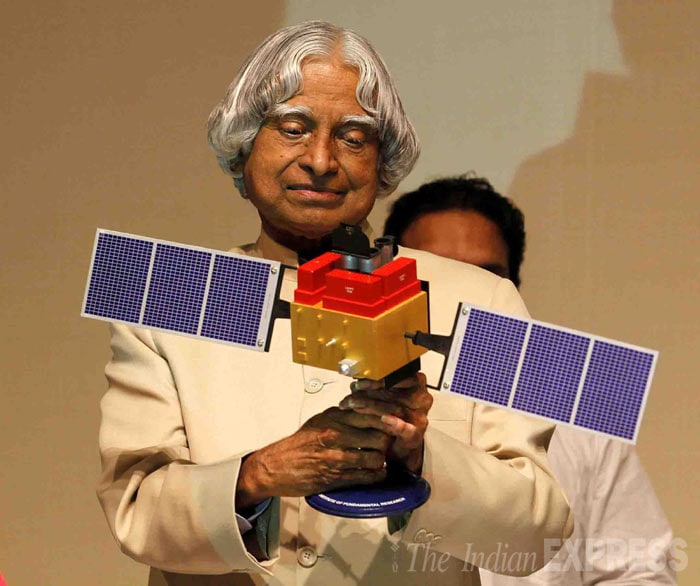
The journey of A P J Abdul Kalam as a space scientist began in early 1960s at Thumba, a coastal village near here, which housed India’s first rocket launcher, Thumba Equatorial Rocket Launcher.

I K Gujral congratulating former President Dr. APJ Abdul Kalam after he was conferred with the Bharat Ratna at Rashtrapati Bhawan in New Delhi. (Source: Express photo by Virendra Singh) –


abdul kalam, abdul kalam rare photos, abdul kalam photos, photos abdul kalam, apj abdul kalam, apj abdul kalam photos, photos abdul kalam, abdul kalam photo, photos kalam, kalam photos, latest photos, photos 27 July abdul kalam

One of the little known facts about former President A P J Abdul Kalam is that he has a medical invention to his name — a coronary stent built with missile composites that dramatically brought down the cost of heart stents from Rs 55,000 to Rs 10,000 in the mid-1990s.

Former president Dr APJ Kalam deliver lecture on Homi Bhabha Birth Centenary Commemoration TIFR Foundation Day at Colaba. (Source: Express Photo by Ganesh Shirsekar) –


abdul kalam, abdul kalam rare photos, abdul kalam photos, photos abdul kalam, apj abdul kalam, apj abdul kalam photos, photos abdul kalam, abdul kalam photo, photos kalam, kalam photos, latest photos, photos 27 July abdul kalam

Dr. Abdul Kalam, who received several prestigious awards including Bharat Ratna, played a crucial role when India tested its nuclear weapons at Pokhran in 1998 when the Vajpayee government was in power.

Former prime minister Atal Bihari Vajpayee, George Fernandes, Pramod Mahajan, Bhairon singh Shekhawat and other senior sceintist and army officals at the site of 1998 Pokharan nuclear missile launch. (Source: Express photo by Ravi Batra) –

abdul kalam, abdul kalam rare photos, abdul kalam photos, photos abdul kalam, apj abdul kalam, apj abdul kalam photos, photos abdul kalam, abdul kalam photo, photos kalam, kalam photos, latest photos, photos 27 July abdul kalam

Dr. APJ Abdul Kalam felicitated 100-year-old body builder from Kolkata Manohar Aich during the celebration of Shanmukhananda Hall Diamond Jubilee. (Source: Express photo by Prashant Nadka) –

abdul kalam, abdul kalam rare photos, abdul kalam photos, photos abdul kalam, apj abdul kalam, apj abdul kalam photos, photos abdul kalam, abdul kalam photo, photos kalam, kalam photos, latest photos, photos 27 July abdul kalam

“At Rashtrapati Bhawan I found a letter from our first President, Rajendra Prasad to Nobel laureate Sir C V Raman in 1954 asking him to come to Rashtrapati Bhawan to accept the Bharat Ratna. Anyone would have jumped at the offer. Then I read Sir CV Raman’s reply to the invitation. It said, “Dear Mr President, I thank you for giving me such a great honour, but I have a problem. I am guiding a scholar and he is submitting his thesis in December-January. I have to sign the thesis and won’t be able to accept the invitation, ” Dr. Kalam said at Idea Exchange. (Source: Express archive) –

abdul kalam, abdul kalam rare photos, abdul kalam photos, photos abdul kalam, apj abdul kalam, apj abdul kalam photos, photos abdul kalam, abdul kalam photo, photos kalam, kalam photos, latest photos, photos 27 July abdul kalam

Dr. APJ Abdul Kalam being sworn-in as the 11th President of India by the then Chief Justice of India B N Kirpal at the central hall of Parliament in New Delhi. (Source: PTI file photo) –


abdul kalam, abdul kalam rare photos, abdul kalam photos, photos abdul kalam, apj abdul kalam, apj abdul kalam photos, photos abdul kalam, abdul kalam photo, photos kalam, kalam photos, latest photos, photos 27 July abdul kalam

Former President A P J Abdul Kalam intervenes in the debate after presenting the second Ramnath Goenka Excellence in Journalism awards on Monday night. On stage (from left): moderators Rajdeep Sardesai of CNN-IBN and Barkha Dutt of NDTV; panelists Shobhana Bhartia of The Hindustan Times, N Ram of The Hindu, Ravi Dhariwal of Bennett, Coleman (publishers of The Times of India), Pankaj Pachauri of NDTV India and Shekhar Gupta of The Indian Express. (Source: Express archive) –

abdul kalam, abdul kalam rare photos, abdul kalam photos, photos abdul kalam, apj abdul kalam, apj abdul kalam photos, photos abdul kalam, abdul kalam photo, photos kalam, kalam photos, latest photos, photos 27 July abdul kalam

During the Ramnath Goenka Awards, Dr. Kalam had broken protocol and sat on the dais to interact with the journalists present at the ceremony. (Source: Express archive) –

abdul kalam, abdul kalam rare photos, abdul kalam photos, photos abdul kalam, apj abdul kalam, apj abdul kalam photos, photos abdul kalam, abdul kalam photo, photos kalam, kalam photos, latest photos, photos 27 July abdul kalam

Dr. APJ Abdul Kalam in Sukhoi-30 MKI. (Source: Express photo by Ravindra Joshi)

APJ Abdul Kalam's rare photos from Indian Express archive

Dr. Abdul Kalam at his residence at 10 Rajaji Marg in New Delhi. (Source: Express photo by Oinam Anand) –

See more at: http://indianexpress.com/photos/photo-archives/apj-abdul-kalams-rare-photos-from-indian-express-archive/15/#sthash.0VnQg57H.dpuf


Source….www.indianexpress.com

Natarajan