Message For ONAM Day…” Strive to Manifest , Cultivate and Express Love, Suppressing Ego and Pride …”

Sathya Sai Baba

When you eat a banana, you have to first remove the skin; so it is with other fruits as well be it a mango or an orange. The sweet substance has to be reached after removal of the bitter skin. For Emperor Bali to be received and accepted by God, the bitter cover of egoism and power-mania had to be removed. Ignorance,maya (delusion), illusion, pride, etc. are the components of the skin. The festival of Onam comes and goes, but you are no way nearer to God. This is because while Onam is thoroughly welcomed and enjoyed, generosity, renunciation, love and the spirit of service are not given an equally hearty welcome. Take this as the Onam Message – strive to manifest, cultivate and express Love, suppressing pride and egoism, so that you win the Grace of God.

அன்பாசிரியர் – சித்ரா: அஞ்சல் அட்டை முதல் யூடியூப் வரை அசத்தும் ஆசிரியை!

உற்சாக மாணவர்களுடன் ஆசிரியை சித்ரா.

உற்சாக மாணவர்களுடன் ஆசிரியை சித்ரா.

| மாணவர்கள் மீதான அன்பாலும் அக்கறையாலும் அர்ப்பணிப்புடன் தனித்துவமாக கற்பிக்கும் அரசுப் பள்ளி ஆசிரியர்களின் நல்லடையாள அணிவகுப்புத் தொடர் இது. |

“பெரிய அளவில் பணம் சம்பாதிப்பதற்குப் பதிலாக, பெரிய மாற்றத்தை விதைக்க ஆசைப்பட்டேன். அதனாலேயே ஆசிரியர் ஆனேன்!”- தகவல் மற்றும் தகவல் தொடர்பு தொழில்நுட்பத்தில் சாதித்ததற்காக குடியரசுத் தலைவரிடம் தேசிய விருது, அப்துல் கலாமின் பாராட்டு, மைக்ரோசாப்ட்டின் உலகளாவிய மன்ற, தேசத்தின் சாதனையாளர் விருது, நல்லாசிரியர் விருது மற்றும் ஏராளமான தேசிய, மாநில, ஊரக விருதுகள் பெற்ற சித்ரா என்னும் அரசுப் பள்ளி ஆசிரியரின் வார்த்தைகள் இவை.

இனி சித்ராவின் பயணம், அவரின் வார்த்தைகளிலேயே…

“1996-ம் ஆண்டு விக்கிரவாண்டி ஊராட்சியின் வாக்கூர்பகண்டை என்னும் ஊரின் தொடக்கப் பள்ளியில், என் ஆசிரிய வாழ்க்கை தொடங்கியது. அப்போது நான் ஒன்றாம் வகுப்பு ஆசிரியை. வழக்கமான அ, ஆ தானே என்றிருந்த எனக்கு, மாணவர்களே பாடம் சொல்லிக் கொடுத்துவிட்டார்கள், அவர்கள் எழுதிய ‘அ’வையும், ‘ஆ’வையும், படிக்க கூடுதல் முயற்சி தேவைப்பட்டது.

அப்போது பேருந்தில் பள்ளிக்கு வந்து சேர ஒன்றரை மணி நேரம் ஆகும். அந்த சமயத்தில் குஜராத்திய எழுத்தாளர் ஒருவர் எழுதிய ‘கனவு ஆசிரியர்’ என்ற புத்தகம் கிடைத்தது. அதில் கூறப்பட்டிருந்த வழிமுறைகளையும், அறிவுரைகளையும் எனக்கு ஏற்றாற்போல மாற்றிக் கொண்டேன். மாணவர்களுக்குச் சொல்லிக் கொடுக்க, அரசு நடத்திய பயிற்சி முகாம் அதிக உதவியாக இருந்தது. ‘விளையாட்டு வழி’ கல்வி முறையைப் பின்பற்ற ஆரம்பித்தேன்.

மாணவியிடம் கற்ற பாடம்

குச்சி, புளியங்கொட்டைகளை வைத்து கணக்கு சொல்லிக் கொடுத்தேன். மாணவர்களை அருகில் இருந்த வயல்களுக்கு அழைத்துக் கொண்டு போய் அறிவியல் சொல்லிக் கொடுப்பதும், வகுப்பறையிலேயே விதைகள் இட்டு செடிகள் வளர்ப்பதும் வழக்கமாய் இருந்தது. மாலை நேரங்களில் பாட்டு மூலம் பாடம் கற்றுக் கொடுக்கத் தொடங்கினேன்.

ஒரு முறை ஆர்வமிகுதியில் மூன்றாம் வகுப்புக் குழந்தைகளுக்கு மினி கிரைண்டர் மாதிரி செய்து எடுத்துக் கொண்டு போனேன். “இது எதுக்கு டீச்சர்? இதுதான் எங்க வீட்டுலயே இருக்கே!” என்றாள் ஒரு மாணவி. அப்போதுதான் சிரமப்பட்டு கடினமான எதையும் செய்து காட்டுவது தேவையற்றது என்பதை உணர்ந்தேன்.

மனம் நெகிழ்ந்த தருணம்

மெல்ல மெல்ல கற்றலின்பால் குழந்தைகளுக்கு ஆர்வம் ஏற்பட்டது. பள்ளி மாணவர்கள், மாவட்ட ஆட்சியர் அலுவலகத்தில் நடைபெறும் விழாக்களில் ஆவலுடன் கலந்து கொள்ள ஆரம்பித்தனர். சுதந்திர தினம், குடியரசு தினம் என அரசு விழாக் கொண்டாட்டங்களிலும் திருக்குறள் ஒப்பித்தல், பாட்டுப் போட்டி மற்றும் விளையாட்டுப் போட்டிகளிலும், பங்குபெற்றனர். குக்கிராமத்தில் இருந்து வெளியே கூட சென்றிருக்காத அக்குழந்தைகள், முதன்முதலாக ஆட்சியர் அலுவலகம் போய் பரிசுகளுடன் திரும்பி வந்தனர்.

பரிசுகளை வென்றதாகக் கேட்ட தருணத்தில் எங்கள் கால்கள் தரையிலேயே படவில்லை. ஒவ்வொரு விழாவிலும் போட்டிகளில் கலந்து கொள்வது வழக்கமானது. நீர்ப்பிரச்சினைகள், உடல்நலப் பிரச்சினைகள், சுகாதாரம் குறித்த விழிப்புணர்வு குறித்த கார்ட்டூன் கதைகளை ஒவ்வொரு வாரமும் சொல்லிக் கொடுக்க ஆரம்பித்தேன். பாண்டிச்சேரி வானொலி நிலையத்திலும் எங்கள் மாணவர்கள் ஏராளமான நிகழ்ச்சிகளில் பங்கேற்றனர்.

எனக்காக போராடிய கிராமத்தினர்

‘பள்ளிக்கு யார் வந்தாலும் பயப்படக்கூடாது. இயல்பாக அவர்களை வரவேற்று, பள்ளியைச் சுற்றிக் காண்பிக்க வேண்டும்’ என்று சொல்லியிருந்தேன். ஒரு முறை மாவட்ட ஆட்சியர் எங்கள் பள்ளிக்கு திடீர் வருகை தந்தார். மாணவர்களே அவரை வரவேற்ற விதத்தைப் பார்த்து அசந்து போனவர், அடுத்த நாளே எங்களுக்கு விருதளித்துச் சிறப்பித்தார்.

ஒரு முறை நான், விடுமுறை காரணமாக வெளியூருக்குப் போய்விட்டு, திங்கட்கிழமை காலையில் பள்ளிக்குத் திரும்பினேன். சைக்கிளில் வேகமாக வந்து கொண்டிருந்த என்னைப் பார்த்து கிராம மக்கள் புன்முறுவல் பூத்தனர். எனக்கு எதுவுமே புரியவில்லை. பின்னர் தான் அந்தச் சிரிப்பின் பின்னால் இருக்கும் அன்பும், நம்பிக்கையும் புரிந்தது.

இரண்டு நாட்களுக்கு முன்னால், நான் மாற்றலாகி வேறு ஊருக்குச் செல்ல உத்தரவு வந்திருக்கிறது. ஆனால் கிராம மக்கள், என்னை அனுப்பக்கூடாது என்று தொடர்போராட்டம் நடத்தி, உத்தரவைத் திரும்பப் பெற வைத்திருக்கின்றனர். நான் வாங்கிய எல்லா விருதுகளின் ஆனந்தத் தருணத்தை விட, இந்தத் தருணமே என்னை அதிகம் சந்தோஷப்படுத்தியது” என்கிறார்.

கற்பித்தலில் எளிமைகளும் புதுமைகளும்

கற்றலிலும் கற்பித்தலிலும் எளிமையையும், புதுமையையும் விரும்பினார் ஆசிரியை சித்ரா. ஆரம்பப் பள்ளி மாணவர்கள் எழுதிப் பழக வேண்டுமென்பதற்காக, தமிழ் மற்றும் ஆங்கில எழுத்துகளை அச்சிட்டு, முத்திரையாக்கினார். அதை ஒவ்வொரு குழந்தையின் நோட்டுப்புத்தகத்தில் அச்சு வைத்து எழுதக்கற்றுக் கொடுத்தலில் புதுமை படைத்தார். வகுப்பில் கல்வியைத் தாண்டி நல்ல பழக்கங்களையும் கற்றுக்கொடுப்பதை வழக்கமாகக் கொண்டவர், கழிவறைகள் தேவையைக் குறித்த விழிப்புணர்வை ஏற்படுத்தியதற்காக, மத்திய அரசின் சுகாதாரத்துறை விருதையும் பெற்றிருக்கிறார்.

கலாம் தந்த வியப்பு

பள்ளியில் ‘கடிதம் எழுதுதல்’ பகுதியை நோட்டிலே எழுதித்தான் பழக்கப்பட்டிருப்போம். ஆனால் ஆசிரியை சித்ரா, அருகில் உள்ள தபால் நிலையத்தில் இருந்து அஞ்சல் அட்டைகளை வாங்கி கடிதம் எழுதக் கற்றுக் கொடுத்திருக்கிறார். அதன் நீட்சியாக, மாணவர்கள் சிலர், குடியரசு தின மற்றும் பொங்கல் வாழ்த்துக் கூறி, டெல்லி ஜனாதிபதி மாளிகைக்குக் கடிதம் எழுதி அனுப்பியிருக்கின்றனர். சற்றும் எதிர்பார்க்காத ஆச்சரியமாய் டெல்லியில் இருந்து பதில் கடிதம் வந்தது. அதில் அப்போதைய ஜனாதிபதி அப்துல் கலாமின் கையொப்பம் இடப்பட்டு தமிழில் பதில் அளிக்கப்பட்டிருந்தது.

கணினி… சாதனையின் தொடக்கப்புள்ளி!

பள்ளி மெல்ல மெல்ல வளர்ச்சி அடையத் தொடங்கிய நிலையில், ஆசிரியை சித்ராவுக்கு வேறு ஊருக்கு மாற்றல் வந்தது. 2008-ம் ஆண்டில் காஞ்சிபுரம் மாவட்டத்தில் உள்ள அஸ்தினாபுரம் ஆரம்பப்பள்ளிக்கு வந்து சேர்ந்தார். கணிப்பொறியின் ஆக்கிரமிப்பு தொடங்கியிருந்த காலம் அது. ஆர்வமாய்க் கணினி கற்கத் தொடங்கினார் சித்ரா.

நினைத்த வேலைகளைக் குறுகிய நேரத்தில் செய்துவிட முடிகிற உலகத்தினுள் நுழைந்ததாய் உணர்ந்தார். தான் கற்றதை மாணவர்களுக்கும் சொல்லிக் கொடுக்க ஆசைப்பட்டார். ஆனால் அது மிகப்பெரிய சாதனையின் தொடக்கப்புள்ளியாக இருக்கும் என்பது அப்போது அவருக்குத் தெரிந்திருக்கவில்லை.

பள்ளியில், மதிய உணவு இடைவேளைகளில் விருப்பமுள்ள மாணவர்கள் கணினி கற்றுக் கொள்ளலாம் என்று அறிவித்தார். கணிப்பொறியை எப்படித் திறப்பது, இயக்குவது, மேலும் அடிப்படையான எம்.எஸ்.ஆபிஸ் குறித்தும் மாணவர்களுக்குக் கற்றுக் கொடுத்தார்.

தனது பயணம் குறித்து மேலும் பேசுகிறார் சித்ரா.

“2010-ல் இணையத்தில் உலவிக் கொண்டிருந்த போது, சோலார் குக்கரின் செயல்முறையைப் பார்த்தேன். விளையாட்டாய் மாணவர்களிடம் காண்பித்து, அதை முயற்சித்துப் பார்க்கச் சொன்னேன். அவர்களும் சில முறைகள் முயன்றனர், ஆனால் அரிசி வேகாமல் அப்படியே இருந்தது. அடுத்தடுத்த நாட்களில் திரும்பத் திரும்ப அவர்கள் முயற்சிக்க, சோலார் குக்கர் வெற்றிகரமாக இயங்கியது.

சமூக சேவகி கிரண் பிர் சேத்தியின் ‘டிசைன் ஃபார் சேஞ்ச்’ அமைப்பு சிறந்த கண்டுபிடிப்புகளை நிகழ்த்தும் பள்ளி மாணவர்களுக்கு ஒவ்வோர் ஆண்டும் விருது வழங்குகிறது. அதன் சிறந்த 20 கண்டுபிடிப்புகளில் ஒன்றாக எங்களின் கண்டுபிடிப்பும் தேர்வாகியது. அச்சம்பவம், அங்கீகாரத்தை எதிர்பார்க்காமல், மாணவர்கள், புதிது புதிதாய்க் கண்டுபிடிப்புகள் நிகழ்த்த ஏதுவாக அமைந்தது.

பல ஆசிரியர்கள் பாடப்புத்தகத்தை, பைபிளாகத்தான் பார்க்கின்றனர். அதைத் தாண்டி வேறு எதையுமே மாணவர்களுக்குச் சொல்லிக் கொடுப்பதில்லை.

தொழில்நுட்பம் அதன் போக்கில் வளர்ந்துகொண்டே இருக்கிறது. அதன் நன்மைகளை உணர்ந்து பயன்படுத்துவது எப்படி என்பதை மாணவர்களே எங்களுக்குக் கற்றுக் கொடுக்கின்றனர்” என்கிறார்.

ஆசிரியப்பணி தவிர, பள்ளிக் கல்வித்துறையின் சமூக அறிவியல் பாடத் திட்ட உறுப்பினராகவும் இருக்கிறார் சித்ரா. பாடத்திட்டங்களை உருவாக்கும் சமயத்தில் இரவு பகலாக உழைத்து, புத்தகத்தை வடிவமைத்ததில் இவரின் பங்கும் தவிர்க்க முடியாததாய் இருந்திருக்கிறது. மாணவர்களைத் தன் இரு கண்களாய் பாவித்த கலாம் மாணவர்களுக்குப் பதிலளித்த சம்பவம், தற்போது மூன்றாம் வகுப்பு சமூக அறிவியல் பாடத்தில் சேர்க்கப்பட்டிருக்கிறது.

ஆசிரியர்களை ஊக்குவிக்கும் பணி

சத்தமின்றி இன்னொரு முக்கியப் பணியையும் இவர் செய்து வருகிறார். தனக்கு ஏதோ ஒரு வகையில் தெரிந்த, அறிந்த அரசுப் பள்ளி ஆசிரியர்களில் எவரேனும் கற்பித்தலில் புதுமைகளைக் கையாண்டு வந்தால், அவரை அடையாளம் கண்டு பள்ளிக் கல்வித் துறையின் பாடத் திட்டக் குழுவில் இணைக்கும் வேலைதான் அது.

தனது கற்பித்தல் முறையையும், தன்னுடைய மாணவர்களின் திறமைகளையும் தமிழகம் முழுவதும் உள்ள ஆசிரியர்களிடம் கொண்டு சேர்த்து, அவர்களுக்கும் தனது உத்திகள் சென்றடைய யூடியூபை நாடியிருக்கிறார் ஆசிரியை சித்ரா. அவ்வப்போது அதில் வீடியோ பதிவுகளை அப்டேட் செய்து வருகிறார். அரசுப் பள்ளி மாணவர்களின் ஆக்கங்களைப் படம்பிடிக்கும் சித்ராவின் யுடியூப் பக்க இணைப்புhttps://www.youtube.com/user/chitra137

Source….க.சே. ரமணி பிரபா தேவி – தொடர்புக்கு: ramaniprabhadevi.s@thehindutamil.co.in      www.tamil.thehindu.com

Natarajan

” மகாபெரியவா கொடுத்த வாழைப் பழம் பிரசாதம் ….குழந்தைக்கு …”

இரண்டரை வயது வரை நடக்காமலேயே இருந்த ஒரு குழந்தை, மகா பெரியவா ஆசி பெற்று நடக்க ஆரம்பித்த கதை இது.

பிறந்த குழந்தை வாய் திறந்து மழலை மொழி பேசாதா என்பதே தாய் உட்பட அனைவரின் எதிர்பார்ப்பு. ஆனால், குழந்தை பிறந்ததும் தத்தித் தவழ்ந்து நடக்காமலே இருந்தால் எப்படி இருக்கும்? அது எத்தனை பெரிய துயரம்! அனுபவித்துப் பார்த்தவர்களுக்குத்தானே அந்த வலி தெரியும்?!

இரண்டரை வயது வரை நடக்காமலேயே – உட்கார்ந்த இடத்தில் இருந்தபடியே தரையில் தத்தித் தத்தி நகர்ந்துகொண்டிருந்தது அந்தக் குழந்தை. பெயர் சுப்பிரமணியன். நடக்கவேண்டிய வயது வந்த பிறகும் குழந்தை நடக்காமலே இருந்தால் எந்தத் தாய்தான் பரிதவித்துப் போகமாட்டாள்? சுப்பிரமணியனின் நிலையைப் பார்த்த புவனேஸ்வரியும் அப்படித்தான் பரிதவித்துப் போனார்.

அரசுப் பணியில் இருந்த கிருஷ்ணமூர்த்தியும் அவருடைய மனைவியான ராஜமும் பேரனின் இந்த நிலை குறித்து ரொம்பவே கவலைப்பட்டனர். தங்கள் மகள் வயிற்றுப் பேரனான சுப்பிரமணியனுக்கு நேர்ந்த இந்த அவலம் தாத்தா மற்றும் பாட்டியைத் தடுமாற வைத்தது. ‘பேரன் சரியாக வேண்டுமே’ என்பதுதான் அவர்களின் கவலையாக இருந்தது.

‘‘பூர்வ ஜன்ம கர்மாவா இருக்கும். அதனாலதான் அவன் இப்படிப் பொறந்திருக்கான். நிறைய கோயில்களுக்கு அவனைக் கூட்டிட்டுப் போய் பிரார்த்தனை பண்ணு. பரிகாரம் செய்’’ என்று கிருஷ்ணமூர்த்தியிடம் சொன்னார் நண்பர் ஒருவர். அதன்படி பல கோயில்களுக்கும் போய் தெய்வத்தின் சந்நிதிகளில் பிரார்த்தனையையும் வைத்தார்.

மருத்துவத் துறையில் சுப்பிரமணியனை ‘க்யூர்’ செய்ய இப்படி ஒரு டாக்டர் இங்கே இருக்கிறார் என்று எவராவது தகவல் சொன்னால் போதும்… அடுத்த நாளே அப்பாயின்ட்மென்ட் வாங்கி அந்த டாக்டரிடத்தில் இருப்பார் கிருஷ்ணமூர்த்தி. சுப்பிரமணியன் எழுந்து நடக்க வேண்டும் என்பதற்காக சின்ஸியரான இந்தத் தாத்தா பார்க்காத மருத்துவர் இல்லை; செய்யாத சிகிச்சை இல்லை.

மருத்துவர்களாலேயே ‘இதுதான் பிரச்னை’ என்று ஆணித்தரமாக எதையும் எடுத்துச் சொல்ல முடியவில்லை. ஒரு டாக்டர்… அவருக்கு அடுத்து இன்னொரு டாக்டர்… என்று நாட்கள் நகர்ந்தனவே தவிர, நல்ல சிகிச்சை இல்லை; சுப்பிரமணியனின் செயல்பாடுகளிலும் முன்னேற்றம் இல்லை. சிகிச்சையின் பொருட்டு பொருட்செலவும் அதிகமானது.
‘‘அவன் நடக்க மாட்டேங்கிறான்னு அப்படியே விட்டுடாதே… நீ பாட்டுக்கு அவனை நிக்க வெச்சு நடக்கறதுக்கு உண்டான முயற்சிகள்ல தொடர்ந்து ஈடுபட்டுண்டே இரு. ஒரு குறிப்பிட்ட வயசு வரைக்கும் உன் பேரன் இதே நிலையிலயே இருந்துட்டான்னா – அதாவது நடக்காமவே இருந்துட்டான்னா பிற்காலத்துல உம் பாடு இன்னும் சிரமமாகிப் போய்விடும்’’ என்று கிருஷ்ணமூர்த்தியின் வீட்டுக்குப் பக்கத்தில் இருந்த ஒருவர் எச்சரிக்கை என்ற பெயரில் பயமுறுத்தியது வேறு, அவரது குடும்பத்தினரை ஏகத்துக்கும் களேபரப்படுத்திவிட்டது. எனவே, அலுவலக நேரம் தவிர, தான் வீட்டில் இருக்கும் நேரங்களில் பேரன் சுப்பிரமணியனைத் தூக்கி நிற்க வைப்பார் கிருஷ்ணமூர்த்தி. ஆனால், குழந்தையின் இளம் கால்கள் தரையில் நிற்காமல் வளைந்து, மடிந்து தடுமாறும். சட்டென்று பேலன்ஸ் சரிந்து கீழே விழும் பேரனைக் கைத்தாங்கலாக அரவணைத்துக்கொள்வார் கிருஷ்ணமூர்த்தி.

ஒரு நாள் கிருஷ்ணமூர்த்தியின் அலுவலக நண்பர் ஒருவர், ‘‘ஏம்ப்பா கிட்டு… ஒரு நாள் காஞ்சிபுரம் போய் மகா பெரியவாளைப் பாரு. குழந்தைக்கு அவரோட ஆசி கிடைச்சா எல்லாம் சரியா போயிடும். கூட்டிண்டு போய்ப் பாரேன்’’ என்று அனுசரணையாகச் சொன்னார்.

மனைவி ராஜத்திடம் இந்த விஷயத்தைச் சொல்ல… ‘‘கண்டிப்பா போயிட்டு வருவோம். கண்கண்ட அந்த தெய்வத்தோட பார்வை இவன் மேல விழுந்தா, ஒருவேளை எல்லாம் சரியாயிடும்னு தோண்றது’’ என்று மனைவி ராஜமும் தன் பங்குக்குச் சொல்ல… ஒரு நாள் வாடகை காரை அமர்த்திக் கொண்டு காஞ்சிபுரம் கிளம்பினார்கள்.

அது ஒரு கோடை விடுமுறைக் காலம். பள்ளி மற்றும் கல்லூரிகள் விடுமுறை விடப்பட்டு விட்டதால், குடும்பத்தோடு பலரும் காஞ்சி ஸ்ரீமடத்துக்கு வந்திருந்தனர். தங்கள் ஊரில் இருந்து கிட்டத்தட்ட ஒரு பிக்னிக் போல் புறப்பட்டு, காஞ்சிபுரத்தில் உள்ள திருத்தலங்களை எல்லாம் தரிசித்துவிட்டு, அப்படியே ஸ்ரீமடத்துக்கும் பெரியவா தரிசனத்துக்காக வந்திருந்தார்கள்.

காஞ்சி மடமே மனிதத் தலைகளால் நிரம்பியதுபோல் காணப்பட்டது. கூட்டத்தினரிடையே ஒருவாறு ஊர்ந்து, நீந்தி மகா பெரியவா அமர்ந்து அருட்காட்சி தந்துகொண்டிருக்கும் சந்நிதானத்தை அடைந்தனர் கிருஷ்ணமூர்த்தி மற்றும் அவரது குடும்பத்தினர். பேரன் சுப்பிரமணியனைத் தன் இடுப்பில் தூக்கி வைத்திருந்தார் கிருஷ்ணமூர்த்தி. ஏகத்துக்கும் காணப்பட்ட கூட்டம் வேறு சுப்பிரமணியனை ஹிம்சை செய்தது போலும். விடாமல் அழுதுகொண்டே இருந்தான். தாய் புவனேஸ்வரியும் பாட்டி ராஜமும், பெரியவா சந்நிதானத்தைக் காட்டி, ‘‘அங்கே பார், உம்மாச்சித் தாத்தா. அழக்கூடாது. அவரைக் கும்புட்டுக்கோ’’ என்று சொல்லிக்கொண்டே இருந்தனர்.

அன்று மகா பெரியவா மௌனத்தில் இருந்தார். எவரிடத்திலும் எதுவும் பேசவில்லை. முக்கியமான சந்தர்ப்பங்களில் மட்டும் தன் அந்தரங்கக் காரியதரிசிகளிடம் சைகையின் மூலம் சில விஷயங்களைக் கேட்டறிந்தார். மற்றபடி தன் முன் வந்து செல்லும் பக்தர்களின் குறிப்பறிந்து பிரசாதத்தையும் திருக்கரங்களால் ஆசியையும் வழங்கிக்கொண்டிருந்தது அந்தப் பரப்பிரம்மம்.

கூட்டம் வேறு அதிகமாக இருந்ததால், பெரியவா தரிசனம் முடிந்து செல்லும் பக்தர்களை விரைவாக அங்கிருந்து அனுப்பிக் கொண்டிருந்தார்கள் சீடர்கள்.

மகனை மேல்படிப்புக்காக வெளிநாட்டுக்கு அனுப்புவதற்கு முன் ஆசி பெற வந்தவர்கள், கல்லூரி அட்மிஷன் கிடைக்க வேண்டுமே என்கிற பிரார்த்தனையுடன் வந்த பக்தர்கள், திருமணத்துக்கு அழைப்பிதழை அவரது சந்நிதானத்தில் வைத்து அனுக்ரஹம் வேண்டி வந்தவர்கள் என்று திரளான கூட்டம் கொஞ்சமும் கலையாமல் அப்படியே இருப்பதுபோல்தான் பட்டது கிருஷ்ணமூர்த்திக்கு. தரிசனம் முடிந்து பத்துப் பேர் வெளியேறினால், இருபது பேர் வந்து புதிதாகச் சேர்ந்து கொள்கிறார்கள்.

அப்போதுதான் கிருஷ்ணமூர்த்தியின் மனதுக்குப் பட்டது – கூட்டமே இல்லாமல் இருக்கும் ஒரு தினத்தில் வந்து மகா பெரியவாளிடம் இவனைப் பற்றி ஓரிரு வார்த்தைகள் சொல்லி, ஆசியை வேண்டிப் பெற்றிருக்கலாமே என்று! ஆனால், பெரியவாளின் அனுக்ரஹம் எப்படி இருக்கும் என்பது யாருக்குத் தெரியும்?

‘ஜய ஜய சங்கர ஹர ஹர சங்கர’ நாம கோஷத்தை மனதுக்குள் முணுமுணுத்தபடியே ‘கருணை தெய்வத்தின் திருப்பார்வை பேரன் மேல் விழுந்து, அவன் நல்லபடியாக நடக்கவேண்டும்’ என்று பிரார்த்தித்துக்கொண்டே வரிசையில் நடந்து கொண்டிருந்தார் ராஜம். இப்படி ஒரு பிள்ளையைப் பெற்ற புவனேஸ்வரியும் தன் தாயைப் பின்தொடர்ந்து நடந்தார்.

பெரியவாளின் அருகே வந்து நின்றபோது, பரவசப்பட்டுத்தான் போனார் கிருஷ்ணமூர்த்தி. சுப்பிரமணியனைக் கீழே இறக்கித் தரையில் அமர வைத்தார். பிறகு, நமஸ்கரிப்பது போன்ற பாவனையில் அவனையும் குப்புறப் படுக்க வைத்து, தானும் கீழே விழுந்து நமஸ்கரித்தார். இவரைத் தொடர்ந்து ராஜமும் புவனேஸ்வரியும் பெரியவாளை நமஸ்கரித்தனர்.

சுப்பிரமணியன் மீது தீர்க்கமாகத் தன் பார்வையைச் செலுத்தினார் மகா பெரியவா. பிறகு, ‘அவனைத் தூக்கி வெச்சுக்கச் சொல்லு’ என்பதாக ஒரு சிஷ்யனுக்குப் பெரியவா சைகை காண்பிக்க… அவன் கிருஷ்ணமூர்த்தியிடம், ‘‘மாமா… குழந்தையைத் தூக்கி இடுப்புல வெச்சுக்குங்கோ’’ என்றான். அதன்படி பேரனைத் தூக்கித் தன் இடுப்பில் வைத்துக்கொண்டார் கிருஷ்ணமூர்த்தி. இவர்கள் அனைவருக்கும் கல்கண்டு மற்றும் குங்குமப் பிரசாதம் கொடுத்தார் மகா பெரியவா. ஏதோ சொல்லவேண்டும் என்று சுப்பிரமணியனின் நிலையை விவரிப்பதற்காக கிருஷ்ணமூர்த்தி வாயைத் திறக்கவும், பெரியவாளே அவரைக் கையமர்த்தி விட்டார்.

ராஜமும் புவனேஸ்வரியும் கண்களில் நீர் பெருக அந்த மகானின் சந்நிதியில் தங்களின் பிரார்த்தனைகளை வைத்தனர். ‘குழந்தை நடக்கவேண்டும்… குழந்தை நடக்கவேண்டும்’ என்பது மட்டுமே அப்போதைய அவர்களின் கோரிக்கையாக இருந்தது.

‘‘தரிசனம் செஞ்சவா எல்லாம் நகருங்கோ… நகருங்கோ’’ என்று பெரியவாளுக்கு முன்னால் நின்றுகொண்டிருந்த சில சிஷ்யர்கள் குரல் கொடுக்கவும்… மெள்ள நகரலாம் என்று தீர்மானித்துக்கொண்டு ஓரடி எடுத்து வைத்தார் கிருஷ்ணமூர்த்தி. ‘அவாளை சித்த இருக்கச் சொல்லு’ என்பதாகத் தன் சீடன் ஒருவனுக்குப் பெரியவா சைகையால் உத்தரவு பிறப்பிக்க… சட்டென்று நகர்ந்த அவன் கிருஷ்ணமூர்த்தியின் கையைப் பிடித்து, காத்திருக்குமாறு பெரியவா சொன்னதாகச் சொன்னான்.

பெரியவாளுக்கு முன்னால் நெகிழ்ச்சியுடன் காத்திருந்தார் கிருஷ்ணமூர்த்தி. அதற்கு மேல் அவரால் அமைதியாக இருக்க முடியவில்லை. குரல் உடைய… ‘‘திருவையாறு பூர்வீகம். எம் பேரன் இவன். பொறந்து ரெண்டரை வருஷம் ஆச்சு… இன்னும் தரையில் கால் பாவிச்சு நடக்கலை. எத்தனையோ வைத்தியர்கிட்ட போயிட்டேன். காசு செலவானதும் கவலை அதிகமானதும்தான் மிச்சம். பெரியவா கருணை பண்ணணும்…’’ என்றார். கண்களில் இருந்து வழியும் நீரை மேல்துண்டால் துடைத்தார்.

ஒரு புன்னகை பூத்த அந்தப் பரப்பிரம்மம், தன் முன்னால் சற்றுத் தள்ளி வைக்கப்பட்டிருந்த பழத் தட்டை இன்னும் தன் அருகே கொண்டு வருமாறு சீடனிடம் சைகையால் சொன்னார். அவனும் அப்படியே செய்தான். அந்தத் தட்டிலிருந்து ஒரு ரஸ்தாலி வாழைப்பழத்தைத் தன் கையால் எடுத்தார். உரித்துச் சாப்பிடும் பாவனையில் அதன் மேல்தோலை உரித்தார். பாதி வாழைப்பழம் உரிக்கப்பட்ட நிலையில் அது காட்சி அளித்தது. இதை கிருஷ்ணமூர்த்தியின் இடுப்பில் இருந்த சுப்பிரமணியனுக்கு நேராக நீட்டினார் பெரியவா. அதற்கு ஏற்றாற்போல் கிருஷ்ணமூர்த்தியும் கொஞ்சம் நெருங்கி வந்தார். இருந்தாலும், மகா பெரியவா நீட்டிய அந்தப் பழத்தைத் தான் வாங்கி, சுப்பிரமணியனுக்குக் கொடுத்துவிடலாமே என்கிற எண்ணத்துடன் ஒரு சீடன் சட்டென முன்வந்து பெரியவாளிடம் கையை நீட்டினான்.

அப்போது பெரியவாளின் முகத்தைப் பார்க்கணுமே…! ‘தள்ளிப் போ’ என்பதாக அந்தச் சீடனுக்கு உத்தரவுபோல் வலது ஆட்காட்டி விரலை மட்டும் இடமும் வலமும் வேகமாக அசைத்துக் காண்பித்தவர், சுப்பிரமணியனைத் தன் அருகே வந்து அந்த வாழைப்பழத்தை வாங்கிக்கொள்ளுமாறு முக பாவனையால் அழைத்தார். அதற்கேற்றாற்போல் கிருஷ்ணமூர்த்தியும் தன் இடுப்பில் இருந்த சுப்பிரமணியனை இன்னும் கொஞ்சம் அருகே கொண்டுபோனார். தன் கையில் உரித்த நிலையில் இருந்த வாழைப்பழத்தைப் பெரியவா நீட்ட… தன் கையை நீட்டி அதை வாங்கிக்கொண்டான் சுப்பிரமணியன்.

அங்கே கூடி இருந்த பக்தர்கள் அனைவரும் ருசிகரமான இந்தக் காட்சியைப் பார்த்து மெய்சிலிர்த்தனர். வயதான ஒரு மாமி, ‘‘எத்தனையோ குழந்தைகளுக்குப் பெரியவா கல்கண்டு கொடுத்துப் பார்த்திருக்கேன். பழங்களைத் தந்தும் பார்த்திருக்கேன். ஆனா, ஒரு வாழைப்பழத்தை – அதன் தோலை உரிச்சு – பெரியவாளே அந்தக் குழந்தையோட கையில கொடுத்தார்னா… இது அந்தக் குழந்தைக்குப் பெரிய அனுக்ரஹம்’’ என்று பக்கத்தில் யாரிடமோ சொல்லிக்கொண்டிருந்தார்.

சுப்பிரமணியன் தன் கையிலிருந்து வாங்கிய வாழைப்பழத்தை முழுதுமாக அவன் சாப்பிடும் வரை வேறு எந்த பக்தரையும் பார்க்கவில்லை பெரியவா. அவன் சாப்பிட்டு முடித்து, அவர்களை அங்கிருந்து அனுப்பிய பின்னர்தான் மற்ற பக்தர்களுக்குப் பிரசாதம் வழங்க ஆரம்பித்தார் மகா பெரியவா.

ஊருக்கு வந்த கிருஷ்ணமூர்த்தியின் குடும்பத்தினர் பெரிதும் சந்தோஷப்பட்டனர். ‘‘ஏதோ நம் பிரார்த்தனை அந்த மகான் காதுலயே விழுந்துடுத்து போலிருக்கு. நம்மை எல்லாம் நன்னா ஆசிர்வாதம் பண்ணிட்டார். அதுவும், நம்ம சுப்பிரமணிக்குத் தன் கைப்பட வாழைப்பழம் கொடுத்ததை இப்ப நினைச்சுப் பார்த்தாலும் சிலிர்ப்பா இருக்கு’’ என்றார் ராஜம் தன் கணவரிடம்.

‘‘பெரியவா ஆசிர்வாதத்துல அவன் நடக்க ஆரம்பிச்சாலே போதும். வேற எதுவும் வேண்டாம்’’ என்ற கிருஷ்ணமூர்த்தி, அந்த வேளையில் காஞ்சி மகானை நினைத்து, இருந்த இடத்தில் இருந்தே வணங்கினார்.

காஞ்சிபுரத்தில் இருந்து வீட்டுக்கு வந்து சுமார் மூன்று நாட்கள் ஆகி இருக்கும். பணி புரியும் அரசு அலுவலகத்தின் உயர் அதிகாரி ஒருவரிடம் ஏதோ ஒரு பேச்சுவாக்கில் தான் காஞ்சி சென்று வந்ததைப் பற்றிச் சொன்னார் கிருஷ்ணமூர்த்தி. கூடவே, பெரியவாளின் ஆசி குறித்தும் அங்கு தன் பேரனுக்கு வாழைப்பழம் தந்த அனுபவத்தையும் சொன்னார். அப்போது சென்னையில் ஓரிடத்தில் ஒரு பள்ளியைப் பற்றிச் சொல்லி, ‘‘அங்கு உன் பேரனைக் கூட்டிக்கொண்டு போய்ப் பார். எதற்கும் ஒரு வேளை வரவேண்டும். உனக்கு இப்பதான் பெரியவா உத்தரவு கொடுத்திருக்கா போலிருக்கு’’ என்றார்.

அதை அடுத்து, உயர் அதிகாரி சொன்ன அந்தப் பள்ளிக்குப் பேரனைக் கூட்டிப் போனார் கிருஷ்ணமூர்த்தி. சரியாக நான்கே மாதங்களில் சுப்பிரமணியனுக்கு நடக்கக்கூடிய பயிற்சியை அன்போடு சொல்லித் தந்தார்கள். ‘‘பெரியவாளின் பார்வை பட்ட சில மாதங்களிலேயே அவனிடம் நல்ல முன்னேற்றம் தெரிந்தது. பயம் குறைந்தது. தைரியமாக நடக்க ஆரம்பித்தான். இப்ப அவனுக்கு வயசு இருபத்திநாலு. அவன் நடக்கிற நடைக்கு வேற யாருமே ஈடு கொடுக்க முடியாது. அப்படி ஒரு வேகம். அவன் வேகமா நடக்கறதைப் பார்த்தா எனக்கு பெரியவா ஞாபகம்தான் வருது. அந்த தெய்வம்தானே இவனை இப்படி நடக்க வெச்சிருக்கு!’’ என்று நெகிழ்ச்சியுடன் சொல்கிறார்கள் கிருஷ்ணமூர்த்தி தம்பதியர்

Source….www.periva.proboards.com

Natarajan


Watch How a Super Adorable Baby Elephant Was Rescued from a Dry Pit ….

A baby elephant fell in a deep dry well in Andhra Pradesh. It tried its best to come out, but all in vain. Finally, the rescue team came on the spot and helped the elephant escape. Watch the cute footage here.

Baby elephants are super cute. Period. Sadly, one such adorable elephant fell into a dry well in Ramakuppam in Andhra Pradesh’s Chittoor district on Sunday, Aug 23.

The helpless animal struggled a lot to come out of the pit, but it was too deep. Hundreds of onlookers gathered around to have a look. After a point it seemed completely impossible for the little fella to make its way up. Thankfully, people from the forest department finally reached the site and helped it out.

Screen Shot 2015-08-24 at 12.44.40 pm

Screen Shot 2015-08-24 at 12.45.07 pm

With a huge tractor, they made a path for the animal to climb. After struggling for a bit, it finally started climbing as the relieved onlookers cheered. –

Screen Shot 2015-08-24 at 12.46.03 pm

Have a look at the video here:

Source….www.thebetterindia.com and http://www.youtube.com

Natarajan


This is how Kerala celebrates Onam….A Festival Celebrated by All People Irrespective of Caste, Creed and Relegion….


Image: School girls wearing traditional costume share a laugh backstage as they wait to perform during festivities marking the start of the annual harvest festival of “Onam” in the southern Indian city of Chennai
Photographs: Babu/Reuters

You may be surprised to learn that worshipping the Mahabali, making apookalam and having the Onasadhya are just a miniscule part of the elaborate festival. Find out how people from different parts of Kerala celebrate the ten-day festival.

With elaborate feasting and a host of colourful activities and celebrations planned across the state, Onam is undoubtedly the biggest festival of Kerala.

While most Keralites celebrate it as a harvest festival, a famous and popular legend is also that of the erstwhile King Mahabali visiting the people of Kerala on Onam.

When King Mahabali was defeated and sent to paathaal (netherland) by Vamana, an avatar of Lord Vishnu, he’d appealed that he should be allowed to visit his subjects once every year.

It is believed that on Tiruvonam, the tenth day of Onam, Mahabali comes visiting the homes of his praja (people) to find out if they are happy and content.

What makes Onam so unique is the fact that it is the only festival celebrated by people irrespective of caste, creed or religion. That explains why it is considered the national festival of the state.

The ten-day long festival starts on Attam in the Chingam month of the Malayalam calendar.

It continues for the next eight days — Chithram, Chodhi, Vishakam, Anizham, Thriketa, Moolam, Pooradam, Uthradam — and culminates on Thiruvonam, the tenth day.

Some also celebrate Onam on Avittam, the eleventh day.

During Onam, across Kerala, a host of celebrations and activities are organised — some as part of the ritual, some for entertainment.

Since some of the customs and activities are dying a natural death due to ignorance or lack of time, we spoke to some people who were born and brought up in Kerala to tell us how Onam has been celebrated in different provinces over the years.


Image: Young girls pose next to a Pookalam designed by them
Photographs: Sahil Salvi/Rediff.com

Pookalam

An important attraction of Onam is the Pookalam— a carpet of multi-coloured flowers arranged in a decorative pattern.

Throughout the ten days of the festival, young girls and boys would wake up early and get ready to make the Pookalam on the courtyard to welcome King Mahabali and other guests who’d visit them.

Each day features a new pattern.

Ramanunni Nair who belongs to Palakkad district of Kerala remembers his childhood days of making the Pookalam and tells us how fun it used to be:

“When we were young, throughout the ten days of Onam, we used to wake up as early as 3 and 4 am. The girls would get ready, broom the courtyard and spread a layer of wet cow dung on the ground. Meanwhile, the boys would collect flowers of different colours and varieties and bring it home to the girls. Some of us would steal from the neighbouring garden just to ensure that we were on top of the game. It was fun climbing fences and trees to get as many flowers as possible.”

Nair tells us that in the olden days, the flowers were arranged on a wet patch of cow dung which ensured that the arrangement remained intact when the dung dried.

Meanwhile, Keralites who live in the cities and cannot afford to make a Pookalam every day make a small arrangement of flowers outside their apartment or their building.

Today Pookalam competitions are organised across the nation and in some countries abroad as well. The participation is huge and the designs are elaborate and innovative.


Image: A symbolic statue of Mahabali is placed on a banana leaf
Photographs: Divya Nair/Rediff.com

Mahabali Varavelpu

As mentioned earlier, Onam also celebrates the welcoming of King Mahabali (Mahabali Varavelpu) who is said to ascend from paathal to Kerala during these ten days to visit his people and enquire about their well being.

Besides the pookalam, every household also erect a small symbolic idol of Mahabali or Maveli outside the house and offer rice and naivedyam to it.

The idol, also known as Maathevar is made of sand or clay and is painted in kaavi (brick colour).

Some of them also paint eyes and moustache on the statue to make it look attractive.

On the last day of Onam, the idol is immersed in the sea or nearby river and pray to Mahabali to visit their families the following year for Onam.

On the last day of Onam, the idol is immersed in the sea or nearby river and pray to Mahabali to visit their families the following year for Onam.

While worshipping the idol and offering prayers, most of them recite this particular poem:

Maveli nadu vaneedum kalam,
manusharellarum onnupole
amodhathode vasikkum kalam
apathangarkkumottillathanum

It says that: When Maveli ruled our land, everyone was treated equally; they were joyful, merry and free from trouble.


Image: Women from Kerala performing the Kaikottikali
Photographs: Syam Subramanian/Wikimedia Commons

Kaikottikali

Kaikottikali or Thiruvadhirakalli is a traditional dance form performed by women on Onam.

It is usually performed in the afternoon after lunch or in the evening after the traditional lamp is lit.

To perform the dance, women wear the traditional cream coloured cotton saree with zari borders and decorate their hair with mogra flowers.

A kutthu villaku (traditional lamp) is lit in the centre of the courtyard and women form a circle around it and perform the dance facing inwards.

They clap and move around the circle singing onam songs praising the harvest and welcome the good times.

Shashikala Pillai, a 42-year teacher from Shoranur, Kerala who now lives in Mumbai shares some fond memories of kaikottikali with us.

“Each Onam, we would eagerly await the Thiruvathirakalli which was performed in our ancestral home after sunset. Everyone in the family would gather and all the women, including my mother used to perform. Women in the neighbourhood would also join in the dance. Those who did not perform, contributed by singing onapaatu (onam songs) and encouraged the others. As children, we’d eat chips and banana while watching them perform,” she says.


Image: Artists perform Pulikali on the streets
Photographs: Wikimedia Commons

Pulikali

Pulikali meaning ‘tiger dance’ is where a group of dancers dressed as tigers would dance to the tune of the drums and entertain the audience.

Neetu Panicker, an MBA graduate who recently shifted to Bangalore after her marriage remembers watching the Pulikali for the first time in Trissur:

“Pulikali is very famous in Trissur. The dancers wear masks of tiger and leopard and paint themselves in animal prints. When I saw them for the first time, I was very scared. One of them almost pounced on me as if he was attacking a prey. I screamed and closed my eyes. But over time, I got used to it. I would stand by the road outside my house with my father and brother and watch them perform stunts on the streets.”


Image: Kummati artists participate in a procession in Thrissur, Kerala
Photographs: Aruna/Wikimedia Commons

Kummattikali

Very few people from Kerala remember the Kummati, complained a 55-year-old Sashidharan Nair when I asked him about Onam celebrations in Malappuram, a village in Kerala.

Delving the details, Nair tells me that during Onam, Kummattis are specially trained artists dressed in plaited grass that cover their bodies; they also wear fancy masks and garlands.

“Kummatis travel in groups and perform the Kummatikali — a form of dance where they hop and jump in a synchronised pattern to entertain children. Some times they are dressed like characters from Hindu mythology and they enact scenes from the Ramayana and Mahabharata or share lessons in peace and happiness. They visit our homes and perform the dance in the courtyard. In return we’d gift them clothes or fruits,” he explained.

Nair says the festival of Onam celebrates different ways of sharing happiness.


Image: Vallamkali in Ponnani, Malappuram district of Kerala
Photographs: Riyaz Ahmed/Wikimedia Commons

Vallam Kali

Vallam Kali (vallam means boat), or the sname boat races need no introductions.

In Alapuzha, Cochin and Kottayam districts, men old and young form teams to race against each other in canoes.

The leader of the team gives instructions while the rest of them sit inside the canoe and row it as fast as they can.

They also sing songs and shout slogans to cheer each other.

Kunjikrishnan Pillai who used to regularly visit the boat race in Ashtamudi, Kollam shares one of the famous and most popular vallamkali songs with us:

Kuttanadan punchayile
kochupenne kuyilali
kottu venam, Kuzhal vanam
Kurava venam

It means: When the crops are ripe in Kuttanadu village, a young girl’s voice resembles a songbird; let’s bring on the sound of drums and chorus and join the celebrations.

“Most of these songs become war cries and every year, you will see a new set of songs and slogans. The enthusiasm is very addictive; sometimes there are petty fights while cheering for their respective teams, but eventually they get sorted as people get back to the festive spirit.”

Onathallu

Also known as Kayyamkali in some parts of Kerala, Onathallu (thallu meaning fight/push in Malayalam) is a form of martial arts.

Men wearing cream and red bordered dhotis form teams of two and indulge in a form of wrestling using only the hands for attack and defense.

When the kings ruled Kerala, Onathallu was presented before an audience just to prove how mighty and skilled their war soldiers are.

Today, it is treated as a competition of strength for entertainment purposes only.


Image: Onapottan
Photographs: Nidish K Viswanathan/Wikimedia Commons

Onapottan

In certain parts of Kerala is considered auspicious to spot an Onapottan, Onattar or Oneshwaran onThiruvonam.

Some people believe that the Onapottan is a messenger of the Mahabali

The Onapottan (translated as ‘a crazy character’ in Malayalam) is dressed rather outrageously (as you can seen in the picture above) and roams about the streets of the village sharing folklore.

His face is painted in various colours and he wears a tiered colourful kireedam (crown) on his head.

Onapottan carries a mani (bell) in one hand and an umbrella made of palm leaves just like Mahabali on the other. When we spot him, we bow to him and give him rice, fruits or something to eat, which he collects in a cloth bag he usually carries. If he throws some of the rice back at you, it is considered that you’re blessed with prosperity. If Onattar is happy, we feel that Mahabali has blessed us,” Nair adds.


Image: Kazhcha Kola
Photographs: Vinayaraj/Wikimedia Commons

Kazhcha Kola

Since the festival celebrates a good harvest, some people display a Kazhcha Kola (a bunch of ripe banana) in front of their house.

This, people say makes Mahabali happy and he blesses them in return.

And finally we have Onasadhya, or the traditional onam feast that includes rice, wheat, fruits and vegetables that is served on a banana leaf with its tapering end placed to the left.

You are supposed to sit on the floor with your legs crossed as the elderly women or men of the house serve the items of the sadhya in a particular order of significance starting with salt,papadam, banana, sharkara upperi (a sweet made from yam), banana chips and different types of pickles. The rice and curries are served at the end.

Sometimes a typical Onasadhya comprises as many as 20 different preparations — a sign of luxury, prosperity and happiness — so much so that it features significantly in Malayalam proverbs such as Onnam unnan bhagyam venam (You have to be lucky to enjoy an onam feast) and Kanam vittum onam unnanam (You have to have the onam feast even if it means having to sell your property/riches).

Source….www.rediff.com

Natarajan


Chennai’s Colonial Era LandMarks….

Chennai's colonial-era landmarks

Photo: Nathan G./Mint

The port city has drawn traders from far and wide to set up shop. Here are six pre-Independence establishments that are still thriving

On 22 August 1639, three square miles of land on the Coromandel Coast, where Fort St. George is located today, was handed over to the British East India Company by the local Nayaka rulers. It was from that shard of earth—flanked by ocean and dusted with blond sand—that Madras originated.


Now called Chennai, the city celebrated its 376th birthday on Saturday. Here are the profiles of some of the city’s most iconic institutions.


Victoria Technical Institute
Photo: SaiSen/Mint
Photo: SaiSen/Mint
The sepulchral atmosphere at the Victoria Technical Institute (VTI) is deepened by a marble statue of the puritanical monarch in full court dress—crown, cloak and sceptre—glaring beadily at you. The pretty young lady on the phone, however, doesn’t seem to be bothered. She has lined up a selection of baby dresses and is discussing the specifics with someone at the other end of the line, possibly a friend or relative who has recently had a baby girl. “I’m sure it will fit her,” she says, “She is still very small.”
This is perhaps one of the few places where you get frocks of this sort in the city: light-as-air smocked cotton in pastel shades with little flowers embroidered all over it. Other remnants of a time gone by can be found here: lace-edged doilies, plump tea cosies, wicker baskets, household linen with cut-work embroidery, multicoloured knitted napkin holders.
Most of the embroidery is done by women’s self-help groups in South India,” says C. Israel, CEO-IC (chief operating officer, in charge) of VTI. “We support them by giving them this platform to showcase their work.”
VTI, which was established as a public charitable trust in 1887 to commemorate the golden jubilee of Queen Victoria, was registered as a society in 1889.
“A few citizens of the Madras Presidency came together to start an organization to help the craftspeople of this country,” says Israel. “They wanted to preserve Indian handicrafts this way.”
VTI’s importance and reach grew as the society’s councillors began persuading craftspeople to route their products through the institute. Scholarships were offered to artisans and more art colleges were established in the Madras Presidency. In 1909, VTI got its first permanent exhibition centre: the Victoria Public Hall on Pantheon Road, Egmore.
When World War II erupted in Europe, British troops chose to occupy the Victoria Public Hall and the institute was moved to a rented store on Mount Road. In 1956, a new flagship showroom was opened in the same area.
The institute, which is spread across three floors and employs around 42 people, has craftspeople from all across the country supplying goods. Finely moulded statues of various Hindu gods in bronze, stone and rosewood can be found on the ground floor and in the adjoining gallery; the brightly coloured enamel work of Rajasthan and equally brilliant wares of Channapatna are balanced by the more subdued Bidriware and Dhokra art, while exquisitely carved and painted wooden furniture takes up an entire floor.

“There are over a hundred different sorts of handicrafts here,” says Israel. “And we constantly meet new craftsmen and invite them to display the best of their workmanship here.”
The Old Curiosity Shop
There is something decidedly Dickens-esque about the red-brick building on Mount Road that houses the Kashmir Art Palace. Step inside and you will understand why it is also called ‘The Old Curiosity Shop’. A line from the inimitable author’s novel, by the same name, flashes unbidden across the mind as you step inside, “the place… was one of those receptacles for old and curious things which seem to crouch in odd corners of this town and to hide their musty treasures from the public eye”.
Mohammed Lateef, whose father started the store in the mid-1940s, says, “The struggle for Independence was at its peak back then and there was a lot of turmoil in the north of India. My father (Ghulam Mohammed) came down to Madras for a visit and liked the relative peace and simplicity of the people here.”
Mohammed Lateef. Photo: SaiSen/Mint
So, Ghulam went back to Kashmir, sold his existing business and used the money to set up the shop on Mount Road. “Back then, people didn’t understand the concept of antiques,” says Lateef. “This used to simply be a gift shop for the English officers who needed to pick up things to take back to their homeland.”
It was his clientele who named the shop, laughs Lateef, turning on a cassette player. Don McLean’s Vincent wafts through the store. With a satisfied expression, Lateef leans back and says, “My style has always been vintage and I don’t sell anything I don’t like. I suppose this store reminded (clients) of the original Old Curiosity Shop.”
Currently, he says, his shop has a mix of both old and new things, “A lot of my clients are in the IT sector—they like to spend money on their house. And I like educating them,” says Lateef, who claims that Jawaharlal Nehru, former chief minister M.G. Ramachandran and actor Sivaji Ganesan visited the store during their lifetime.
“I can make you go back in history,” he promises, picking up a large lump of quartz that gleams gently in the dim light. Holding it up, he remarks, “This is at least million years old.”
There are other things in the store, perhaps not so primeval, but rare and unique nevertheless: finely embroidered, ancient pashmina garments, sepia-hued letters written by Indian statesmen, black-and-white photographs and the cameras that took them, gramophones, radios, typewriters, telescopes, compasses, sundials, five-decade old comics, century-old etchings and sketches, toys, vinyl records, coins, stamps, vintage jewellery, old movie posters, books produced by the Gutenberg press.
“After the British left India, this changed from a gift store to an antique one,” he says, “I talked to my clientele, understood their hobbies and started sourcing things for collectors all over the world. Some of the things I have here once belonged to royalty.”
Gem and Company
It is a small, unpretentious store on NSC Bose Road opposite the Madras high court. Clunky old buses trundle past, shoving pedestrians off the road and raising whorls of dust that find their way into the store, coating furniture and clients with a fine layer of dirt.
Behind the glass shutters of the wooden shelves, however, the pens are safe enough: the little-girl fountain pens with Disney princesses and fairies emblazoned on them, the slender metal cylinders that glint in the sun, the hand-crafted ebonite canisters of swirly brown and streaky black, the packets of cheap and convenient ball pens, the multicoloured gel pens.
“I have a passion for pens and love them,” says M. Pratap Kumar, owner of Gem and Co., which exclusively sells pens. “That is why I do what I do.”
M. Prabhat Kumar. Photo: SaiSen/Mint
It began a little less than a century ago, in the late 1920s, when Kumar’s grandfather N.C. Cunnan and his friend Venkatrangam began Gem and Co. Back then, all pens had to be imported from England, he says, adding that today, besides the regular brands such as Parker, Reynolds, Cello, Waterman, Sheaffer and Cross, he also sells the shop’s own brand of pens, Gama. “We sell our pens all over India and abroad,” he says.
Though he stocks a variety of pens, Kumar admits that he has a penchant for the good old fountain pen. “I always advise children who come here to use fountain pens. They are cheap, long-lasting, eco-friendly, don’t stress either the paper or your fingers and give you a much more legible and neat script,” he says, admitting that he is thrilled that schools in the city today are now insisting on their students using fountain pens.
In addition to selling pens, he also focuses on pen servicing, “The fountain pen is a very technical instrument; our exclusive service station for old pens can help you revive even your grandfather’s pen.”
From a shelf below, he takes a slender, velvet-padded box and opens it to reveal an amber-coloured pen. The cap is shattered and the nib cracked, but he picks it up almost reverentially and remarks, “This is an antique pen—once I am done with it, it will write better than any new one.”
Higginbothams
The air-conditioning isn’t working and shimmery, gossamer cobwebs hang like decidedly unlovely birthday streamers off long-stemmed grubby white fans. But the stained glass through which sunlight filters in leaving behind tiny pinpricks of bright light on the smooth black and white Italian tiles is beautiful, as is the sweeping wooden staircase that leads to the gallery above.
The pendulum of the tall grandfather clock must have oscillated for nearly 170 years, but time continues to sit lightly on Higginbothams, the oldest surviving bookstore in India. Unlike most other popular bookstores in Chennai, which have diversified their offerings over the past decade or so (in a few cases, books are no longer even stocked there), Higginbothams is unabashedly what it claims to be—a bookstore in the truest sense of the word.
Photo: Nathan G./Mint
M. Hemalatha, a senior customer relations manager who has been with the company for more than 33 years, says, “We are a conservative place and our environment may not be fancy. But when it comes to books, we have all that you require here. We have books across all subjects—technical and academic, bestsellers, classics, non-fiction, regional language publications…”
Labelled shelves of books cover the nearly 12,000 sq. ft store, while notice boards mounted on the wooden railings that bind the mezzanine floor celebrate the power of the written word. “Finishing a good book is like leaving a good friend,” declares one notice, attributing the comment to American publisher and author William Feather. Joseph Addison’s observation that “Reading is to the mind what exercise is to the body,” is printed on another. Then there is Pulitzer Prize-winning historian and writer Barbara Tuchman’s simple but lucid comment, a personal favourite—“Books are the carriers of civilization.”
Started by Abel Joshua Higginbotham, a former librarian, in 1844, the bookstore has grown into one of the key attractions of the city. It was frequented by the who’s who of the day, from publisher John Murray to Madras governor Charles Trevelyan and British prime minister Clement Atlee; it became the official book supplier of most government-owned or managed institutions of the time, including the Connemara Public Library.
In 1891, Abel’s son C.H. Higginbotham took over and began expanding the business—building the large high-ceilinged white building where the store is now located, taking it to other large cities in South India and also establishing capsule versions of the store at most railway stations.
“In addition to our larger stores in South India, we also have stores in college campuses, railway stations and the Chennai airport,” says Hemalatha.
In 1925, the store was bought by John Oakshott Robinson and merged with his existing printing unit, Associated Press, to form Associated Publishers.
Black-and-white portraits of the various stakeholders in the business smile enigmatically at you as you enter the store. Between the two portraits of founder Abel Joshua Higginbotham and his son C.H. Higginbotham is one of the late S. Anantharamakrishnan, founder of the Amalgamations Group.
“The bookshop was taken over by the Amalgamations Group in 1945,” explains Hemalatha, adding that it has been with the group ever since.
Despite it being a weekday morning, there are a few children crouched on the floor, examining the bottom shelf of the children’s section. “Reading is increasing among young people in spite of multimedia influences,” says Hemalatha. “Earlier, we were afraid that physical stores would go as the online market was able to give discounts we could not match. However, people who truly love reading still enjoy browsing in a bookstore for the touch and feel of books. And because we are a serious bookstore, they continue to come here.”
Poppat Jamal and Sons
The last year of the 19th century saw a terrible famine spread across Western and Central India. Poppat Jamal, whose family had a wool-exporting business in Gujarat, decided to escape it by leaving home. After a brief stint in Rangoon and then Bombay, he decided to explore the south of India and landed up in Madras.
“My grandfather came here and found a job working with Ibrahim Peer Mohammed and Company, a crockery company in Broadway,” says Mahmud N. Jamal, who has taken care of the business since the early 1970s.
Mahmud Jamal. Photo: SaiSen/Mint
In 1901, Poppat Jamal’s employer decided to sell the business, “He asked my grandfather what he thought the stock in the store was worth,” says Mahmud. “My grandfather said Rs50,000, which was a fortune in those days.”
Though he didn’t have that sort of money, Poppat Jamal agreed to take it over. “The former owner told my grandfather to pay him back after selling the goods. There was a lot of trust in those days,” adds Mahmud.
The large blue-and-white cup and saucer at the entrance of the store may proclaim the name of the business in its current avatar, Poppal Jamal and Sons. But it was not always named so, reveals Mahmud.
“My grandfather started the business with his brother, so it was initially called Poppat Jamal and Brothers,” he says. “When his brother passed away in the 1920s, the name changed to Poppal Jamal and Sons.”
Prior to Independence, the wares were imported from the UK and Japan, he adds. However, as better Indian brands came into the market, they started sourcing more products locally.
From bright melamine dinner sets to Cristal d’Arques glasses, neatly packaged lunch boxes, ceramic cups, airtight storage boxes, electronic gadgets and finely carved silverware, the range is extensive and attractive.
“We stock both local and international brands; we also have Taz, our in-house brand,” says Mahmud, adding that baking equipment is currently hugely popular. “We have a cross-section of buyers and our price range extends from Rs10 to Rs40,000.”
The store has changed locations (in 1958, it moved from Broadway to Mount Road) and the business has expanded (the company now has four stores in the city, as well as stores in Coimbatore and Vijayawada) but what the brand stands for remains essentially the same: PQR—Price, Quality, Range.
Mathsya
They say that when the Battle of Kurukshetra was fought, the king of Udupi refused to take sides, opting instead to cook and serve food to the soldiers gathered on the battleground. As with most stories from the epics, divine intervention came into play: the king would meet Lord Krishna every day to determine how many soldiers would survive the battle that day, thereby deciding the quantity he had to cook.
Little wonder indeed that the little town of Udupi in South Kanara, Karnataka, produces some of the finest vegetarian food in the country. Once upon a time, Madras was filled with hotels serving Udupi cuisine; unfortunately with the changing times, many of the old Udupi hotels were forced to shut down.
Mathsya, located at the corner of Halls Road in Egmore, has managed to hold its own since the turn of the last century. Ram Bhat, a partner of the popular restaurant, says, “To understand Mathsya, you have to understand Udupi philosophy. At the Udupi Sri Krishna Temple, food is served as prasadam to all.”
His grandfather Ramanna Bhat, who set up the restaurant in the early 1900s, was affiliated to that temple and set up the restaurant when he moved to Madras. “Back then, it was called Madras Café,” he says. “When my uncle Shama took over, he called it the Udupi Sri Krishna Bhavan.”
The name changed again after Independence, it was then called Udupi Home, he says, adding that “During the Indo-China War in 1962, there were constant power cuts, the trains came in late and people were stranded without food. So, the government gave Udupi Home permission to serve food post-midnight.”
And that holds good even today. The bells that decorate the hand-crafted wooden door of the restaurant jingle into the wee hours of the morning, while a wooden statue of Mathsya (the piscine avatar of god Vishnu) in the centre of the room welcomes all who enter—middle-aged homemakers, runny-nosed children, mustachioed businessmen and mini-skirted party-goers—equally graciously.
“In the late 1970s, we changed the entire set-up and gave it a more modern look and menu,” says Bhat. “While the rasam vadai, Raja Raja Cholan dosai, onion rava dosai, Manglore bondas and filter coffee continue to be all-time favourites, we also have things like cheese toast, bread-peas masala, aloo parotta and pav bhaaji,” he says, adding that “we are the first restaurant to introduce authentic Punjabi and north Indian cuisine to the south”.
Source…..Preeti Zachariah…..www.mintonsunday.livemint.com
Natarajan


Madras …then and now….

Change has always been beautiful and always will be. You go down the memory lane while seeing the old photos and reminiscing the time that passed by. And it may be anything – school friends, best friend or your hometown. Can you imagine how much of an impact it would create if the photos were merged into one and you couldn’t help but notice the stark difference and revel in that moment?

This Indian photographer, Raunaq Mangottil, has clicked photographs of Chennai. And these are not just photographs that hold aesthetic value, but it makes you realise the change that city has undergone over the years. When you look at it, you would realise that so many things have changed but even then, some things haven’t.

1. Statue of Thomas Munro, Park Town


Then: Thomas Munro, an official of East India Company who came to Chennai in 1789 and was responsible for Ryotwari system. After he died, his statue was made here.

Now: One of the blissful places of Chennai now. Free from traffic, this area is now taken care of by the military.


2. The Hindu Office

Then: The balcony of this office was used to keep a check on the test match scores, as can be seen in the picture.

Now: The never ending traffic has put an end to that.


3. Spencer Plaza Signal, Mount Road

M 3

Then: Bullock carts were a common sight then and the Kashmir Art Palace, the Old Curiosity Shop, and Agurchand Mansion leading to the LIC Building is quite evident.

Now: Only frustrating one-ways.


4. Corporation Of Madras

M 4

Then: This was constructed in a Neoclassical style and stands to be one of the finest structures of Chennai.

Now: Passers-by are not allowed  and is now shielded by Metro Construction blue sheets.


5. Higginbotham’s & Poompuhar

M 5


Then: This one was for all book lovers. This was India’s then largest bookstore. The building next to Higginbotham’s is Poompuhar, the popular textile shop.

Now: Though the bookstore is there even now, you’re most likely to be pulled over by the cops because of parking problems. It has a brilliant English-language selection, including Lonely Planet books, and a good range of maps now.


6. Casino Theater

M 6

Then: Mount Road was a cart track leading from Fort St.George to St.Thomas Town, as well as functioning as a heavenly treat for film buffs.

Now: Unfortunately, a terribly managed and a lost landmark now.

7. Chennai Central

M 7

Then: This station was relatively a calm place. People used cycles for commuting other than the much acclaimed Ambassador cars then.

Now: It is filled with the ever increasing population, but it stands majestic even now.


8. Egmore Station

M 8

Then: Madras Egmore was previously called the Egmore Redoubt, a place to store ammunition for the Britishers.

Now: Still retains its old charm, but with an added advantage of CCTV Cameras and round-the-clock security.


9. Rajaji Salai

M 9

Then: This was one of the main commercial centers of Chennai. Walking on this road used to be a pure bliss.

Now:  Traffic runs incessantly between SBI Buildings and Burma Bazaar now.

See, he hasn’t just rummaged through the internet for old pictures. It is a brilliant collection which is guaranteed to make you go nostalgic.

News Source: I am Madras


Source….Aparajta Mishra….www.storypick.com

Natarajan


India Is Home To The World’s First Completely Solar-Powered Airport….


One of the world’s three biggest polluters just took a big step toward reducing its greenhouse emissions and embracing renewable energy sources.

India’s fourth-largest airport, the Cochin International Airport in the southern city of Kochi, announced on Tuesday that it is now “absolutely energy neutral,” The Economic Times reports. The airport is co-funded and operated by the Indian government through a public-private partnership.

The airport’s energy neutrality is possible thanks to a 12-megawatt solar system consisting of more than 46,000 panels installed on a 50-acre site. The system can generate up to 60,000 units of electricity daily.

According to Al Jazeera America, the project took six months to build and cost $10 million, which the airport anticipates it will recover within five years. The panels are expected to last 25 years.

<span class='image-component__caption' itemprop="caption">The Cochin airport's solar panels as seen from above in Kochi, India in the southern state of Kerala.</span>

The Cochin airport’s solar panels as seen from above in Kochi, India in the southern state of Kerala.

The panels were designed and installed by Bosch Ltd., which has a five-year partnership with the airport, according to Catch News.

The airport began testing solar energy in March 2013, when it installed a small solar plant on the arrival terminal’s rooftop, according to The Economic Times.

The project has been seen as a model for the rest of India, and the government is urging other airports to follow suit.

India’s goal is to ramp up solar capacity to 100 gigawatts by 2022. Its current capacity is four gigawatts.

India has a broader goal to derive 15 percent of its energy from renewable sources by 2022, with 3 percent coming exclusively from solar. Earlier this summer, the government rolled out new incentives to encourage developers to turn to renewable energy.

Source…..Chicago Editor, The Huffington Post,….www.huffingtonpost.com

Natarajan

How an Artist is Changing Bengaluru Streets, One Pothole at a Time….

How an Artist is Changing Bengaluru Streets, One Pothole at a Time

Baadal Nanjundaswamy’s art work is incredible and delivers results. Image Courtesy: Facebook/Baadal Nanjundaswamy

As Bengaluru preps for the upcoming civic body polls on Saturday, it will be interesting to see how the scary crocodiles and gigantic anacondas that have appeared on the city’s water-logged and pothole-ridden roads recently will affect voters.

The city has been struggling with polluted lakes, garbage crisis, bad roads and crippling traffic management for a while now. Fed up with the state of affairs, local artists took it upon themselves to make sure the problems spoke for themselves, using imagination and art as their tools.

The charge has been led by Baadal Nanjundaswamy who shook up social media and local authorities (into making amends) by creating a life-size crocodile and swamp as an installation to highlight a pothole that hadn’t been fixed for days.

The crocodile did the trick and the pothole was filled. Since then, Mr Nanjundaswamy has been changing the face of Bengaluru pot holes, one brush stroke after another.

From transforming broken dividers into sutli bombs in one place and wrapped gifts in another, to painting huge faces around uncovered man holes, his art work is incredible and delivers results.

Check out some of his work below:

A little Diwali gift – major social media explosion in 3-2-1:

Photo Credit: Facebook/Baadal Nanjundaswamy

Bengaluru’s Secret Santa leaving them colorfully wrapped gifts for Christmas:

Photo Credit: Facebook/Baadal Nanjundaswamy

How about this Valentine’s Day proposal to civic body Bruhat Bengaluru Mahanagara Palike (BBMP)?

Photo Credit: Facebook/Baadal Nanjundaswamy

Or these fearsome faces with gaping mouths?

Photo Credit: Facebook/Baadal Nanjundaswamy

They needed a zebra-crossing, so that’s what they got – a zebra crossing the road:

Photo Credit: Facebook/Baadal Nanjundaswamy

Would you like a game of Hopscotch on one of Bengaluru’s streets? It could be fun but also might be the only thing you do for a while:

Photo Credit: Facebook/Baadal Nanjundaswamy
source…..www.ndtv.com
natarajan

” These Chennai Scientists Are Trying To Solve An Impending Agricultural Crisis…”

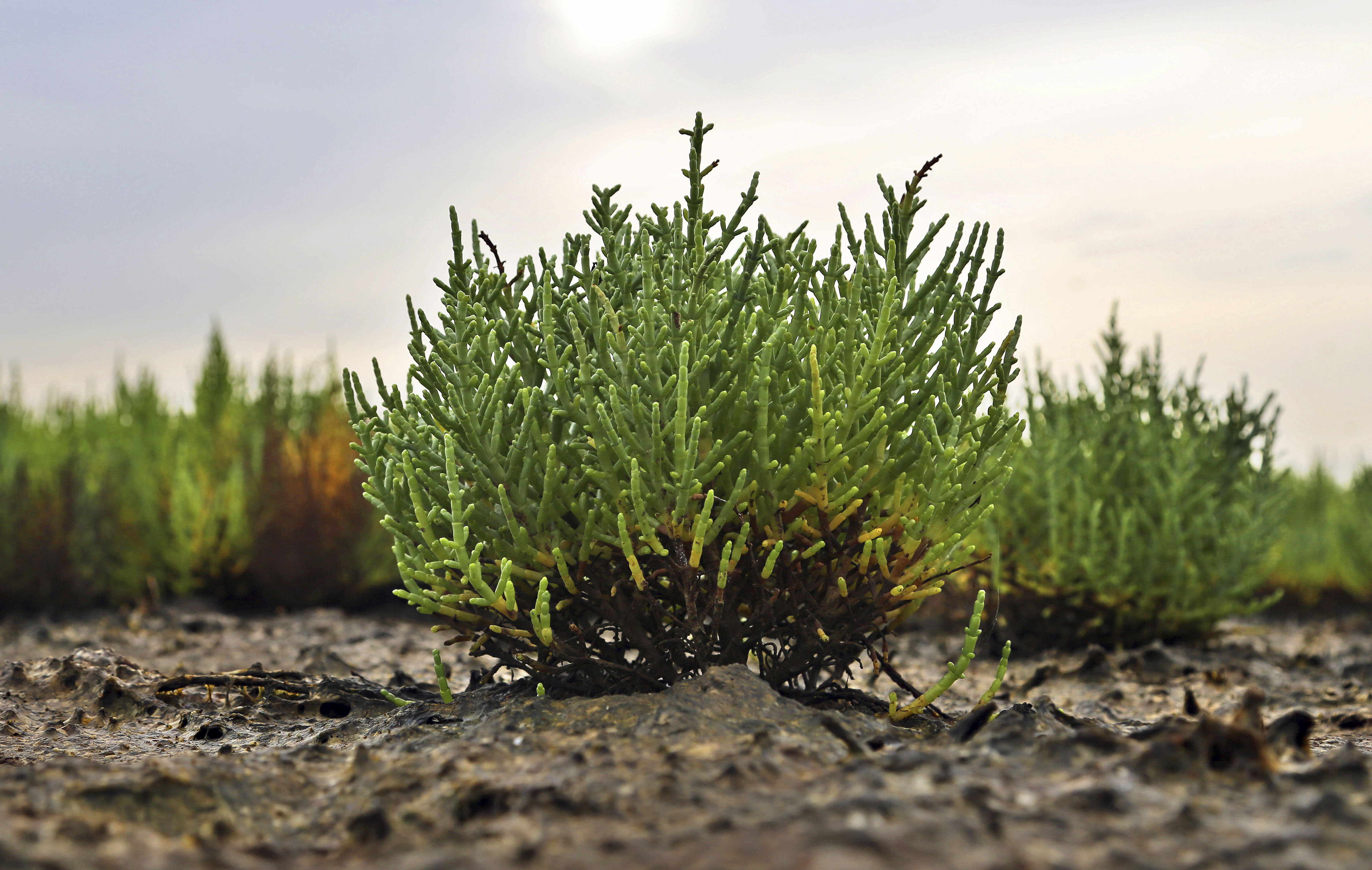
SALICORNIA BRACHIATA

VEDARANYAM, Tamil Nadu — On a sun-scorched wasteland near India’s southern tip, an unlikely garden filled with spiky shrubs and spindly greens is growing, seemingly against all odds.

The plants are living on saltwater, coping with drought and possibly offering viable farming alternatives for a future in which rising seas have inundated countless coastal farmlands.

Sea rise, one of the consequences of climate change, now threatens millions of poor subsistence farmers across Asia. As ocean water swamps low-lying plots, experts say many could be forced to flee inland.

“It’s hard to imagine how farmers will live,” said Tapas Paul, who as a World Bank official helped channel about $100,000 to help build the small garden a decade ago in a swampy, seaside town dominated by salt flats in southern Tamil Nadu state. “In the places subject to inundation and sea level rise, there are few options.”

A team of Indian scientists is searching for solutions to what they describe as a fast-approaching agricultural crisis. Their neatly plotted rows of naturally salt-tolerant plants, known as halophytes, could be a part of the answer. The scientists from the M.S. Swaminathan Research Foundation are also trying other approaches: tweaking genes and cross-breeding plants by conventional means to discover which might grow and even flourish.

“Sea level rise is inevitable, and we are not prepared,” said Swaminathan, who pioneered high-yield wheat and rice varieties for India in the 1960s. “The biggest problem in India is just the very large population. We can say people can relocate, but where could we even accommodate all those who need to move inland?”

Saltwater for a farmer long meant certain crop failure. Wartime foes sowed enemy fields with salt to ensure social collapse. Natural disasters such as the 2004 Asian tsunami left countless plots unproductive for years.

Asia’s coastal farmers, including millions impoverished in India, now face such problems. Climate change will bring stronger storms and warmer temperatures that expand ocean waters and melt ice caps and glaciers. As a result, seas are set to rise up to 1 meter (3.2 feet) in this century, according to the latest scientific forecasts.

Chellammal, a graceful, 65-year-old farming housewife in the Tamil Nadu village of Tetakudi, knows the nightmare of farming on salt-contaminated land too well.

“I struggled so long to get things to grow, but nothing worked,” said Chellammal, who goes by one name. “Every year just got worse until there was nothing left,” she said, crouched in a bright pink sari by her fields.

The land her family had saved for decades to buy went completely barren about five years ago, after a neighboring village took up shrimp farming when flooding from a nearby ocean canal salted their lands. The shrimp ponds were never lined properly, so their saltwater seeped into surrounding soils.

The farmland lost by Tetakudi’s 200 households now supports little more than a vast expanse of salt-tolerant shrubs called Suaeda maritime along with succulents called Salicornia brachiata, known to locals as “chicken feet.”

To the villagers, the bright green bushes are no better than weeds. Already, 12 families have boarded up their homes and left.

But scientists say suaeda is good for firewood. And salicornia species, which can tolerate nearly twice the salinity of seawater, have enormous potential as a biofuel crop, with seeds containing high concentrations of oil.

The problem, however, lies in realizing profits. For any crop to work on a large scale, inexpensive methods and machinery for harvesting will have to be developed. Then processing plants, production lines and markets would need to be built. As of now, none of that exists.

Chellammal is dubious, but interested.

“If we can make money from what we grow, we’ll try it. Why not?” she said. “Maybe all is not lost.”


salicornia brachiata

In this June 16, 2015 photo, a wild-growing Salicornia brachiata, a halophyte known to locals as ‘€chicken feet’, thrives on fields tainted by saltwater from a neighbouring shrimp farm near Velankanni, India.

The timing for an agricultural crisis due to sea rise couldn’t be worse. India’s poor farmers already struggle with frequent flooding, drought and soils degraded by agrochemical overuse. Those on the coast are also hit by storms, with at least 27 of the 35 deadliest cyclones in history barreling through the Bay of Bengal before slamming into either India or Bangladesh.

India’s freshwater sources are also in peril, with over-tapped groundwater reserves so low the country is expected to have only half the water it needs by 2030. Grain production, meanwhile, has stalled around 260 million tons in recent years, despite global pressure for India to boost yields, eliminate waste and eradicate widespread poverty and malnutrition.

To feed its growing 1.26 billion population, India must increase food production 45 percent by 2050, for which experts say it may need to cultivate more land. Instead, about 1.2 million hectares (3 million acres) of its coastal farmland has been degraded by salt, according to India’s Central Soil Salinity Research Institute.

Inland, India has lost another 5.5 million hectares of arable farmland, out of its nationwide total of 163 million hectares, though India’s soil salinity troubles are exacerbated by industrial salt flats, a growing number of shrimp farms and the depletion of groundwater reserves. The trend will only continue as seawater creeps onto low-lying lands along the 7,500-kilometer (4,700-mile) coast that outlines the country along the Bay of Bengal, Indian Ocean and Arabian Sea.

“Saltwater agriculture is considered a futuristic area. But it really shouldn’t be,” said marine biologist V. Selvam, the M.S. Swaminathan foundation’s mustachioed director of coastal research. “Very soon there won’t be enough land and water to meet our needs.”

And India is not alone. Countries including Egypt, Bangladesh and much of Southeast Asia also face heavy saltwater intrusion and loss of farmland. Already, 62 million hectares, or 20 percent, of the world’s total 300 million hectares of irrigated farmland has been salinized to some extent. Another 50 centimeters (1.6 feet) of sea rise, which is just half of what’s expected by 2100, would swamp up to 1.9 million more hectares, the Intergovernmental Panel on Climate Change has said.

That will undermine the world’s ability to find the additional 120 million hectares of farmland it needs for a staggering 70 percent increase in food production to feed the world by 2050, according to the U.N. Food and Agricultural Organization.

Experts say there will be little choice but to grow some non-food crops along the coasts.

The world’s irrigated acreage could be increased by about 50 percent by reusing saline water and salinized crop fields for halophytes, said University of Arizona environmental sciences professor Edward Glenn.

“As with aquaculture replacing wild fisheries, it is inevitable that halophytes will have their day,” he said.

Sesuvium portulacastrum. Paspalum vaginatum. Prosopis juliflora.

These are just a few of the 350 known species of salt-tolerant plants that are candidates to become crops for the future. Saltwater plants are unlikely to become staple foods, because while often high in nutrients they’re also very salty and so should be eaten in moderation.

Species such as Salicornia europaea, also known as glasswort or samphire, are already sold in European markets as a fancy salad addition or side dish. The bright purple-and-white blossoms of Limonium are a florist’s delight, while another species called Atriplex or saltbush is eaten by sheep.

Supporters note a host of potential uses to make harvests profitable, including firewood, decorative flowers, kitty litter, nutritional supplements, cooking oil and biofuel. Cattle fodder is another possibility, and Indian herders already graze their cattle on thorny shrubbery by the sea.

Despite the potential, saltwater agriculture is still seen as a fringe topic, even after decades of research by universities worldwide along with studies and pilot projects in countries including Mexico, Pakistan, Jordan and Eritrea. The aviation company Boeing is also researching biofuels from saltwater plants.

India’s scientists aren’t waiting for markets to develop. Nor are they relying on just the halophyte garden to offer up new options.

They’re scouring coasts for wild grain species that might naturally tolerate some salinity, and using arduous breeding methods to create new salt-tolerant strains.


The foundation has also developed genetically modified rice using genes from mangrove trees. It says the resulting plant can tolerate salt concentrations of 12-15 grams per liter. Seawater is typically two to three times saltier, but that’s still a major improvement from currently cultivated rice varieties, which can handle only up to 3 grams per liter.

Genetic modification is considered the most difficult approach, because salt tolerance is a trait that involves numerous genes. But the molecular biologist leading the development of GM halophytic rice believes it’s essential.

“Conventional breeding just takes too long, and this problem is urgent,” said Ajay Parida, the foundation’s executive director. His work stalled in 2007 under an effective moratorium on field testing GMOs, but the Indian government is considering shifting its GM testing policy and Parida now expects his trials to start soon.

“We could eventually be cultivating wastelands and places considered entirely unsuitable,” he said. “But it’s only after crisis hits that people realize the magnitude of the problem and start pushing for an answer.”

Source….  |  Katy Daigle….www.huffingtonpost.com

Natarajn