Phenomenal domestic growth fuels India’s aircraft demand…

India’s exponential rise in both passenger and freight traffic means the country will need 1,750 new aircraft over the next 20 years, according to estimates from Airbus.

With air traffic growth driven by a fast expanding economy, rising wealth and urbanisation, and government-backed regional connectivity programmes, India will require 1,320 new single-aisle aircraft and 430 widebody aircraft over the next two decades.

That’s according to European aircraft manufacturer Airbus in its latest India Market Forecast. It said the total value of the aircraft would be $255bn.

The report predicted that by 2036, Indians will each make four times as many flights as today. As a result, traffic serving the Indian market is forecast to grow 8.1 percent per year over the next 20 years, almost twice as fast as the world average of 4.4 percent.

Domestic Indian traffic is expected to grow five-and-half times over by 2036, reaching the same level as US domestic traffic today.

According to figures from OAG Schedules, domestic air capacity in India rose from 74.2 million available seats in 2008 to 143.2 million in 2017. In the last calendar year alone, domestic capacity increased by 13.8 percent after adding more than 17 million available seats.

The domestic growth comes as India’s government pushes its regional connectivity scheme (RCS), also known as UDAN, which aims to make air travel affordable and widespread.

The programme seeks to develop new and enhance the existing regional airports, as well as connecting more than 100 underserved and unserved airports in smaller towns.

Source…..David Casey in https://www.routesonline.com

Natarajan

The little girl from Mahabalipuram who is taking Indian skateboarding scene by storm…

Eight-year-old Kamali Moorthy, a child prodigy, is the only girl skateboarder and surfer in her hamlet in Tamil Nadu.
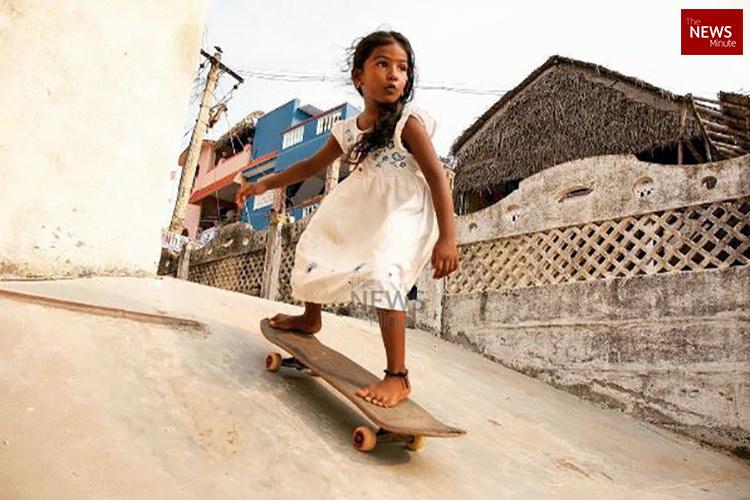
 

It was 3pm on a Friday. The air was hot and salty, and Fisherman Colony, a seaside village near Mahabalipuram in Tamil Nadu, was baking in the afternoon sun. Seemingly oblivious to the heat, a few children are skateboarding on a quirky new skating ramp set up in the street. Among them was an arresting sight – a small girl effortlessly navigating the concrete slopes of the ramp, setting herself apart from the rest.

With her short hair tied up and two front teeth still taking shape, 8-year-old Kamali Moorthy grins as she drops into the ramp from the granite coping and rolls down the slopes, as if she was born to do so. And this is indeed the common belief among many people, from tourists to the fisher folk, who adore Kamali, the only girl skateboarder and surfer in the hamlet.

“Was she born with a skateboard?” asks Steffano Beccari, an Italian sculptor as he watches Kamali on the ramp.

“Right? she makes it look so easy,” responds Aine Edwards, Kamali’s mentor and an Irish entrepreneur residing in Mahabalipuram.

For the skateboarding community in India, Kamali is a child prodigy. She is not a professional skateboarder yet, but she is already a part of the circuit and goes on tours with other skateboarders. How did this young girl from a fishing hamlet in coastal TN become the next big thing in Indian skateboarding?

Destined to meet

“Kamali was only 3 years old when she started skating on a slope built by Holystoked collective, which builds skating ramps free of cost across India,” Aine says, “Mahabs has always been a surfer’s town, and skateboarding is concrete surfing, so it goes hand-in-hand here.”

Velu, a well-known surfer and Kamali’s uncle’s friend taught her and her little brother, Harish, how to balance themselves on a skate board, she says. “He even gifted them two boards. Ever since those baby steps, Kamali has been on a roll, quite literally, teaching herself new tricks every day and skating to her heart’s content.”

However, it was when world-renowned skater Jamie Thomas visited Mahabs as part of a brand promotion event few years ago, that Kamali got her first big break.

“I was down the end of the street and one of my friends mentioned that there was a pro skate-boarder in town. Just then, Kamali came out in a white dress with a skate board in her hand and Jamie Thomas was by the beach. I went and asked him if I can introduce him to a little girl. The rest is history,” says Aine, adding that they were destined to meet.

For Aine, it was just surreal to watch Jamie and Kamali skateboard together.

“What was merely a chance encounter lasted 3 to 4 hours. Jamie changed all his plans and taught her new tricks,” Aine says, “And just like that, he took Kamali’s skills up by a few notches. It was magic.”

“I learned a lot of new tricks from Jamie which I have been practicing. He taught me to drop in from the big one (taller part of the ramp) and to skate through steeper slopes. Then he taught me this cool trick called rock to fakie which I’m not sure how to explain” Kamali chips in with excitement. A talkative child, who is not shy to speak up, Kamali has more than just the sporting talent, she has confidence.

Jamie even sent Kamali a skateboard, on which she has been practicing ever since. Every day, she takes her board and goes to the ramp opposite to her house to hone her skills. However, Kamali’s potential, Aine explains, is not limited to the ramps in her village.

“Last year, we took a bunch of kids, including Kamali, to Mangaluru where Holystoked set up a skate park. She skated non-stop. She dropped in from the top of the ramp which is twice as tall as the ramp she was used to back home. After she got back, she was dejected as she had to go back to the smaller ramp. It was like giving a kid a big candy and taking it back,” laughs Aine.

Skateboarder in the surfers’ family

Aine and Kamali were introduced to each other through a surfer friend who stayed in a homestay atop Kamali’s house. Kamali’s chirpy presence instantly drew everyone to her, and Aine too was charmed the moment they met.

“She was quite a character even then. A lot of fun to hang out with. We soon started going to the ocean to surf and she gradually picked up the art of riding the waves,” Aine recollects.

Unlike the other girls in the town, Kamali was born into a family of surfers and hence it came naturally to her, Aine explains.

“Surfing is in her blood. Kamali only started skating regularly during her school summer holidays, as there was no one to take her surfing. Now she can catch green waves and go sideways on her own, which is quite impressive,” says Aine.

“She has two skateboards and there’s a skating park conveniently located opposite to our house. She has been skateboarding almost every day since she was three. I sometimes think she uses her board more than her feet,” Kamali’s mother Suganthi says.


With the surf season beginning in March, Aine says that Kamali is excited to hit the waves again.

Skateboarding into the future

Living with her single mum, Suganthi, and grandparents, Kamali and her four-year-old brother Harish are the first-generation English medium school goers. So, they have to strike a balance between their formal education and sport. But with growing popularity, a lot of the residents around Mahabs want to send their kids to skate. And many of them even ask if Kamali can teach their children, explains Aine.

“The teachers in her school are very encouraging. Some of them wanted to get Kamali to teach skating to her classmates as part of the school’s extra-curricular activity,” says Aine.

“All said, this is still a conventional fishing village and the girls are brought up pretty traditionally. Many in this village don’t understand this culture of skating and surfing. For them it is something that has infiltrated from the West and they wonder what all the fuss is about?” says Aine.

Despite these challenges, Kamali, Harish and several other skater kids aim to shatter stereotypes and become mainstream skateboarders.

Aine and other surfing enthusiasts in Mahabs want to promote the sport in and around the village by setting up more and better ramps in the future. However, when asked about promoting skating through competitions, she remains sceptical, “She is too young to compete professionally. But besides this, skating much like surfing, is a soul sport. Although there are quite a few surfing contests, you do it not as a competition but for the love of the sport.”

Source ::::: Sreedevi Jayarajan in http://www.thenewsminute.com

natarajan


Hyderabad Girl Scripts History, Wins India’s First Gymnastics Medal in World Cup…!

The Gymnastics World Cup 2018 in Melbourne will go down in history as India got its first ever bronze medal in the women’s vault event.

The feat was achieved by Aruna Reddy, who finished after Slovenia’s Tjasa Kysslef and Australia’s Emily Whitehead, with a score of 13.649. A total of 16 countries were part of the World Cup series event this year.

The 22-year old dedicated her stupendous win to her late father, B Narayana Reddy, who had been instrumental for his daughter’s entry into the field.                     

Aruna with her Bronze medal. Source: Facebook.

Realising that Aruna had the agility and build for a gymnast, Narayana had her enrolled at the Lal Bahadur Shastri stadium in Hyderabad at the age of five.

“I owe everything to him, and if he had been alive and seen me on the podium today, he would have been so happy. He was there in my days of struggle, but couldn’t watch me win,” said an emotional Aruna to The Indian Express.

The Hyderabadi lass, who is a former black belt and Karate trainer, had initially trained under the guidance of coaches Swarnalatha and Ravinder. Later, Swarnalatha’s husband Giriraj took over as Aruna’s mentor after realising her immense potential and was her instructor until his untimely death in 2008.

Then, coach Brij Kishore took Aruna under his wing, and it is under his guidance that the budding gymnast blossomed and went on to clinch many medals at three National Games she had participated in, with the first one being in 2005.

In 2014, Aruna had aroused some hope for Indian gymnasts when she secured the 14th position at the qualification round of Vault apparatus at the Commonwealth Games along with a ninth place finish at the Asian Games.

Aruna came back to the fore when she had finished sixth in Vault during the 2017 Asian Championships.

The young athlete is determined to give her finest performance in the upcoming international events.

“The sad thing about this sport is that once you cross the age of 23-24, it becomes difficult to perform because the body doesn’t remain as flexible. A gymnast’s career is short. That’s why I want to make the most out of things before I turn 23,” she told Deccan Chronicle.

Aruna is also part of the Indian gymnastics contingent for the 2018 Commonwealth Games which will be held in Gold Coast, Australia.

We congratulate the young woman on her extraordinary win and wish her luck in all her future endeavours.

Source….www.the betterindia.com

natarajan


Unlike the Super-Rich defauters ,this Ex-PM”s familyHonoured their loan liability ….

These are not good times for the Punjab National Bank, which is embroiled in an 11,400 crore-scam allegedly perpetrated by diamond mogul Nirav Modi and his maternal uncle, Mehul Choksi.

For the average citizen, this is yet another instance of a wealthy man swindling public money through dubious loans issued by these banks, and leaving the country without paying back his dues.

Unlike Nirav Modi and Vijay Mallya, the PNB, which is India’s second largest public-sector bank, also had famous personalities and their families as customers who have honoured their loans.

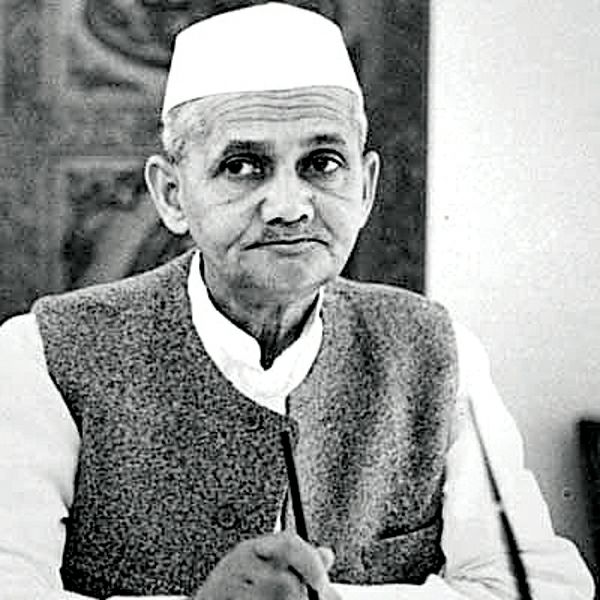
Former Prime Minister Lal Bahadur Shastri had taken a car loan of Rs 5,000 from PNB. After his sudden demise on January 11, 1966, the former prime minister’s widow Lalitha paid back the loan from the pension she received, reported Times of India.

“We went to St Columba’s School on a tonga. Once in a while, we used the office car, but my father did not allow us to use it regularly for any kind of private work. There was a demand at home that we should buy a car,” said Anil Shastri, his son and senior Congress politician, to the publication.

In response to his family’s demands, Shastri approached a senior official from the PMO and discovered that a new Fiat would cost Rs 12,000. Since the family had only Rs 7,000 in the bank, the prime minister decided to apply for a Rs 5,000 loan which the bank sanctioned that very day.

When the prime minister passed away in Tashkent, where he had gone to sign the declaration of peace between India and Pakistan after the 1965 war, the loan remained unpaid. “It was repaid by my mother from the pension she received after my father’s death,” said Anil Shastri.                                                                                                                         


This 1964-model Fiat with the plate number DLE 6 is today exhibited at the Lal Bahadur Shastri Memorial in the national capital.

Source….www.thebetterindia.com

Natarajan


At 103, This Karnataka Man is one of the oldest Drivers on the Country”s streets Today …

Willy’s, Morris Minor, Fiat, Austin, Ferguson, Mercedes Benz, Chevrolet, Volkswagen – these are just among the few brands 103-year-old CSR Michael D’Souza has driven.

A veteran of World War II, Michael has been driving for the last 85 years.

But giving up his car keys is simply not an option for him. “I enjoy driving and never got tired of it. I will continue to drive till the lord sends me his vehicle,” he smiles.

A native of Ooty, Michael was born to Charlson and Mary D’Souza on October 16th, 1914. Michael’s first tryst with a vehicle was at the age of 18, when he and his 13 siblings drove around Ooty in his father’s truck.

“The licence issued then was a page-long and it was applicable for all vehicles. Unlike today, there was no such thing as a licence based on vehicle category,” he says.

In 1932, he was enlisted in the British Army for 10 years and during his service he travelled to different parts of the country.

“However, due to the loss of my original military documents during transit in Visakhapatnam, my post-service benefits were denied to me. Though I appealed to my superiors for several years, I gave up realising it was a lost cause,” he says.

Meanwhile, Michael married Eliza, and the couple moved to the erstwhile Madras Presidency. Though they had no children, it was a happy marriage, he says, and they regarded the children of his elder brother as their own.

A few years later, Michael joined the Public Works Department (PWD) in Mysore and later he was transferred to Mangalore. At PWD, Michael had the chance to drive the general purpose vehicle, affectionately called ‘Jeep’ (GP). He also was given the opportunity to drive a truck, tractors and even road rollers.

“It was quite an experience, since the department barely had qualified man-power to operate such heavy-duty machines. I was asked to drive everything and I took the opportunity to make the most of it,” he laughs.

In fact, several roads in Mysore, Udupi and Mangalore were first asphalted and sealed when he drove the road roller over them.

In 1982, he retired from service, but the couple stayed on in Mangalore.

Michael got his first license in 1959, and he has renewed it constantly since then.

“On my last visit, the RTO inspector said in jest that should I make it for my next renewal in 2019, then he will award me the permit driving for a lifetime,” Michael smiles.

Considering he has driven so many vehicles, which one does he prefer?

“The GP,” he says, without missing a beat. “It does not skid and in unstable territory you can also shift to a lower gear and drive.”

He has only driven a two-wheeler once. “I got so dizzy, I stopped immediately. I am only cut out to driver vehicles with four wheels or more,” he says.

Except for a brief period in 1993 when he had a cataract surgery, Michael has never stopped driving. At the ripe age of 103, his medical records show that he is incredibly fit for his age and shows no signs of age-related ailments.

His secret, he says, is his diet, which comprises rice, curd, chapathi and bread. Although, up until a couple of years ago, he used to consume meat frequently, lately he has reduced his intake of non-vegetarian food.

“As our age progresses, I believe we should not strain our stomachs. Therefore, nowadays I eat meat only rarely,” he says.

He is also incredibly active – no matter the number of floors, he always takes the stairs.

After Eliza passed away in 2013 – at the age of 83 – Michael’s routine changed. He now wakes up at 4 am every morning to tend to his garden and feed his cat, dog and birds. “Earlier, I used to even have a goat, a chicken and a duck. My wife was very irritated with the tortoise I had, so I had to give him up,” he says.

Always dressed in a formal shirt, pants and a golfer’s hat, Michael still works – he now drives for a local banker and his family. The one concession he does make for his age is that he now avoids going on long drives and driving late in the night.

What does Michael think of drivers today? “Terrible!” he shakes his head. “People just don’t follow lane discipline any more. It’s horrible the way autorickshaws and two-wheelers switch lanes these days. One of the main reasons I don’t drive in the evening is how people thoughtlessly switch on their high beams even on well-lit roads. It can easily lead to an untoward incident.”

In his 85 years behind the wheel, Michael says he has been fined only once for not wearing a seatbelt. “Three months ago, when I was fined, I went to the station to pay the fine. The inspector took the receipt, laughed when he saw my age and the fact I was being fined for the first time, and said he will pay the fine on my behalf and let me go,” smiles Michael.

Ironically, Michael does not own a car, although the centenarian does not regret it. “As long as I am allowed to drive a car, I don’t have any qualms about it,” he says.

Content provided by Story Infinity (Subs and Scribes Media Ventures LLP).

Source….Harsha Raj Gatty in https://www.thenewsminute.com/

Natarajan


He is 100 and She is 99…Meet the Kerala Couple celebrating 82 years of Marriage …

The Kottayam-based couple studied in the same school and later went on to marry.


Ask Madhavan Nair and Meenakshi Amma for how long they have been married, and 99-year-old Meenakshi Amma creases her forehead, as if lost in deep thought. Sitting beside her, 100-year-old Madhavan Nair does not need much prodding to remember the year they got married – Malayalam calendar year 1111.

Meenakshi Amma nods in agreement.  “See, he still remembers it so clearly!” she says, breaking into laughter.

(Malayalam calendar year 1111 is the year 1936. According to Malayalam calendar, 2018 is the year 1193.)

The duo celebrated 82 years of their marriage in December 2017 and the milestone also coincided with Madhavan Nair’s 100th birthday.

In their house near Pallikkathode in Kerala’s Kottayam district, Madhavan Nair – who used to be an active member of the Congress party – and his wife Meenakshi Amma, continue to live their “happily ever after” to this day.

When TNM visited the couple, Madhavan Nair and Meenakshi Amma shared their eight decades-long love story. Although the duo first met in school at the age of 8, little did they know that the coming years would bring them together. After a few years of studying in the same class, both Madhavan Nair and Meenakshi Amma moved to different schools.

Together in youth and old age

Having known each other since a very young age, Madhavan Nair and Meenakshi Amma have retold their wedding story many a time to their children, explaining how theirs had been an arranged marriage and not a love marriage. The couple have five children together, all of whom stay in Kottayam.

“It is true that we knew each other from school. We had seen each other, but hadn’t spoken much. What do school kids have to talk to each other at that age? Years later, our families decided to get us married. So that’s how it happened,” Madhavan Nair says.

Asked about the wedding, Madhavan Nair’s recollection is matter-of-fact: “It was a simple ceremony, no pomp and show like today’s weddings. The wedding took place at her (Meenakshi Amma) house. I tied the thaali around her neck, gave her the pudava (saree) and there was a meal afterwards. That’s how simple the wedding was.”

After a moment’s pause, Madhavan Nair continues: “During our times, nobody got married in temples like now, and young people never eloped! The weddings used to happen at the brides’ house.”

When asked whether they feel the weight of 82 long years, the two of them smile. This writer was charmed to see Madhavan Nair’s toothless grin while Meenakshi Amma guffawed loudly, displaying her perfectly aligned teeth.

The years where Madhavan Nair was involved in party and social work had not been easy on his family, he admits. The odd working hours and the long absence from home did not exactly bode well for a harmonious family life. But Meenakshi Amma is in no mood to send her husband on a guilt trip.

“People would come to get him. He would go with them and share whatever knowledge he had. It never bothered me, since I knew he was going on work and not for anything else. He would return home after work for sure,” Meenakshi Amma says.

However, Madhavan Nair has for long withdrawn from his years of active social life, and now spends most of his time at home. While minor health issues do trouble Meenakshi Amma, Madhavan Nair likes to dismiss age-related woes.

Despite having to rely on a walking stick, the 100-year-old is young at heart.

“I walk around the house and the yard at times. With this walking stick, I can walk as far as I can. But I am not so young any more, I have no teeth left and I don’t think I look good with this toothless grin!” Madhavan Nair says.

Visuals by Lenin CV

Source….Megha Varier in https://www.thenewsminute.com

Natarajan

Will Chennai be able to save a 300 year old Plaque connecting it to its Armenian Past …?

The plaque is the last living relic of the Marmalong, the first ever bridge built over the Adyar river in 1726 by Armenian trader Coja Petrus Uscan.


If you take a walk across the busy roads of Saidapet in Chennai, chances are that you would cross what is perhaps one of the oldest living relics that connects the city to its Armenian past.

To the uninitiated, it may look like an unremarkable slab of stone on a pale green crumbling wall. However, this ordinary looking slab of stone is in fact a 300-year-old plaque that belonged on the pillars of one of oldest bridges in the city.

Marmalong Bridge, the first ever bridge across the Adyar river, was commissioned in 1726 by Coja Petrus Uscan, an immensely wealthy Armenian trader. Uscan, who had decided to settle in Madras after coming to the city in 1724, paid 30,000 pagodas from his own money to build the bridge and another 1,500 pagodas for its upkeep.

“Uscan was immensely respected and perhaps was even one of the only non-British allowed to stay in Fort St George or the White town. A devout believer in St Thomas, Uscan wanted more people to visit the Saint Thomas Mount, and therefore removed the two impediments – the river and the lack of steps – by building the bridge as well as 160 steps to the mount. This was the initial purpose of the bridge. But all that soon changed as the Marmalong Bridge became crucial to the expansion of the city, especially towards the South,” says Chennai-based novelist and historian Venkatesh Ramakrishnan.

Mount Road came after the bridge


 Mount Road, around which the city developed, came 60 years after the Marmalong bridge.

Named after Mambalam, one of the villages near the Adyar, the Marmalong Bridge perhaps laid the foundation stone for the city as it led to the emergence of the Mount Road, around which Chennai developed.

“It was only natural that a road followed after a bridge was built. The British built the Mount Road in the 1800s, around which the city grew. So, in a sense, the bridge led to the city’s birth and is very close to its heart,” Venkatesh adds.

However, the Marmalong only lives in our memories today. Where the arched bridge of Uscan once stood, a concrete replacement called the Maraimalai Adigal Bridge now exists. There are no traces of this Adyar-Armenian connect but for the last living relic – the plaque commemorating Uscan’s construction of the bridge.

With inscriptions in three ancient languages – Persian, Armenian and Latin, the Uscan plaque was established in memory of the great nation of Armenia and is a tribute to the people who helped build the city.

“The Armenian inscriptions are on the lower portion of the plaque. It can’t be read because the writing has faded with time and neglect,” according to Venkatesh.

Crusade to preserve the plaque


The neglected plaque stands near the Saidapet Metro construction site. 

Displaced from its original site, the plaque faces the perils of urbanisation and is further threatened by the metro rail work that is underway.

Years of neglect and development in the area has buried the stone in layers of debris. In fact, the bottom of the stone has disappeared under the ground as the road levels have been rising every year due to re-carpeting, Venkatesh laments.

With the construction of the Saidapet Metro station underway, historians who are fighting to save the plague urge the CMRL to give the stone a place of honor in the metro station.

Highlighting the importance of preserving such relics, Venkatesh says, “The Armenians have contributed immensely to this city. I believe it is important to preserve all traces to this link. It is really unfortunate that while the Uscan stone stands neglected, another plaque at the Fourbeck Bridge is preserved by the Architectural Society of India,” he said.

A dedicated group of Chennai historians have launched a Facebook page “Retrieve Uscan Stone” to draw attention to the issue and save the plaque.

“The Saidapet Metro work is too close to the plaque. We have been urging the officials to move the relic to a better place, may be a museum or a memorial site. We just don’t want to lose a precious piece of the city’s history,” Venkatesh says hopefully.

Source….https://www.thenewsminute.com

Natarajan


Meet Muruganantham, the real Pad Man…

His low-cost machines that make sanitary pads have earned him international recognition. A Muruganantham’s story is now being told on the big screen as Pad Man

A Muruganantham’s life is a haze of interviews to newspapers, TV channels and radio stations. His phone doesn’t stop ringing and his wife sees him only during meal times. To the world, he is a social entrepreneur; ‘Pad man’, ‘Menstrual man’; ‘The man who wore a sanitary napkin’: the low-cost sanitary napkin machine that he created is changing the lives of thousands of women across the world.

But at his home in Coimbatore, he’s a busy father whose bonding time with his daughter is during his work tours —he takes her along since he’s rarely home; an elusive husband with whom his wife seeks an appointment —she says this jokingly to us, but there’s truth in it.


Just the same

There’s a Bollywood movie about him that’s releasing this week and he has gained international recognition. But the man is matter-of-fact about his celebrity status. “My work remains the same,” he says, seated in the living room of his rented house. “Tomorrow, I will walk into a remote village with my machine and no one will recognise me,” he says. “Nothing has changed or will change.” But the cause that he upholds —to take sanitary pads to every nook and corner of India —is gradually gaining momentum. In another 30 years, Muruganantham is sure that he will ensure 100% penetration.

It’s like breaking a massive mountain with a sledgehammer singlehandedly—the stigma surrounding the subject is as such. Which is what makes his story interesting. Muruganantham recalls how his obsession to research on sanitary napkins earned him nothing but ridicule from those around him. “My fellow villagers thought I was a vampire,” he laughs. “I came close to being tied up to a tree.” Muruganantham wanted to create low-cost sanitary towels.

His work took bizarre turns —he strapped onto himself a machine fashioned using a football bladder that pumped out blood into a sanitary pad that he wore. He was that mad scientist the world just didn’t understand. In 2006, when his innovation won an award from the then President Pratibha Patil, his life changed forever.

“My machines now run in 4,800 points in India and in 29 other countries,” he says. His story has appeared in several foreign language publications—Hebrew being one of them. It’s only natural that it be made into a feature film.

Now a feature film

Pad Man, directed by R Balki, featuring Akshay Kumar, Radhika Apte, and Sonam Kapoor, presents Muruganantham’s journey from a school drop-out to a social entrepreneur. “It does have ‘masala’ elements, being a Bollywood film,” says Muruganantham. He worked with the crew for over three years, helping them set up his machines on the sets and demonstrating his work.

The story is set in Madhya Pradesh and not Tamil Nadu. Muruganantham feels that only then will the cause have a pan-India reach. “I did have Tamil filmmakers approach me,” he says. “But I didn’t want the film to be confined to one part of the country.” Elusive that he is, it took a while for actor and writer Twinkle Khanna, who has produced the film, to pin him down for a conversation. “She contacted me in 2015,” says Muruganantham. Khanna featured Muruganantham in her 2016 book The Legend of Lakshmi Prasad.

Pad Man is the first feature film that talks about women’s monthly period,” he says. With barely any knowledge of Hindi, Muruganantham managed to effectively convey his thoughts to the team. “It helped that director Balki and the cinematographer PC Sreeram knew Tamil,” he says.

Despite his wide network of employees and volunteers, Muguganantham personally travels with his machines to train women to make sanitary napkins in regions affected by extremism. He rolls off names of villages that many may not have heard of — Dhamtari, Lakshmipuramu, Gajroli, Tehri… Many girls in such villagers don’t attend school due to lack of awareness and access to sanitary pads. Murugnanantham is changing that. This is the best thing about his innovation—that a village girl who shut herself at home simply because she menstruated, can finally go to school.

In all these years of working on menstrual hygiene, what Muruganatham finds most difficult to deal with, is the superstition surrounding it. “Women in rural India have the strangest beliefs surrounding the monthly period,” he says. He is trying to break these by educating them. In a tribal village in the Nilgiris, women believed that if they used a sanitary towel, their eyes will be taken away. Muruganantham says, “A girl used it for two months and told her friends ‘Look, my eyes are still intact’.”

Source…Akila Kannadasan in http://www.the hindu.com

Natarajan


Kolkata’s Howrah Bridge Turns 75! Did You Know It Survived a Japanese Air Attack?

In 1946, a census was conducted to count the daily traffic footfall on the state-of-the-art Howrah Bridge. The figures registered were 27,400 vehicles, 121,100 pedestrians and 2,997 cattle.

Contrast the above information with a 2007 report, which showed a daily flow of 90,000 vehicles, out of which 15,000 were goods vehicles.

The iconic bridge in the world is regarded as the “Gateway to Kolkata” since it connects the city to Howrah, and turned 75, this February. Of course, the bullock-carts of yesteryears have been replaced with high-end luxury cars.

Apart from being a pathway for various modes of transport, this iconic suspension-type balanced cantilever bridge has been the backdrop of many intense film scenes. Remember Ajay Devgn getting gunned down while riding a bike down the bridge in Yuva, or the dramatic Durga Puja celebrations under the bridge, as depicted in Gunday?

Many movie scenes used the bridge in the backdrop, starting with Bimal Roy’s 1953 classic Do Bigha Zameen, to Garth Davis’ Academy Award-nominated 2016 film Lion.

The Howrah Bridge made quite the impact before it was fully constructed. One night, during construction, workers were removing muck, trying to fix a cassion. The entire mass plunged 2 feet, and the ground shook. The intense impact caused a seismograph at Kidderpore, to register an earthquake. Interestingly once the muck cleared, many interesting objects of value, like anchors, cannons, cannon-balls, brass vessels, and coins dating back to the era of the East India Company were found.

Commissioned in 1943, the Howrah Bridge had a quiet opening. Even though it was a pioneering construction, a behemoth much ahead of its time, the Government decided to play things down, due to the fear of a Japanese air attack, since World War II was raging during that time.

A gigantic technical marvel, ahead of its time

One unique feature of this enormous bridge is that no nuts and bolts have been used in its construction. The steel fabrication has been riveted into place to hold the entire span of the bridge over the river Hooghly.

26,500 tonnes of steel, mostly supplied by Tata Steel, single monolith caissons of dimensions 55.31 x 24.8 metres, with 21 shafts, each 6.25-metre square, and sixteen 800-tonne capacity hydraulic jacks, amongst other materials, were used in the construction of the bridge.

Walk along the bridge’s massive length, and you will feel dwarfed and insignificant, for a good reason. The structure has a central span of 1,500 feet between centres of main towers and a suspended span of 564 feet. The main towers are 280 feet high above the monoliths and 76 feet apart at the top. The anchor arms are 325 feet each, while the cantilever arms are 468 feet each.

The bridge deck hangs from panel points in the lower chord of the main trusses with 39 pairs of hangers. There are cross girders, stringer girders, and floor beams that complete the intricate construction. Any bridge sways in the wind. The Howrah Bridge has special expansion and articulation joints, to compensate for turbulence.

A mammoth maintenance routine

Naturally, a structure this huge, serving as a roadway to so much transport, needs to be kept at its optimum condition. You’d think that the bridge would need a natural disaster to shake its foundations, but regular daily life puts a strain on the structure.

The maintenance of this gargantuan bridge is no easy task. Just ask the Kolkata Port Trust, which, post a 2003 investigation, spent Rs 5,00,000 annually, just to clean the bird droppings that were corroding joints and other parts of the bridge. In 2004, it cost Rs 6.5 million, to paint the 24 million square feet of the bridge, using 26,500 litres of aluminium paint and zinc chromate primers.

A cultural icon that would not be here today

We might not have had the same Howrah Bridge, if it ironically, weren’t for World War II. Before its construction, a global tender was floated, and a German company turned out to be the lowest bidder. Increasing hostilities in 1935 resulted in the German contract being cancelled, with the tender going to India’s Braithwaite Burn and Jessop Construction Company Limited.

The same war, which saw the bridge come to life, also threatened to destroy it. While the war was in full swing, India found herself in the position of a de-facto ally to Britain and the Western Allied Powers. Naturally the Japanese, part of the opposition, bombed Kolkata from 1942 to 1944, trying to destroy the bridge, and operations at the seaport. The British responded swiftly, even turning Kolkata’s Red Road, into a runway for Spitfires to take off.

The quiet hero during this time of crisis was the 978 Balloon Squadron. The British set up balloons, attached to the ground by several steel cables. These balloons prevented bombers from going low and hitting targets. The planes would get stuck in the cables and crash. The Japanese Air Force flew many sorties over Kolkata, bombing the central business district and the docks.

As many as 131 bombs were dropped on the 10th, 16th and 28th of December 1942 and 17th and 23rd of January 1943. The attack on 23rd was the most devastating with over 70 bombs being dropped over the dock area and the casualty on that day was nearly 500.

Let us appreciate this giant superstructure, which has stood tall for aeons.

Unfortunately, today, the most significant threat the iconic Howrah Bridge faces isn’t from Japanese fighter planes or their bombs, but from corrosive spit containing tobacco, pan-masala and other acidic, poisonous ingredients.

A 2011 inspection by Kolkata Port Trust authorities, calculated the damage—a total of Rs 2 million had to be spent, to cover parts of the bridge with fibreglass, to avoid corrosion due to spitting.

Spitting remains the biggest threat to this bridge, and a 2013 report in The Guardian mentions the bridge’s Chief Engineer, AK Mehra, who said that the slaked lime and paraffin in the poisonous spit are highly corrosive. In some areas, the steel pillars have been damaged by as much as 60 percent.

During World War II, when Kolkata was under attack, worried citizens, with a bag full of Vaseline, and bandages, would run to air-raid shelters, after safely hiding their earthen jars which contained their drinking water supply.

Those citizens if alive today, would surely be surprised when they realise the iconic Howrah Bridge which survived the Japanese bombing might not survive the Indian habit of spitting.

Source…www.the betterindia.com

Natarajan