At the age of 7 , He is the youngest to scale the Mountain Kilimanjaro …

He just wanted to see some snow. But he got much more than that.
Samanyu, all of 7, scaled Africa’s loftiest peak and proved that no dream is impossible.
And that age is just a number.
Rediff.com‘s Divya Nair speaks to the mini mountaineer.


IMAGE: Samanyu Pothuraju at Uhuru peak, Mount Kilimanjaro in Tanzania.
All photographs: Kind courtesy Samanyu Pothuraju/Boots and Crampons

On April 2, 2018, when Samanyu Pothuraju, 7, from Hyderabad, was woken up at 3 am by his expedition leader Bharat Taminneni, he didn’t want to wake up.

He begged, “It’s too cold outside. I don’t want to go. Please let me sleep.”

It was the very last leg of their ascent to the summit of Mount Kilimanjaro so Bharat would not give in.

Recalls Lavanya Krishna, Samanyu’s mother, “Finally, Bharat told him that if he reached the summit, his favourite (Telugu film) hero Pawan Kalyan would (surely want to) meet him.”

Mention of Pawan Kalyan did the magic.

Samanyu woke up with a start.

Eight odd hours later that day, at 11.52 am, to be precise, little Samanyu made it to the top of Uhuru, the highest point of Mount Kilimanjaro, Tanzania. And clinched a world record.

At 7, Samanyu is the youngest person in history to scale this peak, 5,895 metres above sea level.

But the Class 3 student, who “loves karate, computers and math,” did not have the faintest idea about the significance of his journey.

“I was wearing a thick jacket and gloves. My legs were paining, but I was happy,” Samanyu tells Rediff.com from Hyderabad.

Last year he was one of the youngest to reach the Mount Everest base camp in Nepal.

What inspired him to go to Africa?

Mount Everest actually.

Says Lavanya, who accompanied Samanyu till Kilimanjaro’s second base camp and not beyond, “When we reached the base camp of Mount Everest, some months ago, he (Samanyu) was disappointed that he couldn’t see much snow.”

“When I told him about Kilimanjaro, he asked me if there would be snow and if he could touch it. I said yes. He said he wanted to go and see the snow.”

For Lavanya, a bank employee who quit her job to take care of her children (Samanyu’s elder sister is 13), sending her seven year old to the top of Kilimanjaro wasn’t an emotional decision.

It was about letting Samanyu have his dream.

She consulted Raji Thammineni of Boots and Crampons, a Hyderabad-based adventure logistics company, to find out how safe the journey was.

“Raji is a friend and she advised I first send Samanyu to a training camp to see if he was fit to go.”

Samanyu passed the camp last year with with flying colours.

“He could climb 50 steps up and down with ease, trek to mountains and even made it to the Everest base camp in October 2017,” says Lavanya.

In November, Samanyu signed up with Boots and Crampons to prepare to scale Kilimanjaro, Africa’s highest mountain.

In addition to his training, Lavanya helped her son get mountain ready by showing him a video of the terrain daily.

“He saw how people climbed it in different situations — rain, sun, snow, etc.”

Samanyu was keen to see snow. But he also wanted to see East Africa’s famous blue monkeys.”

“He saw three blue monkeys,” Lavanya says.

Lavanya and Samanyu flew to Tanzania on March 27.

“It was supposed to be summer. When we reached it was raining and snowing. My head was paining on reaching the second base camp, so I was asked to rest,” says Lavanya.

The next climb, from the second base camp to the last camp, took approximately 10 hours.

The final stretch from the last camp to the summit was equally long. But Samanyu finished it like a pro, says Lavanya.

‘It required meticulous planning to achieve this mission. We took all the care and precautions to keep the child safe and help him realise (the importance) of his mission to the summit of one of the most challenging mountains in the world,’ Bharat and Raji posted on Facebook about Samanyu’s achievement.

‘Master Samanyu fought bravely with different terrains — rainforest, moorland-rocky landscape, Alpine desert and crater rim — before summiting this wonder of the world. We are extremely proud to support Master Samanyu’s achievement which brought laurels to our country,’ the post added.

The sacrifices

To prepare for Africa, Samanyu had to wake up early and religiously maintain a schedule so he could balance school, extracurricular activities and mountaineering.

“He’d wake up at 5 am and go for his karate classes followed by cycling. After school, he’d train for mountaineering,” says Lavanya.

Samanyu had to follow a strict diet. Not too much sugar. No ice cream.

“I had to eat canned food,” Samanyu tells Rediff.com. “It was tasty though.”

“After we climbed down, they gave me ice cream. I was very happy.”

What’s next

His next challenge?

“I want to do the 10 peaks challenge in Australia.”

Turns out none of this has affected his academic performance: Samanyu, who studies at the Bolton School in Hyderabad, scored over 95 per cent in his last examination.           

IMAGE: Samanyu holds up a printout with Telangana Chief Minister K Chandrashekhar Rao’s image at Uhuru peak, Kilimanjaro.

Lavanya and Krishna spent Rs 15 lakhs funding their son’s expedition, but they feel helping Samanyu attain his dreams was their most important mission.

Here’s their message to parents: “Never stop your child from dreaming big. You can guide her /him on what is right and wrong. But support their dreams as much as you can.”

Samanyu is now waiting to meet Pawan Kalyan, as promised. His parents have tweeted the Telugu superstar about their son’s wish to meet him.

Hey, Pawan, if you are reading this feature, please do give lil’ Samanyu a call.

http://www.rediff.com

Natarajan


The Secret of Boxing icon…Mary Kom”s Success….

‘If I am super fit till 2020, I will compete but if I am not fit I will not.’                               

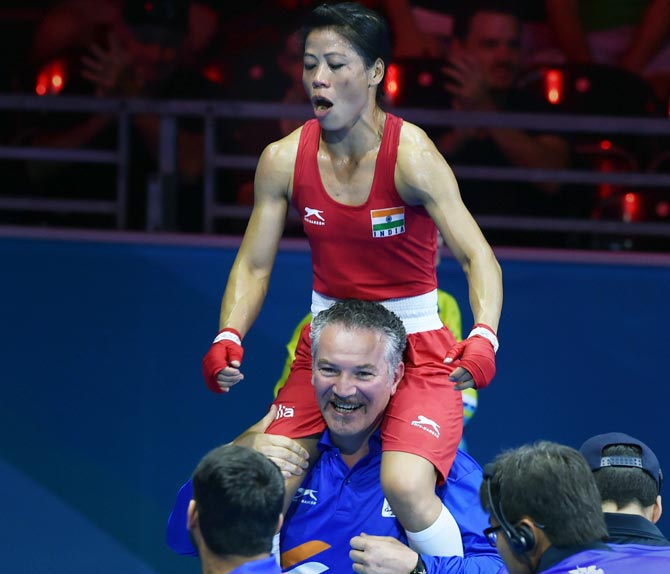
IMAGE: MC Mary Kom celebrates with her coaching staff after winning the Commonwealth Games gold medal. Photograph: PTI

Almost every medal that is there to be taken is in her kitty but M C Mary Kom says she still trains like a maniac, the latest result of the regimen being a gold on debut at the Commonwealth Games in Gold Coast on Saturday.

The 35-year-old mother-of-three, who has five world titles and an Olympic bronze medal, is seen as a sporting icon not just in India but also in other countries.

Crowned Asian champion just months ago, Mary Kom added the light flyweight (48kg) Commonwealth crown to her tally.

“The secret to my success is my fitness and I am very quick. I plan well before bouts. I am lucky that I can catch my opponents within seconds, I am able to read them very quickly,” a giggling Mary Kom said at the end of her CWG campaign.

“I don’t have injuries, all I have is minor issues like cramps sometime,” she added.

And the secret to her fitness levels and to an extent her calm demeanour in the ring is a training regimen that she refuses to let go even one day.

“When I decide something with my head and heart than even my husband cannot stop me. He sometimes tells me to take it easy after competition but I can’t help it,” she said.

“I have to train to keep myself calm. It’s a a strong urge, it’s a habit and training makes me happy. When I don’t train I feel sick sometimes,” she added.

But despite the high fitness levels, she wouldn’t commit on whether the outlandish possibility of a 2020 Olympic appearance is on her mind.

“2020 is difficult to say, but I will try my best. 48kg is not there and I will have to put on weight to be in 51kg which is never easy. If I am super fit till 2020, I will compete but if I am not fit I will not,” said the accomplished boxer.

Elated at being India’s first woman boxer to claim a Commonwealth Games gold, Mary Kom said scripting history makes her happy.

“I have won everything and all of my medals are very important. Do I need to say more? Which other boxer can claim that, now I would not be scared of anyone. I am very happy that I created history. I have got everything,” she said.

“I still think about Olympics gold but other than that I have got everything. Even in Olympics, I do have a medal. I haven’t left out anything,” she signed off.

Source……..www.rediff.com

natarajan


At 15, Anish Bhanwala is India’s youngest C’wealth Games gold medallist….

Haryana lad wins men’s 25 metres rapid fire pistol at Commonwealth Games with a new Games record                                                         

Shooting – Gold Coast 2018 Commonwealth Games – Men’s 25m Rapid Fire Pistol – Finals – Belmont Shooting Centre – Brisbane, Australia – April 13, 2018. Anish of India poses with his gold medal. REUTERS/Eddie Safarik – UP1EE4D0DRM4H 


Anish Bhanwala made history on Friday, becoming India’s youngest gold medallist at the Commonwealth Games.

The 15-year-old achieved the feat after firing his way to the gold medal with a Games record in the men’s 25 metres rapid fire pistol event at the Belmont Shooting Centre.

The Haryana lad shot down Australia’s David Chapman’s 2014 Glasgow Games record of 24 in the final with a score of 30, which included four series of five each.

The youngest in the six-man final round, he showed nerves of steel and led the more experienced marksmen through the event to emerge deserving champion.

Australia’s Sergei Evglevski claimed the silver with a score of 28, while the bronze medal went to Sam Gowin (17) of England.

Neeraj Kumar, India’s other entrant in the event, was the second shooter to be eliminated in the final after a shoot-off after scoring 13.

In winning the gold, Anish bettered the record of team mate Manu Bhaker, who had become the youngest Indian Commonwealth Games gold medallist earlier this week when she won gold in the 10 metre air rifle final.

Speaking about his feat, he said, “I’m very excited that I became the Commonwealth champion. I am the youngest athlete from India to win Commonwealth gold at 15.”

On his next competition and plans to celebrate, he added: “Next are the World Championships (in South Korea) and Asian Games (Indonesia). I will celebrate with my coach.”

In the Qualifications, Anish scored 580 to finish on top while Neeraj was second best with 579.

Anish scored 286 in stage 1 and 294 in Stage 2 qualifying, while Neeraj had 291 in Stage 1 and 288 in Stage 2.

Tags: Anish BhanwalaNeeraj KumarDavid ChapmanManu BhakerSam Gowin

Source….www.rediff.com

natarajan


Meet the Ex-IAS Officer Who Left America to Head the Swachh Bharat Mission…


The Swachh Bharat Abhiyan (Clean India Mission) promised to bring open defecation in India down to zero, and the government had also guaranteed that it would build enough toilets in every village and city to completely eradicate the problem of open defecation.

Many of us will agree that open defecation leads to the proliferation of diseases, and it is thus, advisable, to make India completely open-defecation free.

However, one man working for the Swachh Bharat Mission knows that the subject of open-defecation is not as black and white as it seems. For many, it is a part of their lifestyle, that they cannot change overnight. The problem of maintaining toilets that were built by the authorities also keeps people outside the washroom walls.

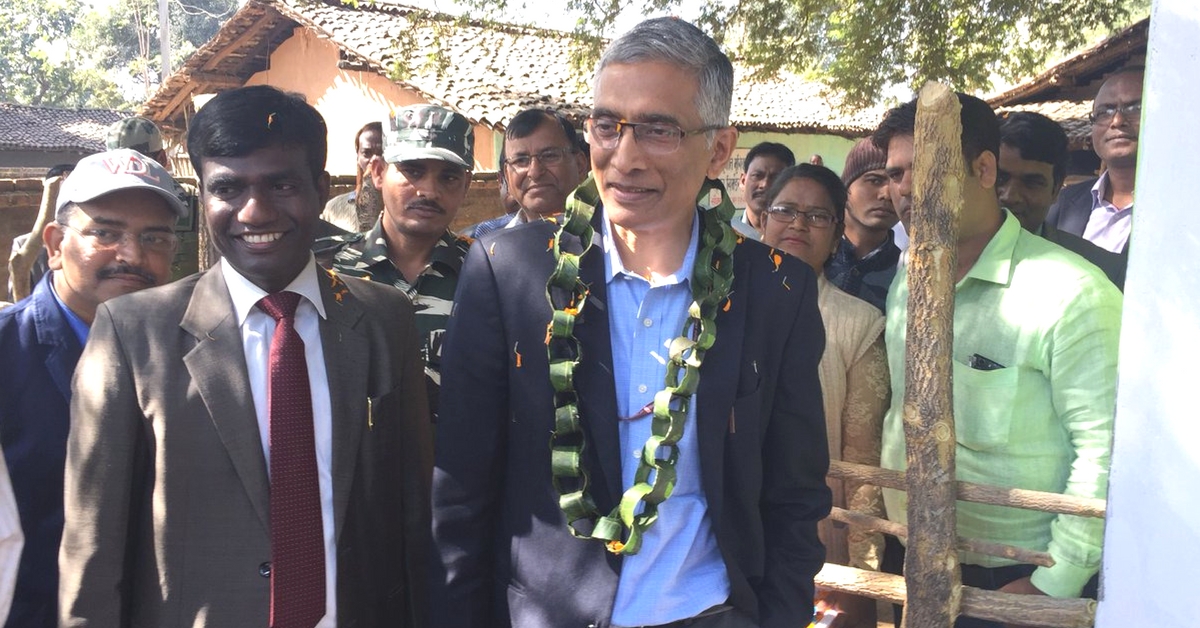
Meet Parameswaran Iyer, a former IAS (Indian Administrative Service) officer who currently leads the Swachh Bharat Mission  


Mr Iyer had worked with World Bank from April 1998 to September 2007 in Hanoi, Vietnam. From 2012 onwards he was the lead water and sanitation specialist for the World Bank and was instrumental in bringing two leading programmes on the ground there.

Before taking up a specialisation in Vietnam, Mr Iyer had also worked in Washington on Egypt and Lebanon and in the Bank’s Water Anchor.

When he realised that he had to accept that many people prefer to defecate in the open rather than in toilets, Mr Iyer brought his experience in Vietnam to practical use. In 2014, he had written about the need for behaviour change before a lifestyle change, on the World Bank’s site.

“The biggest lesson learned so far in Vietnam, and other countries is that eliminating open defecation is not driven by the construction of toilets.

It is driven by changing the behaviour at the community level based on quality, evidence-based interventions. What is also clear is that approaches must be tailored to be the specific context with careful consideration of local factors such as ethnicity,” he wrote.

Mr Iyer’s experience with the World Bank, across several countries, will certainly help India, to go a step further in the cleanliness mission.

This is a rare case of the Indian government appointing an IAS officer working with the World Bank for their initiative, and Mr Iyer has certainly upped the hopes of Indian citizens. He was appointed as Union Secretary for the Ministry of Drinking Water and Sanitation in 2017 on a two-year contract basis.

A senior government official told Livemint, “It is clear from the two-year fixed contract, that the government has decided to give him a free hand to steer the programme. It also gives a clear signal that if the government does not get the desired results from the internal talent pool, it will not hesitate in getting them from outside.”

With a combined experience of about two decades in this sector, Parameswaran is sure to be a beaming light of hope for the dream of a clean India!

Featured image source: Twitter.

Source….Tanvi Patel  in http://www.the betterindia.com

Natarajan


Anna Creek… A Cattle Station in Australia…Bigger than Israel !!!

In Australia, cattle stations—which is the equivalent of an American ranch—tend to be unimaginably large, so large that some of them are bigger than some European and African countries.

Take Anna Creek Station, a well known cattle station in South Australia, near Simpson Desert between Coober Pedy and Lake Eyre. This station covers nearly 24,000 square kilometers. By comparison, Israel is barely 21,000 square kilometers, and the biggest ranch in America is just over 3,300 square kilometers. In fact, there might be close to a hundred cattle stations in Australia that are bigger than the biggest American ranch.


Australia’s cattle stations are huge in size because of the continent’s climate. Most stations are located in the north and the central regions of the Australian Outback, where the climate is so dry and the vegetation so sparse that a large amount of country is needed to support enough cattle to make a living. Even a cattle station as large as Anna Creek Station normally runs about 17,000 animals during a good season.

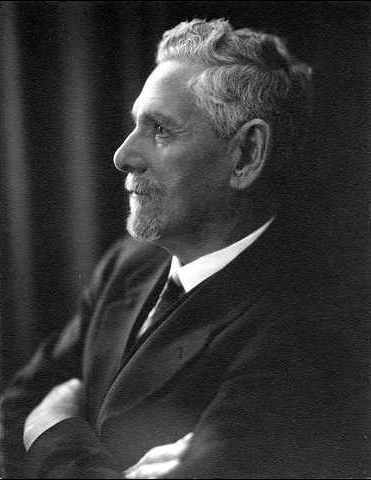
The Anna Creek Station was bought by Sir Sidney Kidman, Australia’s so-called “cattle king”, who owned large areas of land across Australia during his lifetime. Kidman was thirteen when he ran away from his Adelaide home in 1870 with only 5 shillings in pocket and a one-eyed horse that he had bought with his savings. His teen years, Kidman worked as a drover, stockman and livestock trader, and made money supplying services to new mining towns springing up in outback. Eventually he had saved enough to buy his own station.


Sir Sidney Kidman

Kidman began gobbling up one estate after another until he was the biggest landholder in the world by World War I. At one point, the size of Kidman’s properties exceeded the size of the entire United Kingdom. His family still owns more than 10 million hectares, or about three-quarters the size of England. With a herd of 185,000 cattle, S. Kidman & Co is one of Australia’s largest beef producers.

There are at least nineteen cattle stations in Australia whose size exceeds 10,000 hectares. Four of them exceeds 15,000 hectares. These cattle stations are so large and the grazing area so spread out that it takes weeks to round up all cattle during the mustering season. Back in the old days, cowboys used to ride out in horses gathering up cattle. Today light aircraft is used for spotting animals which are rounded up by stockmen on trail bikes.

Because of the remoteness and size of Australian cattle stations, life is very isolated. The next human settlement is often a day’s drive away. So these stations function like small towns with schoolroom for the kids of the owners and workers, a small general store to supply essentials and possibly an entertainment or bar area. Electricity is typically provided by generators or solar cells. Internet and television is provided by satellite.

Anna Creek Station is currently owned by Williams Cattle Company, after it acquired the property from S. Kidman & Co in 2016.

Bonus fact: The name “Kidman” and “Australia” may remind you of actress Nicole Kidman. The connection is more than a coincidence—Nicole Kidman is actually a descendant of Sir Sidney Kidman.

Photo credit: Planettrekker/Flickr

Source ::::: Kaushik in http://www.amusingplanet.com

Natarajan


\


Give Your Idlis a Healthy twist ….

Give your idlis a healthy twist.

Dietitian Jasleen Kaur shares her recipes. You can share yours too! Scroll down to find out how. 


Photograph: Kind courtesy Upendra Kanda/Creative Commons

Hot and sour idli

Ingredients:

  • 1 cup rice
  • 1 cup arhar dal/ toovar dal
  • Red chillies
  • 1 onion, chopped
  • A pinch of hing
  • 1 tsp grated jaggery

Method:

  • Soak the rice and dal separately in three cups of water for four hours.
  • Grind red chillies and tamarind to fine paste. Grind dal and rice separately.
  • Add grated jaggery and red chillies, turmeric powder and salt. Mix well. Set aside for four to five hours to ferment.
  • Lightly grease idli moulds and put the batter. Once steamed, serve the idlis with chutney.

Idli Upma

Ingredients:

  • 5-6 idlis
  • 1 tbsp oil
  • 1/2 tsp mustard seeds
  • 1/2 tsp urad dal
  • 1/2 tsp cumin seeds
  • 5-6 curry leaves
  • 1/2 ginger, finely chopped
  • 1 dry red chilli
  • 1 green chilli, chopped
  • 1/4 cup onions, chopped

Method:

  • Crumble 5 to 6 idlis and keep aside.
  • Heat oil in a pan and add mustard seeds.
  • When they start crackling, add urad dal and cumin seeds.
  • Saute till the urad dal turns golden. Add 5 to 6 curry leaves (chopped or kept whole), ginger, red chili and green chili.
  • Stir and then add the chopped onion. Mix well and saute for a minute or two.

SOURCE:::::: http://www.rediff.com

Natarajan

How Sivalingam battled pain to snatch another C’wealth gold….

‘I had no hopes of winning a medal after I injured my thighs during the National Championships while attempting 194 kg in clean and jerk. ‘

‘Even now I am competing at less than ideal fitness, but I am glad that was enough to get me a gold.’                                                                                                                                       

Defending champion Sathish Sivalingam (77 kg) claimed India’s third gold medal at the Commonwealth Games on Saturday, emerging triumphant despite having given up podium hopes after his injured thighs made even routine things like sitting painful.

The 25-year-old Indian lifted a total 317 kg (144+173) and was so ahead in the competition that he forfeited his final clean and jerk lift.

“I had no hopes of winning a medal after I injured my thighs during the National Championships while attempting 194 kg in clean and jerk. It’s a quadriceps problem; even now I am competing at less than ideal fitness, but I am glad that was enough to get me a gold,” said Sathish, after the medal presentation ceremony during which he was accorded a warm applause from the packed arena.

“I was in so much pain that even sitting was very painful for me. Everyone took care of me, gave me hope but I was not very confident. I had not trained that hard and my body was not at its best, and so how could I hope for a medal,” added the Tamil Nadu lifter.

GOLD COAST, AUSTRALIA – APRIL 07: Gold medalist Sathish Kumar Sivalingam of India poses during the medal ceremony for the Men’s 77kg Weightlifting Final on day three of the Gold Coast 2018 Commonwealth Games at Carrara Sports and Leisure Centre on April 7, 2018 on the Gold Coast, Australia. (Photo by Mark Metcalfe/Getty Images)


It was a fascinating contest of one-upmanship between Sathish and eventual silver-medallist Jack Oliver of England in the snatch competition.

The two kept upping the weights before their attempts but Oliver kept his nose ahead at the end of snatch as he lifted 145 kg in his second attempt. It was a kilogram more than Satish’s final attempt.

However, Satish had the last laugh in clean and jerk after Oliver failed two attempts of 171kg and settled for a total of 312 kg (145+167).

The bronze medal went to Australian showman Francois Etoundi, who lifted 305 kg (136+169) and collapsed clutching his injured shoulder after his final lift.

“I got lucky there, had he (Oliver) not dropped those weights, I would have had to go higher and I am not sure how my body would have taken that. I am quite relieved actually.”

At the 2014 Commonwealth Games, Sathish won the gold medal with 149 kg snatch and 179 kg clean and jerk lifts, totalling 328 kg. His lift of 149 kg in snatch continues to be the Games record.

“I didn’t want to touch that level because I still need to undergo rehabilitation. The fact that the access to our physio was limited made it all the more difficult. I just hope that we get a physio with us at the Asian Games,” said Sathish, once again highlighting the problems the weightlifters are facing due to the lack of accessibility of their physios in the competition area.

Sathish is also the reigning Commonwealth Championships gold-medallist.

“I hope to do even better in the Asian Games because there is a gap now. Earlier, the Asian Games used to come within 20-25 days of the Commonwealth Games, which didn’t give us enough time to prepare. But this time I have got time to prepare and be fully fit now,” he said.

Tags: Jack OliverKumar SivalingamSathish SivalingamFrancois EtoundiIMAGE

Source:   www.rediff.com

Natarajan

Meet Gururaja…CWG 2018 Medallist…

‘His victory is our victory,” said his family as they watched him bag the silver medal in weightlifting, in Australia.


At 7.30 am on Thursday morning all eyes in the Poojary household in Vanse, a tiny village near Kundapur in Karnataka, were glued to the television.

One of their own, Gururaja Poojary, was taking part in the men’s 56-kg weightlifting competition in the 2018 Commonwealth Games in Australia. After failing to lift the weight of 138 kg in his first two attempts, it appeared as if Gururaja’s medal prospects were slipping away

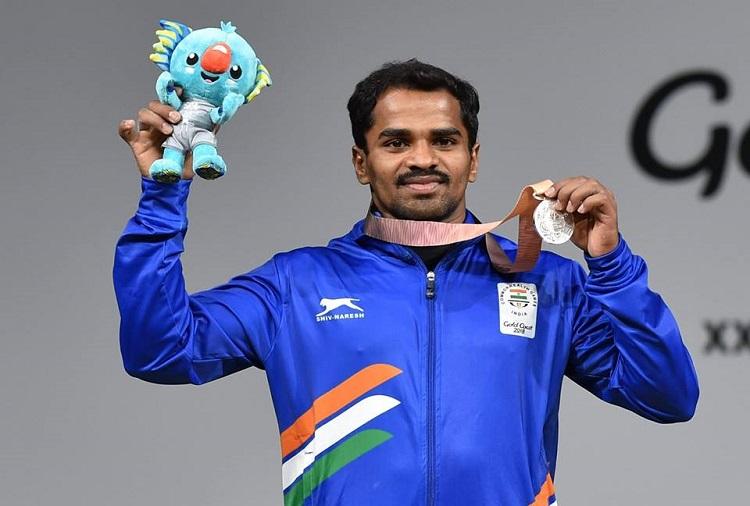
The 25-year old weightlifter, however, was the very picture of strength in his final attempt to take his final tally to 249 kg and clinch the silver medal.

This medal in the Gold Coast is not only Gururaja’s first taste of success on the international stage right on his debut, but is also the product of a journey where he overcame poverty and personal setbacks to reach where he is.

But for his family members, it came as no surprise.

He comes from a sporting family – all five of his brothers dabbled in Kabaddi and were athletes. “But it was Gururaj who was always going to achieve his dream,” says Manohar Poojary, Gururaja’s elder brother.

Gururaja’s father, Mahabala Poojary, is a goods-truck driver, who struggled to make ends meet to take care of his six sons. “Poverty is something we have lived in all our life. If we were a little bit well-off financially or received the necessary support and encouragement, maybe all of my sons could have made our country proud,” says Mahabala, speaking after his son’s success in Australia.

But due to poverty and unforeseen circumstances at home, Gururaja’s older brothers – Mohan, Manohar, Udaya and Rajendra – had to drop out of school and, with that, from sports. Only Gururaja and his youngest brother, Rajesh, completed their studies amongst the six sons.

His mother, Padhu Poojarthi, is a homemaker.

But his family was not willing to let Gururaja tread the same path. “Our father worked extra hard to ensure that Gururaja strove to achieve his dream. Seeing my father’s and brother’s struggles, even we chipped-in, taking on extra work to help in whatever way we could. Today, his victory is as much our victory,” says Manohar.

While studying at Sri Dharmastala Manjunatheshwara (SDM) College in Ujire, in Dakshina Kannada, Gururaja was looking for a wrestling coach rather than a weightlifting one. This was around the time Sushil Kumar had won his first Olympic medal in wrestling in 2008. While his search for a wrestling coach proved to be fruitless, he met powerlifters at the local gym and was soon representing his college in powerlifting.

It was here he met his coach Rajendra Prasad, who gave him his first lessons in weightlifting.”I still remember, in 2011, Gururaja was a young boy who had just joined a graduation course. He was a Kabaddi player and a wrestler, and did not have any idea about powerlifting. We selected him for the club and, seeing his talent, guided him in powerlifting,” says Rajendra Prasad, who works as a coach at the SDM Sports Club.

He added that Gururaja was proficient at the University level and even broke a record set by him in 1999 by lifting 193 kg (total in snatch and knee jerk) in 2012. He improved to 243 kg in 2015, a record which still stands to this day.

It was only in 2013 that he became a national-level athlete and in 2014, after a gold medal at the national-level, he started becoming a serious contender for a Commonwealth Games berth.

With his superlative rise in the sport, Gururaja also enrolled in the Indian Air Force three years ago, after which the Air Force took care of all the training expenses. “Until then, it was the family, college-mates and generous philanthropists who gave wings to his dream, hoping he would bring glory to the region,” says Manohar.

By the time the financial strain on his family was eased, 25-year-old Gururaja was ready to take on the world stage.

With the win in Australia, he has now vaulted straight into the national limelight and Pramod Madhwaraj, Karnataka Minister for Youth, Fisheries and Sport, who also hails from Udupi, said that Gururaja is likely to get a government job as a group-B officer and also a cash prize for his achievements.

When TNM caught up with Gururaja, he was, understandably, elated. “I am very happy that I have represented India in the Commonwealth Games and won the first silver medal for India (this year). This is my first Commonwealth Games and I want to thank my parents, family, my weightlifting coach Rajendra Prasad, SDM institution and everyone from my village who supported me,” he says.

His family members, who were nervously watching from home, was over the moon. Although his mother says she doesn’t quite understand the world of sport, she adds she is overwhelmed by the media visits.

But Gururaja’s family was quick to add that the journey is still not over. “We want him to make our country proud. Our biggest dream is that he participates and wins in the Olympics,” says Mahabala.

There is still some way to go before Gururaja can qualify for the Olympics. His final tally of 249 kgs will have to improve closer to 300 kgs. But throughout his journey, he has broken barriers and after his latest success in Australia, Gururaja will no doubt be willing to go the mile to chase his Olympic dream.

Source…….Harsha Raja Gatty and Prajwal Bhat in https://www.thenewsminute.com

Natarajan

The jingle Trucks of Pakistan …

A typical Pakistani truck driver spends more time with his truck than he does with his wife. Which explains why he wants his 10-ton six-wheeler to look like a new bride.

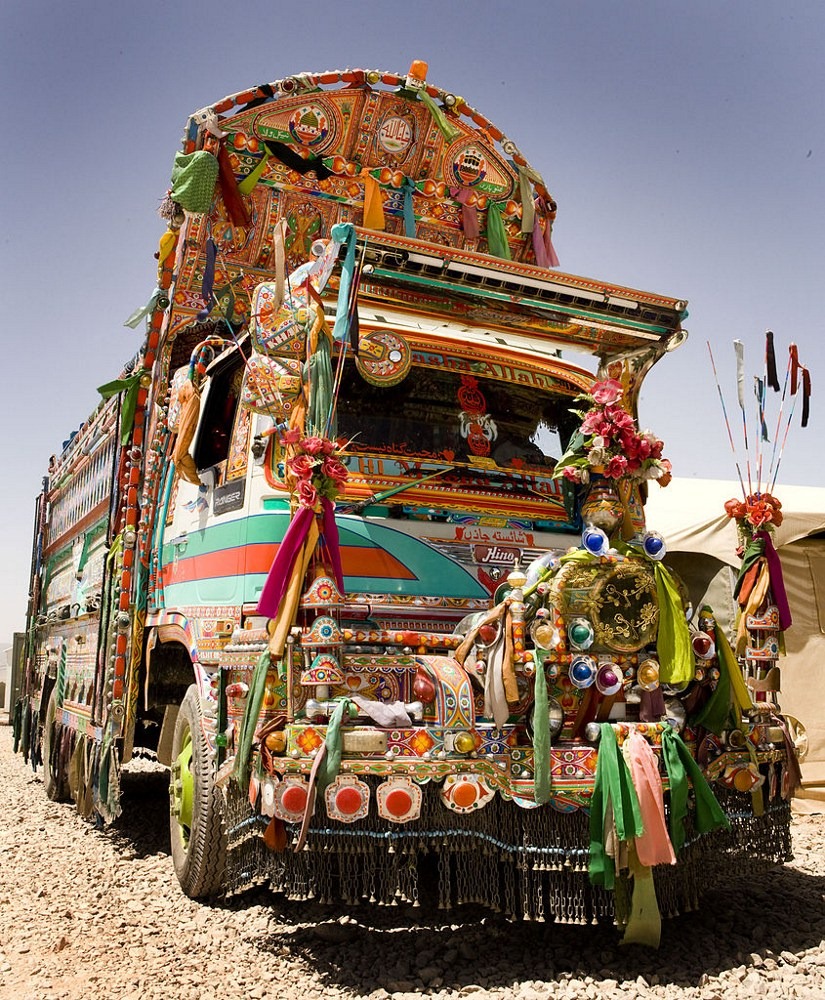
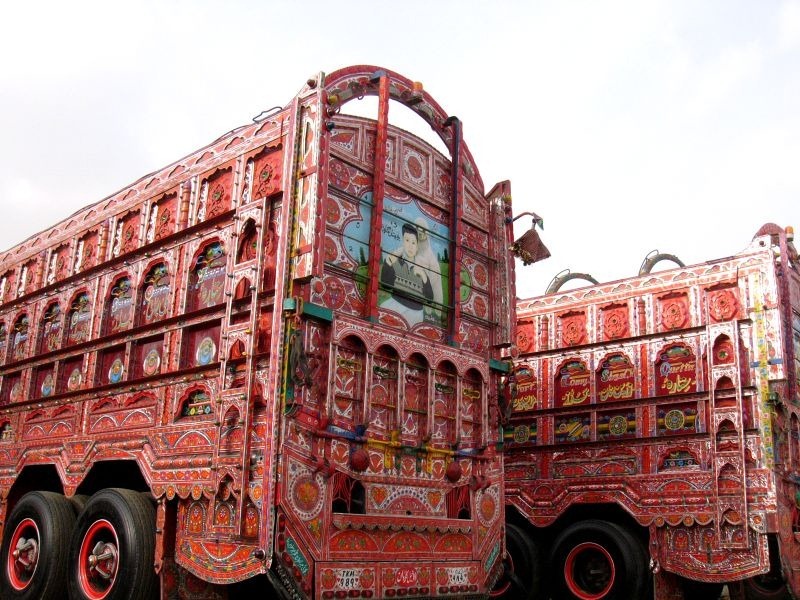
These trucks plying across Pakistan’s national highways and the neighboring country of Afghanistan are distinctively ostentatious. The entire trucks, from top to bottom, are a riot of colors. Lavishly painted panels containing a mosaic of birds, flowers, landscapes, saints, and actresses in hyper-saturated color palette adorn the exterior, while plastic flowers, draped beads, mirrors, ribbons and velvet grace the interior. The cabin is crowned by a custom built wooden prow wrapped in more kitschy artwork, while a string of metal bells dangle from the chassis all round the periphery. When the truck is in motion, these bells clang against each other like a new bride’s ghungroo. This is where the nickname “jingle trucks” come from—coined by US troops deployed in Afghanistan.


Photo credit: ISAF Public Affairs/Flickr

And it isn’t just trucks alone. Passenger buses, water tankers, transport vans, rickshaws, and even vendors’ pushcarts are psychedelically decorated with eye-popping colors. It’s like a rolling folk art, “a national gallery without walls, a free-form, kaleidoscopic exhibition in perpetual motion,” as Richard Covington puts it.

The tradition of decorating trucks began sometime in the 1920s with the introduction of the long-distance Bedfords—a British-built truck with rounded cab and seven-feet high paneled sides that was to become the country’s most prestigious and dependable truck for more than half a century. Originally trucks were painted with each company’s logo so that illiterate people could recognize who owned the trucks. Gradually, these logos became more fanciful, flamboyant and competitive. By the 1950s, stylized murals and frescoes had begun to replace them. It was only in the 1960s, as the country’s economy boomed, the decorations became increasingly sophisticated to reflect the growing wealth of the drivers and the rise of a new urban class.

Pimping out a truck this way cost truck owners a small fortune. It isn’t unheard of for a driver to spend the equivalent of a year’s worth, or more, of profits on truck decorations. According to a 2005 article, a basic painting and body job costs a minimum of $2500, equivalent to two years of the average truck driver’s salary. Some spend upwards of $10,000 outfitting their rigs. Unbelievably, many truckers will return to the workshop every three or four years for a full vehicle makeover.

“Truckers don’t even spend so much money on their own houses,” marvels Durriya Kazi, head of the department of visual studies at the University of Karachi. “I remember one driver who told me that he put his life and livelihood into the truck. If he didn’t honor it with the proper paint job, he would feel he was being ungrateful.”

A well-decorated truck also gives customers the impression that it is well taken care of and will, therefore, be a dependable way to transport goods.

Truck painting is also a big business. In Karachi city alone, more than 50,000 people are engaged in this unregulated yet lucrative industry. Family-run workshops comprising of apprentices and highly trained artisans, and small shops selling all manners of outlandish ornaments and accessories crowd around truck yards.

Over the years, however, the business has changed. Now instead of meticulously hand painting each truck, mass produced stickers and adornments are used.

“Truck decoration is not stagnating; it is dead,” laments R M Naeem, an assistant professor at the National College of Arts, Lahore. “This is because truck painters treat their work as a source of livelihood. They do not have the time or the luxury to innovate; they repeat the same old patterns, images and icons over and over again.”

However, thanks to artists like Haider Ali, who gave a Ford van a jingle-truck-style makeover a couple of years ago in a parking lot in Pasadena, California, and other painters, it’s unlikely that this quintessentially Pakistani craft is going to die out any time soon


Source……..Kaushik in  http://www.amusingplanet.com

Natarajan


ஒழுக்கத்திற்கு வழிகாட்டும் தாத்தா…


தாத்தா ஒருவரால் தான் குடும்பத்தில் எல்லோரையும் மன்னிக்க, கண்டிக்க ஏன்… தண்டிக்கவும் முடியும். வானளாவிய குடும்ப அதிகாரம் படைத்திருந்த தாத்தா இப்போது எங்கே?

தாத்தா, பாட்டி உறவு தாமரை இலை மேல் தண்ணீர் போல ஒட்டாமல் போனதால் தான் இன்றைய பல குடும்பங்கள் சுக்கு நுாறாய் உடைந்து, சிதறிப் போயிருக்கின்றன. வீட்டில் சாப்பிடாமல், நாக்கில் ருசியின்றி கிடக்கும் குழந்தைகளை, மருமகளிடம் திட்டு வாங்கினாலும் பரவாயில்லை என்று ஓட்டலுக்கு கூட்டிச்சென்று புரோட்டா, ஸ்பெஷல் தோசை, ஐஸ்கிரீம் என வாங்கி கொடுத்து வீட்டிற்கு அழைத்து வந்த நாட்கள் என்ன… காய்ச்சலோ, வயிற்று போக்கோ வண்டி கட்டிக்கொண்டு முதல் ஆளாய் டவுன் ஆஸ்பத்திரிக்கு, பெரிய டாக்டரை பார்க்க அழைத்து போகும் உத்வேகம் என்ன… அந்த தாத்தாக்கள் எங்கே?

கயிற்று கட்டிலில் நிலாவை காட்டிக்கொண்டே காற்றோட்டத்துடன் கதை சொல்லும் பக்குவம் என்ன… அவை எல்லாம் இந்த காலத்து குழந்தைகளுக்கு கிடைக்காத பாசபிணைப்பு காலங்கள்.

தாத்தாவின் அதிகாரம்:
தாத்தா கையில் தான் வீட்டின் சாவிக் கொத்து இருக்கும். கல்யாண நாளில் திடீரென ஒரு பெரும் தொகையை மருமகளிடம் கொடுத்து, பிடித்த நகை வாங்கிக்கொள்ளம்மா என்று குடும்ப சக்கரத்தை பக்குவமாக நகர்த்தி செல்லும் தாத்தாக்கள் இல்லாததால் பல குடும்பங்கள் தடம் புரண்டு கிடக்கின்றன. வீட்டிற்கு யாராவது புதிய ஆள் வந்தாலோ, ஆண் குரல் கேட்டாலோ யாரு என சத்தமாக கர்ஜிக்கும் குரலில் எதிராளி சற்று ஆடிப்போய் விடுவார்.

குழந்தைகளை முதல் நாள் பள்ளியில் கொண்டுபோய் விடுவதிலிருந்து, மருமகளை அடுத்த பிரசவத்துக்கு ஆஸ்பத்திரியில் சேர்க்கும் வரை தாத்தா தானாகவே இழுத்து போட்டுக்கொண்டு செய்யும் வேலைகளை இப்பொழுது செய்ய யாரும் இல்லை. ஆட்டோக்காரர், கால் டாக்சிகாரர்கள் அந்த பணியை செய்ய வேண்டிய நிலை. இதுவேதனையானது மட்டுமல்ல மூத்த உறவுகளை உதறிய பாவத்தின் தண்டனை தான்.

ஒழுக்கத்தின் அடையாளம்:
தாத்தா வீட்டில் இருந்ததால் பெரும்பாலான குடும்பங்களில் ஆண்கள் மது அருந்துவதையும், புகை பிடித்தலையும் தவிர்த்தார்கள். லேட்டாக வீட்டிற்கு வந்தால், கதவை தட்டியவுடன் முதல் ஆளாய் கதவை திறந்து ‘ஏன்டா லேட்’ என மகனையும், பேரனையும் அதிகாரத்துடன் கேட்கும் உரிமை தாத்தாவிற்கு மட்டும் தான் இருந்தது. அந்த உரிமையை பறித்ததால் இன்று வீட்டிற்கு ஒன்றிரண்டு ‘குடிமகன்கள்’முளைத்துவிட்டனர்.

பாடம் சொல்லி கொடுப்பதாகட்டும், வாத்தியாரிடம் சென்று ‘படிக்கலைனா நல்லா அடிங்க’ என்று சொல்லிவிட்டு, பேரன் போன பின்பு ‘அடிச்சு கிடிச்சுப்புடாதீங்க; ஒரு பேச்சுக்கு சொன்னேன்,” என்று மறுநிமிடமே வாத்தியாரிடம் மல்லுகட்டும் அந்த தாத்தாவின் அன்புக்கு ஈடு இணையே இல்லை. குழந்தை பருவத்தில் உண்டியல் தான் தாத்தா கொடுக்கும் முதல் பரிசு. சேமிப்பு பழக்கத்தை முதல் காசு போட்டு தொடங்கி வைக்கும் தாத்தாக்கள் உண்டு. ‘தாத்தா நீ செத்துப்போனா எனக்கு யாரு பொம்மை வாங்கித்தருவா? யாரு காசு கொடுப்பா?’ என விளையாட்டாய் கேட்கும் போதெல்லாம் சிரித்துக் கொண்டே ‘உன் கல்யாணத்தை பார்த்துட்டுதான்டா நான் சாவேன்’ என முத்தமிட்டவாறே சொல்லும் அந்த முதிய குழந்தை தாத்தா இப்போது இருப்பதெல்லாம் முதியோர் இல்லங்களில்.

முதுமையை போற்றுவோம்:
குடும்ப உறுப்பினர்களின் மூக்கணாங்கயிற்றை அதிகாரமாக கையில் வைத்திருந்த பல முதியவர்கள் இன்று முதியோர் இல்லங்களில் கட்டிப்போடப்பட்டிருக்கின்றனர். சமீபத்தில் ஒரு ஆதரவற்றோர் இல்லத்தில் எழுதிப்போட்டிருந்த வாசகம் நெஞ்சை உருக்கியது. ‘இது மனிதர்களை பார்க்க விலங்குகள் வந்து போகும் மனித காட்சி சாலை’. பல ஆயிரம் அர்த்தங்களை உள்ளடக்கிய வாசகம் இது. தங்கள் வீட்டின் முதியவர்களை முதியோர் இல்லங்களில் கொண்டுபோய்விடும் மகன்கள் அங்கு சொல்வதெல்லாம், ‘இங்கேயே ஏதும்ஆனா கூட பரவாயில்லை! நாங்க உங்களை ஏதும் சொல்லமாட்டோம். திரும்ப எங்க வீட்டுக்கு மட்டும் அனுப்பிவிடாதீங்க!’ குடும்ப உறவுகள் அந்நியமாகிப்போனதின் முதல் அபாயமே, வீட்டின் முதியோர் புறக்கணிப்பு தான்.

கேள்விக்குறி உறவுகள்:
தாத்தா பாட்டி உறவுகள் தற்போதைய குழந்தைகளுக்கு கிடைக்கிறதா என்றால் கேள்விக்குறிதான். தாத்தாக்கள் கிராமங்களில் தனியாக ரேடியோவோ, தொலைக்காட்சியோபார்த்து அன்றாட பொழுதை ஓட்டிக்கொண்டிருக்க, நகரத்து குழந்தைகள் பள்ளி, டியூஷன், டான்ஸ் என பிசியாக காலம் கழிக்க, என்றாவது வரும் தாத்தாவும் நகரத்து வீட்டில் தனியாகவே இருக்க, தாத்தா- குழந்தை உறவுப்பாலம் நுாலிழையில் தொங்கிக்கொண்டு இருக்கிறது. டிரங்கால் போட்டு கூடுதல் பணம் செலவு செய்து போனில் தாத்தாவிடம் நலம் விசாரித்த காலம் போய், இப்போது பணம், அலைபேசி, நேரம் இருந்தும் மனம் இல்லாமல் தாத்தாவுடன் போனில் பேசுவதையே தவிர்த்துவிட்டோம்.

தாயின் அன்பை போன்றே தாத்தாவின் அன்பும் ஈடு இணையற்றது. ‘தாத்தா நீ செத்துப்போயிட்டேன்னு சொல்லி இன்னிக்கு நான் லீவு போடப்போறேன்’ என்று பேரன் தாத்தாவை கிண்டல் செய்து ஓடுவதும், ‘இரு உன்னை உங்க வாத்தியார் கிட்ட சொல்லித்தரேன்’ என்று சொல்லி தாத்தா செல்லமாய் துரத்துவதும் இனி கிடைக்காத நாட்கள். எந்த ஒரு செயலையும் பக்குவமாய் அணுகி தீர்வு சொல்வது தாத்தாவின் கைவண்ணம். வயதும், அனுபவமும் தாத்தாவை பக்குவப்படுத்துகிறது. ஆனால், அந்த நிதானமும் பொறுமையும் இல்லாததால், இன்று இளைய தலைமுறை இயந்திர கதியாக இயங்குகிறது.

கோடையில் தாத்தா வீடு:
கோடை விடுமுறையில் தாத்தா வீட்டிற்கு கிராமத்திற்கு செல்வதை குழந்தை பருவத்தில் ரசிப்போம். தாத்தாவும், பாட்டியும் சேர்ந்து தலைக்கு நல்லெண்ணெய் தேய்த்து குளிப்பாட்டிவிடுவார்கள். மாலையில் வடை, இரவு சுடச்சுட தோசை சுட்டு கொடுப்பார்கள். திடீரென எல்லா குழந்தைகளுக்கும் விளக்கெண்ணெய் கொடுத்து பேதியாக்கி, வயிற்றை சுத்தம் செய்வார்கள். பள்ளி திறக்கும் முன்பாக சென்ட்ரப்பர், பென்சில், நான்கு வண்ண ரீபில் பேனா, புது ஜாமின்ட்ரி பாக்ஸ் என தாத்தா குழந்தைகளை கவனிக்கும் விதமே தனி தான். பெரியப்பா, பெரியம்மா, சித்தி, சித்தப்பா, மாமா, அத்தை என சம உறவுகளோடு கிராமத்து வீட்டில் குழந்தைகளாக ஆட்டம் போட்ட நாட்கள், குளத்திலும், கண்மாயிலும் நீச்சல் கற்றுக் கொண்டு நாட்கள், பம்புசெட்டில் குளித்தநாட்கள், கோடை மழையில் நனைந்தவாறே கிராமத்து வீட்டு முற்றத்தில் குதித்த நாட்கள் இன்றும் ரம்யமானவை. அந்த நாட்களின் பாசப்பிணைப்பு தான் இன்றும் நம்மை நமது சொந்தங்களோடு இணைத்து வைத்திருக்கிறது.

குடும்ப உறவுகள் அறுந்து போகாமல், நேசங்களும், பாசங்களும் விரிசல் விடாமல் ஆண்டுதோறும் புதுப்பித்து கொண்டிருந்த ஒரே உறவு தாத்தா தான். டேய் என்ற தாத்தாவின் கம்பீரக்குரலுக்கு அப்பா, பெரியப்பா, சித்தப்பா, மாமா, அண்ணன், தம்பி என அத்தனை பேரும் சர்வநாடியெல்லாம் அடங்கி பதுங்கி இருந்த காலம் மறக்க முடியாதவை. தாத்தாவின் குரலுக்கு ஆதரவாய் புதிதாய் வந்த மருமகள்களும் இணைந்து போய், கூட்டுக்குடும்ப உறவுகளும், வரவுகளும் சங்கமிக்கும் கோடை விடுமுறை இப்போது டியூசன், இசை, நடன பயிற்சி என்று தடம் புரண்டு போய்விட்டது. 40 ஆண்டுகளுக்கு முன் குழந்தைகளுக்கு மே மாதத்தில் கிராமத்துவீட்டில் கிடைத்தது எல்லாமே தாத்தாவின் அன்பு அரவணைப்பு தான்.

இழந்துவிட்ட நமது கலாசார உறவு மேம்பாட்டுக்கு குழந்தைகளை கோடை விடுமுறைக்கு தாத்தா வீட்டிற்கு அழைத்து போவோம். ஒதுக்கப்பட்ட முதிய உறவுகளிடம் அன்பு கேட்டு தஞ்சம் புகுவோம். உங்கள் குழந்தைகளுக்கு தாத்தாக்களை நீங்கள் அடையாளம் காட்டுங்கள். பேரக்குழந்தைகள் தாத்தா உறவை கற்றுக்கொள்ளும் மே மாதம், கோடை விடுமுறையில் தாத்தாவிடம் சங்கமிப்போம். கொடுப்பதற்கு ஒன்றுமில்லை என்றாலும் தன் நடுங்கும் கரங்களால் தங்கள் பேரக்குழந்தைகளை வாஞ்சையுடன் தாத்தாக்கள் தடவி, வருடும் போது இருக்கும் அன்பு எதற்கும் ஈடாகாது. உறவின் ஆழத்தையும், அன்பின் விளிம்பையும் குழந்தைகள் உணரும் தருணம் அது.

-ஜெ.ஜெயவெங்கடேஷ்சித்த மருத்துவர், மதுரை

98421 67567

Source….www.dinamalar.com