The Secret of Boxing icon…Mary Kom”s Success….

‘If I am super fit till 2020, I will compete but if I am not fit I will not.’                               

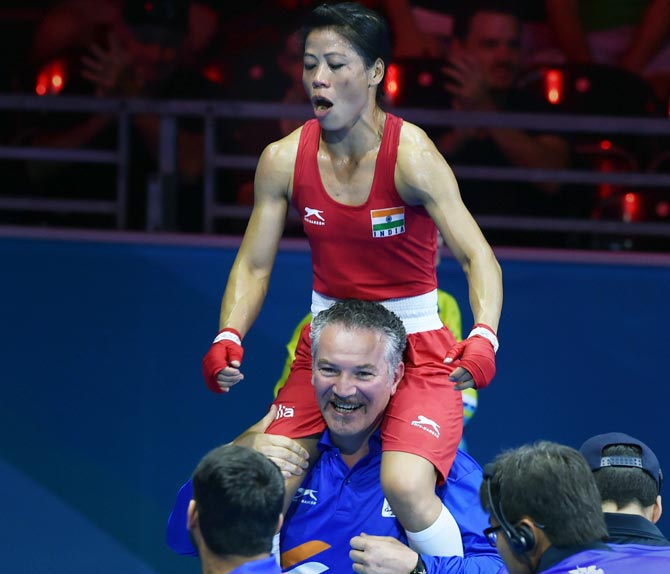
IMAGE: MC Mary Kom celebrates with her coaching staff after winning the Commonwealth Games gold medal. Photograph: PTI

Almost every medal that is there to be taken is in her kitty but M C Mary Kom says she still trains like a maniac, the latest result of the regimen being a gold on debut at the Commonwealth Games in Gold Coast on Saturday.

The 35-year-old mother-of-three, who has five world titles and an Olympic bronze medal, is seen as a sporting icon not just in India but also in other countries.

Crowned Asian champion just months ago, Mary Kom added the light flyweight (48kg) Commonwealth crown to her tally.

“The secret to my success is my fitness and I am very quick. I plan well before bouts. I am lucky that I can catch my opponents within seconds, I am able to read them very quickly,” a giggling Mary Kom said at the end of her CWG campaign.

“I don’t have injuries, all I have is minor issues like cramps sometime,” she added.

And the secret to her fitness levels and to an extent her calm demeanour in the ring is a training regimen that she refuses to let go even one day.

“When I decide something with my head and heart than even my husband cannot stop me. He sometimes tells me to take it easy after competition but I can’t help it,” she said.

“I have to train to keep myself calm. It’s a a strong urge, it’s a habit and training makes me happy. When I don’t train I feel sick sometimes,” she added.

But despite the high fitness levels, she wouldn’t commit on whether the outlandish possibility of a 2020 Olympic appearance is on her mind.

“2020 is difficult to say, but I will try my best. 48kg is not there and I will have to put on weight to be in 51kg which is never easy. If I am super fit till 2020, I will compete but if I am not fit I will not,” said the accomplished boxer.

Elated at being India’s first woman boxer to claim a Commonwealth Games gold, Mary Kom said scripting history makes her happy.

“I have won everything and all of my medals are very important. Do I need to say more? Which other boxer can claim that, now I would not be scared of anyone. I am very happy that I created history. I have got everything,” she said.

“I still think about Olympics gold but other than that I have got everything. Even in Olympics, I do have a medal. I haven’t left out anything,” she signed off.

Source……..www.rediff.com

natarajan


At 15, Anish Bhanwala is India’s youngest C’wealth Games gold medallist….

Haryana lad wins men’s 25 metres rapid fire pistol at Commonwealth Games with a new Games record                                                         

Shooting – Gold Coast 2018 Commonwealth Games – Men’s 25m Rapid Fire Pistol – Finals – Belmont Shooting Centre – Brisbane, Australia – April 13, 2018. Anish of India poses with his gold medal. REUTERS/Eddie Safarik – UP1EE4D0DRM4H 


Anish Bhanwala made history on Friday, becoming India’s youngest gold medallist at the Commonwealth Games.

The 15-year-old achieved the feat after firing his way to the gold medal with a Games record in the men’s 25 metres rapid fire pistol event at the Belmont Shooting Centre.

The Haryana lad shot down Australia’s David Chapman’s 2014 Glasgow Games record of 24 in the final with a score of 30, which included four series of five each.

The youngest in the six-man final round, he showed nerves of steel and led the more experienced marksmen through the event to emerge deserving champion.

Australia’s Sergei Evglevski claimed the silver with a score of 28, while the bronze medal went to Sam Gowin (17) of England.

Neeraj Kumar, India’s other entrant in the event, was the second shooter to be eliminated in the final after a shoot-off after scoring 13.

In winning the gold, Anish bettered the record of team mate Manu Bhaker, who had become the youngest Indian Commonwealth Games gold medallist earlier this week when she won gold in the 10 metre air rifle final.

Speaking about his feat, he said, “I’m very excited that I became the Commonwealth champion. I am the youngest athlete from India to win Commonwealth gold at 15.”

On his next competition and plans to celebrate, he added: “Next are the World Championships (in South Korea) and Asian Games (Indonesia). I will celebrate with my coach.”

In the Qualifications, Anish scored 580 to finish on top while Neeraj was second best with 579.

Anish scored 286 in stage 1 and 294 in Stage 2 qualifying, while Neeraj had 291 in Stage 1 and 288 in Stage 2.

Tags: Anish BhanwalaNeeraj KumarDavid ChapmanManu BhakerSam Gowin

Source….www.rediff.com

natarajan


Meet the Ex-IAS Officer Who Left America to Head the Swachh Bharat Mission…


The Swachh Bharat Abhiyan (Clean India Mission) promised to bring open defecation in India down to zero, and the government had also guaranteed that it would build enough toilets in every village and city to completely eradicate the problem of open defecation.

Many of us will agree that open defecation leads to the proliferation of diseases, and it is thus, advisable, to make India completely open-defecation free.

However, one man working for the Swachh Bharat Mission knows that the subject of open-defecation is not as black and white as it seems. For many, it is a part of their lifestyle, that they cannot change overnight. The problem of maintaining toilets that were built by the authorities also keeps people outside the washroom walls.

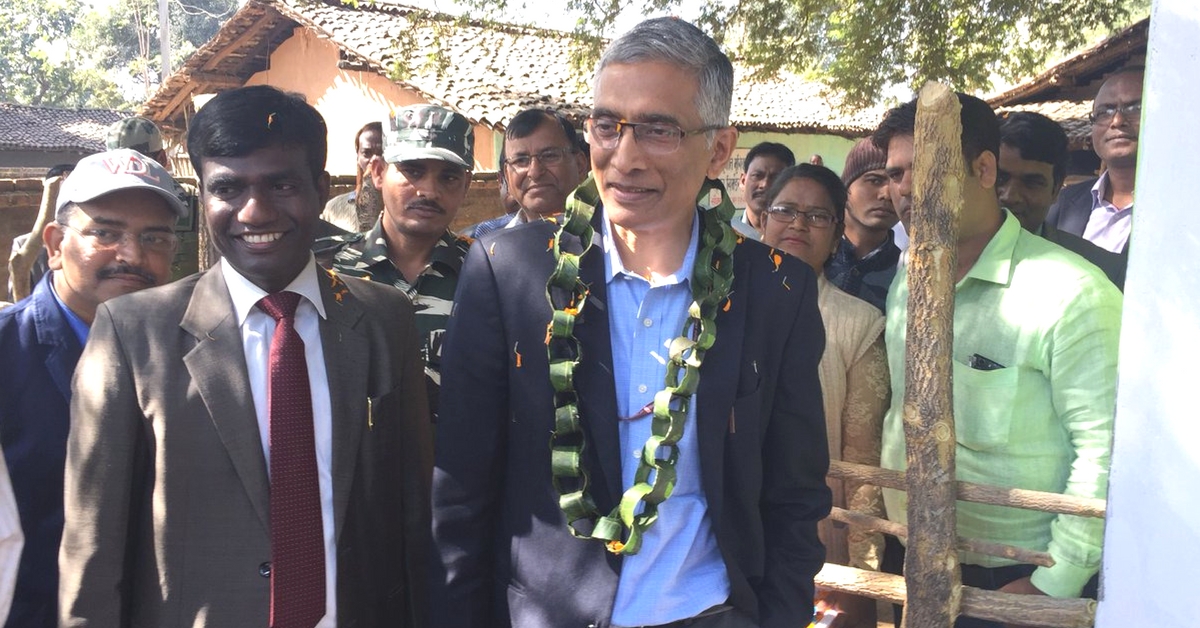
Meet Parameswaran Iyer, a former IAS (Indian Administrative Service) officer who currently leads the Swachh Bharat Mission  


Mr Iyer had worked with World Bank from April 1998 to September 2007 in Hanoi, Vietnam. From 2012 onwards he was the lead water and sanitation specialist for the World Bank and was instrumental in bringing two leading programmes on the ground there.

Before taking up a specialisation in Vietnam, Mr Iyer had also worked in Washington on Egypt and Lebanon and in the Bank’s Water Anchor.

When he realised that he had to accept that many people prefer to defecate in the open rather than in toilets, Mr Iyer brought his experience in Vietnam to practical use. In 2014, he had written about the need for behaviour change before a lifestyle change, on the World Bank’s site.

“The biggest lesson learned so far in Vietnam, and other countries is that eliminating open defecation is not driven by the construction of toilets.

It is driven by changing the behaviour at the community level based on quality, evidence-based interventions. What is also clear is that approaches must be tailored to be the specific context with careful consideration of local factors such as ethnicity,” he wrote.

Mr Iyer’s experience with the World Bank, across several countries, will certainly help India, to go a step further in the cleanliness mission.

This is a rare case of the Indian government appointing an IAS officer working with the World Bank for their initiative, and Mr Iyer has certainly upped the hopes of Indian citizens. He was appointed as Union Secretary for the Ministry of Drinking Water and Sanitation in 2017 on a two-year contract basis.

A senior government official told Livemint, “It is clear from the two-year fixed contract, that the government has decided to give him a free hand to steer the programme. It also gives a clear signal that if the government does not get the desired results from the internal talent pool, it will not hesitate in getting them from outside.”

With a combined experience of about two decades in this sector, Parameswaran is sure to be a beaming light of hope for the dream of a clean India!

Featured image source: Twitter.

Source….Tanvi Patel  in http://www.the betterindia.com

Natarajan


Give Your Idlis a Healthy twist ….

Give your idlis a healthy twist.

Dietitian Jasleen Kaur shares her recipes. You can share yours too! Scroll down to find out how. 


Photograph: Kind courtesy Upendra Kanda/Creative Commons

Hot and sour idli

Ingredients:

  • 1 cup rice
  • 1 cup arhar dal/ toovar dal
  • Red chillies
  • 1 onion, chopped
  • A pinch of hing
  • 1 tsp grated jaggery

Method:

  • Soak the rice and dal separately in three cups of water for four hours.
  • Grind red chillies and tamarind to fine paste. Grind dal and rice separately.
  • Add grated jaggery and red chillies, turmeric powder and salt. Mix well. Set aside for four to five hours to ferment.
  • Lightly grease idli moulds and put the batter. Once steamed, serve the idlis with chutney.

Idli Upma

Ingredients:

  • 5-6 idlis
  • 1 tbsp oil
  • 1/2 tsp mustard seeds
  • 1/2 tsp urad dal
  • 1/2 tsp cumin seeds
  • 5-6 curry leaves
  • 1/2 ginger, finely chopped
  • 1 dry red chilli
  • 1 green chilli, chopped
  • 1/4 cup onions, chopped

Method:

  • Crumble 5 to 6 idlis and keep aside.
  • Heat oil in a pan and add mustard seeds.
  • When they start crackling, add urad dal and cumin seeds.
  • Saute till the urad dal turns golden. Add 5 to 6 curry leaves (chopped or kept whole), ginger, red chili and green chili.
  • Stir and then add the chopped onion. Mix well and saute for a minute or two.

SOURCE:::::: http://www.rediff.com

Natarajan

How Sivalingam battled pain to snatch another C’wealth gold….

‘I had no hopes of winning a medal after I injured my thighs during the National Championships while attempting 194 kg in clean and jerk. ‘

‘Even now I am competing at less than ideal fitness, but I am glad that was enough to get me a gold.’                                                                                                                                       

Defending champion Sathish Sivalingam (77 kg) claimed India’s third gold medal at the Commonwealth Games on Saturday, emerging triumphant despite having given up podium hopes after his injured thighs made even routine things like sitting painful.

The 25-year-old Indian lifted a total 317 kg (144+173) and was so ahead in the competition that he forfeited his final clean and jerk lift.

“I had no hopes of winning a medal after I injured my thighs during the National Championships while attempting 194 kg in clean and jerk. It’s a quadriceps problem; even now I am competing at less than ideal fitness, but I am glad that was enough to get me a gold,” said Sathish, after the medal presentation ceremony during which he was accorded a warm applause from the packed arena.

“I was in so much pain that even sitting was very painful for me. Everyone took care of me, gave me hope but I was not very confident. I had not trained that hard and my body was not at its best, and so how could I hope for a medal,” added the Tamil Nadu lifter.

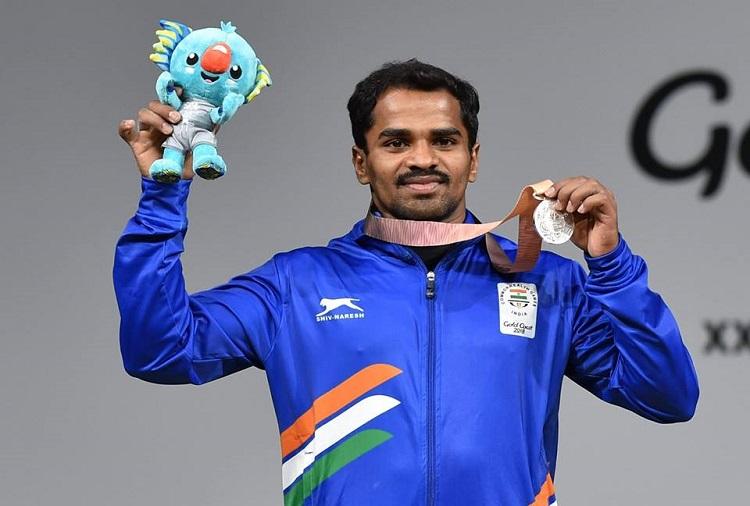
GOLD COAST, AUSTRALIA – APRIL 07: Gold medalist Sathish Kumar Sivalingam of India poses during the medal ceremony for the Men’s 77kg Weightlifting Final on day three of the Gold Coast 2018 Commonwealth Games at Carrara Sports and Leisure Centre on April 7, 2018 on the Gold Coast, Australia. (Photo by Mark Metcalfe/Getty Images)


It was a fascinating contest of one-upmanship between Sathish and eventual silver-medallist Jack Oliver of England in the snatch competition.

The two kept upping the weights before their attempts but Oliver kept his nose ahead at the end of snatch as he lifted 145 kg in his second attempt. It was a kilogram more than Satish’s final attempt.

However, Satish had the last laugh in clean and jerk after Oliver failed two attempts of 171kg and settled for a total of 312 kg (145+167).

The bronze medal went to Australian showman Francois Etoundi, who lifted 305 kg (136+169) and collapsed clutching his injured shoulder after his final lift.

“I got lucky there, had he (Oliver) not dropped those weights, I would have had to go higher and I am not sure how my body would have taken that. I am quite relieved actually.”

At the 2014 Commonwealth Games, Sathish won the gold medal with 149 kg snatch and 179 kg clean and jerk lifts, totalling 328 kg. His lift of 149 kg in snatch continues to be the Games record.

“I didn’t want to touch that level because I still need to undergo rehabilitation. The fact that the access to our physio was limited made it all the more difficult. I just hope that we get a physio with us at the Asian Games,” said Sathish, once again highlighting the problems the weightlifters are facing due to the lack of accessibility of their physios in the competition area.

Sathish is also the reigning Commonwealth Championships gold-medallist.

“I hope to do even better in the Asian Games because there is a gap now. Earlier, the Asian Games used to come within 20-25 days of the Commonwealth Games, which didn’t give us enough time to prepare. But this time I have got time to prepare and be fully fit now,” he said.

Tags: Jack OliverKumar SivalingamSathish SivalingamFrancois EtoundiIMAGE

Source:   www.rediff.com

Natarajan

Meet Gururaja…CWG 2018 Medallist…

‘His victory is our victory,” said his family as they watched him bag the silver medal in weightlifting, in Australia.


At 7.30 am on Thursday morning all eyes in the Poojary household in Vanse, a tiny village near Kundapur in Karnataka, were glued to the television.

One of their own, Gururaja Poojary, was taking part in the men’s 56-kg weightlifting competition in the 2018 Commonwealth Games in Australia. After failing to lift the weight of 138 kg in his first two attempts, it appeared as if Gururaja’s medal prospects were slipping away

The 25-year old weightlifter, however, was the very picture of strength in his final attempt to take his final tally to 249 kg and clinch the silver medal.

This medal in the Gold Coast is not only Gururaja’s first taste of success on the international stage right on his debut, but is also the product of a journey where he overcame poverty and personal setbacks to reach where he is.

But for his family members, it came as no surprise.

He comes from a sporting family – all five of his brothers dabbled in Kabaddi and were athletes. “But it was Gururaj who was always going to achieve his dream,” says Manohar Poojary, Gururaja’s elder brother.

Gururaja’s father, Mahabala Poojary, is a goods-truck driver, who struggled to make ends meet to take care of his six sons. “Poverty is something we have lived in all our life. If we were a little bit well-off financially or received the necessary support and encouragement, maybe all of my sons could have made our country proud,” says Mahabala, speaking after his son’s success in Australia.

But due to poverty and unforeseen circumstances at home, Gururaja’s older brothers – Mohan, Manohar, Udaya and Rajendra – had to drop out of school and, with that, from sports. Only Gururaja and his youngest brother, Rajesh, completed their studies amongst the six sons.

His mother, Padhu Poojarthi, is a homemaker.

But his family was not willing to let Gururaja tread the same path. “Our father worked extra hard to ensure that Gururaja strove to achieve his dream. Seeing my father’s and brother’s struggles, even we chipped-in, taking on extra work to help in whatever way we could. Today, his victory is as much our victory,” says Manohar.

While studying at Sri Dharmastala Manjunatheshwara (SDM) College in Ujire, in Dakshina Kannada, Gururaja was looking for a wrestling coach rather than a weightlifting one. This was around the time Sushil Kumar had won his first Olympic medal in wrestling in 2008. While his search for a wrestling coach proved to be fruitless, he met powerlifters at the local gym and was soon representing his college in powerlifting.

It was here he met his coach Rajendra Prasad, who gave him his first lessons in weightlifting.”I still remember, in 2011, Gururaja was a young boy who had just joined a graduation course. He was a Kabaddi player and a wrestler, and did not have any idea about powerlifting. We selected him for the club and, seeing his talent, guided him in powerlifting,” says Rajendra Prasad, who works as a coach at the SDM Sports Club.

He added that Gururaja was proficient at the University level and even broke a record set by him in 1999 by lifting 193 kg (total in snatch and knee jerk) in 2012. He improved to 243 kg in 2015, a record which still stands to this day.

It was only in 2013 that he became a national-level athlete and in 2014, after a gold medal at the national-level, he started becoming a serious contender for a Commonwealth Games berth.

With his superlative rise in the sport, Gururaja also enrolled in the Indian Air Force three years ago, after which the Air Force took care of all the training expenses. “Until then, it was the family, college-mates and generous philanthropists who gave wings to his dream, hoping he would bring glory to the region,” says Manohar.

By the time the financial strain on his family was eased, 25-year-old Gururaja was ready to take on the world stage.

With the win in Australia, he has now vaulted straight into the national limelight and Pramod Madhwaraj, Karnataka Minister for Youth, Fisheries and Sport, who also hails from Udupi, said that Gururaja is likely to get a government job as a group-B officer and also a cash prize for his achievements.

When TNM caught up with Gururaja, he was, understandably, elated. “I am very happy that I have represented India in the Commonwealth Games and won the first silver medal for India (this year). This is my first Commonwealth Games and I want to thank my parents, family, my weightlifting coach Rajendra Prasad, SDM institution and everyone from my village who supported me,” he says.

His family members, who were nervously watching from home, was over the moon. Although his mother says she doesn’t quite understand the world of sport, she adds she is overwhelmed by the media visits.

But Gururaja’s family was quick to add that the journey is still not over. “We want him to make our country proud. Our biggest dream is that he participates and wins in the Olympics,” says Mahabala.

There is still some way to go before Gururaja can qualify for the Olympics. His final tally of 249 kgs will have to improve closer to 300 kgs. But throughout his journey, he has broken barriers and after his latest success in Australia, Gururaja will no doubt be willing to go the mile to chase his Olympic dream.

Source…….Harsha Raja Gatty and Prajwal Bhat in https://www.thenewsminute.com

Natarajan

Death of Padma Scientist at Airport Spurs Son To Demand Medical Aid at All Airports…

In December last year, Prof Lalji Singh, known as the Father of DNA Fingerprinting in India, died after he suffered a major heart attack while at the Lal Bahadur Shastri International Airport, Babatpur in Varanasi.

Death is inevitable. But nothing shocks us more than when a death, which could have been prevented or avoided, occurs due to sheer negligence. Human apathy makes death painful and stark, making us question everything – medical advances, the quality of healthcare, laws, regulations, and the value of life in our country.

In December last year, Prof Lalji Singh, known as the Father of DNA Fingerprinting in India, died after he suffered a major heart attack while at the Lal Bahadur Shastri International Airport, Babatpur in Varanasi.

The airport was not equipped to handle this medical emergency, and by the time he was taken to the hospital – a good few hours later – he had breathed his last. The doctors who examined him say that had he been provided with oxygen supply during the “Golden Hour”, he could have been saved.

What makes it even harsher is that precious time was lost in getting formalities like an “Exit Pass” organised for him due to security reasons. What good are processes that are supposedly put in place to keep people safe when they end up killing them?

Up until I started my research for this piece I had assumed that all airports across the country would be equipped to handle emergency medical situations and would also have an ambulance on call.

My assumption was wrong.

If they did then perhaps Prof Lalji could have been saved.

Airports have become a place to shop and eat. They are all well equipped with restaurants serving a variety of cuisines, every brand that you can think of has a presence here, and liquor outlets thrive – and yet one of the most basic requirements of having a medical room with functional facilities is missing.

We, at the Better India, spoke to Late Prof Lalji’s son, Abhisekh Singh, who is asking some pertinent questions.

Abhishek is asking the Ministry of Civil Aviation and Airport Authority of India to mandate the availability of a doctor, ambulance, minimum medical support, trained medical personnel and standard operating procedures at all civilian airports in India.

You can support his cause by signing the petition here.


On December 10, 2017, Prof Lalji was travelling from Varanasi to Hyderabad on an Indigo flight. Hailing from a village in Varanasi, Prof Lalji started Genome Foundation, a non-profit organisation that aims to diagnose and treat genetic disorders affecting the underprivileged, especially from rural India.

Having reached the airport well in time, Prof Lalji enquired about the wheelchair he had asked for while making his booking. He had nagging knee pain and hence wanted the wheelchair.

Unfortunately, the staff at the airport told him that there was no request and they couldn’t provide him with one. Since he was travelling alone, he went in to the airport and checked in.

Abhisekh says, “Since I was not present there at that time, I have requested the airport to provide me with the CCTV footage from that day. However, so far I have not received it. I can only, therefore, corroborate what I am saying with what people present there have said to me.”

After he checked in, a wheelchair was provided. Abhisekh also mentions that around this time he called his father to check on him.

A little after that Prof Lalji faced some difficulty in breathing and went to the counter to ask for help. He was taken to the medical inspection room where the compounder after checking him insisted on having him taken to a hospital for immediate medical intervention.

“While the airport had a medical intervention room there was no doctor or medical supplies there. Looking back they did not even have an oxygen cylinder in the airport,” says Abhisekh.

An ambulance was asked for but since did not arrive Prof Lalji had to be taken in a private car to the nearest hospital which was also quite a distance away. Given the strict security, once a passenger enters the airport, they are not allowed to leave until an exit pass is shown.

Despite being in great distress, Prof Lalji had to wait to have that pass made and only then was allowed to leave the airport.

The doctor who checked Prof Lalji mentioned how he could have been saved if he had been administered with oxygen during the ‘Golden Hour’. Prof Lalji was alive even after the heart attack, but the delay in getting him medical treatment cost him his life.

Here are some of the questions raised by Abhisekh:

1. While there is a medical intervention room, it is virtually of no use.

What is the point of having a designated room in the airport and calling it medical intervention room if there are no trained medical professionals there? In places like Varanasi where even the nearest hospital is quite a distance away, what happens in cases of medical emergencies?

Are these airports waiting for such incidents to occur to act?

2. Should airports not be equipped with basic medical infrastructure?

Unfortunately for us in India, heart disease is still the leading cause of death.

Knowing this should we not be working towards equipping the airports and railway stations, places that see thousands of people day in and day out, with basic medical infrastructure?

An oxygen cylinder, a defibrillator, an ambulance on call?

3. Is there a standard operating procedure in cases of medical emergencies?

Are our airports equipped to handle medical emergencies? Manuals like the Airports Authority of India, Terminal Management clearly states the need to have a well-equipped first aid box ready. This includes a small oxygen cylinder with delivery accessories and a facemask.

The manual also states that it is desirable that an updated list of Telephone numbers and addresses of the hospitals and nursing homes ( indicating the specialised Treatment rendered) in the vicinity of the Airport should always be available with the Terminal Manager.

If these are guidelines then why were none of them implemented on December 10, 2017? Are these guidelines just printed because they look good on paper? Does the DGCA ever audit the airports to ensure that all the norms are being followed?

So important questions for us all.

Abhishek is asking the Ministry of Civil Aviation and Airport Authority of India to mandate the availability of a doctor, ambulance, minimum medical support, trained medical personnel and standard operating procedures at all civilian airports in India.

You can support his cause by signing the petition here.

(Edited by Vinayak Hegde)

Source……. Vidya Raja  in http://www.the better india .com

Natarajan

Mumbai Beach Welcomes Olive Ridley Turtles After 20 Years….!!!

On Thursday morning, the Versova beach in Mumbai welcomed around 80 palm-sized turtles, making their way slowly but surely in the Arabian Sea.

Why is this event so special?

Well, for starters, the turtles in question are Olive Ridley Turtle, and their eggs hatched on a Mumbai beach after 20 years, and it was all thanks to the efforts of hundreds of Mumbaikars who have been cleaning the Versova beach for over two years now.

The Olive Ridley Turtle has been classified by the International Union for Conservation of Nature (IUCN) as a vulnerable species, which is likely to become endangered unless the circumstances that are threatening its survival and reproduction improve.

According to WWF India, “Olive Ridley Turtles are the smallest and most abundant of all sea turtles found in the world” and live in the warm parts Pacific, Atlantic and Indian oceans.

The females lay their eggs on the same beach that they hatched from!

However, for the past 20 years, these turtles had stopped visiting Mumbai, thanks to the number of pollutants and plastic on the beaches. Not only is the trash an unwelcoming home to lay eggs, but is also a threat to the lives of the tiny turtles who have to walk from their nesting site to the sea all by themselves.

Afroz Shah had taken the initiative to clean up Versova beaches and collect all the plastic dumped there. According to the Hindustan Times, in only 126 weeks, Afroz Shah and the Versova Residents Volunteers’ team has successfully cleared 13 million kg of garbage, which included plastic from the beach.

Speaking about the Olive Ridley Turtle hatchlings, Prashant Deshmukh, range forest officer, Mumbai Mangrove Conservation Unit said,

“Such an incident happened after 20 years. The presence of more turtle nesting sites cannot be ruled out. We will push for the development of a turtle rescue centre close to this nesting site, and we expect it to be built soon.”

Week 127 .

Fantastic news for Mumbai .

We got back Olive Ridley Sea Turtle after 20 years. Historic moment

Nested and Hatched at our beach. We facilitate their journey to ocean.

Constant cleaning helps marine species.

Marine conservation centre needed at @versovabeach

Apart from Versova, these turtles are found on the beaches of Velas, Anjarle, Harihareshwar, Maral and Diveagar in Maharashtra.

The largest nesting site of the world is in Odisha along the coasts of the Bay of Bengal. Villagers in Odisha, too, have made attempts to save the nesting sites and ensure safety to the newborn turtles. You can read more about this story here.

Edited by Gayatri Mishra.

Source……. Tanvi Patel in http://www.the better india.com

Natarajan


Green Glory: This Indian State Is Ahead of Denmark and Sweden In Wind Energy!!!

With 14.3% of its energy needs being fulfilled through wind and solar energy, it is also a global leader in renewable energy!

In a recent report, the Institute for Energy Economics and Financial Analysis(IEEFA), a US-based think tank, ranked Tamil Nadu as one of the top nine markets in the world for acquiring a high percentage of net energy needs from renewable energy sources.

The study was an assessment of the top 15 countries or power markets in the world, where the share of solar and wind energy in proportion to their total energy requirements is high. Denmark leads the way, with 53% of its energy coming from renewable sources in 2017, followed by Southern Australia and Uruguay.

In 2016-17, Tamil Nadu acquired 14.3% of its energy needs from wind and solar energy sources.

“Tamil Nadu also leads India in installed renewable energy capacity. Of the total 30 GW of installed capacity across the state as of March 2017, variable wind and solar power accounted for 9.6 GW or 32% of the total. Firm hydroelectricity added another 2.2 GW or 7%, nuclear 8% and biomass and run of river, 3%. As such, zero emissions capacity represents a leading 50% of Tamil Nadu’s total installed renewable energy. With much of Tamil Nadu’s renewable energy coming from end-of-life wind farms installed 15-25 years ago, average utilisation rates are a low 18%, making the contribution of variable renewables to total generation even more impressive,” says the IEEFA report.

Total installed renewable energy capacity for Tamil Nadu stands at approximately 10,800 megawatts (MW), of which 7870 MW comes from wind and 1,697 MW solar, while the rest comes from biomass and small hydro projects. Although it comes third in solar energy capacity behind Andhra Pradesh (2,010 MW) and Rajasthan (1,961 MW), the state tops the charts in wind power capacity ahead of Gujarat (5429 MW) and Maharashtra (4,752 MW). Tamil Nadu generates more wind energy than Sweden (6.7 GW) and Denmark (5.5 GW), the birthplace of wind energy.

“This rise in renewables is predicted to coincide with a slide in coal’s share in Tamil Nadu’s electricity mix, from 69% in 2017 to 42% 10 years later,” says the World Economic Forum. The state has also diversified into biogas and small hydro plants as well.

“As of March 2017, the state had 1 GW of biomass and run-of-river small-scale hydro, 2.2 GW of conventional hydroelectricity, and 1 GW of gas fired power capacity operational (plus another 1 GW of gas under construction),” reports the IEEFA. In an interesting aside, it also hosts the second largest solar farm (Kamuthi) in the country with a capacity of 648 MW.

This is a heartening development as it comes a time when the Government of India has set a target of sourcing 175 gigawatts of energy from renewable sources by 2022.

When it comes to renewable energy in India, one could consider Tamil Nadu as a pioneer of sorts. Most of its wind farms, for example, were built approximately 25 years back.

The natural conditions in the state favour the growth and development of solar and wind energy. The Tamil Nadu coast receives high wind density and velocity. For six months it receives heavy wind flows, while four months see moderate flows. Also, the state receives 300 or more days of sunshine.

The state’s sojourn into renewable energy began as an emergency attempt to fill the growing deficit between supply and demand of power.

Major industries like automotive parts, textiles, cement and leather-tanning, for example, demanded large amounts of power and consequently, the feed-in tariff (payments to ordinary energy users—people or businesses—for the renewable electricity they generate) for the wind energy sector was encouraging.

The price at which wind energy is sold to the people today is determined at an open auction for power utilities. Earlier, the state power regulators had a stranglehold on determining prices but changed to an auction system in 2016.

With the local textile sector first grabbing the bull by its horns, Tamil Nadu also became one of the first states to allow industrial units to establish their own wind power plants. These 20-year-old wind farms owned by the Tamil Nadu Spinning Mills Association (TASMA) generates a little less than 40% of the state’s total wind energy capacity (3000 MW). The Muppandal wind farm outside Madurai, for example, generates 1.5 GW of energy, making it the largest wind farm outside China.

With favourable tariff conditions, the state also made serious progress in the solar energy arena.

“In recent years, the government has also worked to improve its transmission infrastructure, encouraging firms to expand. Since renewable energy is infirm, managing the fluctuation in power generation is key. Tamil Nadu has begun forecasting the flow so that the grid is ready to handle things,” says this recent report in Quartz India.

Having said that, the IEEFA has argued in its report titled ‘Electricity Transformation in India: A Case Study of Tamil Nadu’, it argued how the state’s growth in wind and solar energy generation isn’t enough.

“Tamil Nadu should double its wind energy capacity to 15GW and increase its solar capacity to 13.8GW by 2026-27 to deliver cheaper electricity to customers,” the report said.

Instead, what the state is doing is looking to build 25,000 MW of thermal power projects. “Despite being a world leader in wind energy, Tamil Nadu’s wind farms have ageing and outdated technology. Upgrading the existing turbines alone could double the state’s leading wind energy capacity,” said Tim Buckley, IEEFA’s director of energy finance studies, Australia.

There are other concerns, as well. “Renewable energy assets in Tamil Nadu are facing significant back down (as state power utilities are buying little power from these plants). This adversely impacts their feasibility,” Kanika Chawla, a renewable energy expert at Delhi-based non-profit Council on Energy, Environment, and Water, told Quartz India.

Primarily, the major concerns stem from state regulation-related issues. For starters, the state-owned power utility Tangedco has proposed an additional imposition of taxes on rooftop solar plants, says this Times of India report.

Last July, Tamil Nadu was unable to use all the solar power it generated. In the wind energy sector, the government could stymie TASMA’s ability to drawing back the excess power it delivers to the power grid in the event of a shortage (wind banking). What one must understand is that TASMA generates and delivers excess wind energy to the power grid.

However, the biggest concern is the dire financial condition of the state power utility. In 2016-17, the Tamil Nadu Generation and Distribution Corporation Limited (TANGEDCO) posted a loss of Rs 3,783 crore, besides year-long delays in the payment of dues to power-generating units.

As a result, these power generation units are unable to repay loans they had taken from the banks to install all the necessary equipment. The poor state of regulation in the state’s power sector is a real concern.

Source….  

in http://www.the betterindia.com

Natarajan


The Hindi-Speaking Aussie who loves India …

Charles ‘Biharilal’ Thomson, is an Australian who speaks fluent Hindi learnt on the streets, trains and buses of India’s hinterland.
Biharilal tells Rediff.com‘s Archana Masih how India has bewitched him.
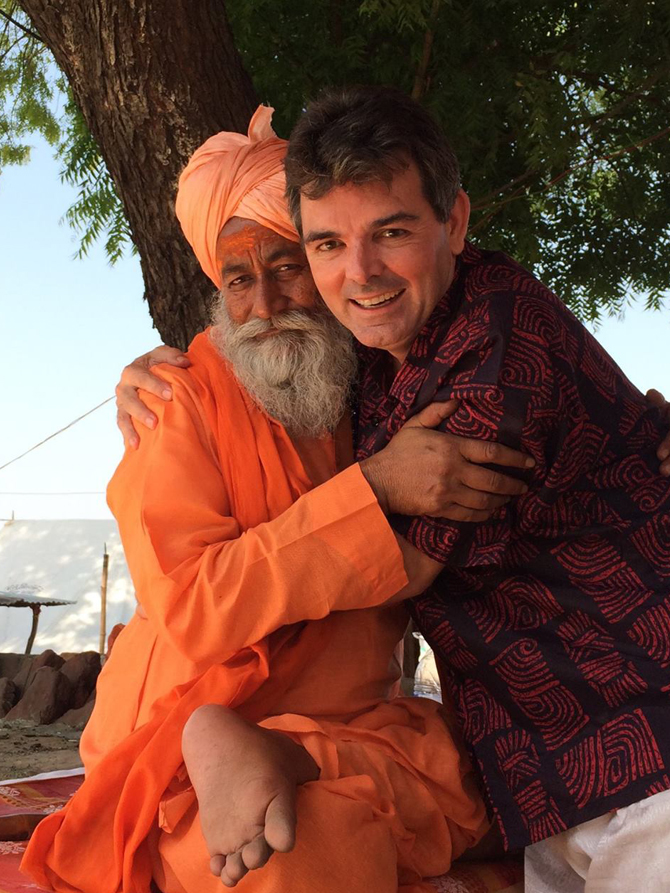


Photograph: Kind courtesy Charles Thomson/Facebook

Biharilal Thomson is a white Australian who speaks Hindi better than many Indians.

The first time he saw a non-white person was as a 10 year old. His mother had invited an Indian yogi from Bihar into their home in Australia and asked her son to share his room with the sadhu for a few weeks.

“I had only seen white Australians till then, not even native Aboriginals — and here was an Indian in a langoti in my room!” he exclaims in good humour, sitting in a film producer’s home in suburban Mumbai, wearing a kurta-pajama and a yellow stole.

In the two hour conversation, he only speaks Hindi, a language he learnt in the streets, trains and buses of Bihar where he had arrived at age 13 in December 1974.

He loved his new home on the banks of the Ganga so much that he did not return to Australia for the next 11 years. Accounts of his experiences in India’s rural underbelly in the 1970s-1980s, include encounters with dacoits on horseback on at least two railway journeys.

“I saw real sadhus, I saw real dacoits — and I thought I had reached an amazing place,” says Biharilal with a grin. His life experiences, he says are so unbelievable that he sometimes thinks it is like a film.

It also reveals an India of another time — one that was simpler, wilder, unfamiliar and distant from what it is today.

“India was friendly with the Soviet Union, and I came across Indians who were desperate to emigrate to the USA, Canada or UK — not to the USSR.”

“The other thing that was common was cycles. Only the DM (district magistrate) and SP (superintendent of police) had cars — and in the trains people sometimes travelled with their own cooks!”

After going back to Australia in 1985, he returned to formally work in India in 2011.

India has seen a giant leap ahead since, and he has spent nearly 16 years here, but one question posed to him that hasn’t changed over the years is — “Why did you come to India?”

“This is what I am routinely asked, especially by the youth. They ask ‘Why have you come here when we want to settle abroad?’,” says Biharilal, who applied for Indian citizenship in 2014 and hopes to hold an Indian passport soon.

“The other thing I am amazed with is this craze for English. Even if I speak to those who know Hindi in Hindi, they reply in English!”

“Why?”

His fluency in Hindi has fetched him invites to Hindi events by the Indian high commission in Australia, to symposia at Savitribai Phule Pune university and Delhi’s Hansraj College. He has anchored a few film festivals and done some acting roles.

It has also brought him an FM radio show that he hopes to receive a confirmation for by April.

“In independent India it will be the first time that an angrez will do a radio show in Hindi,” he says enthusiastically.

Not wanting to be boxed into roles of the typical gora speaking tooti-phooti Hindi, he refers to the accomplished actor Tom Alter.

“He is an asli Hindustani, I’m nakli, but because earlier directors made him speak broken Hindi like an angrez, people thought he was English.”

“People didn’t know he was Indian, a Padma Shri, who spoke fluent Hindi and Urdu.”

Biharilal works at Josh Talks, a media company that invites guests to share inspirational stories. His focus is on all regional languages and tier-2 cities.

He has also done a few acting roles in Hindi and Marathi television serials, and recently appeared in an airline commercial for Scoot, a budget airline owned by Singapore Airlines.

There are quirky benefits to a white man speaking Hindi too — like the number of wedding invitations he receives. Many wedding organisers in the Delhi area send him invitations only to have a foreigner on display!

“I get so many invitations for chief guest. In the marriage season, I’ll be booked,” he laughs.

“People want a gora who speaks Hindi to show at their weddings.”

The move from Australia to India may have been a continental shift, but for Charles ‘Biharilal’ Thompson, it was like coming home.

It was a life introduced to him by his mother, a ballerina and an early convert to yoga, who came to learn at the Bihar School of Yoga in Munger in 1972.

“At that time only 1% of the world travelled by aeroplane,” says Biharilal, who is often recognised as ‘Biharilal Autowale Babu’ after a show on Zee TV where he covered the 2017 Delhi municipal election in a colourful autorickshaw.

He also covered the UP assembly election last year for WION, Zee’s English news channel.

“We used to fly to the Gold Coast to visit my grandparents every year. I made my father promise that he would send me to India instead, if I stood 1st or 2nd in school.”

He stood 2nd and travelled to Calcutta, he says, taking a train to Jamalpur and then a bus to Munger.

“I was shocked to see the poverty in Calcutta, but hearing ‘garam chai‘ by tea vendors in the train was like music,” he remembers.

Eight weeks later, his father returned to take him home.

“I told him I wanted to stay for one more year,” he says over a cup of tea.

“But I stayed for 11.”

blob:https://ishare.rediff.com/d8239350-f845-46f6-86e1-762bd67d53b5

He has now spent 16 years in India — first at the Bihar School of Yoga in Munger, then working in a financial tech start up Eko India, and currently in the entertainment industry.

At the famed yoga school in Munger, he says he learnt yoga and managed the library. He helped in the institute’s office work which would take him to Patna and Delhi.

It was on one these travels that he found himself in the middle of a dacoity.

He had bought a third class ticket and boarded a train from Jamalpur to Patna in Bihar. The TT saw his ticket and upgraded him to first class. Along the way, dacoits came riding alongside the train, detached the first class compartment and started looting passengers.

When they reached his coupe, he held out his hands, and said, “Ruko, ruko! (stop, stop!)”

The dacoits stopped.

“I was a young boy and did not know very good Hindi at that time, so I just managed to ask a dacoit if he had any videshifriend?”

The dacoit said ‘No’ and Biharilal told him that he would be his friend.

“He smiled and did not take anything from me.”

Caught in another dacoity on a railway platform — this time on a dark railway platform surrounded by crop fields — his saffron clothes came to his rescue.

“When they came to me, I just sprang up and started chanting Bum, Bum Bole-Bum, Bum Bole and they said, ‘Yeh toh Ganga jal wala aadmi hai‘ and let me go,” he chuckles.

India was very different then, he says. Yoga institutes were very austere and drew only the most committed.

He remembers the first function he organised which had a generator as backup for electricity failure. When the lights went off and the generator was switched on — the crowd left the sammelan and rushed to get a first glimpse of a generator at the back.

At fifty-seven, Biharilal has seen the arc of India’s history from Indira Gandhi’s Emergency to her assassination to the post liberalisation. He has travelled widely, even taken his mother to the Kumbh Mela.

In between, he returned to Australia and ran a Thai vegetarian restaurant but kept coming back to India.

“I started coming back in the late 80s, but visas were very difficult. Till the Modi Sarkar came, getting a visa to India was not easy. Sushma Swaraj is doing a good job,” he says.

In 2009, a startup started by Biharis, Eko India, offered him a job and he moved to India.

But it was a chance encounter with an Indian student at a Sydney swimming pool that opened the door to acting.

Shashank Ketkar, now a popular television actor, had got talking to him by the pool hearing his Hindi and came to eat at his Thai restaurant.

Few years later, Biharilal would visit him on the sets of his show whenever he was in Mumbai. His kurta-pajama style of dressing and fluency in Hindi caught the eyes of the director and led to small roles. He also got to play an angrez in a Marathi film Shashank Ketkar was acting in.

“I went to Kohlapur and shot a scene where I was seated on a horse in 40 degrees heat. I loved it. I thought I had become Shah Rukh Khan!”

He has also acted in a Hindi suspense thriller that will release this year.

Every day, he receives a large number of messages on Facebook and makes it a point to at least say ‘Ram, Ram’ or ‘Namaste’ to them.

“I feel the whole of Hindustan is made for me. Yeh kamal ka desh hai, yaha aapko sab kuch mil jayega (this is a great country, there is nothing you can’t find here),” he says, adjusting the famous Australian Akubra hat he is wearing and steps into the hot Mumbai sun.

Archana Masih / Rediff.com

Source…..www.rediff.com

Natarajan